




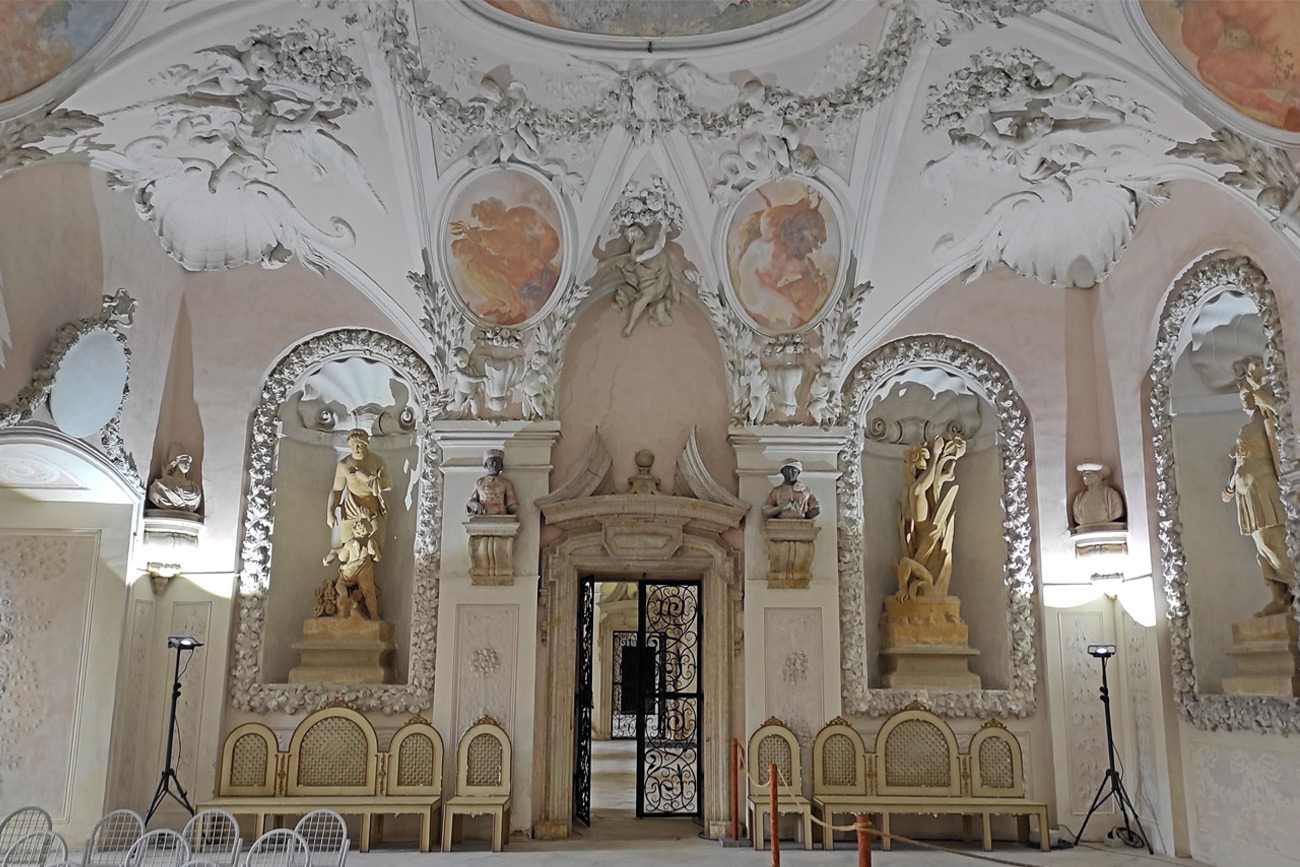
If you're traveling through Moravia, you shouldn't miss the Archbishop's Chateau in Kroměříž, which has been the property of the Olomouc bishops and archbishops for centuries and served as their representative residence. In 1998, this Baroque gem, along with its gardens, was inscribed on the UNESCO World Heritage List.
Join us as we explore a place where history was made and where art literally breathes from every corner.
Address: Sněmovní náměstí 1/2, Kroměříž
-
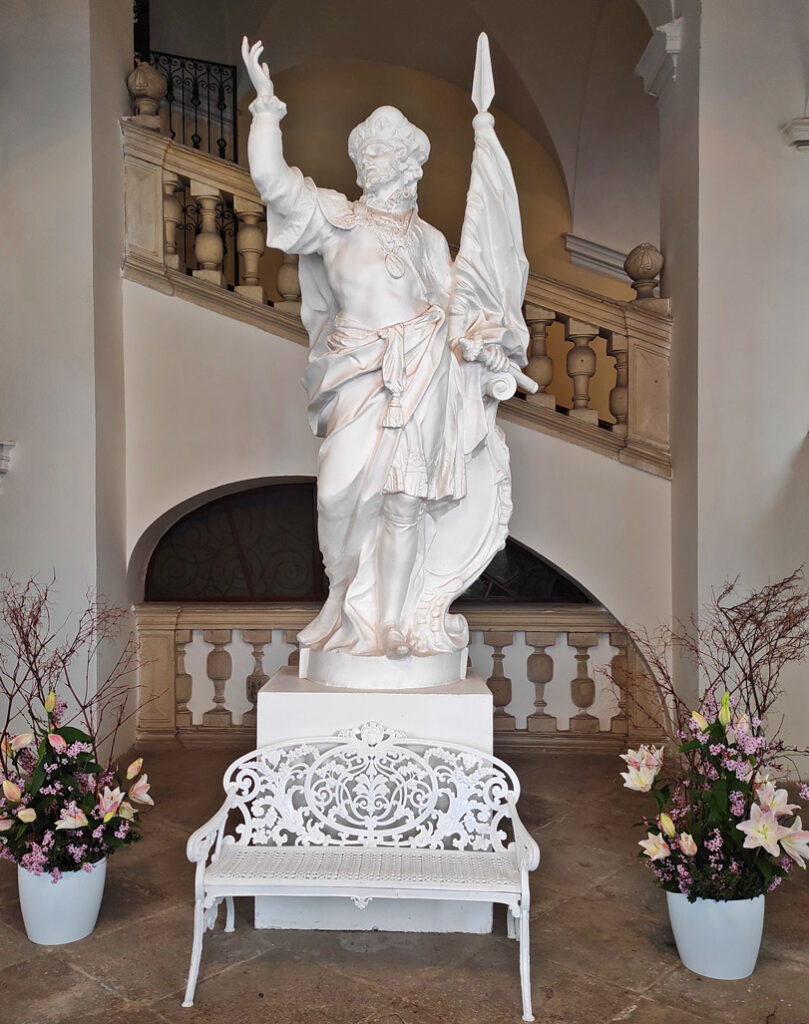
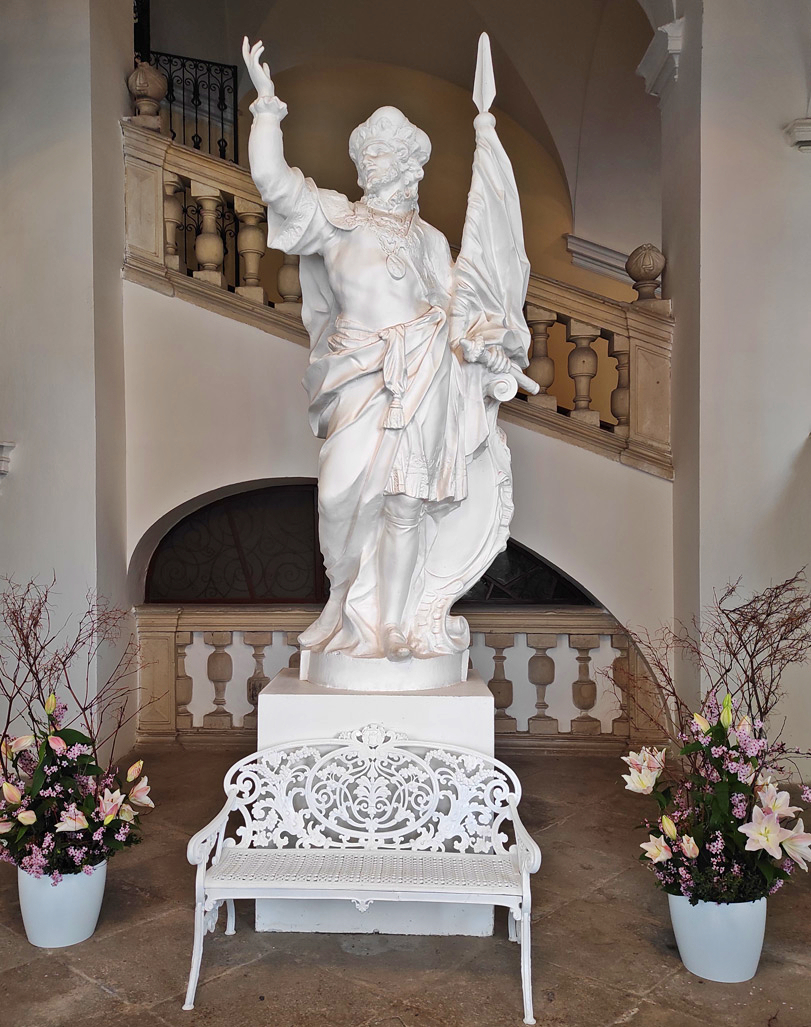
- Entrance hall
-
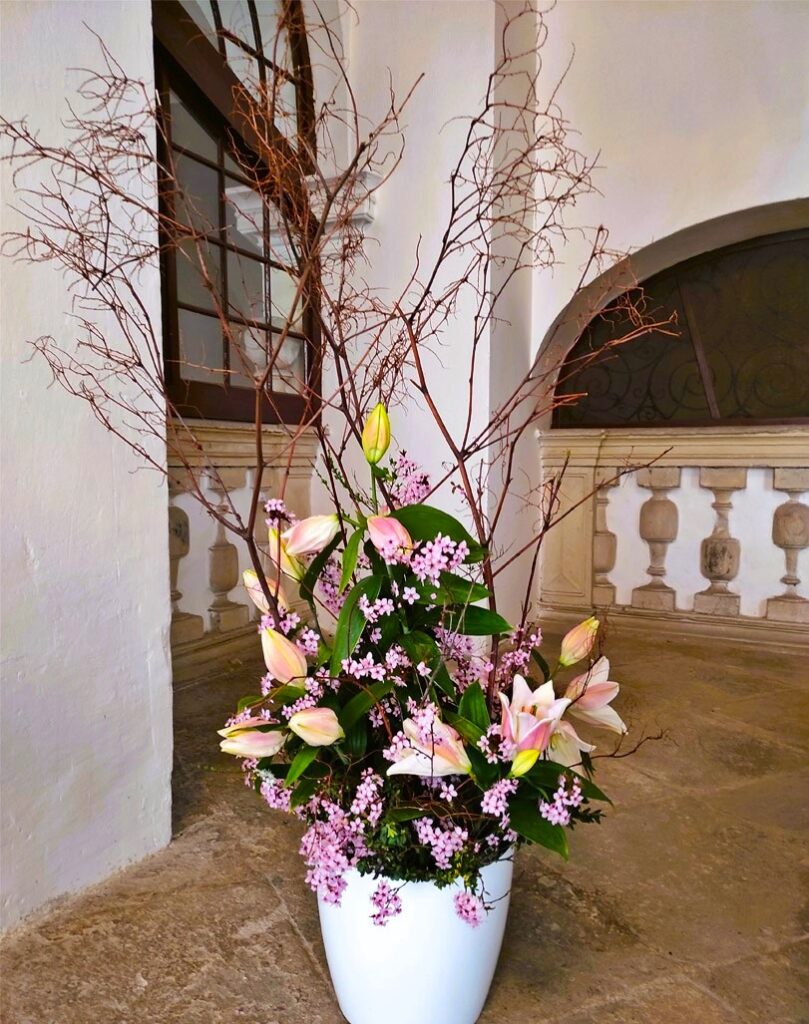
- Floral decoration
Sightseeing tour Sala terrena
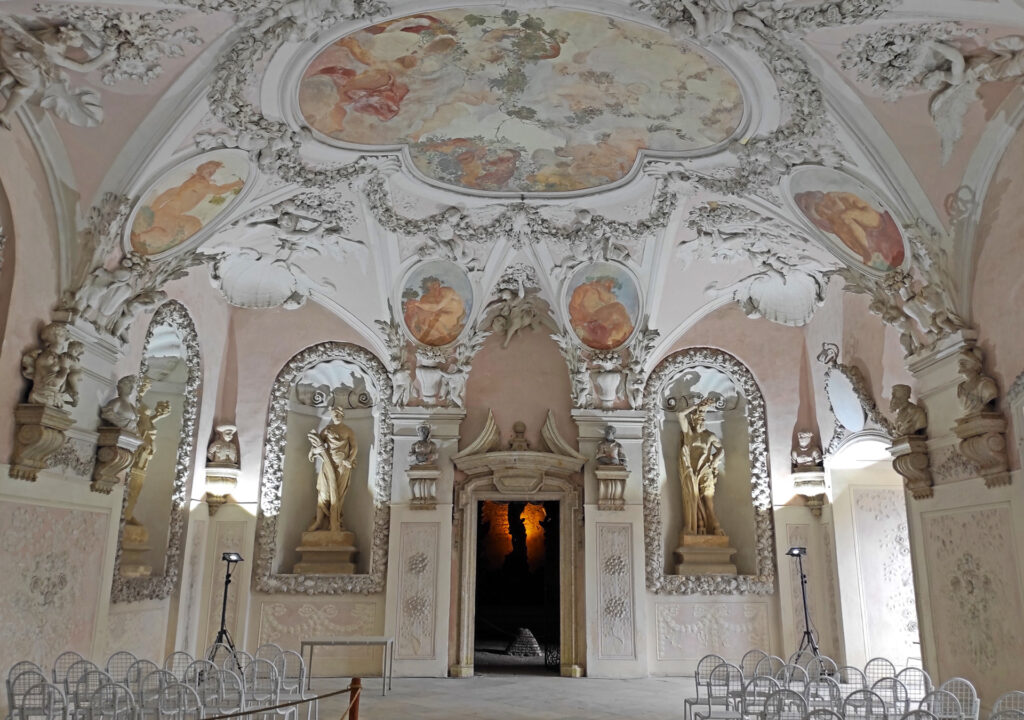
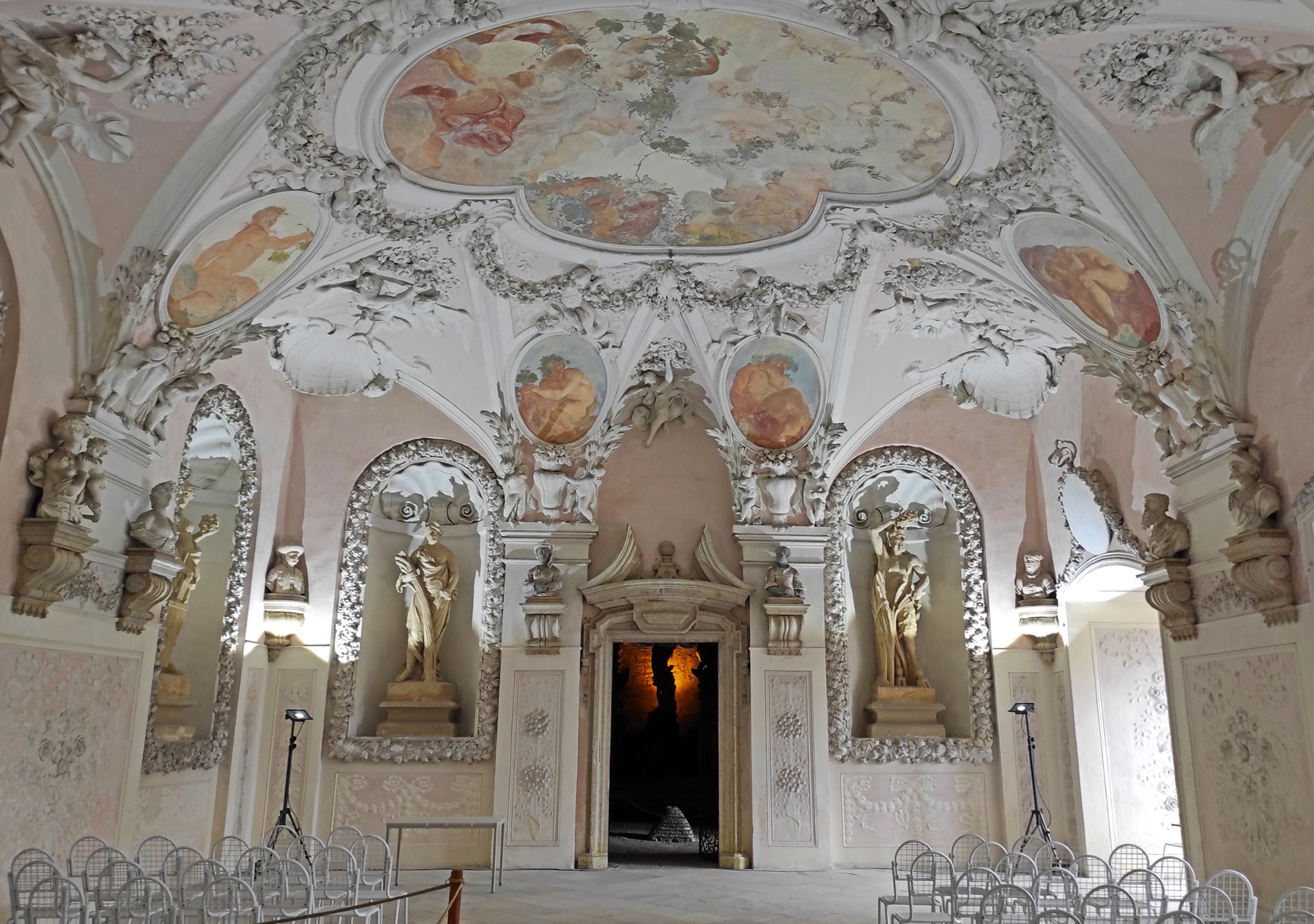
The tour gave us the opportunity to see stunning early Baroque halls that invite visitors to step directly into the green garden.
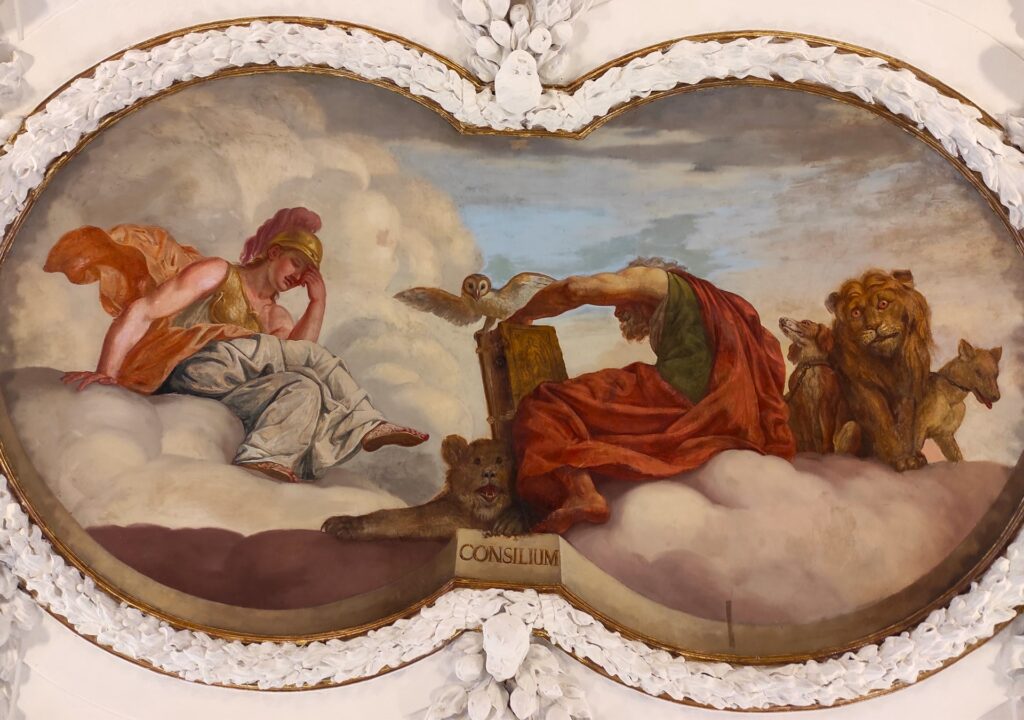
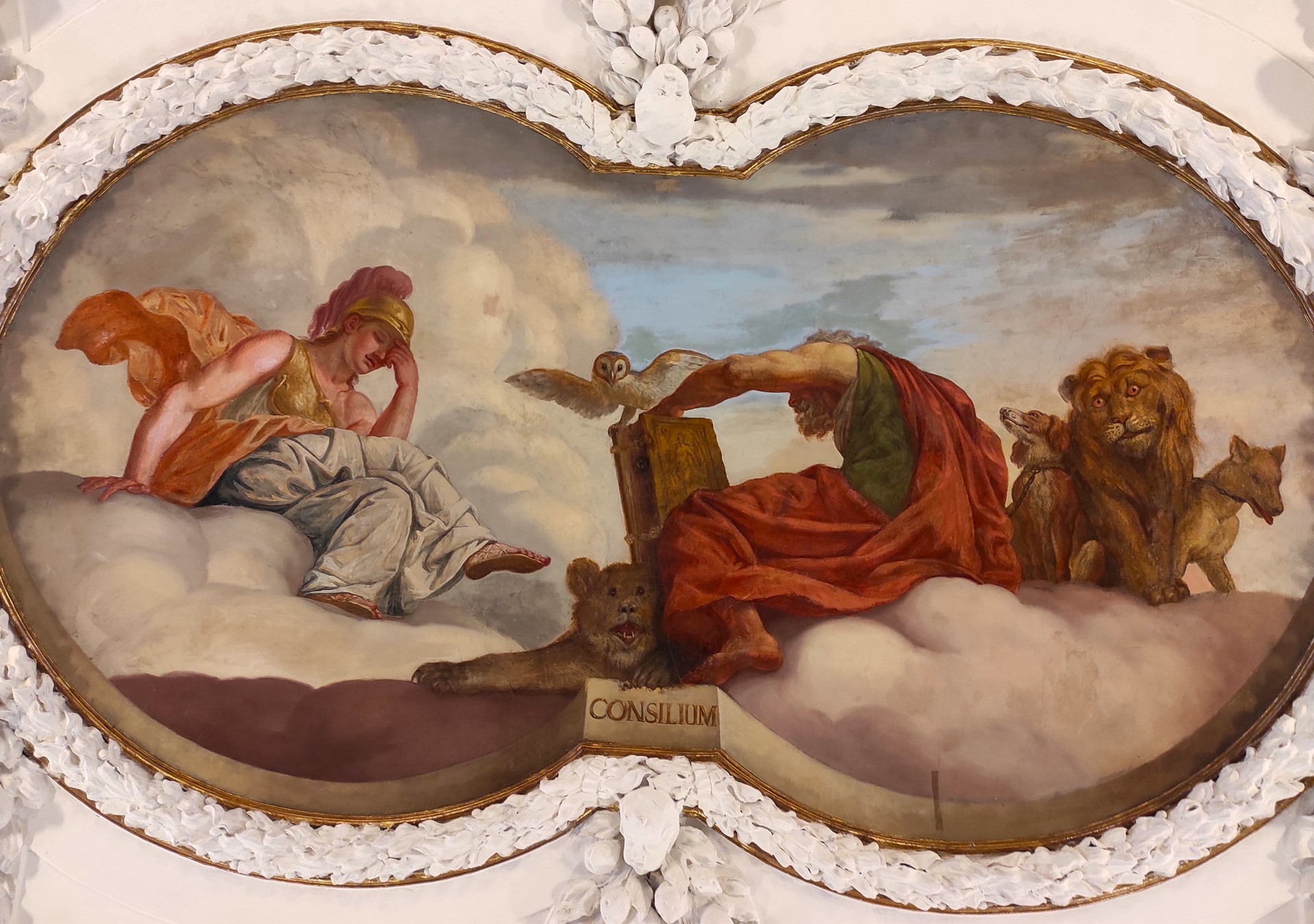
The representatively decorated rooms stand out with their paintings and sculptures inspired by ancient mythology. No wonder they were used as ceremonial rooms. Even today, they are used to host private events—unsurprisingly, wedding ceremonies are regularly held here.
The airy spaces of the halls also provided shelter from the hot summer days, offering a place to rest or relax while enjoying a concert or theatrical performance. The impressive paintings and sculptures in the rooms depict the four elements (fire, water, air, and earth) and the four seasons, thus celebrating nature and its transformations over time.
Our tip:
When purchasing a ticket for the classic tour of the representative halls, be sure to include the Sala terrena, which is undoubtedly one of the most beautiful parts of the chateau interiors.
-
- Sala terenna
-
- Sala terenna
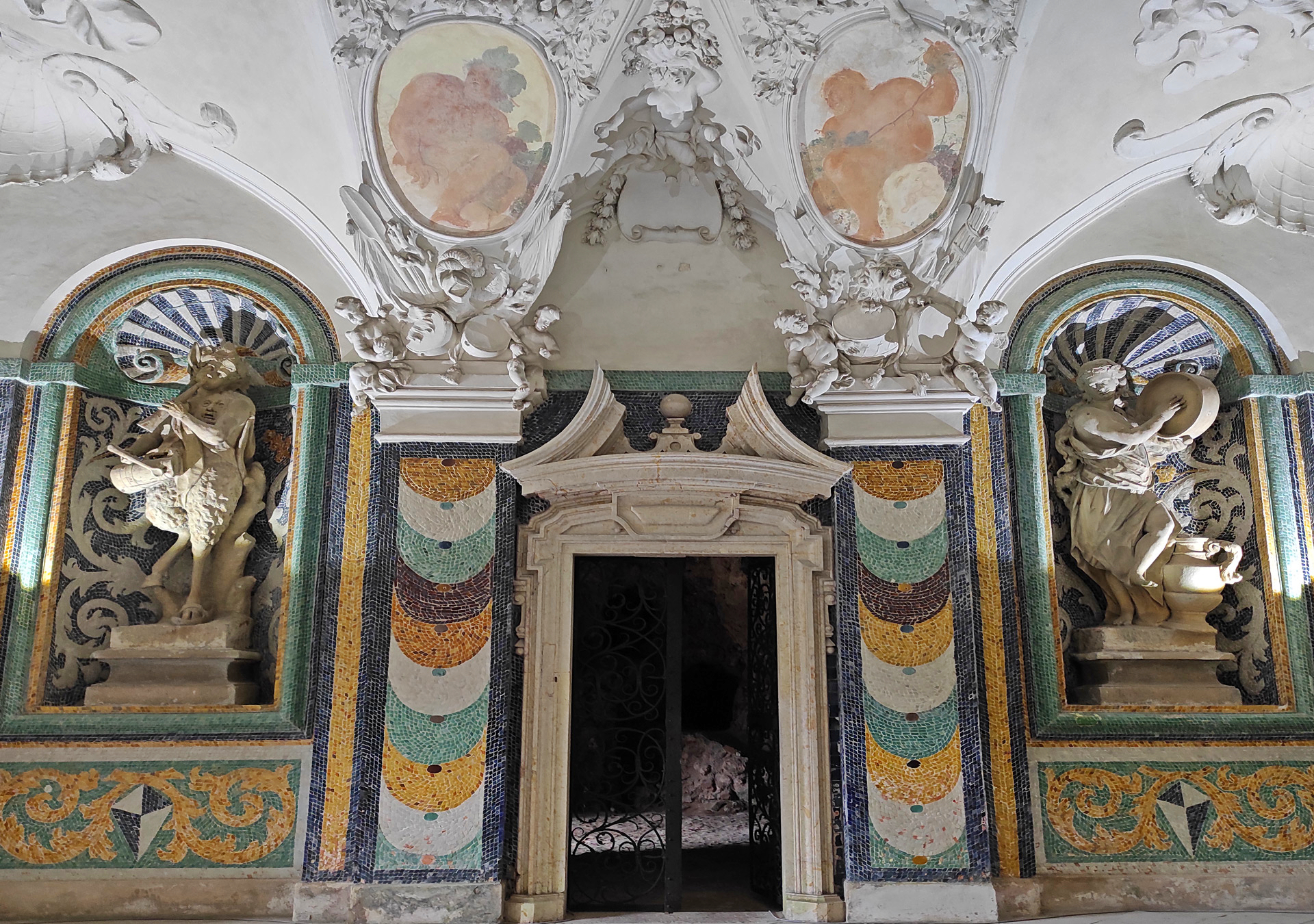
Along the sides of the halls, we enjoyed the mysterious atmosphere of two artificial caves (so-called grottos). The fountain in Apollo's grotto is inspired by the water fountain located in Hellbrunn Palace in Austria. The Bishop of Olomouc was intimately familiar with the residence of the Salzburg archbishops, and so, enchanted by the palace, he had this magical piece built at home as well.
-
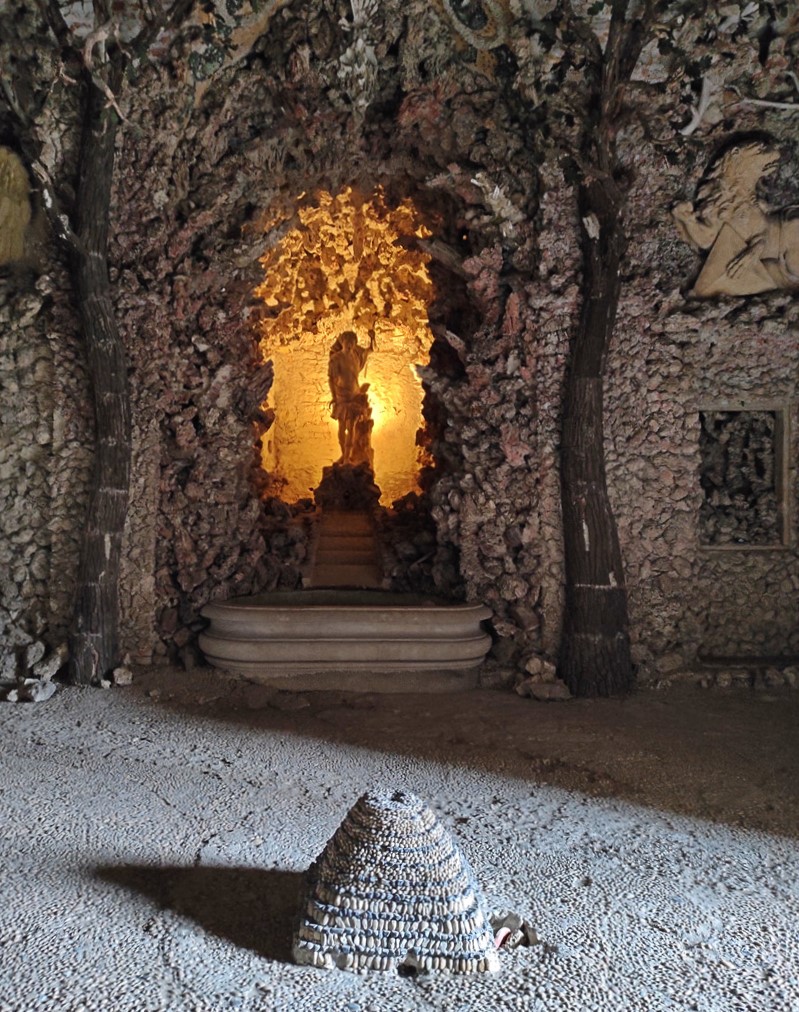
- Apollo's grotto
-
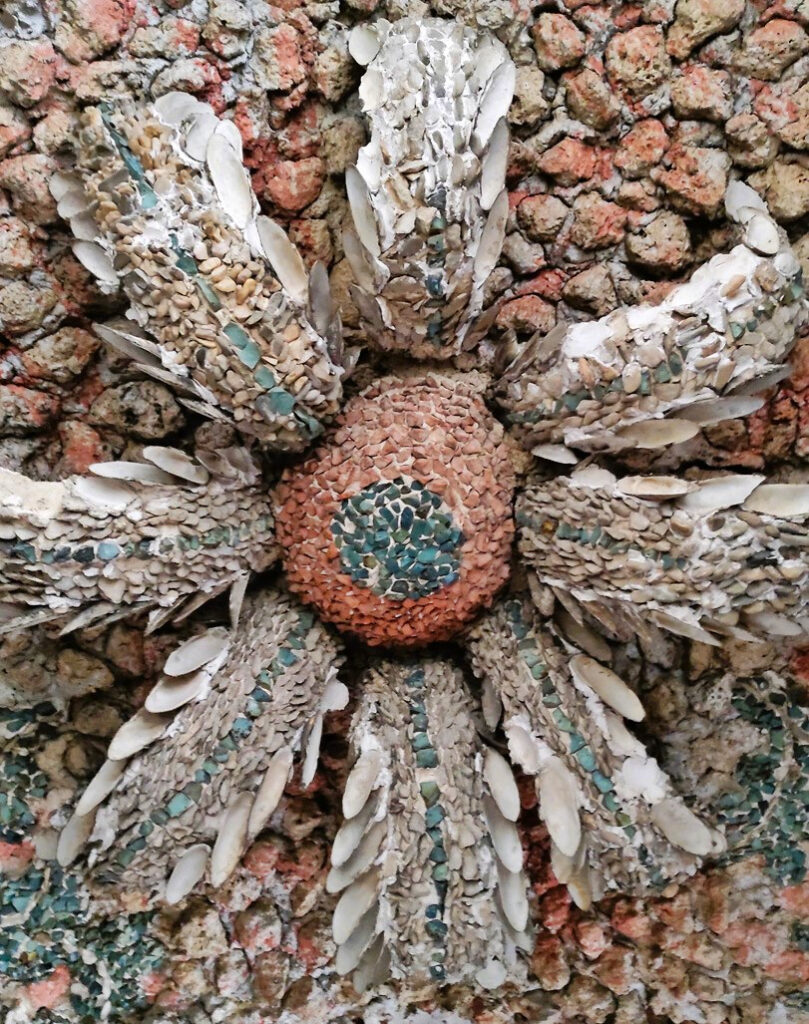
- Apollo's grotto
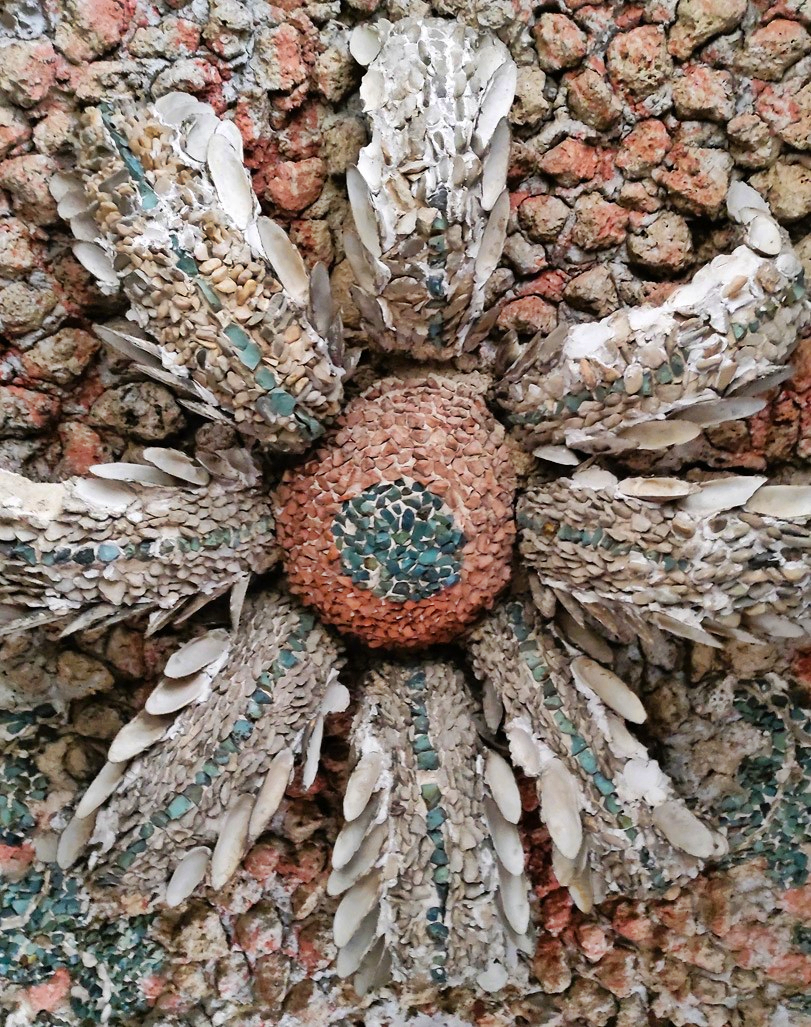
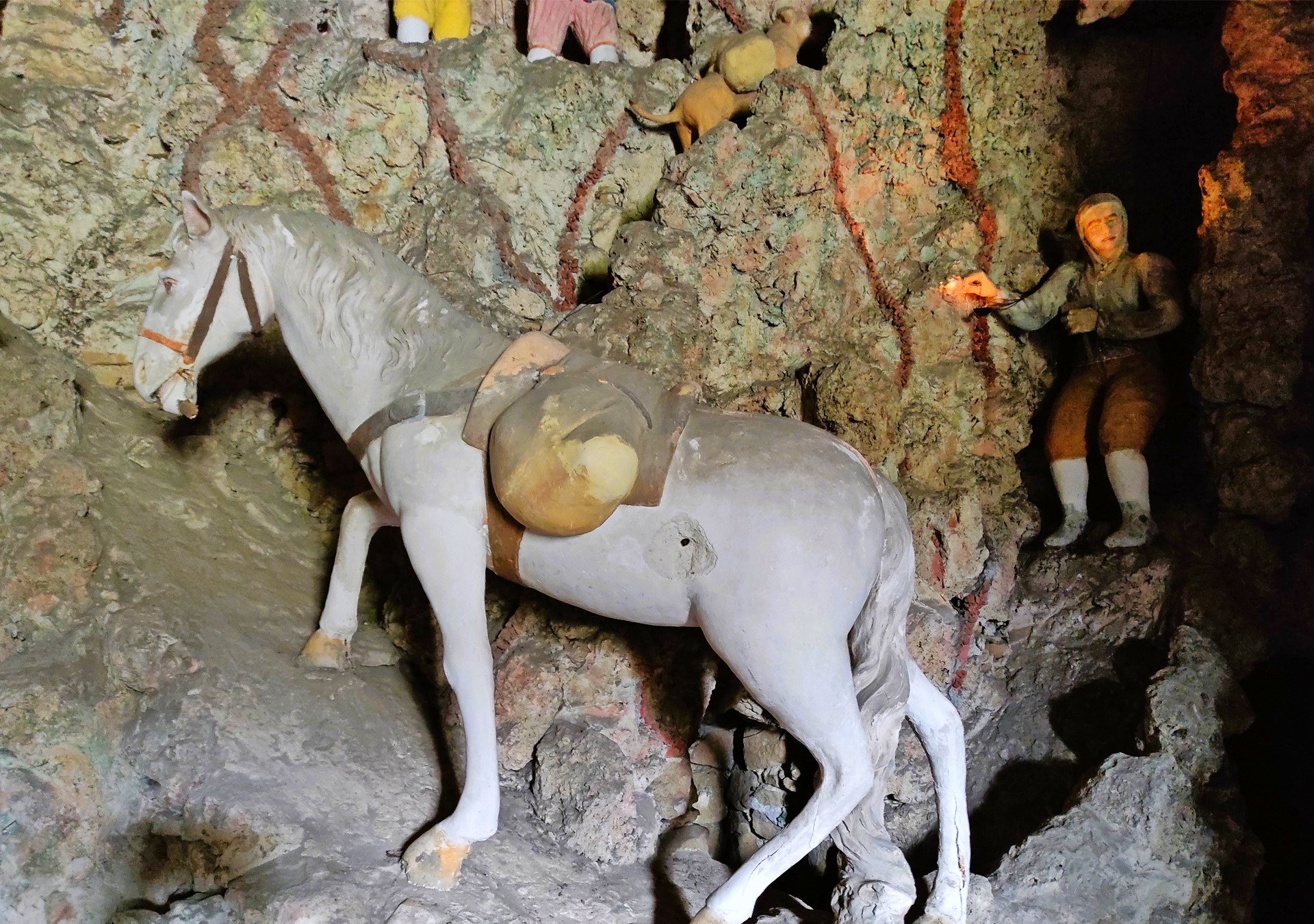
The second, known as the Mining grotto, depicts the interior of an ore mine. You can probably guess why. Of course, it was a very popular topic at the time—the extraction of precious metals. However, the grotto presents a rather romanticized view of the environment of the mines of that time.
-
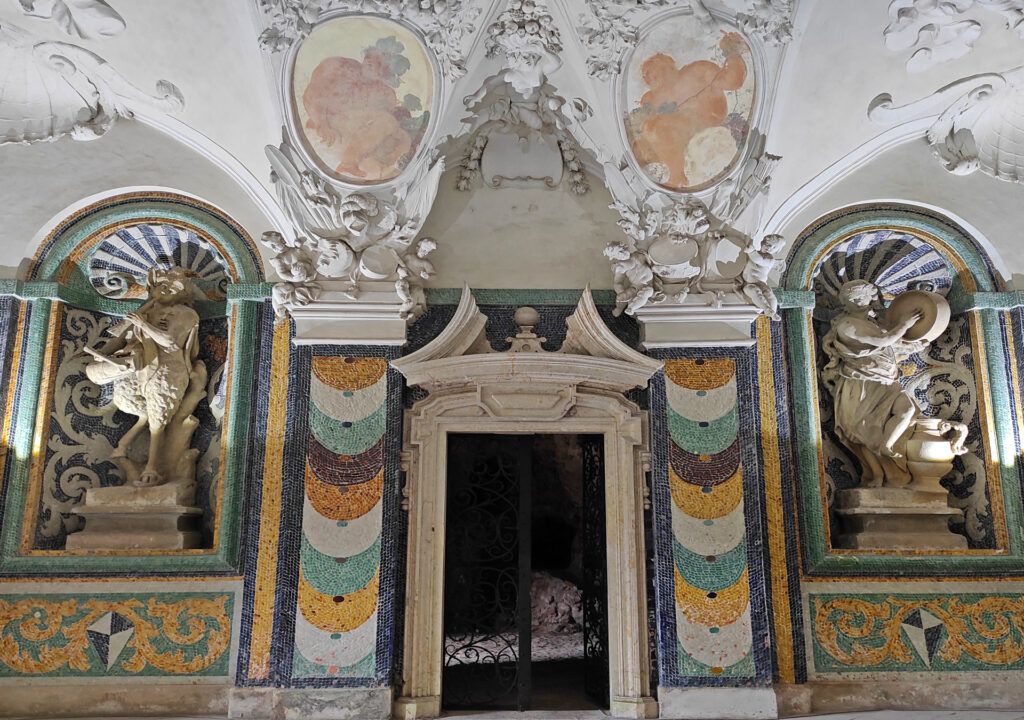
- Entrance to the Mining grotto
-
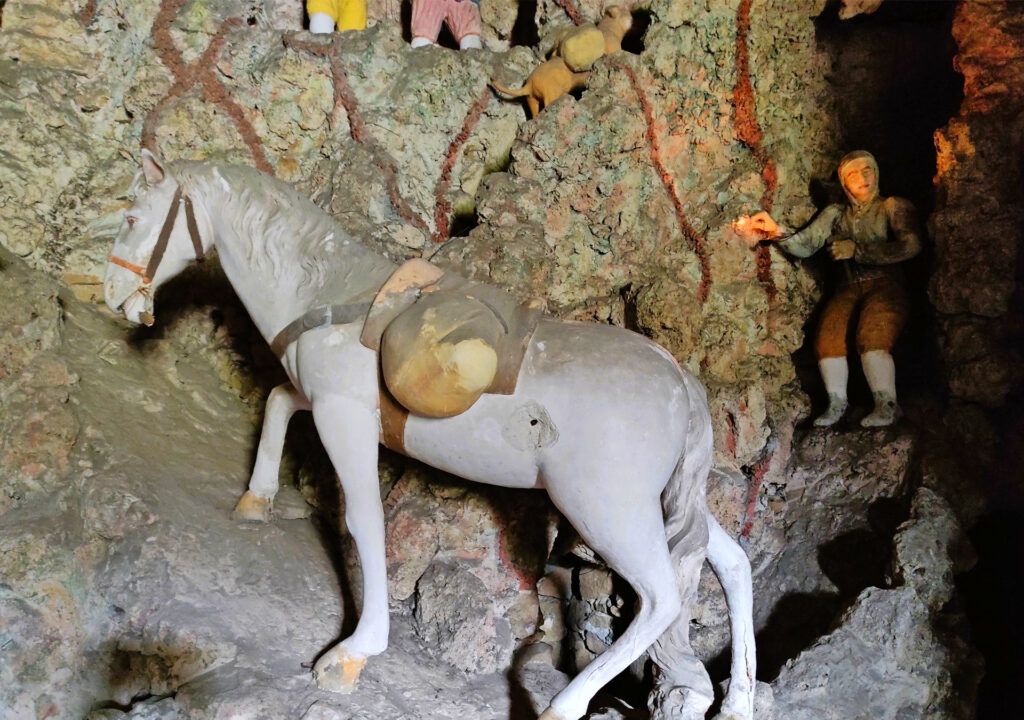
- Mining grotto
Sightseeing tour Representation halls
The basic tour showed us the representative rooms on the first floor and the private apartments of the archbishop. The individual halls are part of a carefully designed path (the so-called Triumphal Way) conceived on the basis of various stories from Ovid's Metamorphoses.
Metamorphoses is a collection of epic poems and represents the author’s most valuable work. Perhaps partly because, in despair and anger upon leaving Rome, Ovid destroyed his original manuscript. Fortunately, there were copies in the possession of Ovid's friends, and as a result the Metamorphoses have survived. The author tells captivating stories of eternal transformations of people, gods, and things—mostly triggered by love, which also serves as the driving force behind each tale.
Thus, the journey through the chateau complex represents a kind of dialogue between art and nature, between permanence and transformation, and between the divine and the secular principles.
The interiors of some rooms were, on the contrary, inspired by significant royal visits. Among them is the Hunting Hall, which was romantically adapted for the visit of Russian Tsar Alexander III and Austrian Emperor Franz Joseph I, whose meeting took place at Kroměříž chateau in 1885. The hall is dominated by a Russian billiard table, which Tsar Alexander III brought here as a gift.
In the Tsar’s Salon, used by the tsar for audiences, a life-sized portrait of the tsar remains as a memento, along with portraits of Franz Joseph I and his wife, Empress Elisabeth, known as Sissi.
The largest room is the Assembly Hall, which is the second-largest ceremonial space in the Czech Republic, right after the Vladislav Hall at Prague Castle. In 1848–1849, the Constituent Imperial Diet of the Habsburg Monarchy even held sessions here after relocating from Vienna, where a revolutionary movement—rooted in dissatisfaction with feudalism—was taking place at the time.
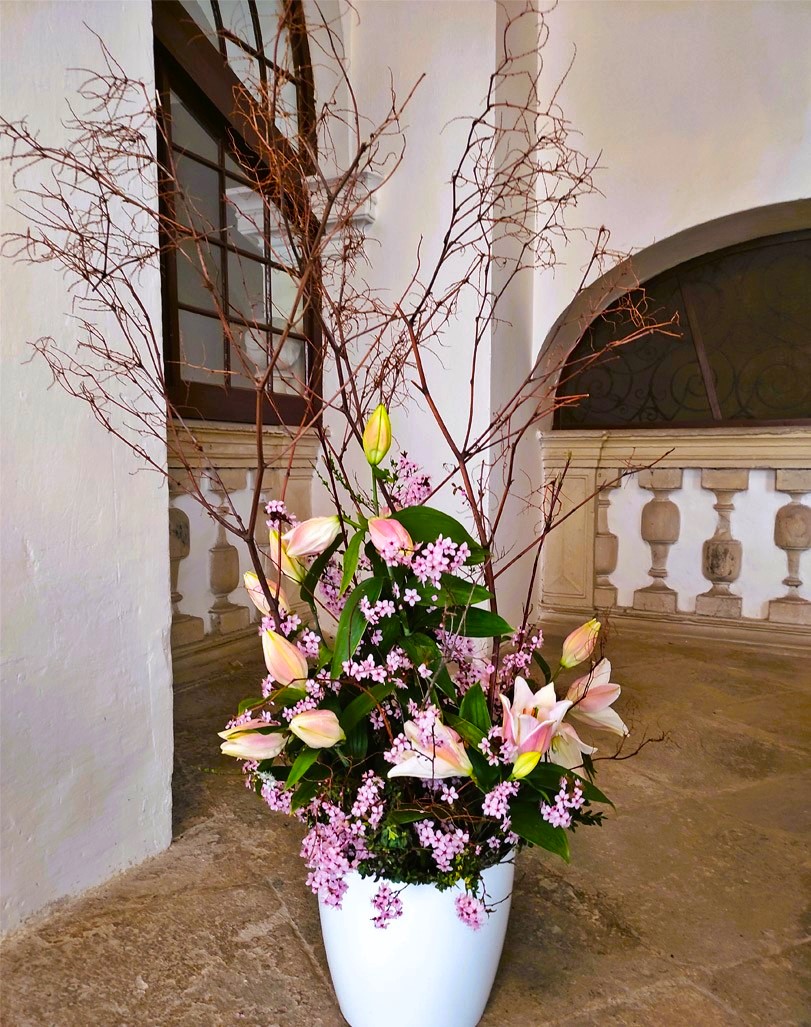
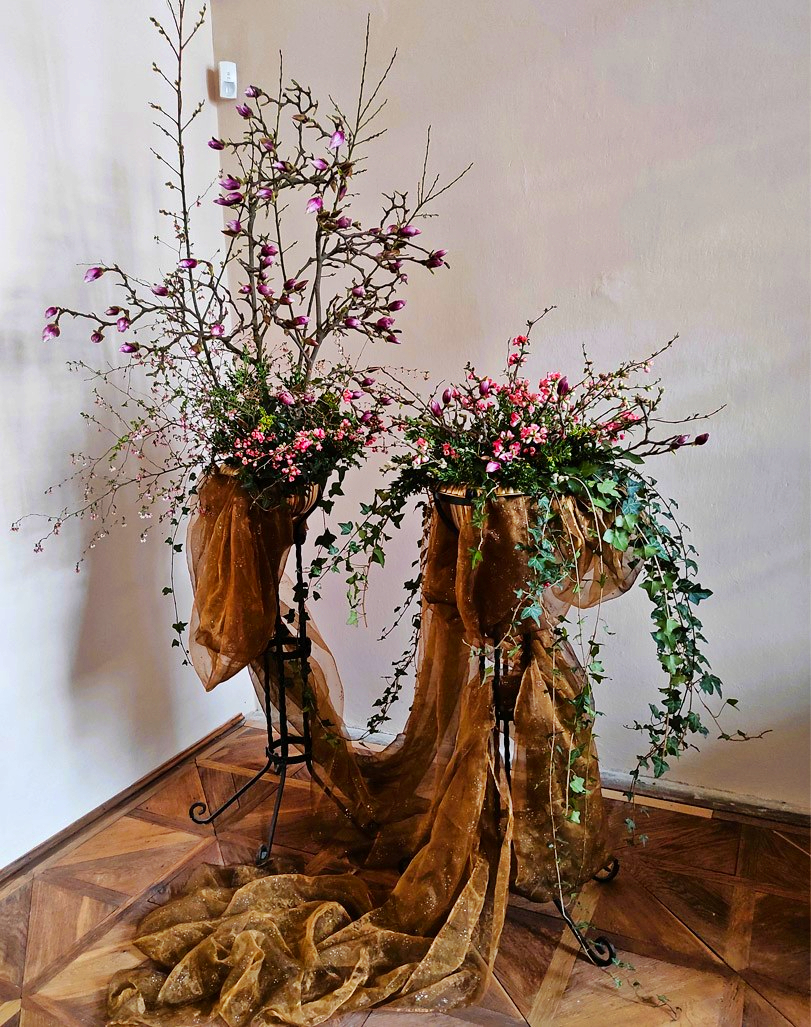
The excellent tour was further enhanced by spring floral decorations, which we were exceptionally allowed to photograph. Under normal circumstances, photography is not permitted inside the chateau.
-
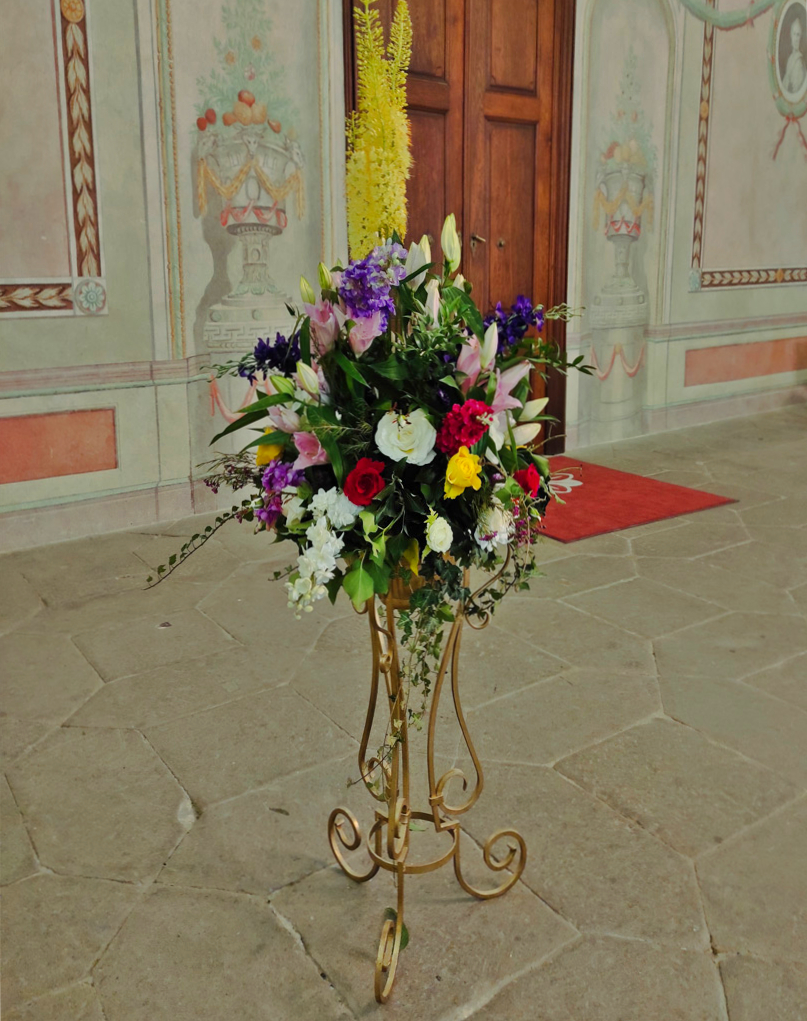
- Spring floral decoration
-
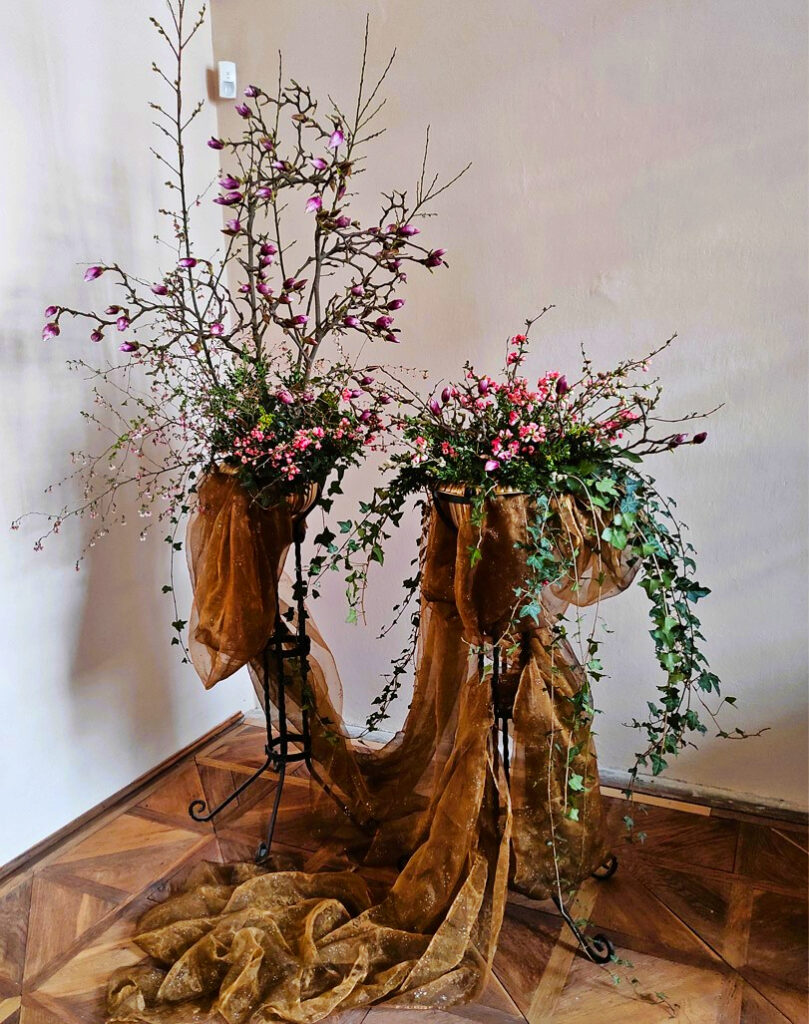
- Spring floral decoration
Sightseeing tour Chateau tower
The massive prism-shaped tower, standing 84 meters tall, dominates the entire town of Kroměříž and represents the oldest remnant of the former bishop's castle. To this day, visitors can see a gothic entrance portal with a cut-out for a drawbridge on the ground floor of the tower.
-
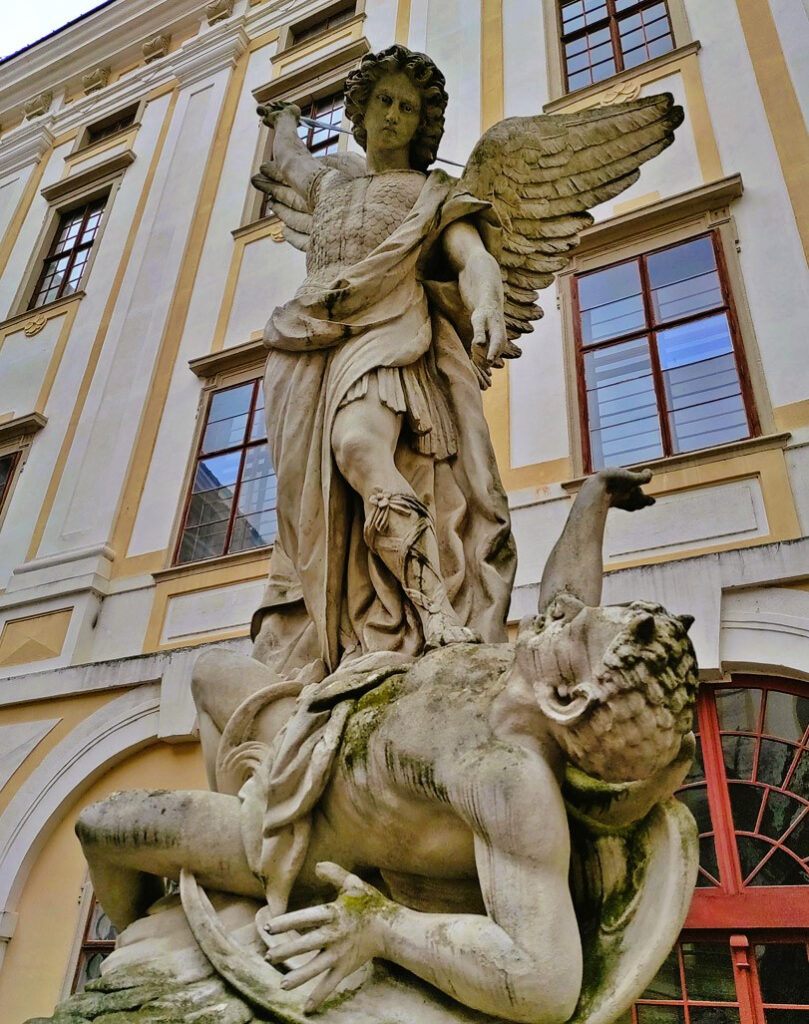
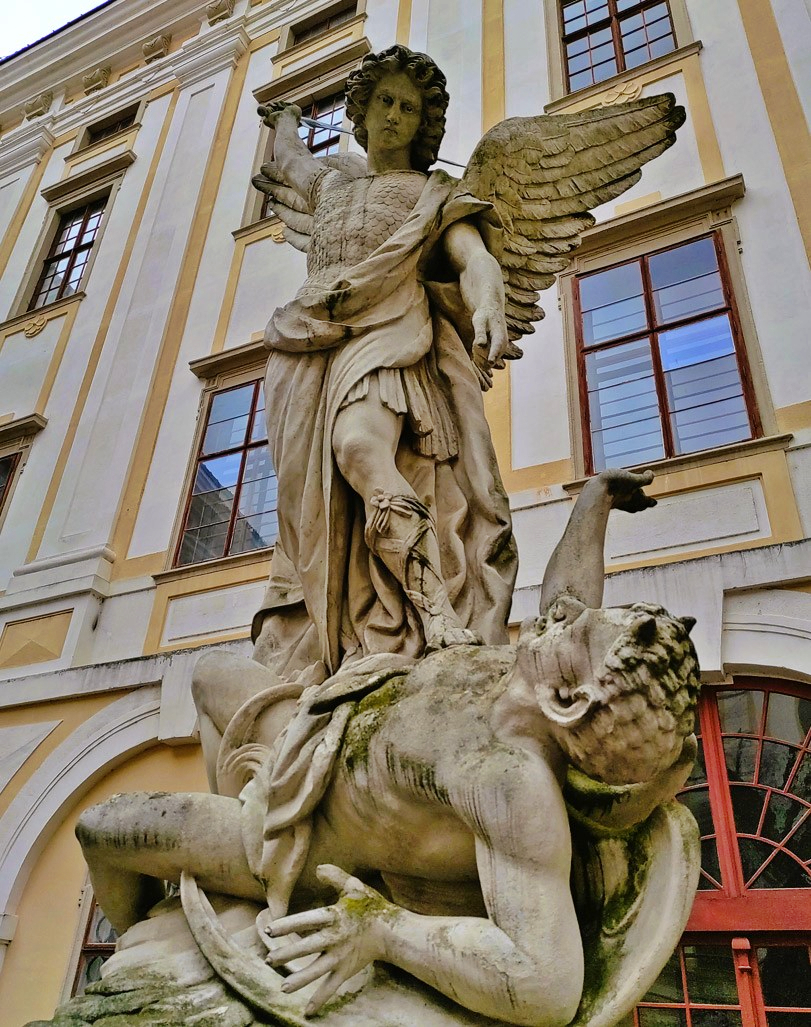
- Guardian angel in the courtyard
-
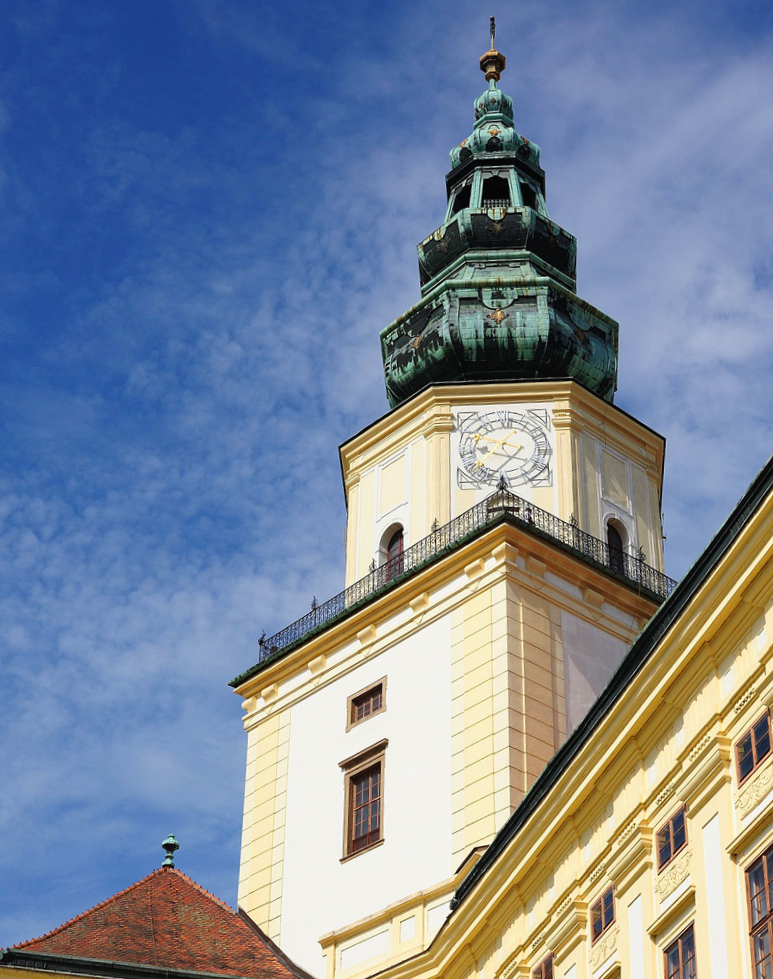
- Chateau tower
However, the tower itself was damaged several times—both during the Thirty Years' War under Swedish occupation and after 1945, when it was set on fire by retreating German troops. They had attempted to shoot down the Czechoslovak flag mounted on the chateau tower with a grenade. After the war, the tower was reconstructed using, among other materials, larch wood from the archbishop's forests and 4 kg of gold, which was used to gild its shining dome.
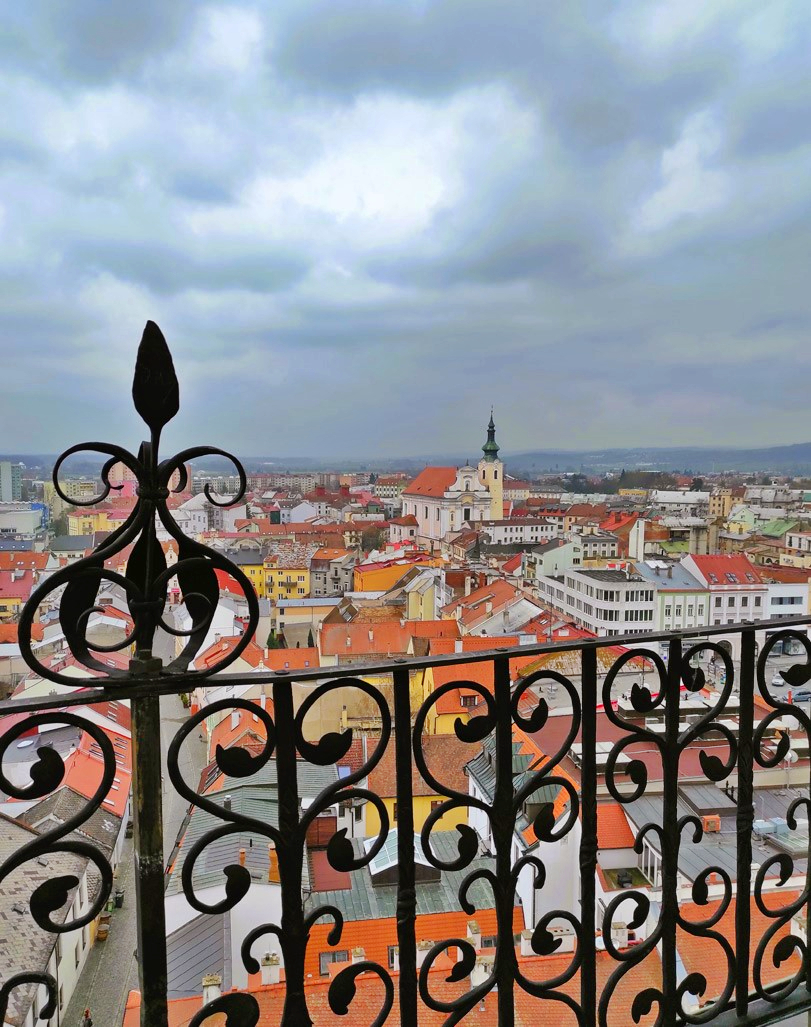
A total of 206 steps lead to the gallery, but the panoramic view of the entire town and the distant surroundings is well worth the climb. In favourable weather, there is also a beautiful view of the Jeseníky Mountains, the Javorníky Mountains and the Chřiby Mountains.
Useful tip:
We bought the tower ticket cheaper as part of the so-called "Via Residentia" sightseeing tour, which combines a visit to the representative rooms and the tower.
-
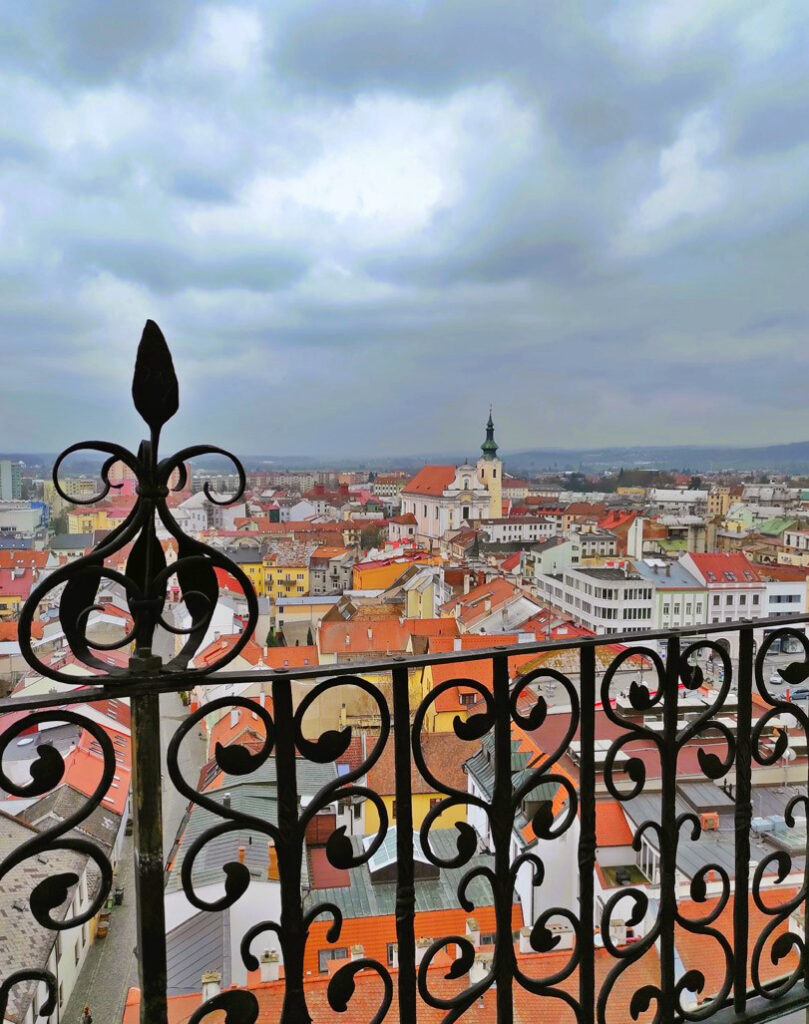
- View from the chateau tower
-
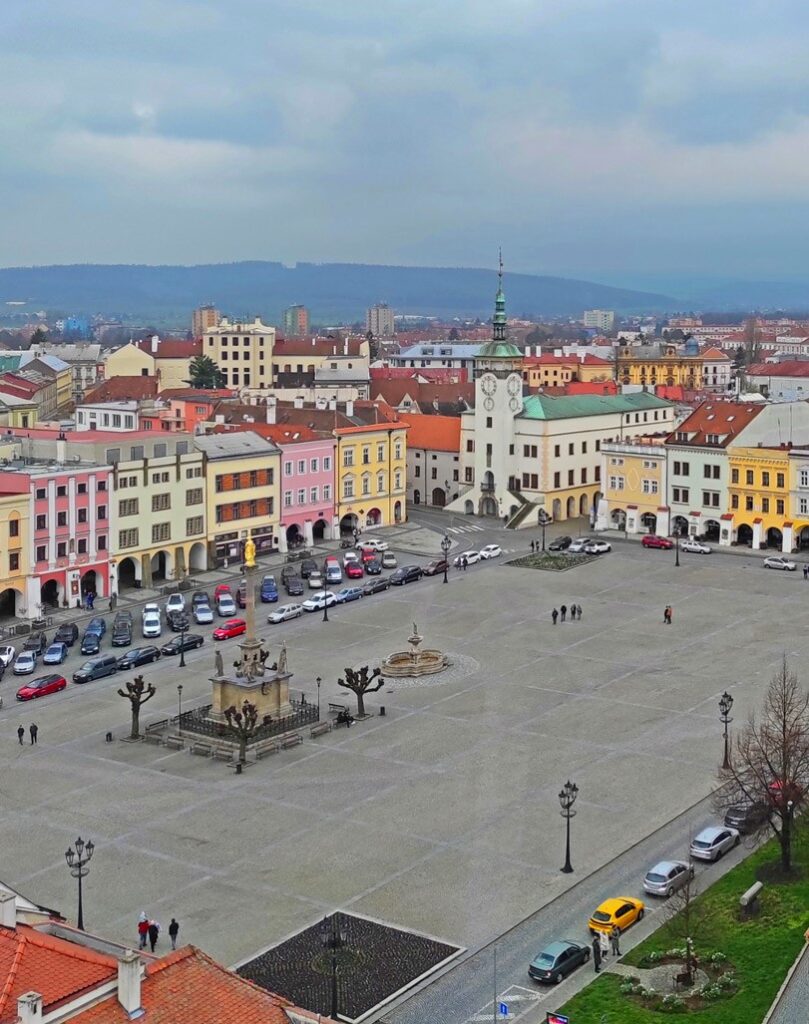
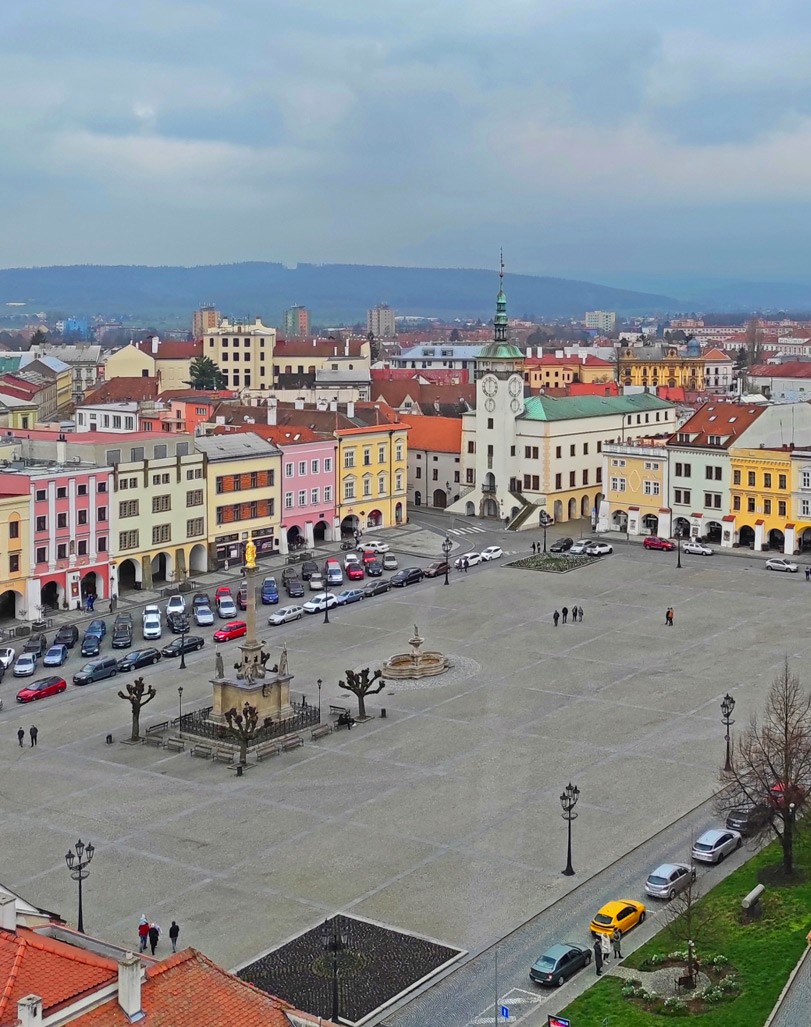
- View of the Main Square
Sightseeing tour Chateau picture gallery
As art lovers, we were thrilled by part of the Olomouc Archdiocese’s painting collection, which—after the National Gallery in Prague—is the largest collection of Central European paintings in the Czech Republic, spanning from the early 15th to the late 18th century.
The chateau gallery houses 85 original works, the most valuable of which is a painting by the Venetian artist Tiziano Vecellio, titled Apollo and Marsyas. This masterpiece has been exhibited in cities like Paris, London, Washington, and others. However, we were also enchanted by other stunning works by van Dyck, Brueghel the Elder and others.
Right before entering the gallery, visitors are greeted by a striking postmodern pietà by artist Michal Ožibko.
Our tip:
If you decide like we did and take a tour of the entire chateau from the basement to the tower, you'll definitely want to take a break and soak up the experience. We stopped for some great garlic soup and pizza at the restaurant U Zeleného stromu, which is located a few steps from the chateau.
Address: Velké náměstí 47/39, Kroměříž
Parking:
The chateau does not have its own parking lot, but you can easily park directly on the Main Square (Velké náměstí) or in the surrounding streets.