




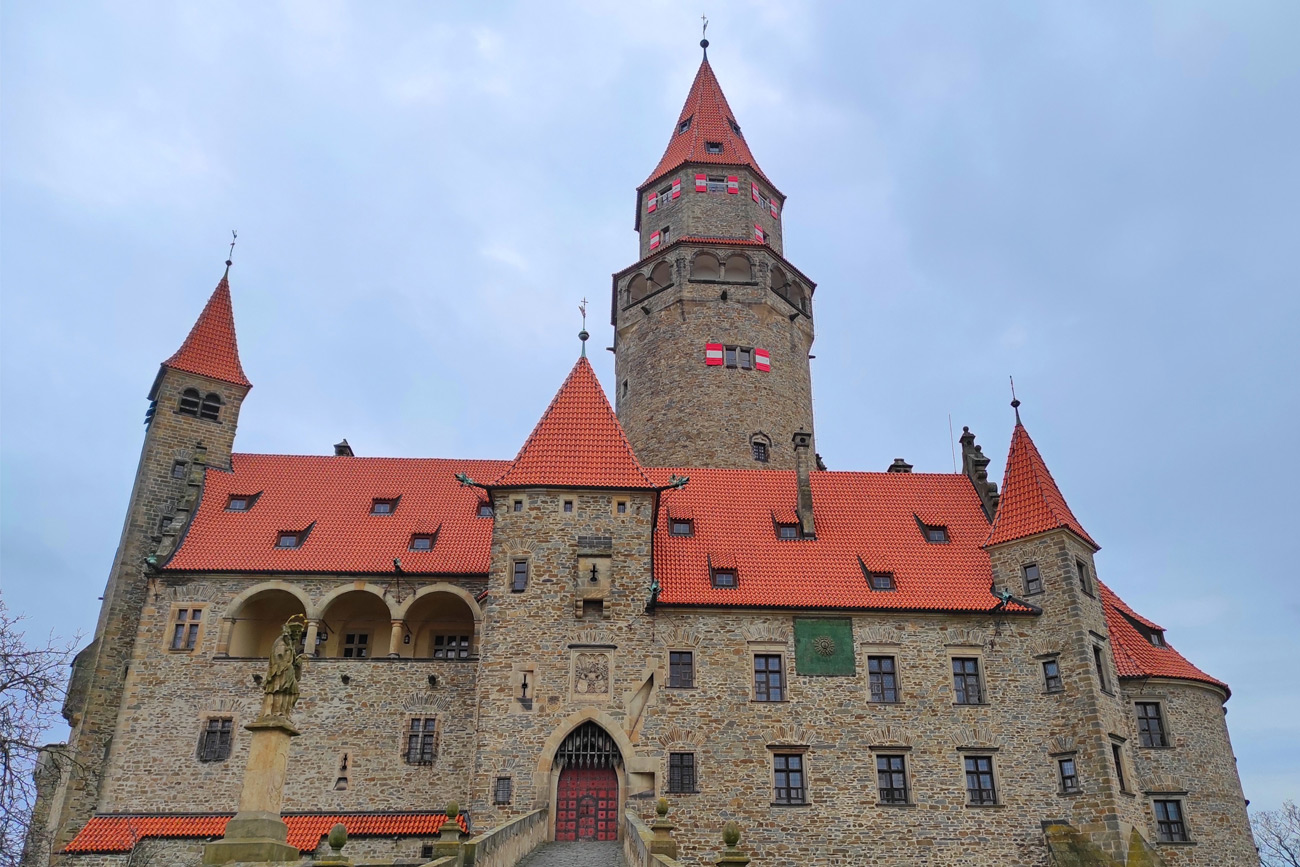
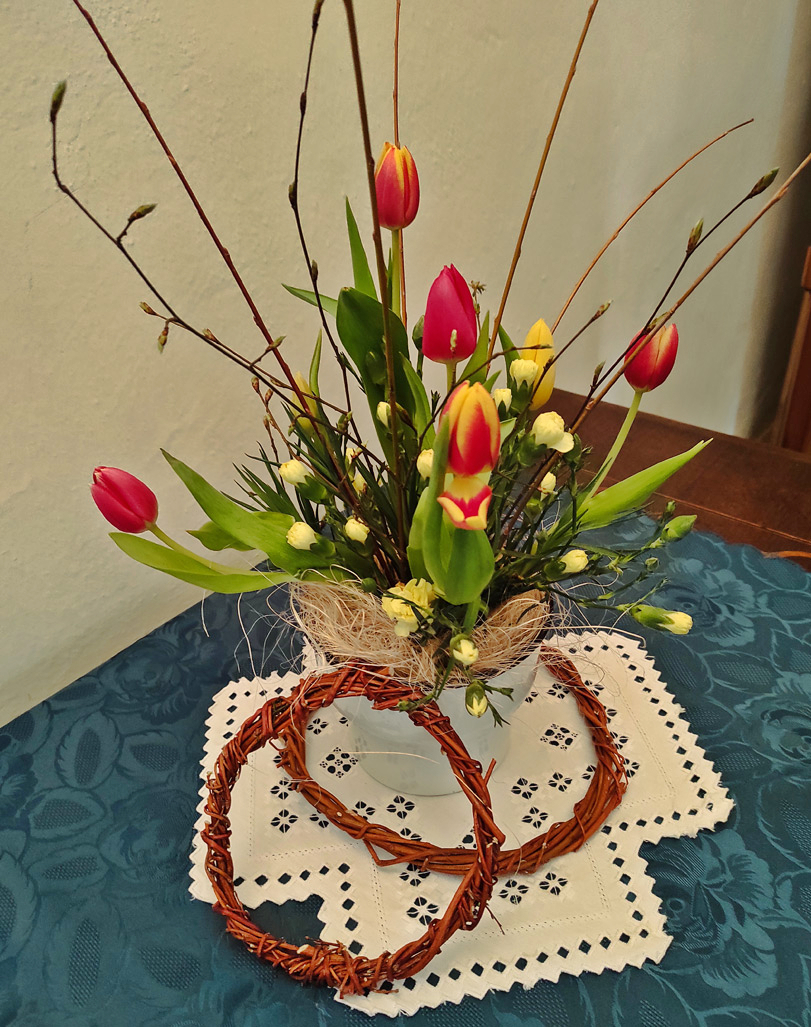
Traveling for history and romance in Moravia has a clear name – Bouzov Castle. This majestic gem, towering on a forested hill, welcomed us not only with its grandeur but also with colourful Easter decorations and the aroma of traditional holiday treats.
To begin with, it’s worth mentioning that this magical castle, whose main tower soars into the clouds, is a popular location for filmmakers who have shot many fairy tales and historical films here. Perhaps the most famous works include the fairy tale of Princess Jasněnka and the Flying Shoemaker, Princess Fantaghiro and The Princess Cursed in Time.
-
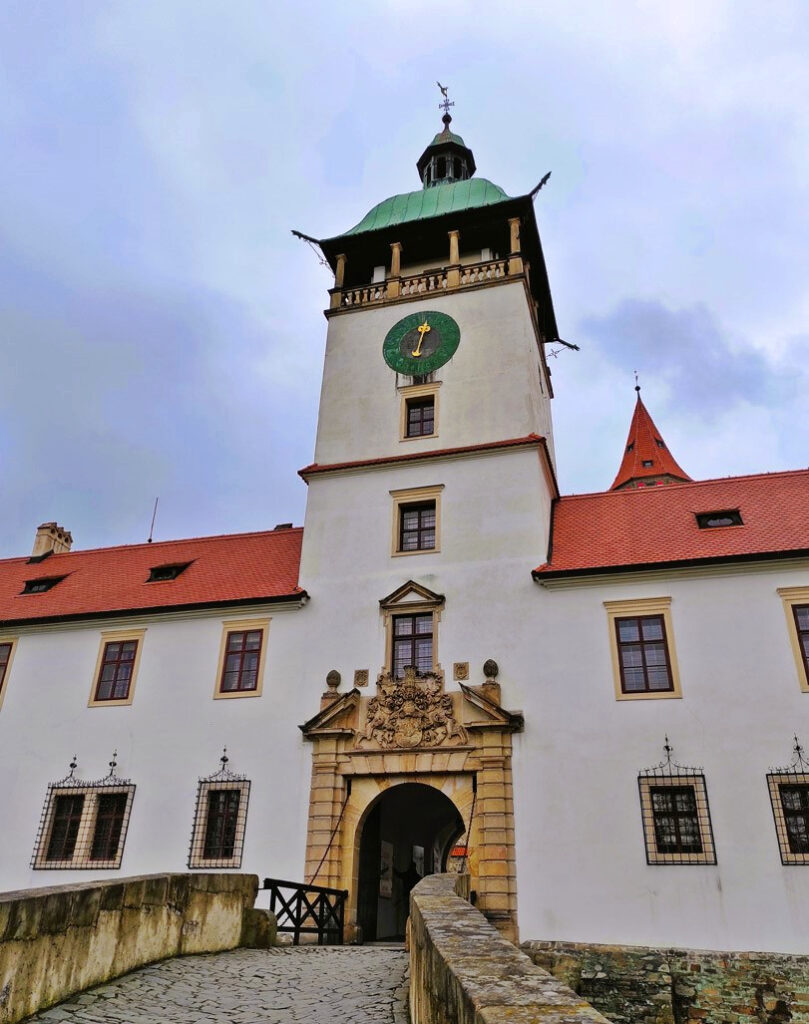
- Entrance to the outer courtyard

-
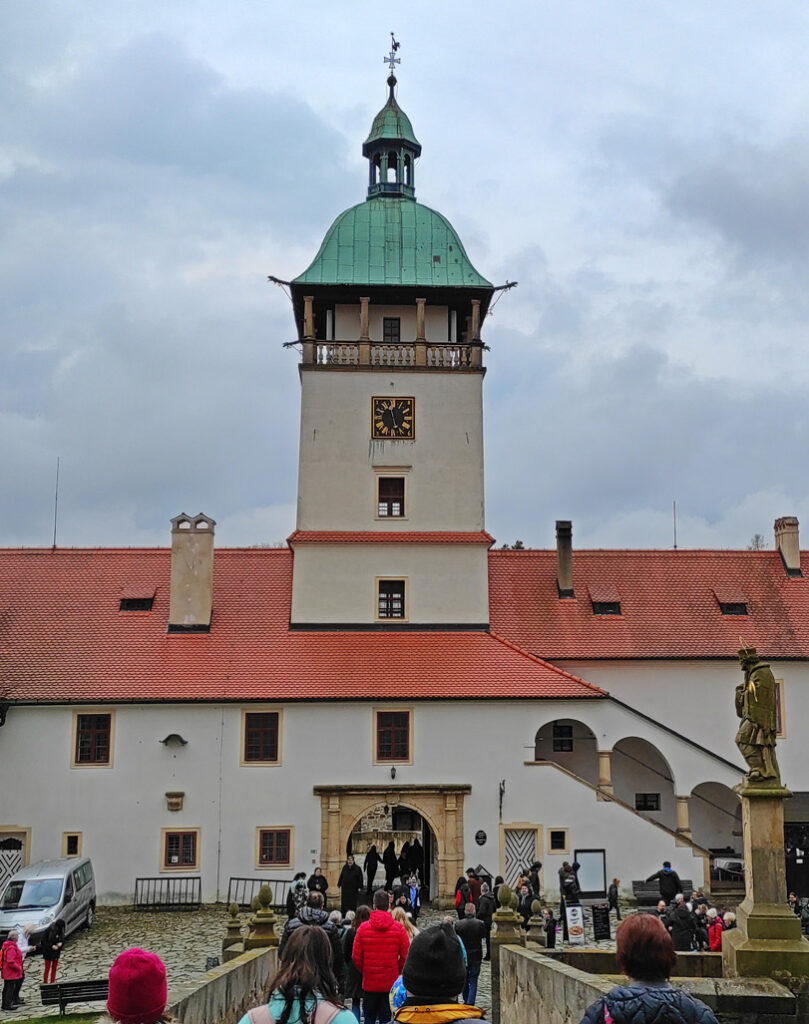
- Outer courtyard with a forward tower

This majestic castle was founded at the turn of the 13th and 14th centuries, but its current appearance as a typical romantic residence was only shaped by an extensive reconstruction at the turn of the 18th and 19th centuries, organized by the highest representative of the Order of Teutonic Knights, Eugene of Habsburg.
Grand Master Eugene of Habsburg was highly educated in history and admired monuments. It is to him that we owe the opportunity today to walk through the rooms and corners of this perfect neo-Gothic castle, which served primarily for ceremonial occasions and the preservation of art collections.
The most important owner of the castle is also commemorated by a coat of arms above the entrance gate, on which an angel holds the coat of arms of the Teutonic Knights in his left hand.
The castle offers several tour routes. We were tempted by the grand sightseeing circuit and the climb up the Hláska watchtower. This historic mansion offers, among other things, a sightseeing circuit designed for the youngest visitors.
Address: Bouzov 8
Tour Route "Bouzov Castle"
This extensive tour route introduced us to the representative and residential areas, which boast custom-made furniture, wooden panelling on the ceilings and walls, and antique objects that were purchased or brought from other estates.
-
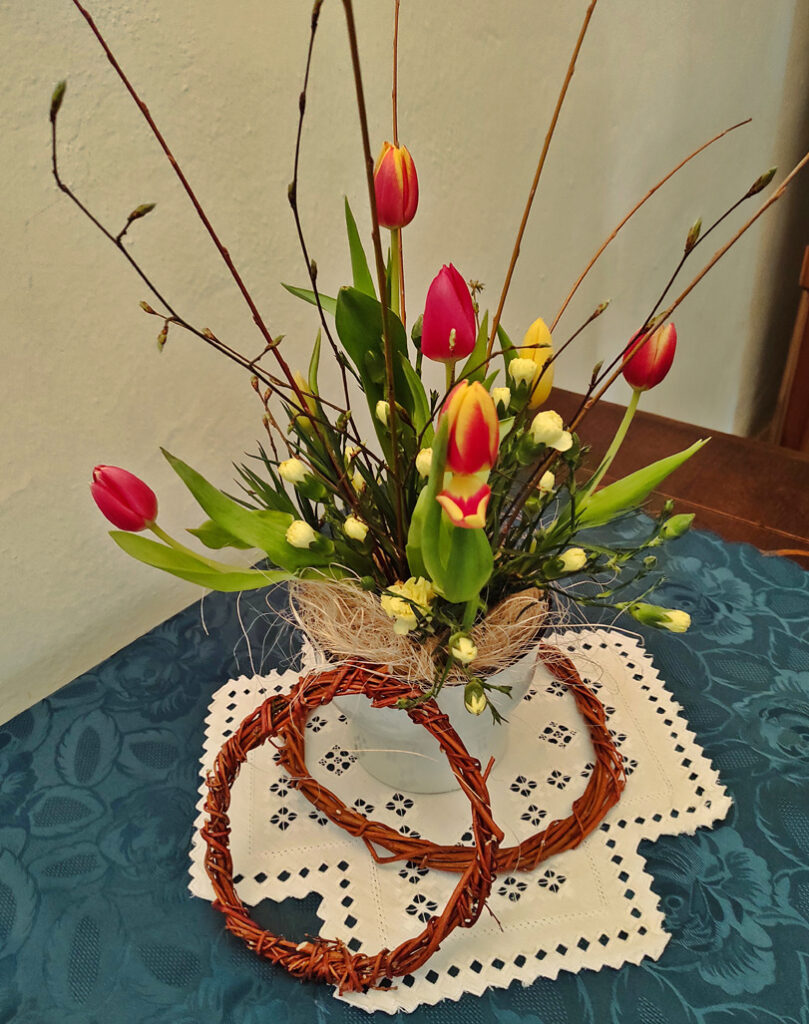
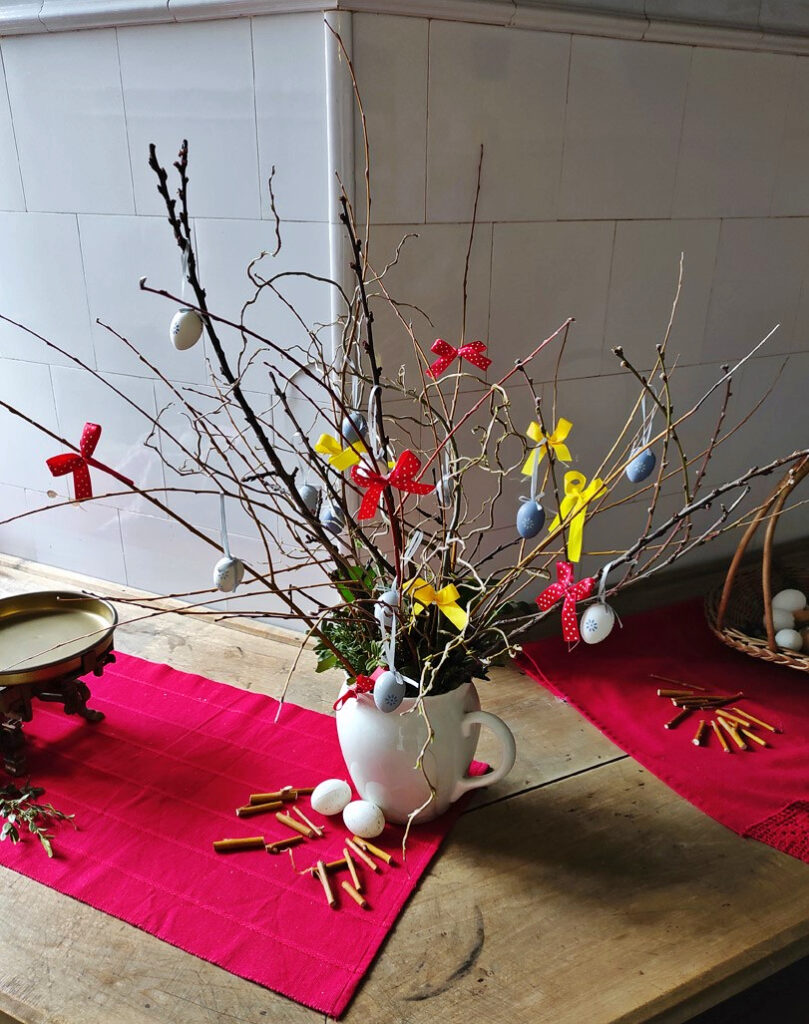
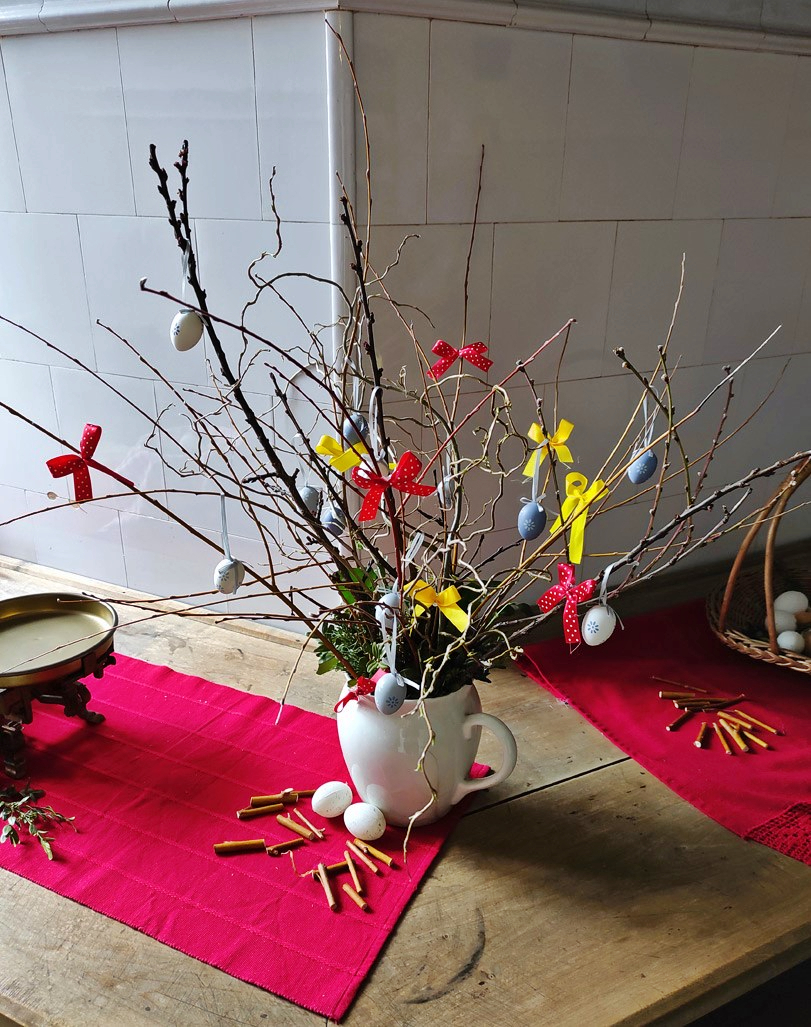
- Easter interior decorations
-
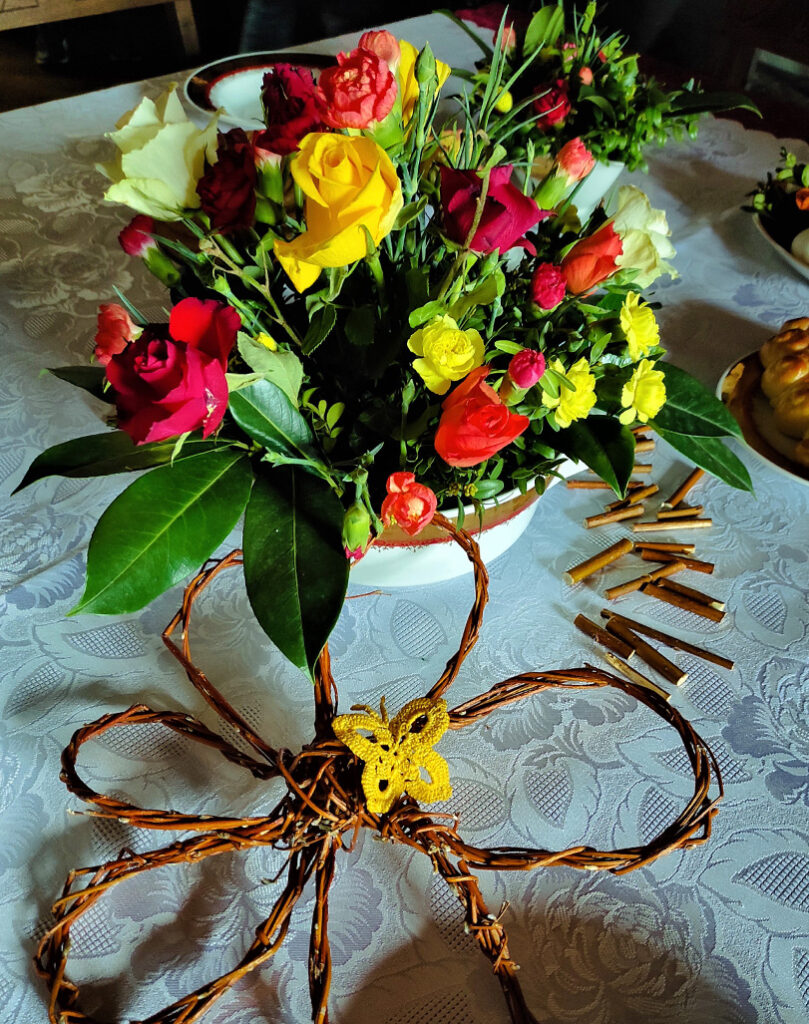
- Table with spring decoration
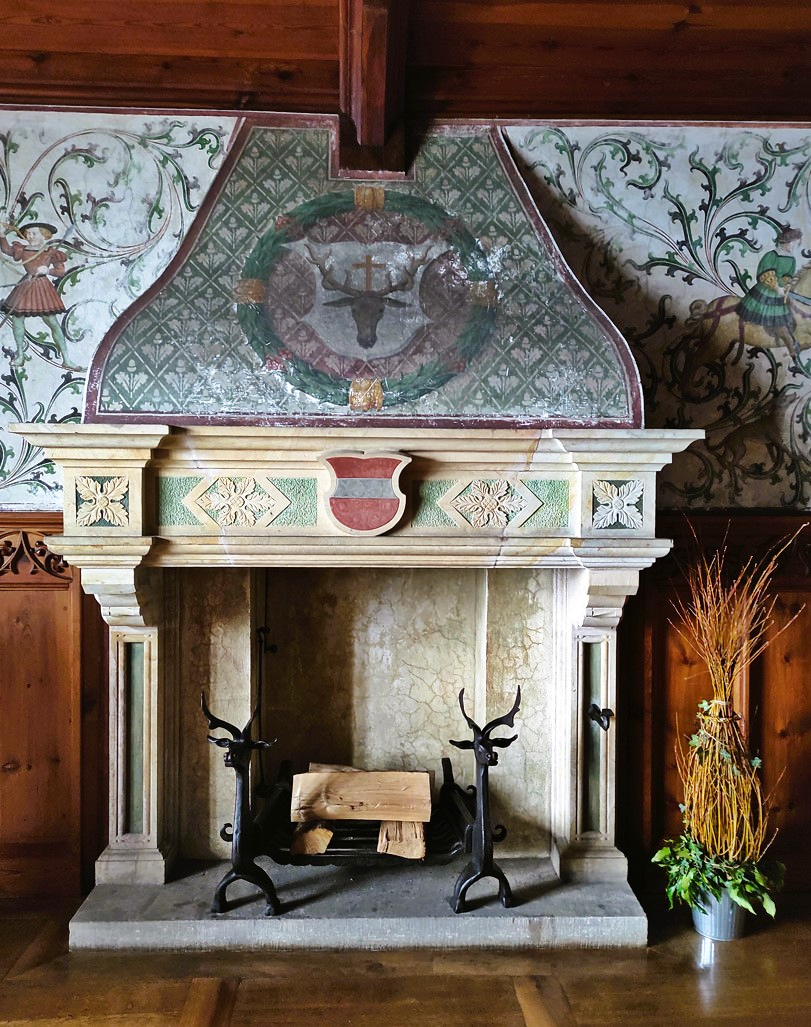
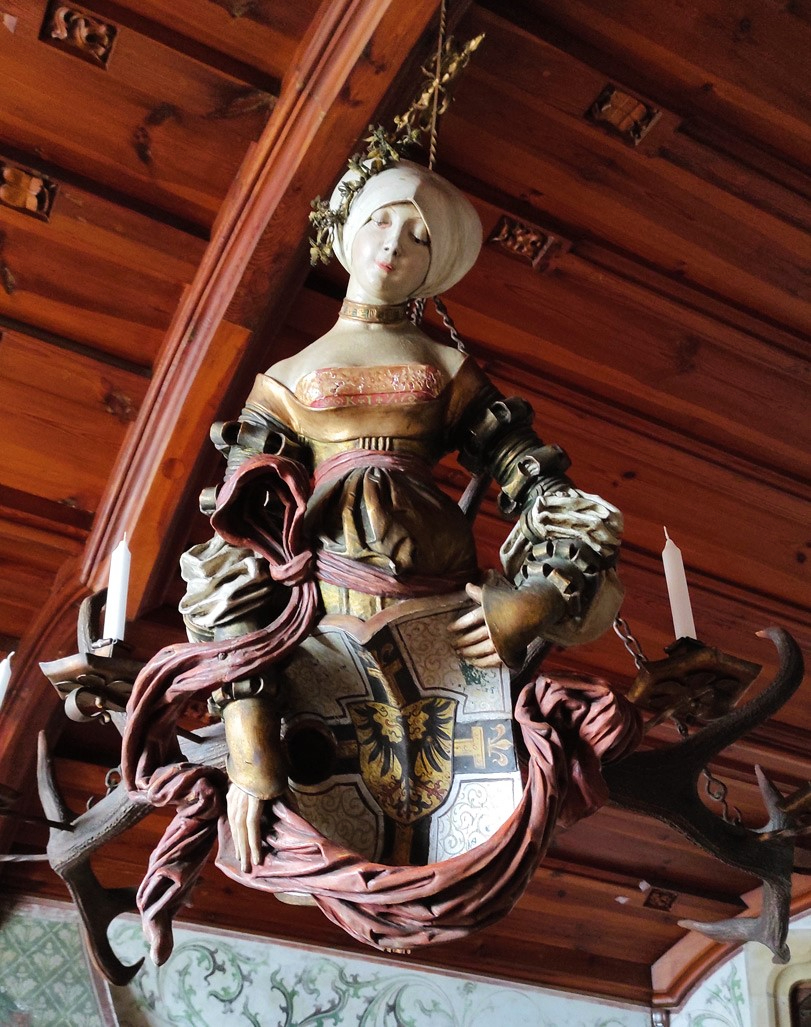
Among the most beautiful rooms is undoubtedly the Hunting Hall, featuring wall paintings depicting forest animals, figures of hunters and hunting dogs. The atmosphere of the hall is enhanced by a chandelier made of deer antlers, nicknamed "Světluška" (Firefly), symbolizing a young girl.
-
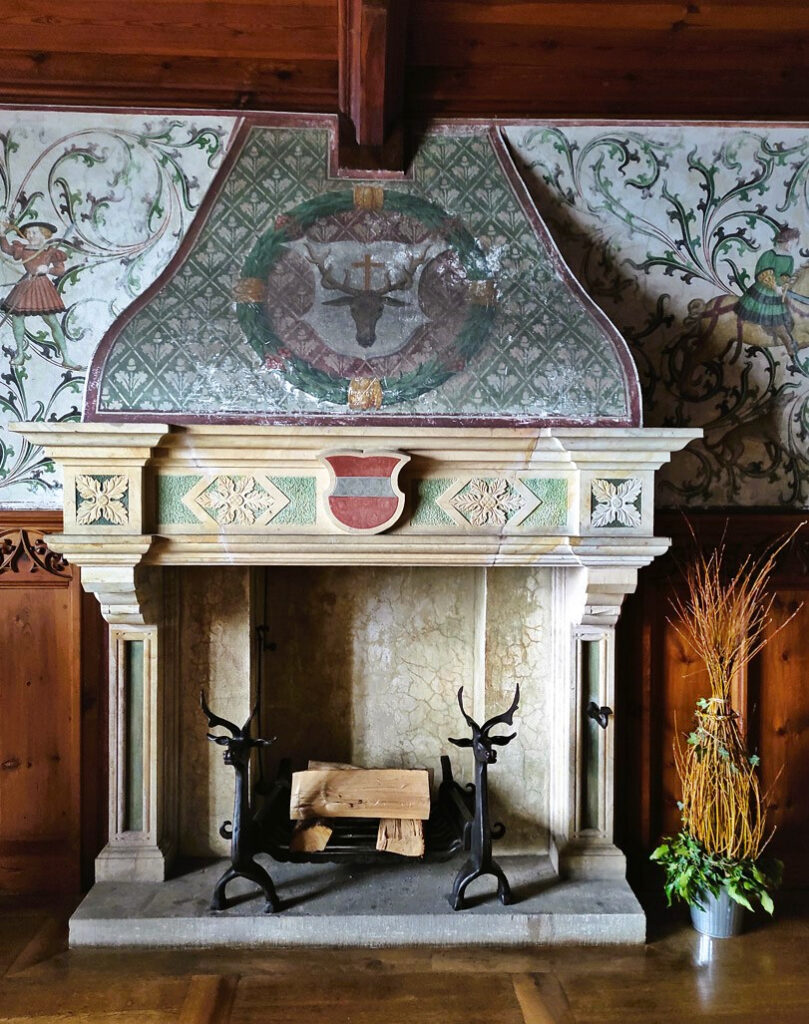
- Fireplace in the Hunting Hall
-
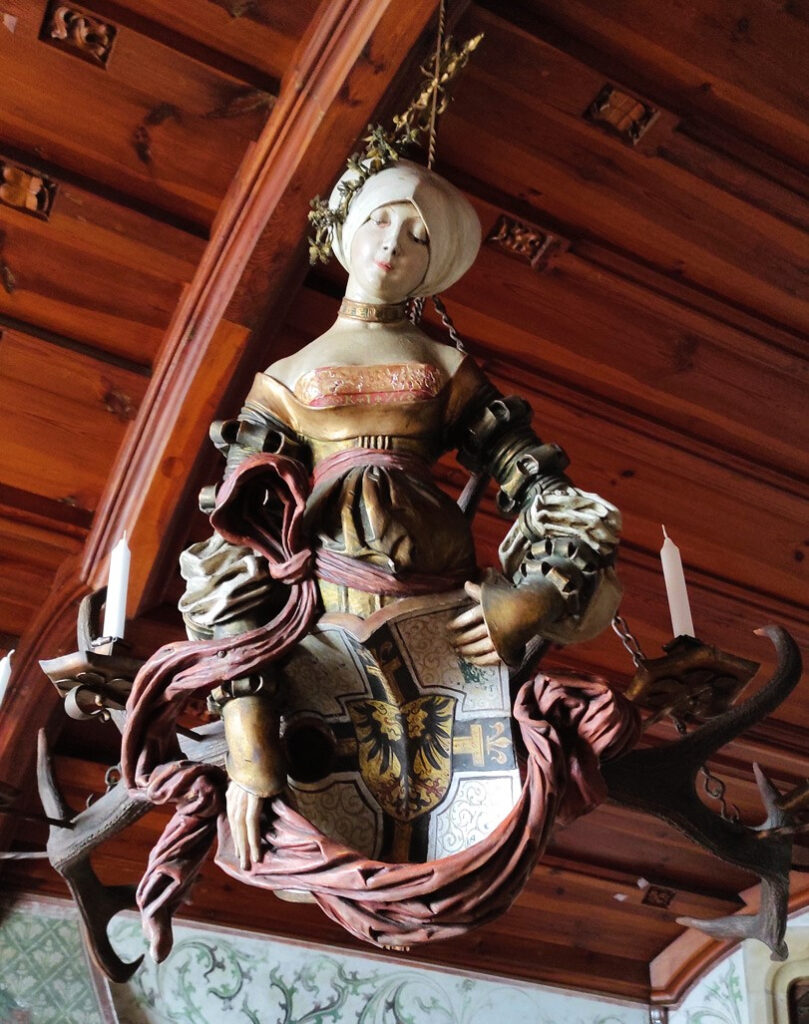
- "Světluška" (Firefly)
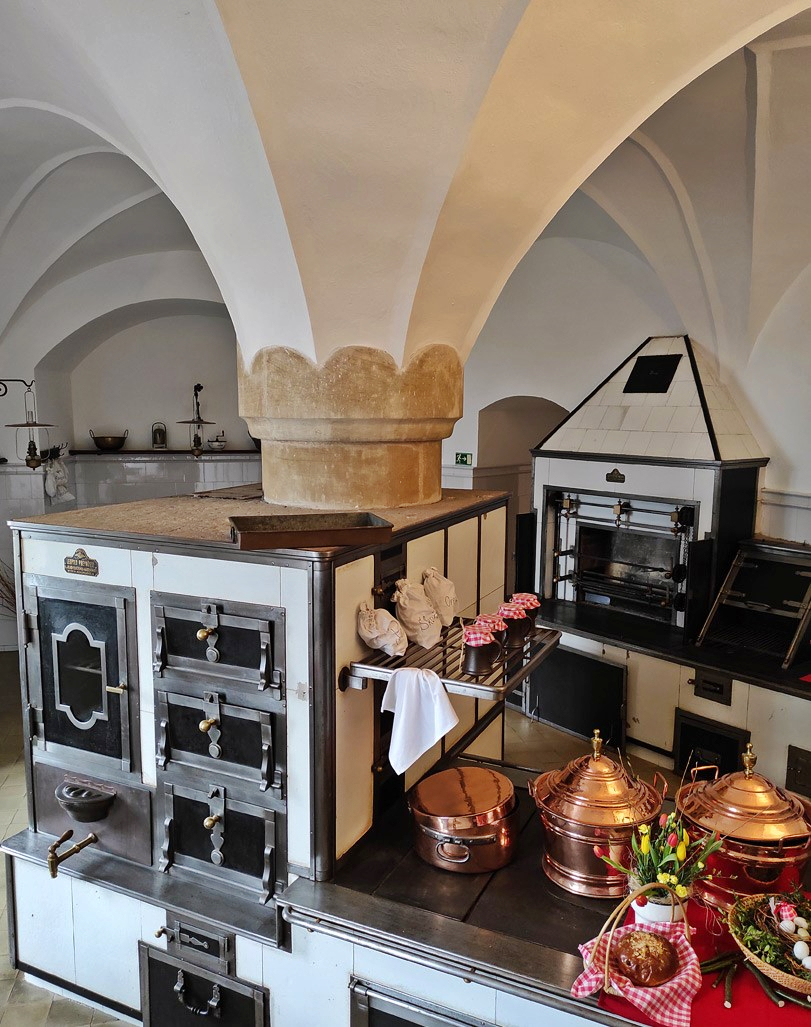
If you set out to explore the beauties of this castle like we did, you might be surprised by the modern kitchen. And how is that possible?
Grand Master Eugene had the castle rebuilt in the style of a medieval fortress, but the work was carried out at a time when the first motor cars were being developed and electric light bulbs were in use. So, the castle also features hot-air heating or water pipeline.
-
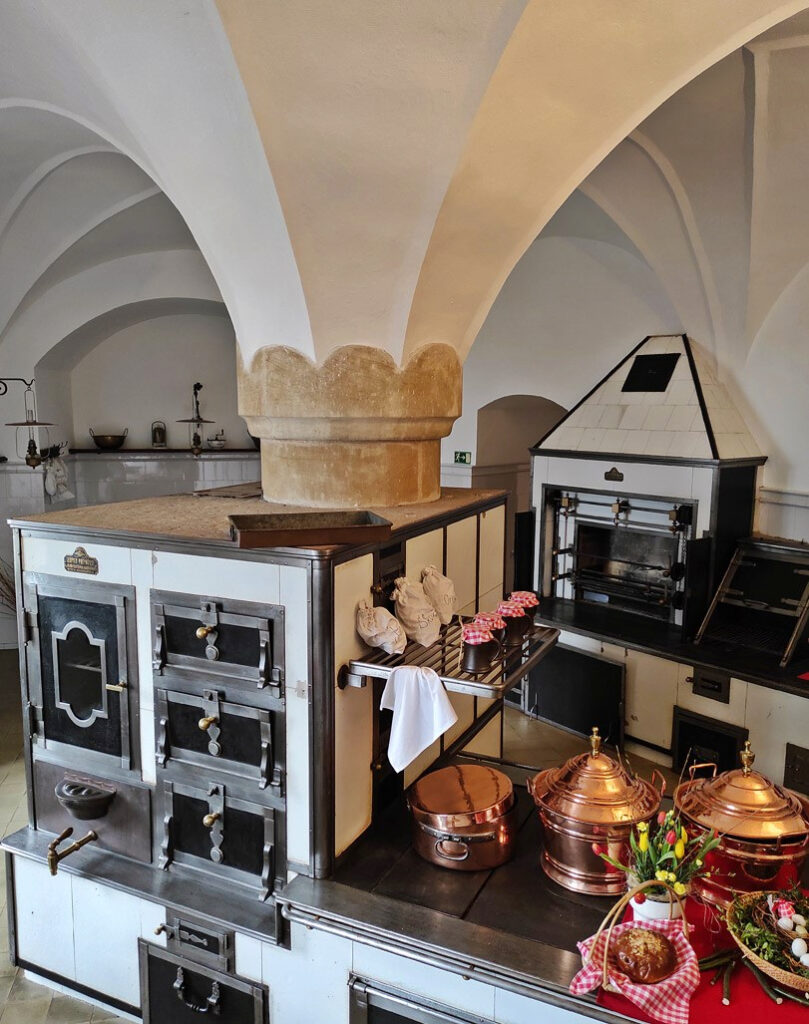
- Modern kitchen
-
- Kitchen interior
The pearl of the courtyard is an ornate Neo-Renaissance well carved into the rock, which is 52 meters deep. In the 1990s, when it was excavated, the well revealed its secrets. The discoverers were undoubtedly pleased with historical artifacts such as ruby-red goblets made of Czech glass or gilded plates from Meissen, but they were also surprised by other finds, such as car keys or a photographic camera.
-
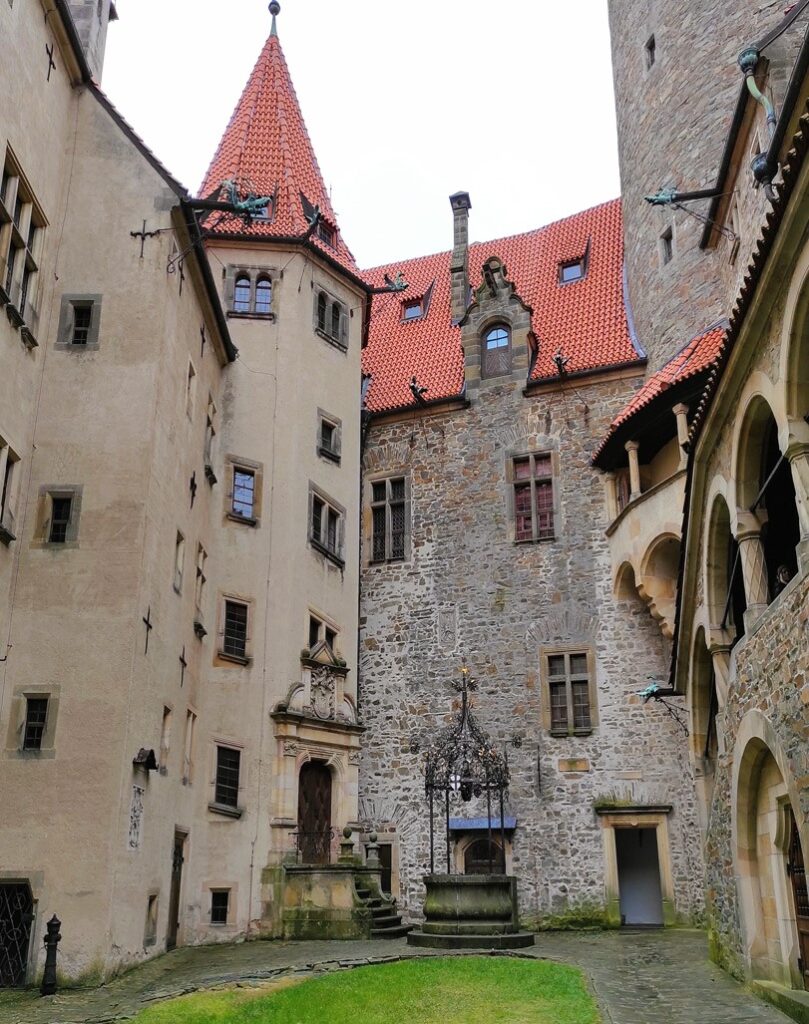
- Impressive courtyard

-
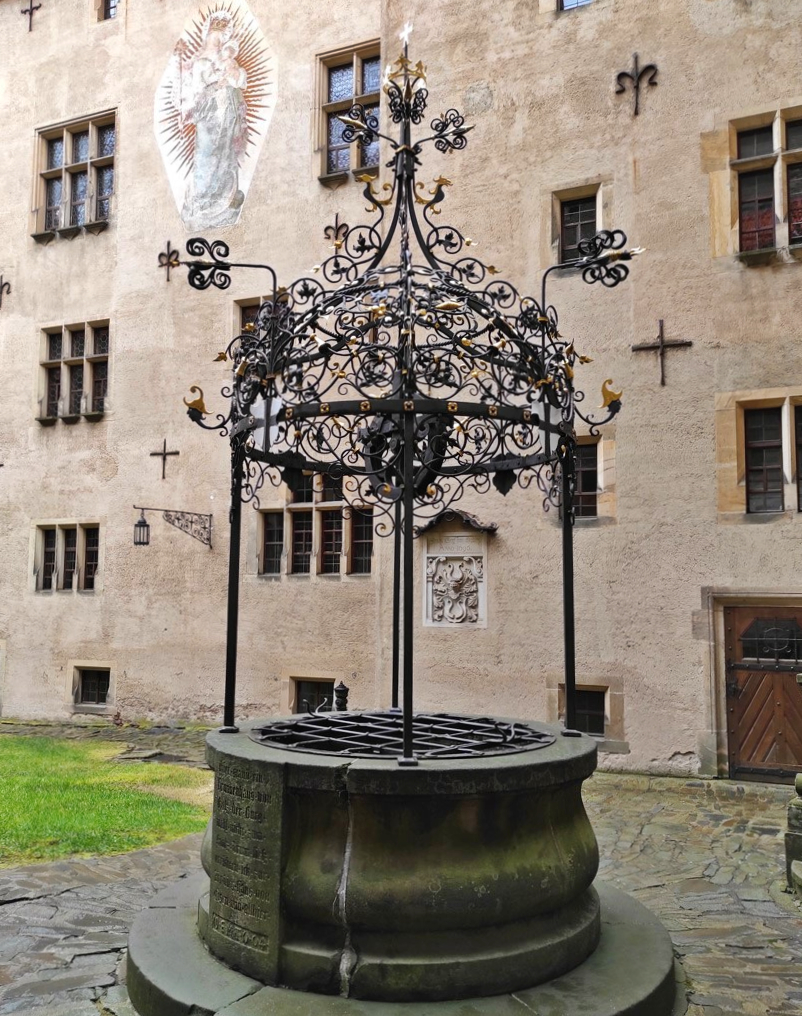
- Neo-Renaissance well
The courtyard is also decorated with a relief of the patroness of the Order, Elizabeth of Thuringia, with rose flowers. And why roses, exactly? The following story explains.
Saint Elizabeth of Hungary (of Thuringia) was a Hungarian princess who lived in Germany and dedicated her short life to helping the poor and needy. When there was a particularly severe famine in the land, Elizabeth was forbidden to distribute bread from the castle to the poor. But she disobeyed and secretly carried it to them, hidden in her apron beneath her cloak. When her husband saw her, he asked her what she was carrying. She replied that she had gone to pick roses in the castle grounds. Her husband made her open her cloak, and from beneath it, roses indeed spilled out—even though it was a time when roses did not bloom. That is why these noble flowers are one of Elizabeth’s attributes.
-
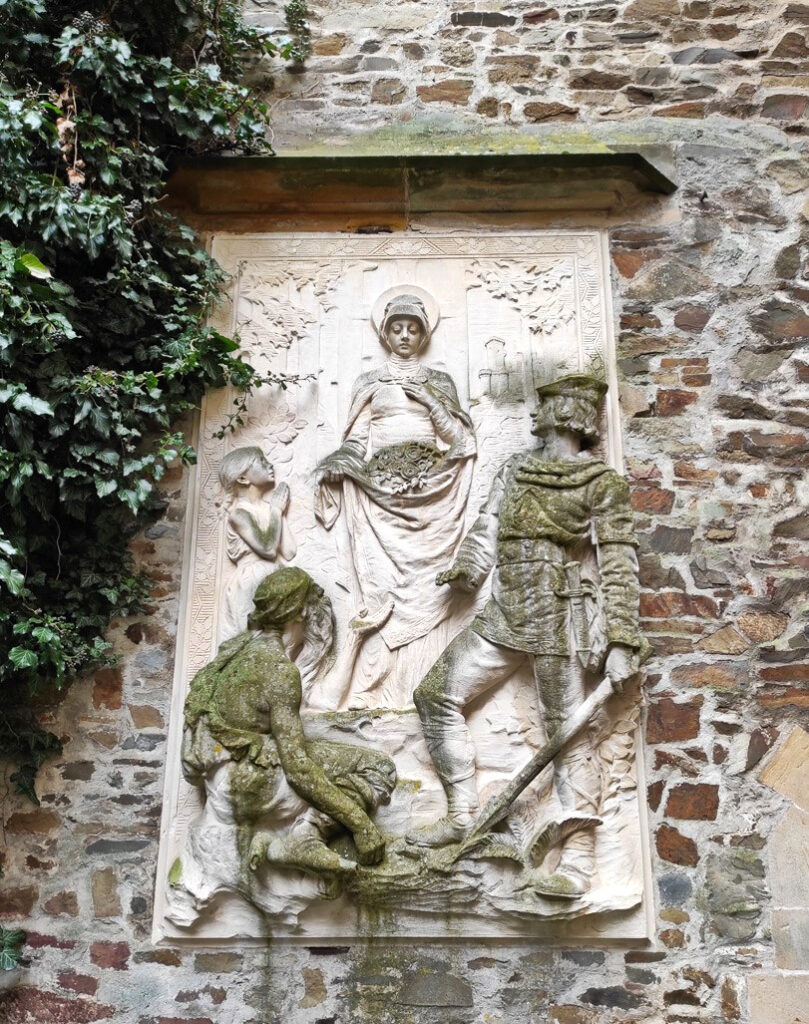
- Relief of St. Elizabeth of Thuringia

-
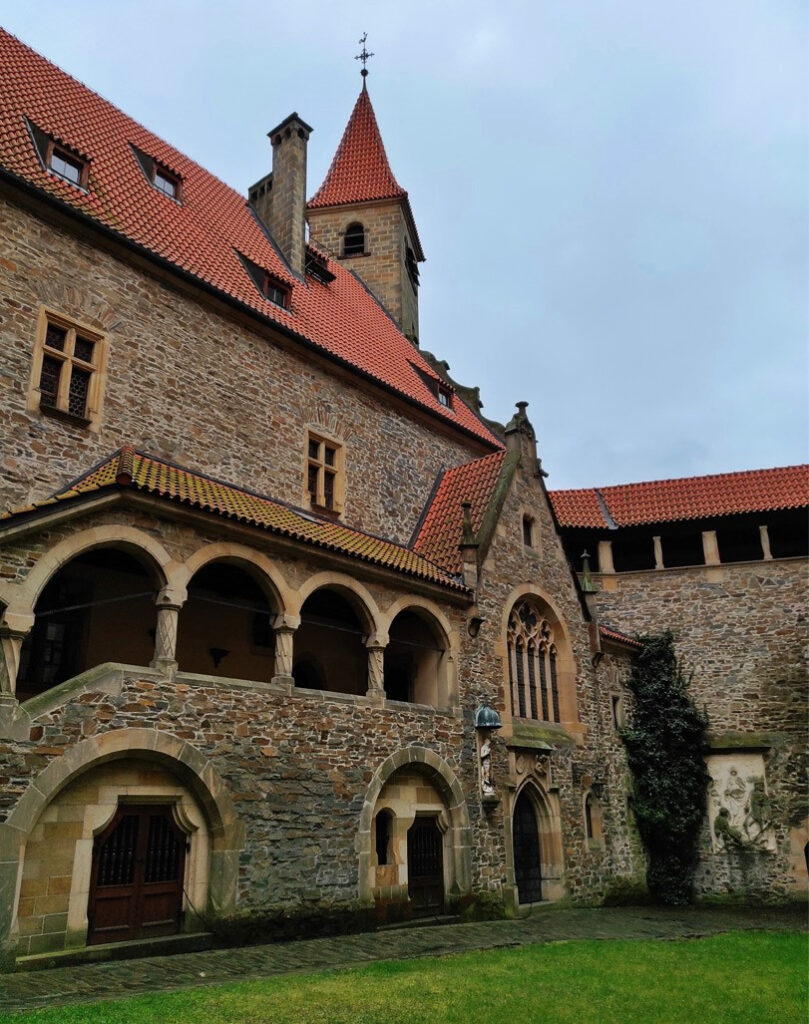
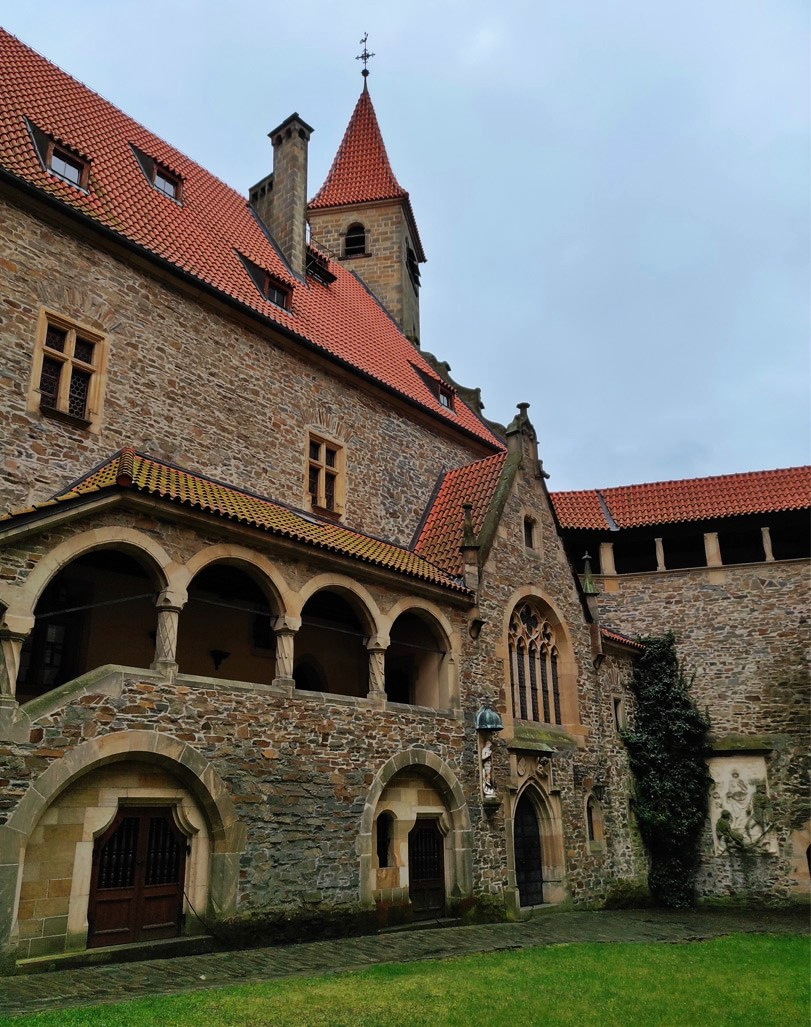
- View of the courtyard
Tour Route "Ascent to the Hláska watchtower"
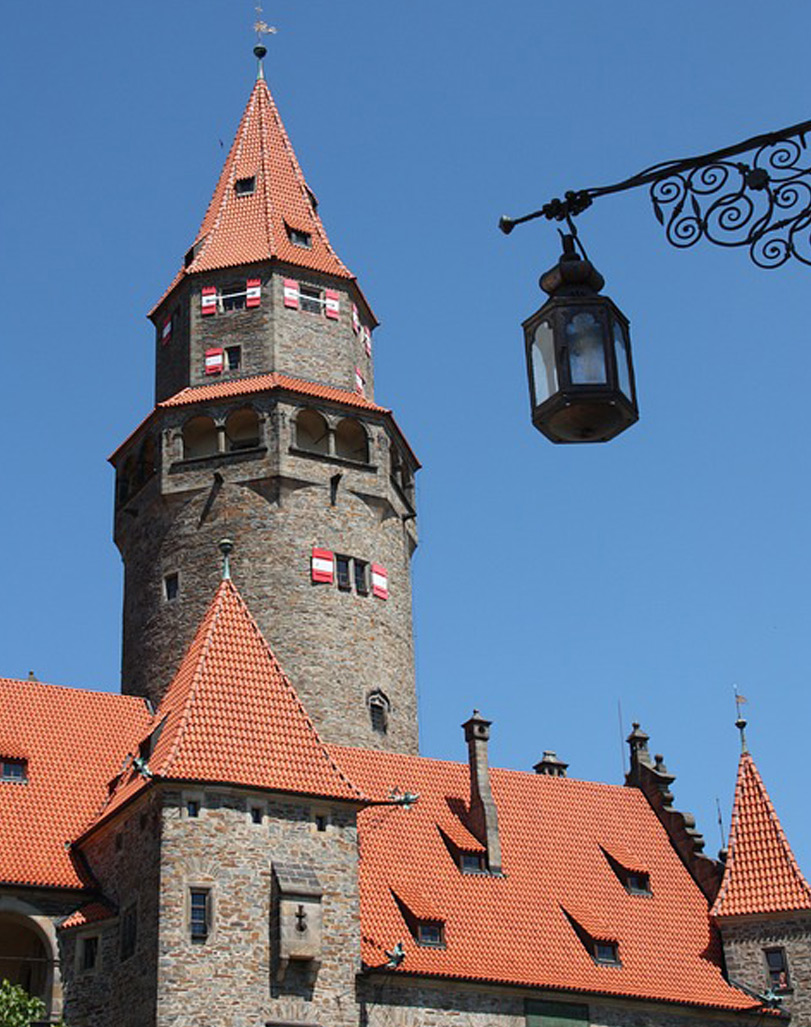
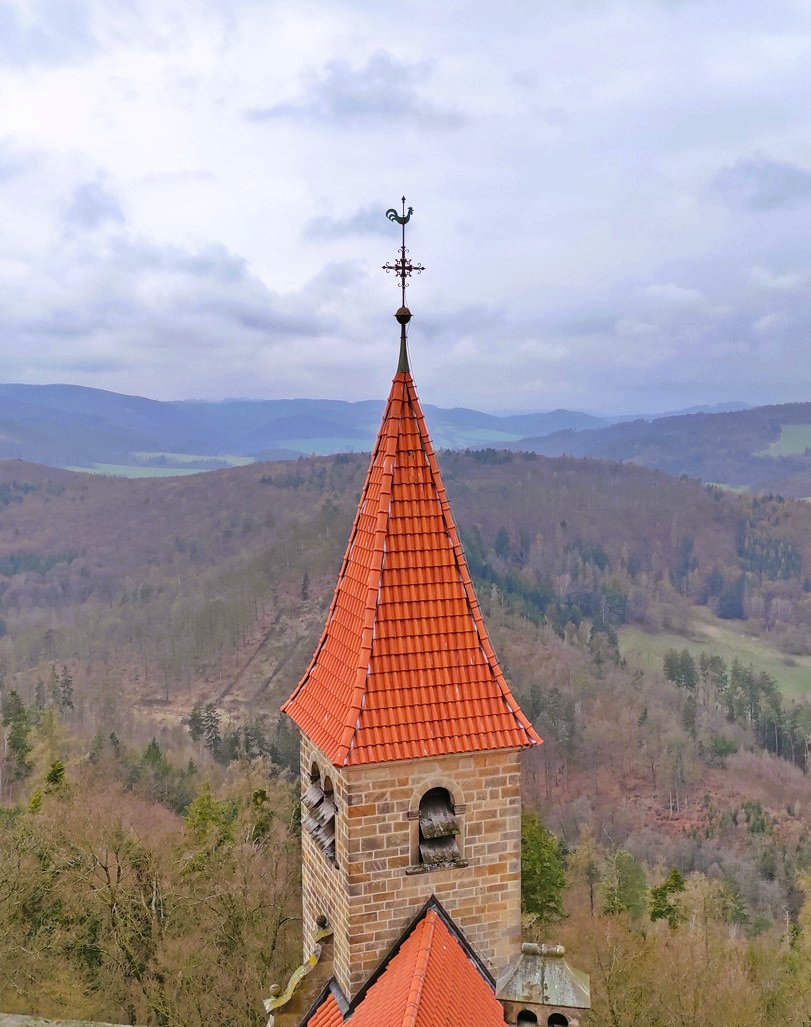
The proud dominant feature of the entire castle is the Hláska watchtower, whose viewing gallery is located 40 meters above the ground. It was on this very gallery that famous scenes from the fairy tale "Princess Jasněnka and the flying shoemaker" were filmed. From the lookout, we had a bird’s-eye view of the surrounding landscape, known as the Bouzov Hills, as well as the town of Mohelnice and the ridges of the Jeseníky Mountains.
-
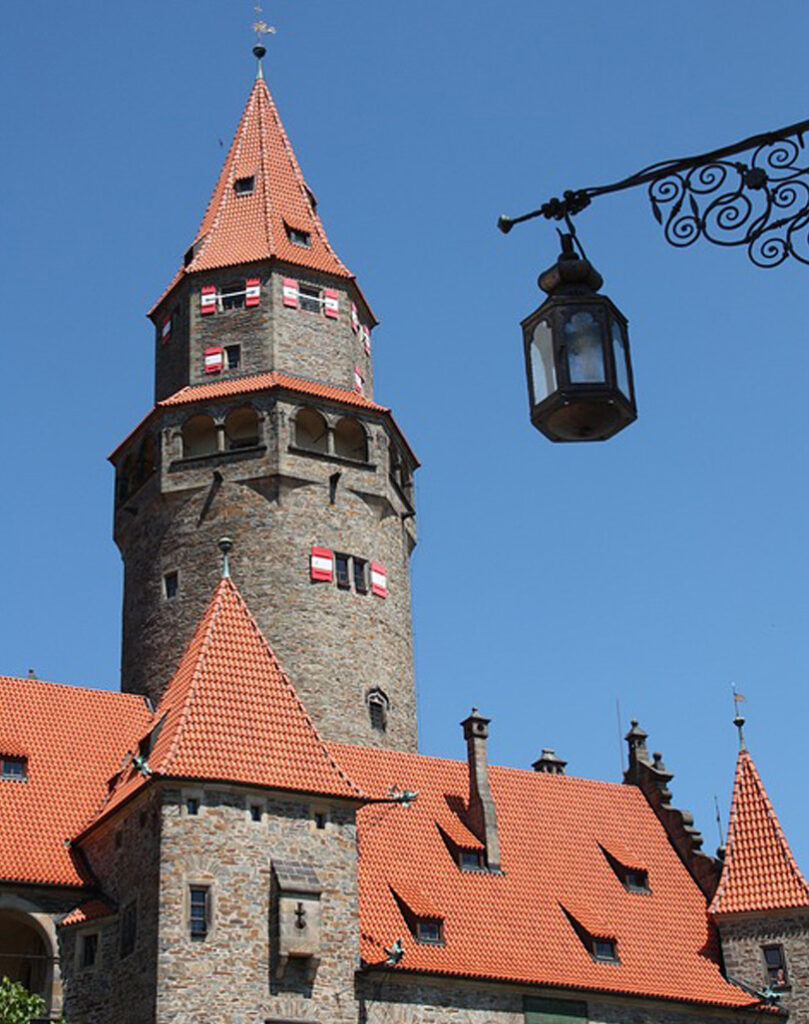
- Hláska watchtower
-
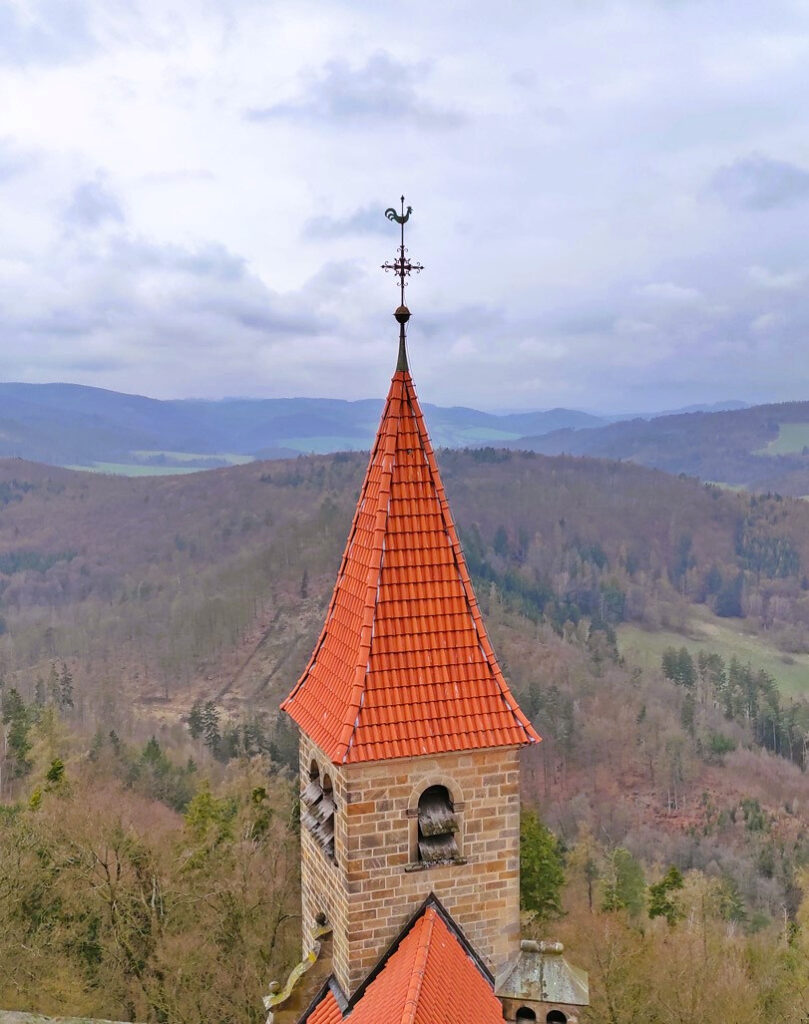
- View of the Bouzov Hills
Our parking tip:
The paid parking lot is located about 300 meters from the castle. However, we headed to the castle in the morning and parked for free in the village of Bouzov in front of the Hruška shop.
An interesting fact for the end:
According to legend, Bouzov may also be the birthplace of the later Czech King George of Poděbrady. The story has a real basis, as his father Viktorín actually resided here.