




In the 17th century, a treasure was born in Bohemia— Czech crystal, a transparent glass that captivated the world with its purity and brilliance. It soon became synonymous with luxury and Bohemia dominated the global glass market.
But that wasn’t all! Cutters from Turnov ventured to Venice to uncover the secrets of glass gemstones. After years of espionage, they brought back a recipe for a diamond glowing composition that even outshone the Italian masters.
And then came the chandeliers —the most magnificent imaginable. From Louis XV to Ottoman sultans, everyone desired Czech crystal jewels. Kamenický Šenov became the European centre of chandelier artistry.
Today, the Crystal Valley is a living gallery. Just as whisky embodies the character of Scotland and Provence carries the scent of lavender, this corner of Bohemia shines and sparkles with the art of glassmaking.
Join us on a journey to the treasures of Poniklá, Harrachov and Jablonec nad Nisou —where tradition comes alive in the hands of master craftsmen. You will encounter fascinating stories that will enchant you just like light passing through crystal clear glass.
Poniklá
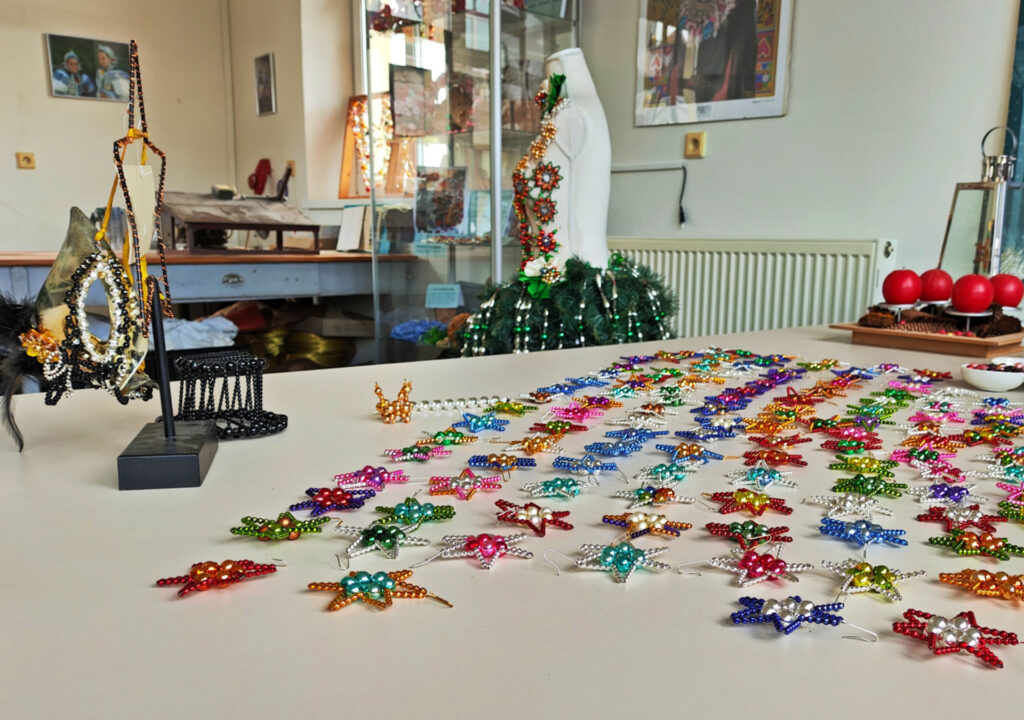
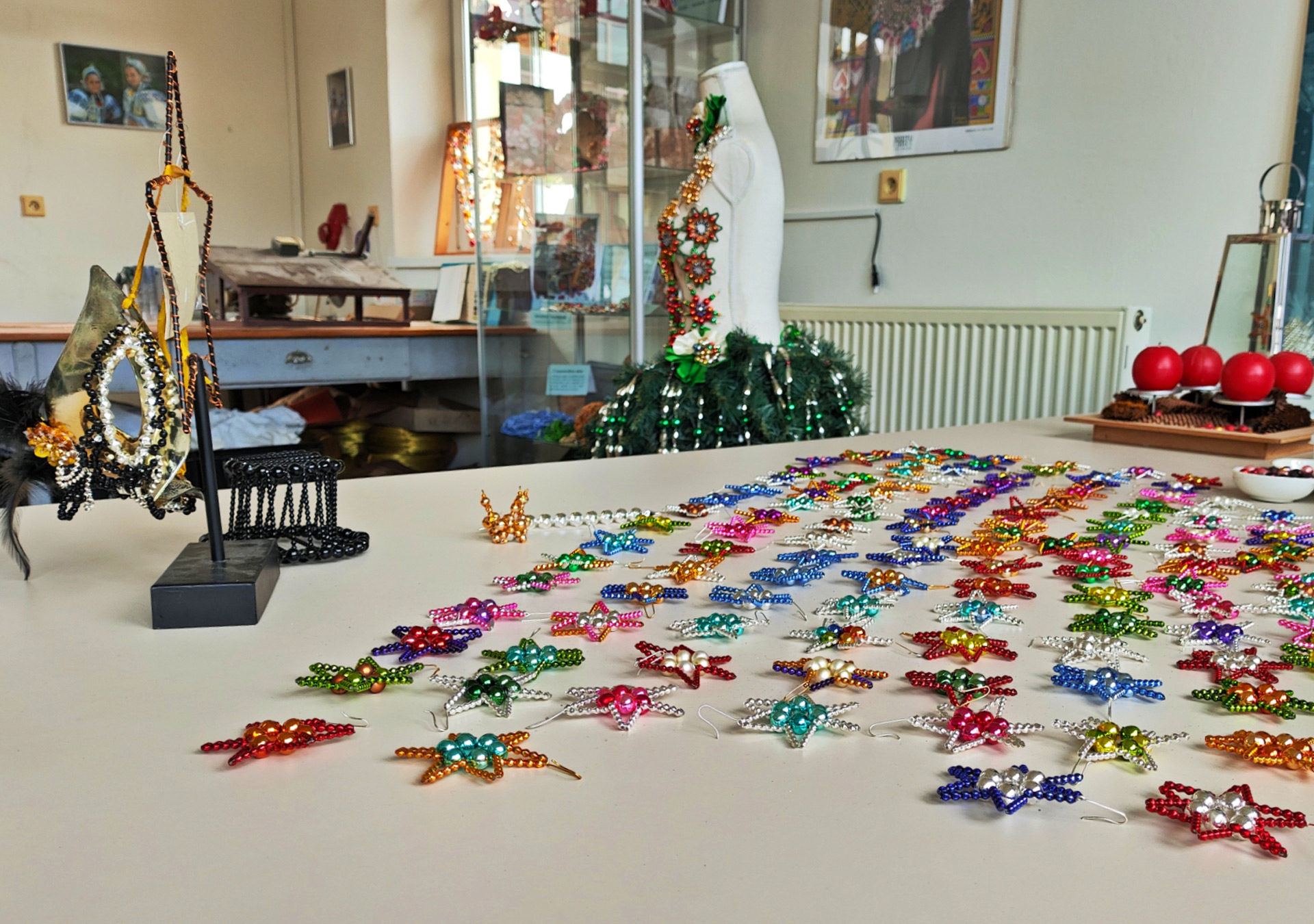
In the picturesque village of Poniklá, a delicate beauty has been born for over a hundred years—blown glass beads and Christmas decorations that have made this corner of the Krkonoše Mountains famous. The company Rautis lovingly preserves this unique craft, the only one of its kind in the world, passed down from generation to generation.
-

- Poniklá
-
- Poniklá
The story began in the 19th century when Jan Hajna brought the secret of glass bead blowing to the village. Soon, the locals threw themselves into production, and in 1902, the first bead-making company was established. The golden era came with Christmas decorations that conquered the world—until the dark turn of 1948, when the craft survived only thanks to the stubbornness of the locals.
After the revolution, the company Rautis got back on its feet and fought a battle for survival. Today, its heart is the manufactory, where every ornament passes through the hands of master craftsmen. And the success? In 2020, their craft was inscribed on UNESCO’s Intangible Cultural Heritage list.
Today, the company welcomes visitors into its kingdom—a shop with a creative workshop and a fascinating tour of the production process. You will see how glass tubes are blown, dyed, silvered, and woven into delicate ornaments. Every single bead passes through at least six pairs of skilled hands.
Address: Poniklá 153
Our experience:
The tour was amazing! The guide immersed us in the manufacturing process, showed us every detail and patiently answered all our questions. And then came the best part—in the creative workshop, we made our own Christmas decorations.
-
- Rautis
-
- Church of St. James the Greater
However, this village is not just home to the renowned company Rautis. Poniklá, whose name comes from the stream that disappears into the ground and resurfaces, has a rich history dating back to 1354. In the past, linen production, lead mining, and graphite extraction also thrived here.
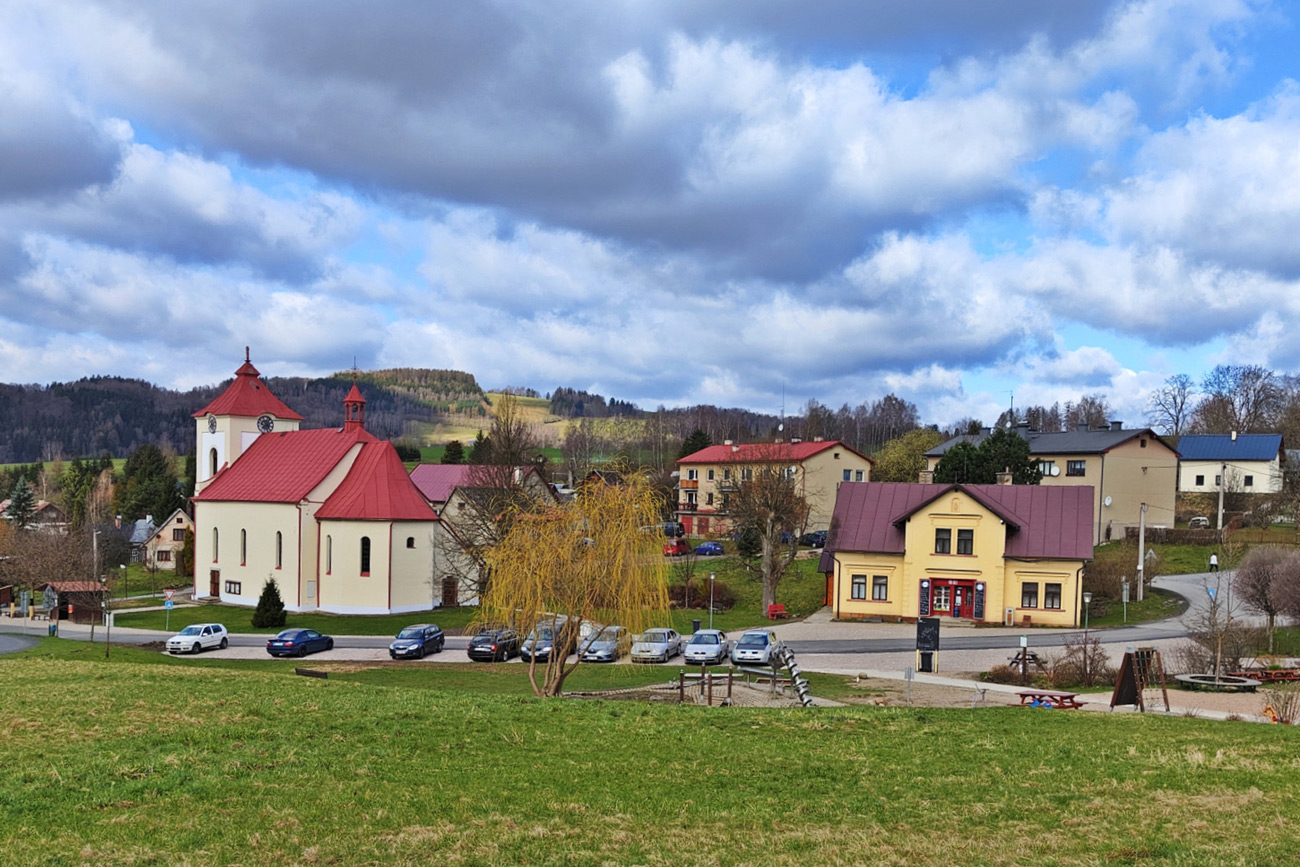
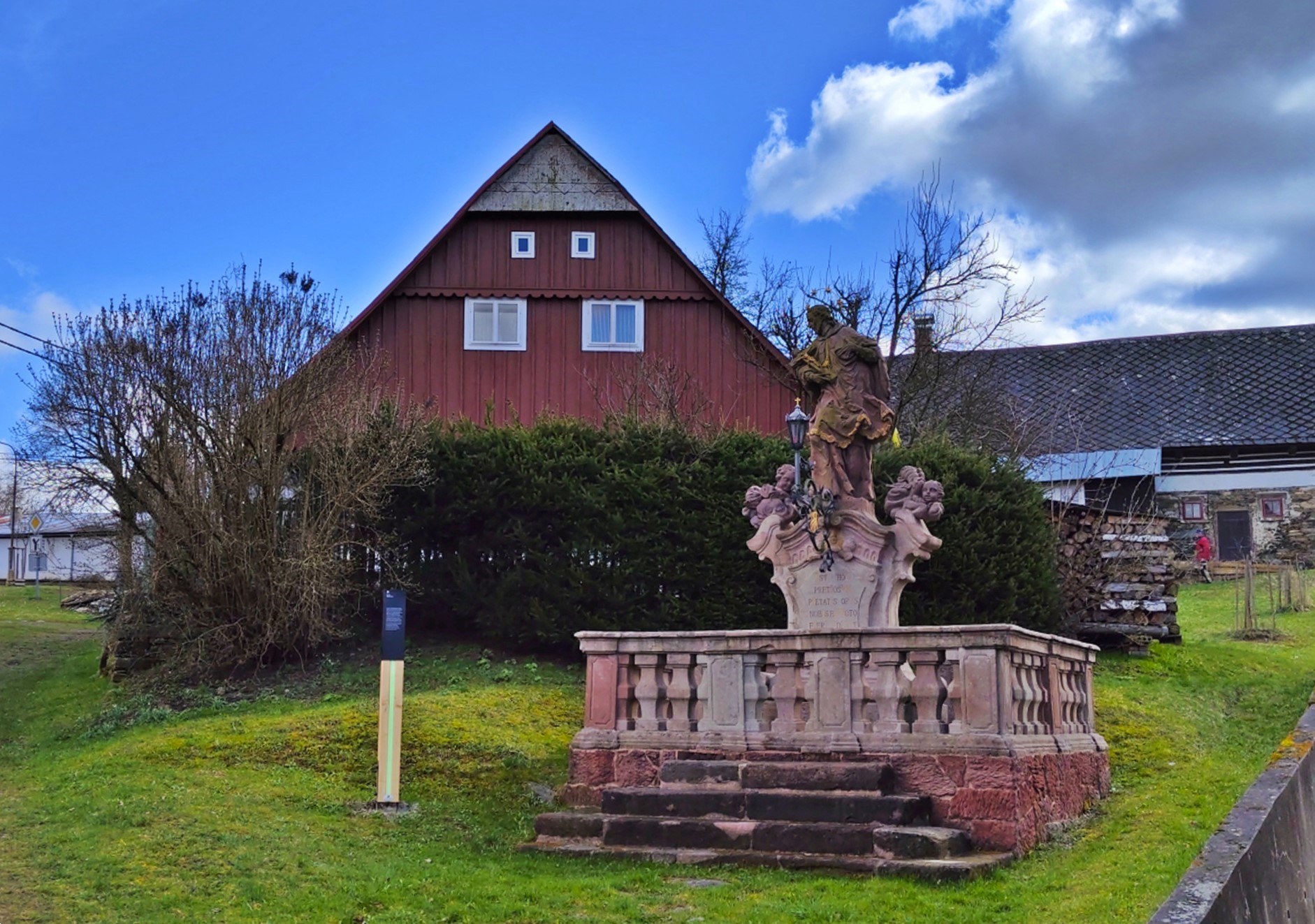
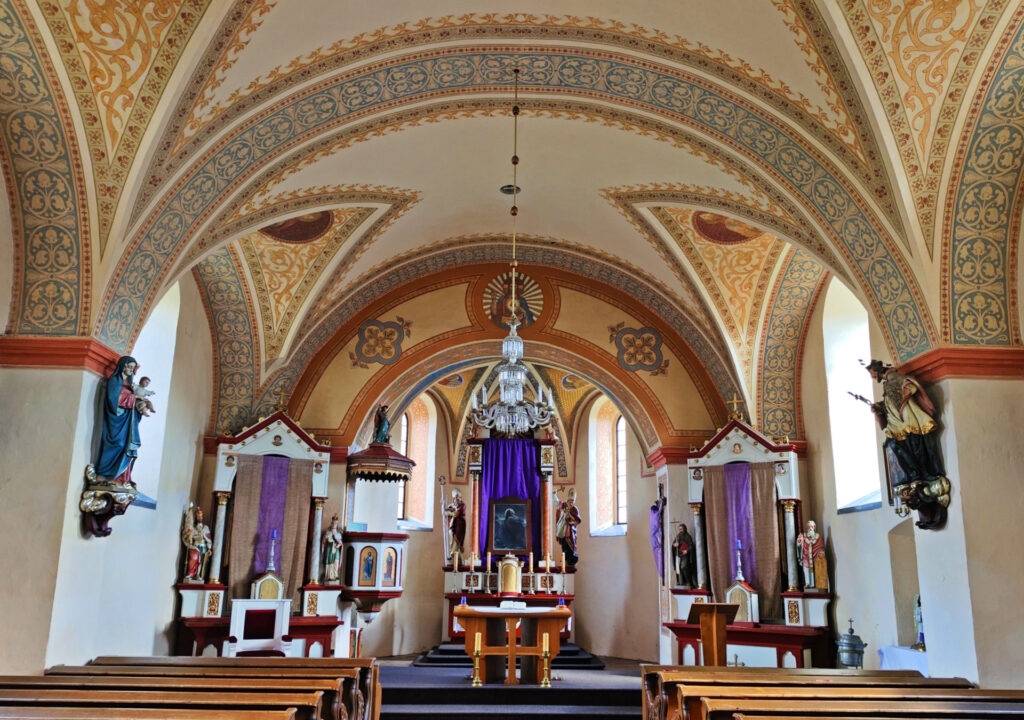
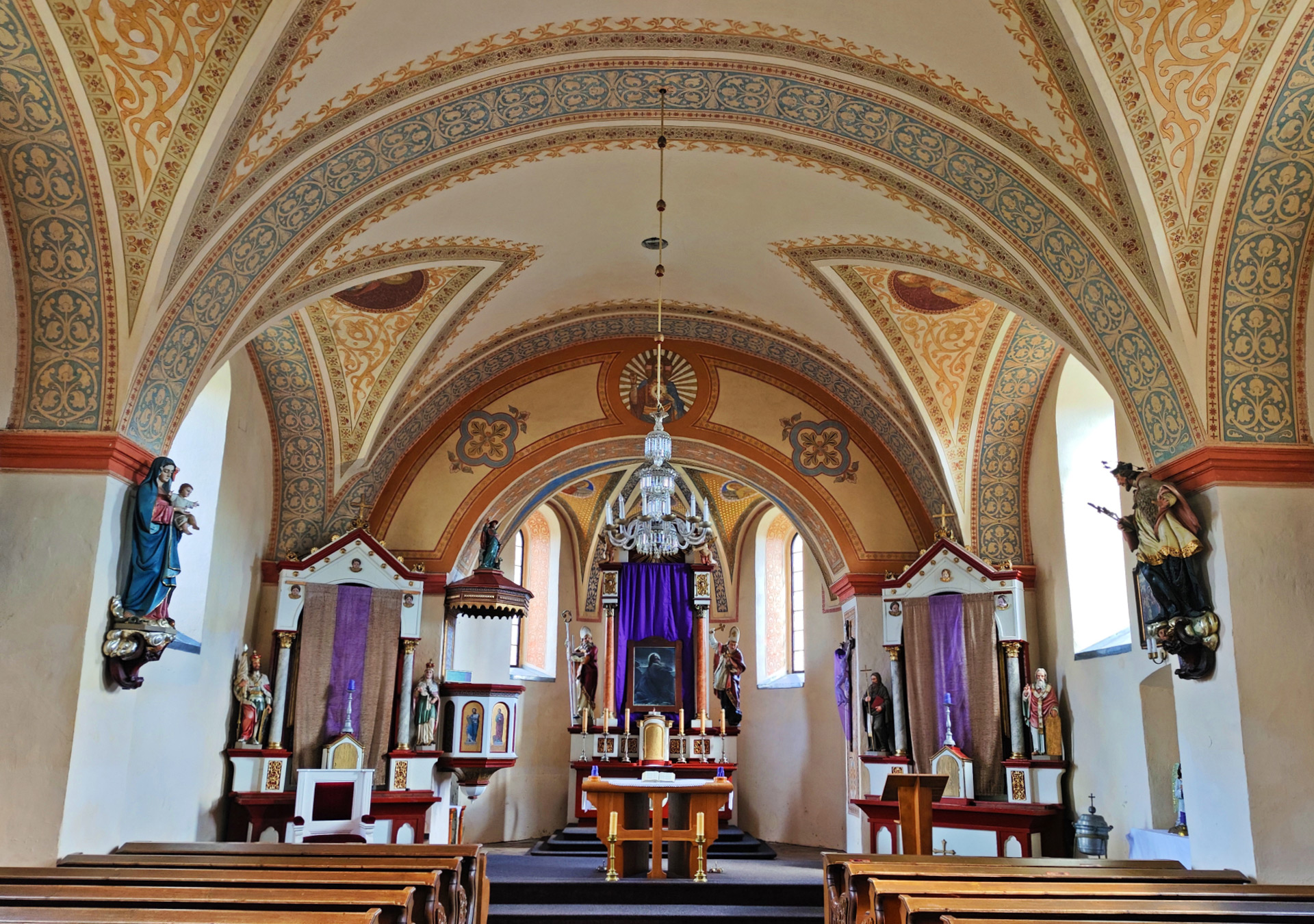
The dominant feature of the village is the Baroque Church of Saint James the Greater from 1682, with its unique baptismal font. Opposite it stands a mysterious statue of Saint John of Nepomuk. A little further on, you will be charmed by Krejčův farm —a gem of folk architecture with a carved gable. And as you stroll through the village, keep an eye out for majestic century-old trees: a linden tree with a trunk circumference of 6.5 meters, a giant chestnut tree near the church or a memorial oak in the centre of the village.
Where to park?
Follow the signs labelled "Christmas Decorations" – they will lead you directly to the parking lot above the village square. Parking is free.
Harrachov
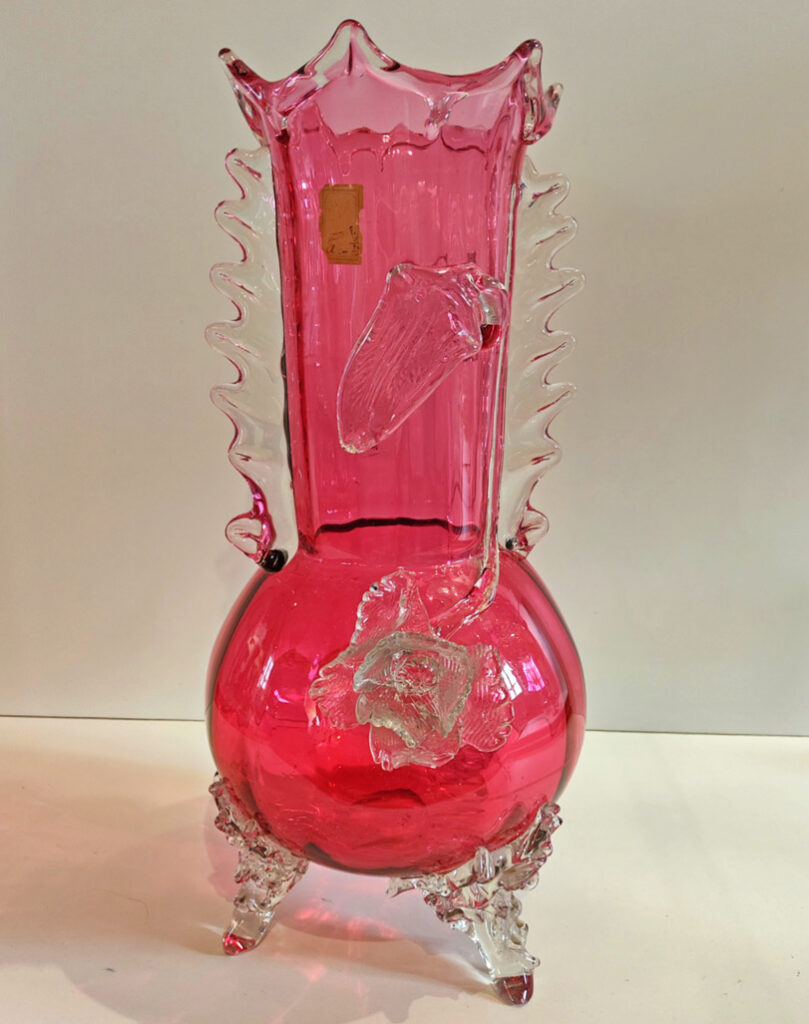
Nestled in the charming town of Harrachov lies one of the Czech Republic’s oldest glassmaking treasures— the Glass factory and Brewery Novosad & Son, whose history dates back to 1712. Originally owned by the Harrach counts, it soon gained worldwide renown. As early as the 19th century, its products shone at exhibitions in Prague, Vienna, Paris and London, winning gold medals.
The glass factory survived fires, floods, wars and nationalization but never lost its lustre. Today, you can admire the art of handmade glass during a guided tour. Skilled glassblowers will shape molten glass into perfect forms right before your eyes. And that’s not all—you will also visit a unique historic grinding workshop, which has captivated visitors with its authentic atmosphere for 127 years. Don’t forget to stop by the glass shop, where you can take home a piece of this extraordinary beauty.
You can also explore a museum featuring rare glass pieces or sample fresh beer from the on-site microbrewery. Established in 2002 as a tribute to Czech craftsmanship, the brewery produces unfiltered, unpasteurized beer using pure spring water from Bílý vrch (White Hill). And if you are looking for a truly unconventional experience, try their beer spa.
Address: Nový Svět 95, Harrachov
Where to park?
We stumbled upon a great option – we parked for free right by the tourist hotel, which is part of the glassworks complex. No searching, no fees, just a few steps away from the fascinating world of glass!
-
- Glass factory Harrachov

-
- Chapel of St. Elizabeth
Our tip:
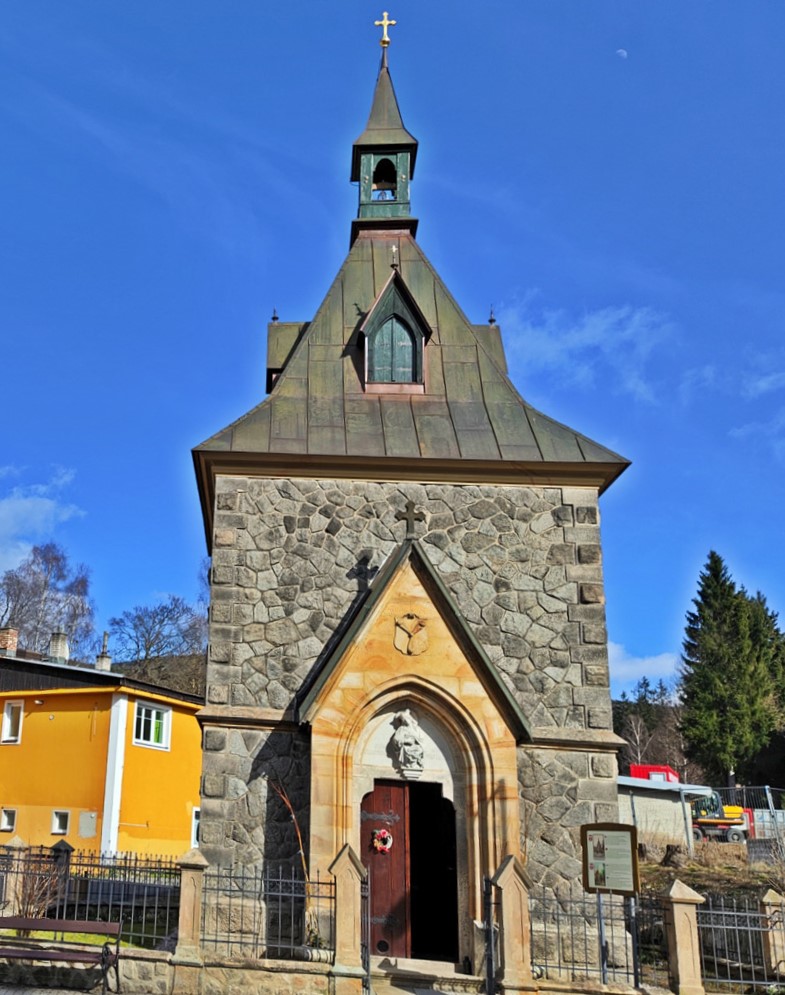
The mysterious Chapel of Saint Elizabeth is hidden right in front of the Harrachov factory—and it’s no coincidence! In the 18th century, it was built by Anna Elisabeth Müller, the wife of the glassworks' director at the time. The original wooden chapel eventually fell into disrepair, but in 1901, Count Jan Harrach had it restored in a pseudo-Gothic style.
And what’s most fascinating about it? The glass bell, cast right in the local glassworks! The entire structure is made of local materials and its sandstone coats of arms and statues were crafted by the famous Czech sculptor Antonín Sucharda.
In 2020, the chapel was renovated thanks to local volunteers, and since then, its colourful stained-glass windows have been illuminating winter evenings. A magical atmosphere worth stopping for!
The mountain resort of Harrachov, however, also enchants nature lovers and sports enthusiasts. Originally a small village called Dörfl, later renamed after the noble Harrach family, it now unites three charming settlements: Harrachov, Nový Svět, and Rýžoviště—one of the oldest mountain settlements in the Krkonoše, famed for its ore mining.
Whether you are looking for winter fun or summer adventures, this place won’t disappoint you. It is home to world-class ski jumping competitions, offers dozens of kilometres of groomed cross-country trails and ski slopes for all levels. In summer, visitors can enjoy cycling paths, hiking routes to the Mumlava Waterfall or even to the source of the Elbe River, tennis courts, golf, a bobsled track and rope parks.
Our invitation:
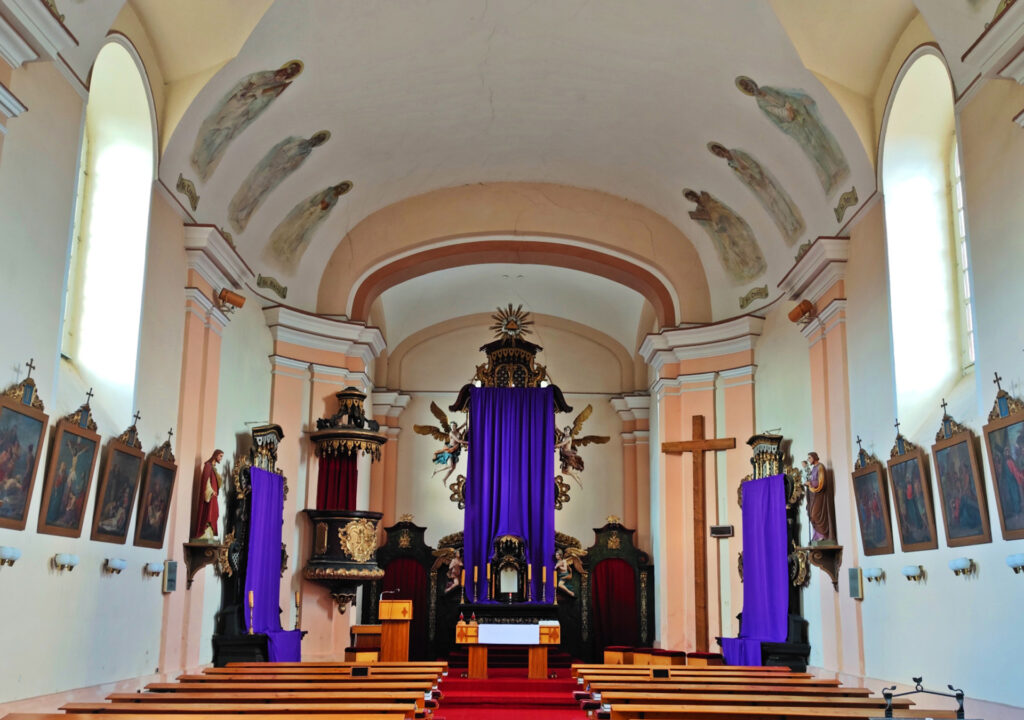
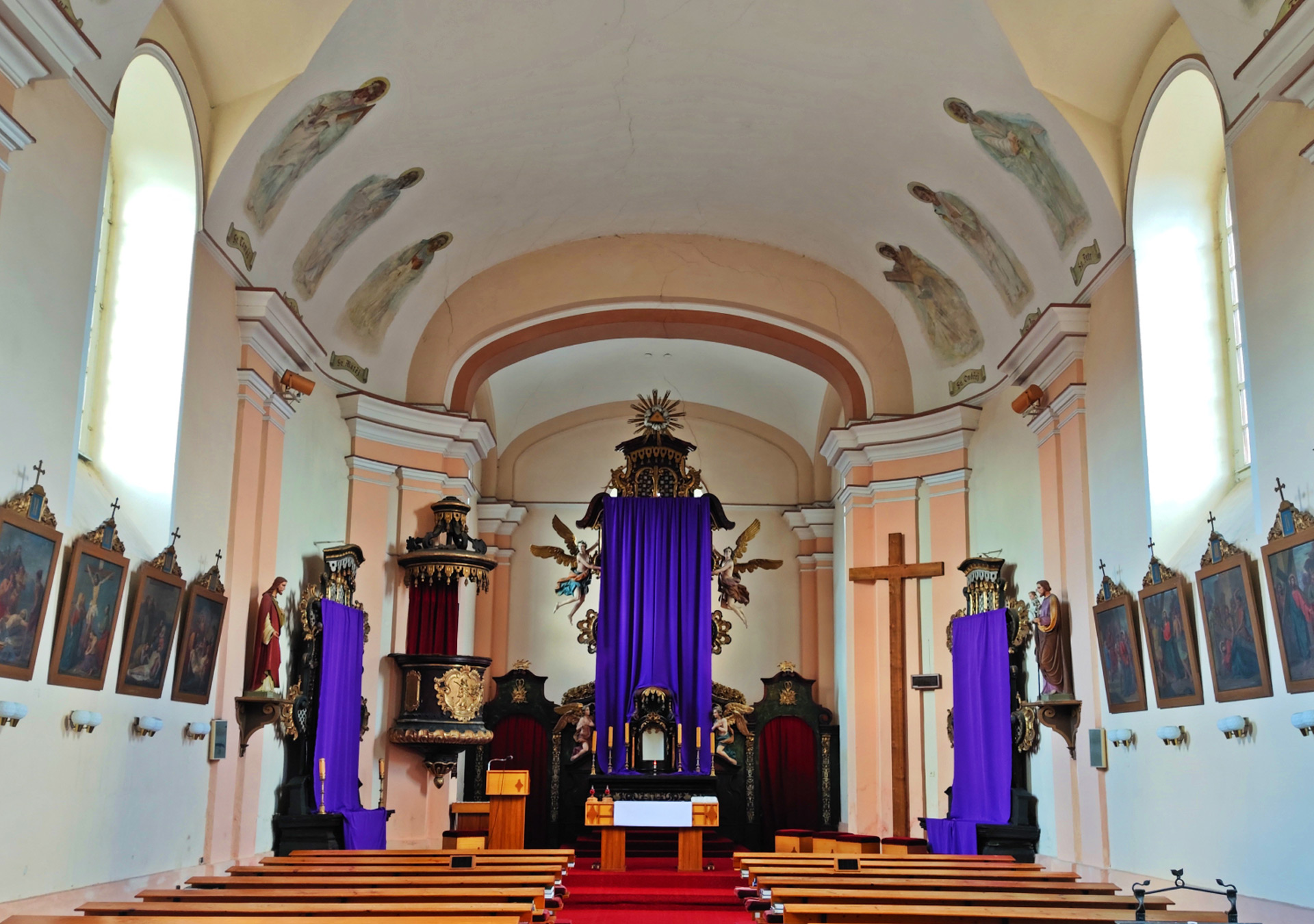
Just 14 km from Harrachov lies the picturesque town of Jablonec nad Jizerou, where time has stood still in the form of traditional Krkonoše-style timbered houses. The town's landmark is the Church of Saint Procopius, whose history dates back to 1492 when one of the region's first wooden churches stood here. Its current late Baroque appearance dates from the 18th century and still captivates visitors with its Rococo interior, featuring a tin baptismal font and exquisite woodcarvings. The church is adorned with the alliance coats of arms of the Harrach and Dietrichstein families and its mighty organ still fills the foothills with the sounds of historic music.
-
- Church of St. Procopius
-
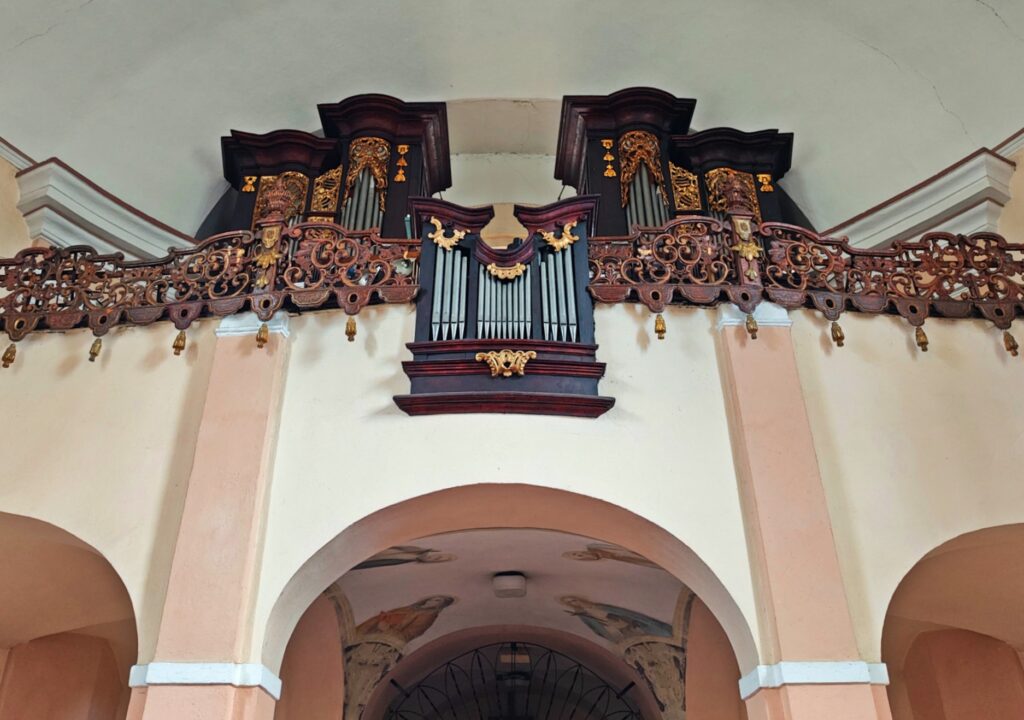
- Church of St. Procopius
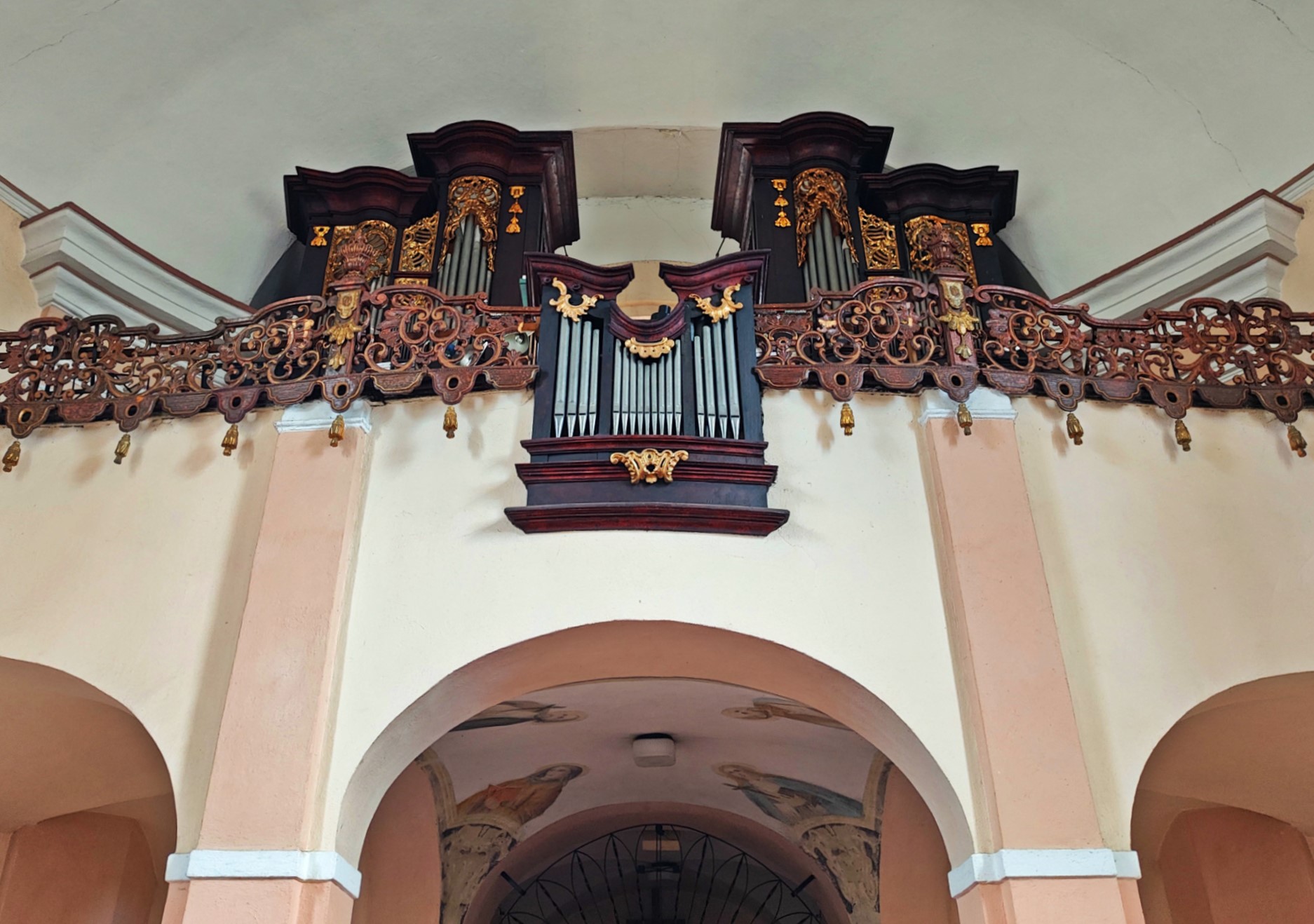
Jablonec nad Nisou
At the end of the 19th century, Jablonec nad Nisou and its surroundings shone as a global hub of glass art and jewellery. It was here that legendary brands like Swarovski and Riedel were born, their crystal brilliance conquering the world.
Want to experience this fascinating history and its vibrant present? Visit the modern exhibitions at the Museum of Glass and Jewellery, where the story of the Crystal Valley unfolds in all its glory.
The museum is housed in a majestic Art Nouveau building that once served as an export house. Its architecture alone will amaze you, but the real magic lies inside. You will find immersive exhibitions that transport you into the world of glittering glass creations and exquisite jewellery.
What is more, this museum is the only one of its kind in the world. Nowhere else will you find such extensive collections of glass and jewellery, showcasing all possible materials and techniques, all under one roof. Here, you will encounter the second-largest glass collection in the Czech Republic, one of the most significant in Europe, and the world’s largest public collection of glass Christmas ornaments.
Another unique experience is a visit to the last surviving building of the once-thriving glassmaking settlement of Kristiánov, now part of Bedřichov. The permanent exhibition takes you back to the days when master glassmakers crafted their works with incredible precision.
And the best part? Their art still lives on— handmade glass production has even been inscribed on UNESCO’s Representative List of the Intangible Cultural Heritage.
Main building address: U Muzea 398/4, Jablonec nad Nisou
The address of the preserved building: Bedřichov 52
Where to park?
Right by the museum, a small parking lot awaits you, where you can park completely free of charge. Although there are only a limited number of spots, if you time it right, you will save not only precious minutes searching for parking but also money.
If it happens to be full, don’t worry. Just a short distance away, less than 200 meters from the museum, you will find the paid Lipanská parking lot. Here, too, everything will be within easy reach, and you won’t have to circle endlessly through crowded streets.
Where to shop?
If you're enchanted by the magical sparkle of glass beads, Jablonec nad Nisou is a true paradise for you! Local shops overflow with ready-made jewellery as well as materials for those who want to create their own unique pieces. And where better to start than at the Museum of Glass and Jewellery, which also houses a small shop full of delicate beauty.
We ended our hunt for glass treasures with a visit to Křišťálový ráj (Crystal Paradise), where the best of Czech tradition shines before your eyes—glittering beads, Christmas ornaments, elegant jewellery and other glass wonders. This store isn’t just an ordinary place; it is a unique project by the Association of Glass and Jewellery Manufacturers, bringing together Czech companies. Their shared goal is to support the famous tradition of Czech glassmaking and attract visitors to the fascinating Crystal Valley. If you love the beauty of handmade craftsmanship, this is a place you will adore.
Address: Jungmannova 497/6, Jablonec nad Nisou
Where to eat?
If you are looking for a great restaurant in the town centre, we wholeheartedly recommend Golden Lion Hotel (hotel Zlatý Lev). This cozy restaurant invites you to relax and enjoy a pleasant meal and its menu will delight even the most discerning foodies—you can try perfect Czech svíčková (beef in cream sauce) as well as juicy steaks. And if you get a craving for something sweet during the day, take a break and indulge in fluffy desserts paired with aromatic coffee that will give you a nice energy boost.
Address: Kostelní 19/1, Jablonec nad Nisou
Our final tips:
Nestled in the heart of Crystal Valley lies the village of Krásná, whose history dates back to 1608. Today, it is part of the village of Pěnčín, but despite its small size, it holds an incredible charm. Its landmark is the Church of Saint Joseph, housing treasures you wouldn’t expect in a mountain village—hand-cut chandeliers by local glassmakers, a rare organ, or stunning stained-glass windows. However, the most unique feature is the Holy Stairs with relics of saints, which the faithful climb on their knees.
-

- Church of St. Joseph
-
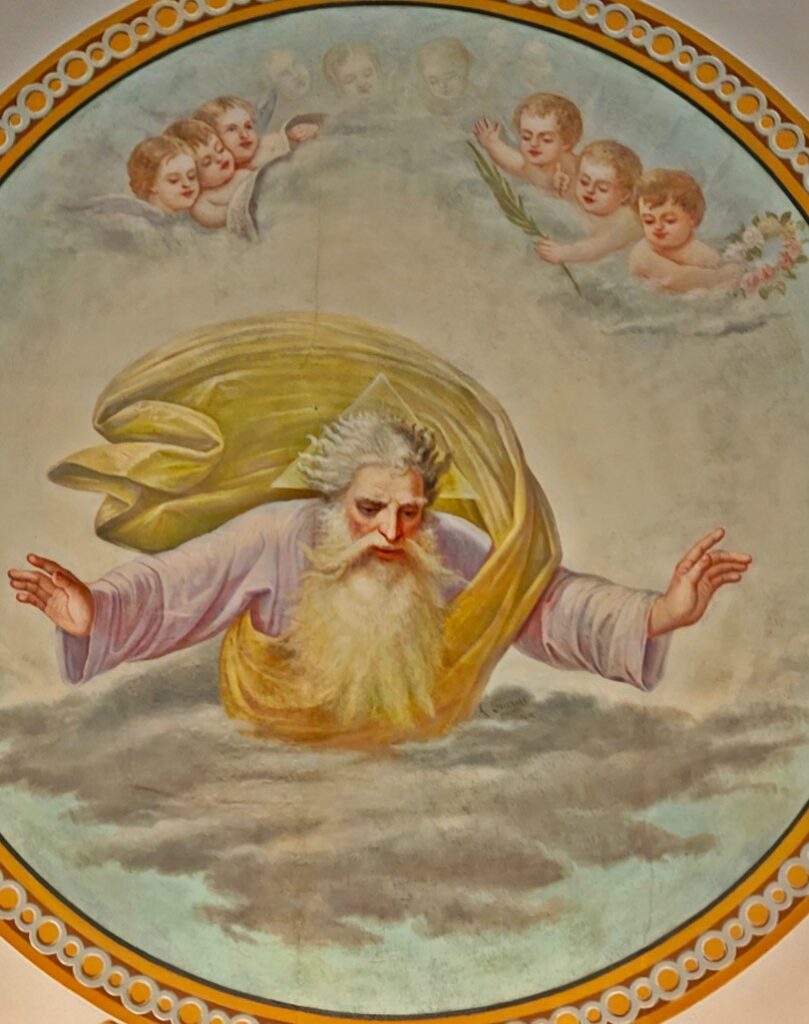
- Church of St. Joseph
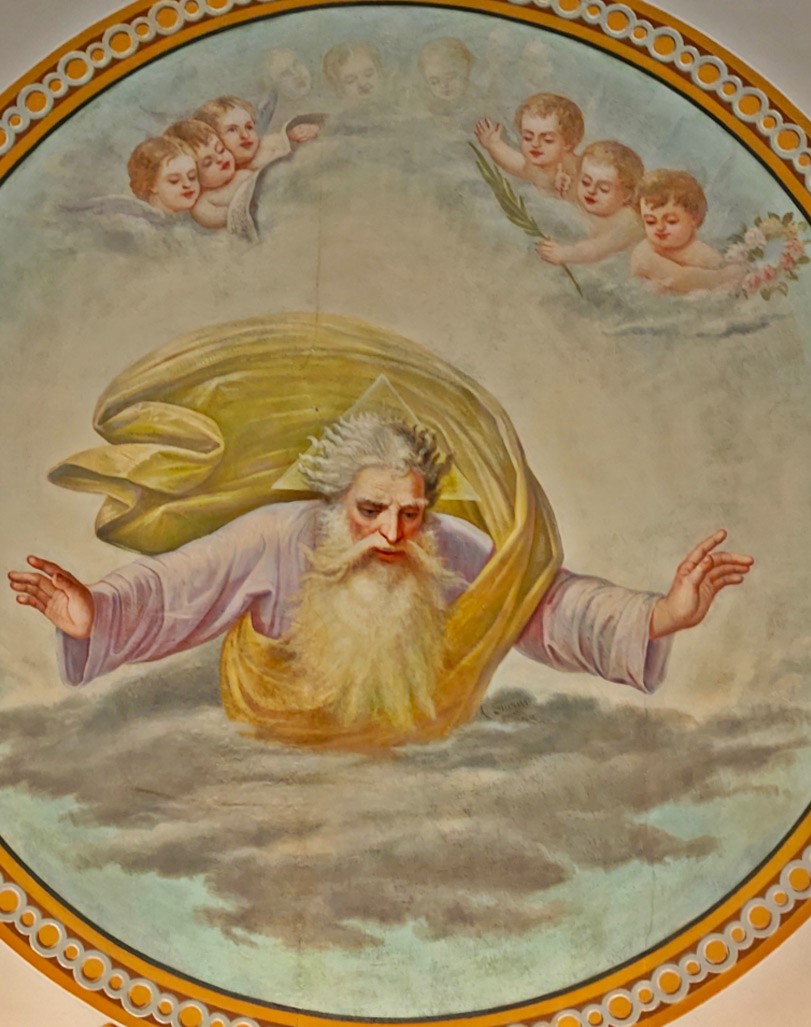
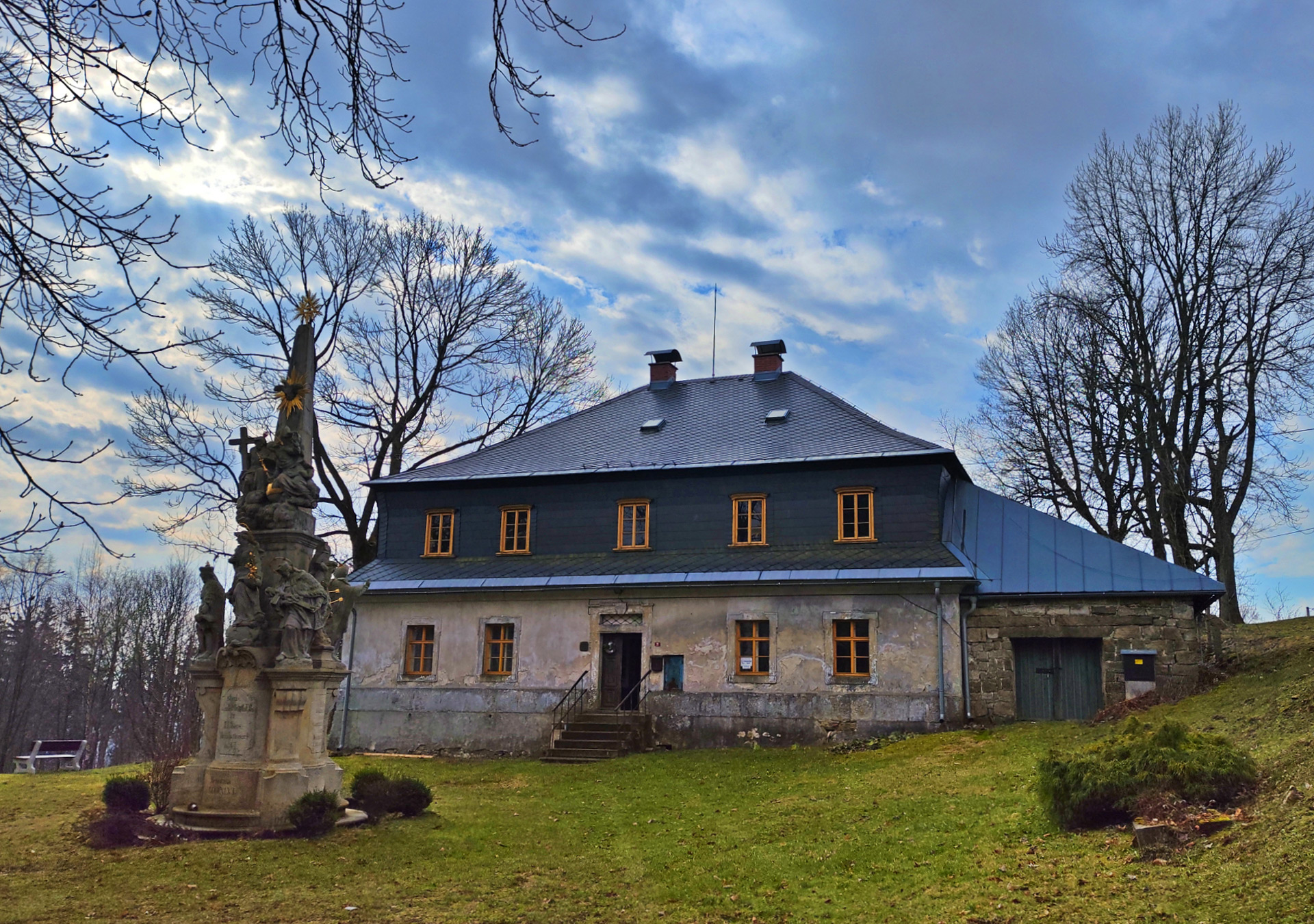
Directly opposite the church stands a mysterious vicarage that looks as if it came straight out of a fairy tale—partly brick, partly timber-framed. Inside, there is a spacious cellar hiding a spring carved into the rock, filled with crystal-clear water.
Address: Krásná 19, Pěnčín
-
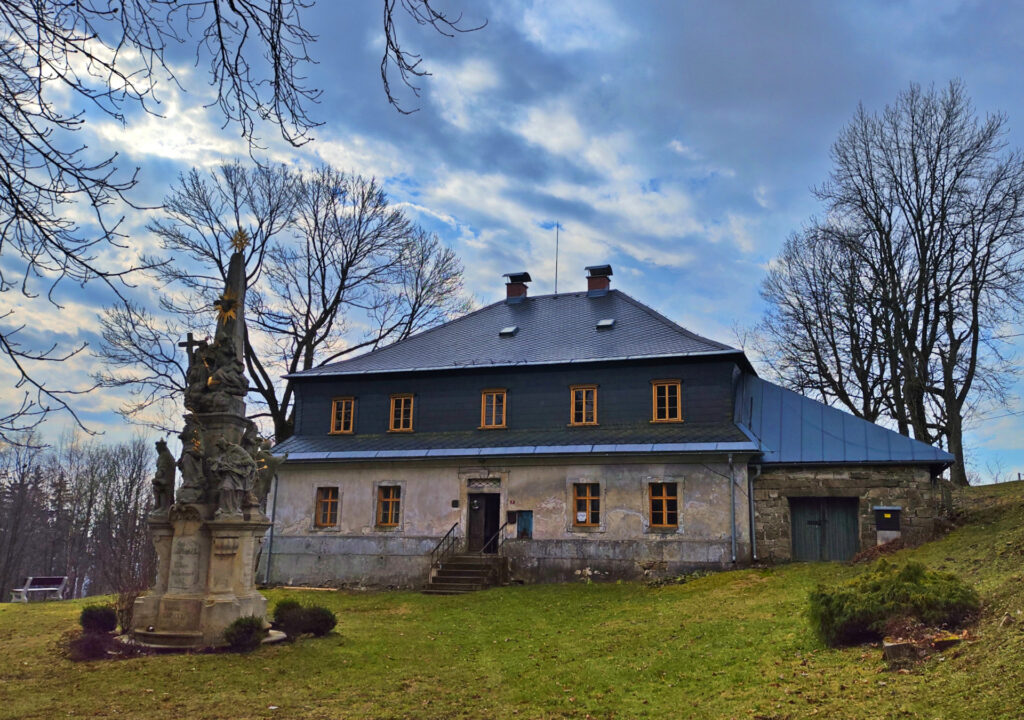
- Vicarage in Krásná
-
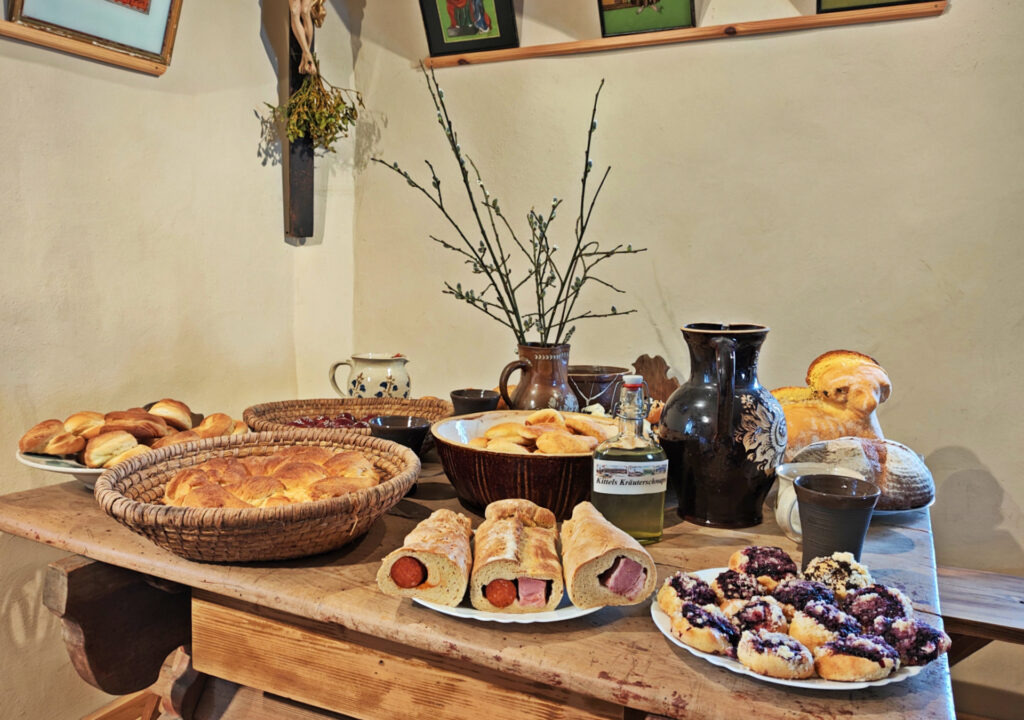
- Kittel House
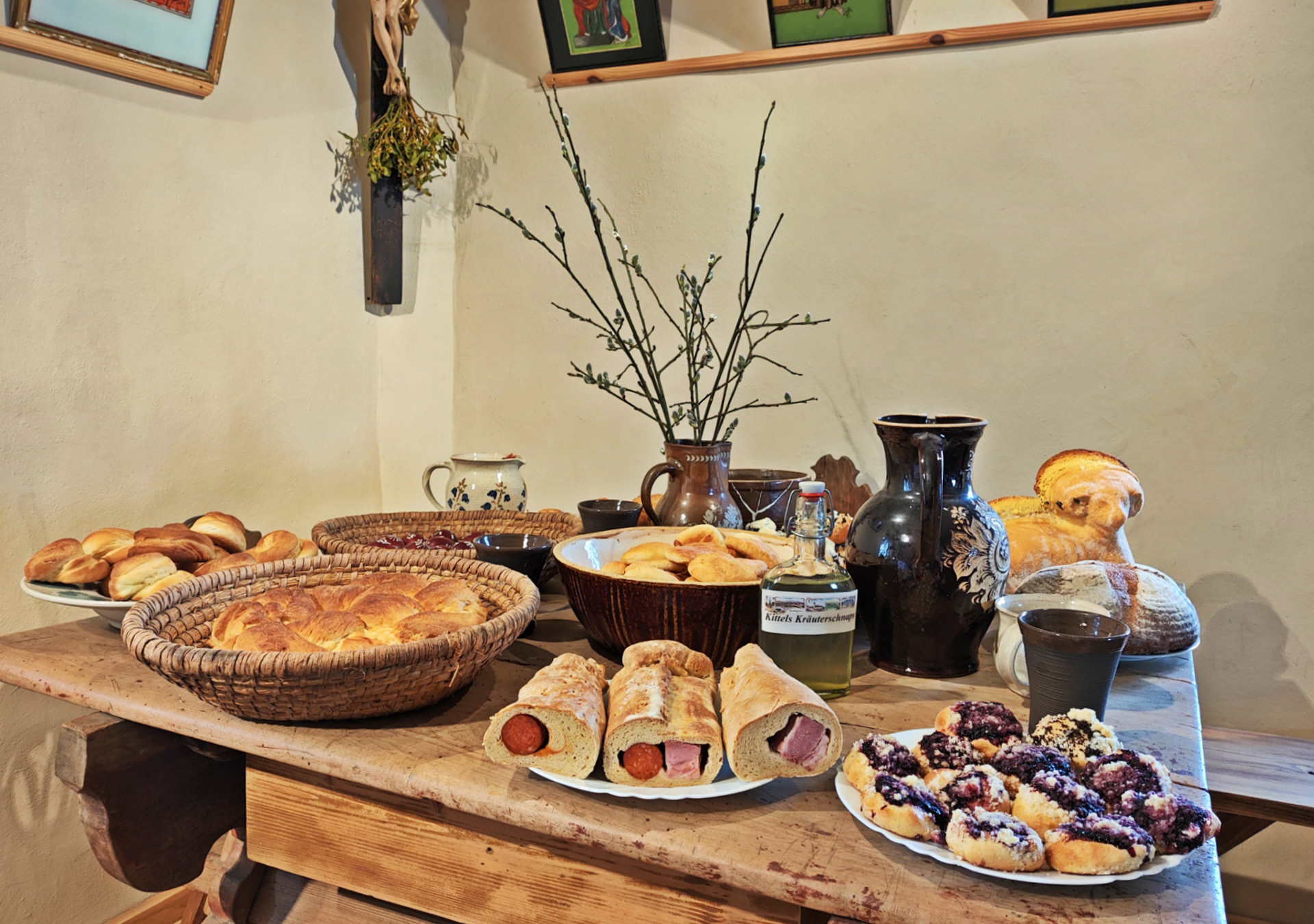
However, the greatest fame was brought to this village by the figure of the physician and healer Kittel, whose legacy includes a majestic timbered house. The legendary Kittel House now comes alive as a cultural and social centre, where history intertwines with modern life. Inside, you will find the Kittel Museum, which tells the fascinating story not only of the "wizard doctor" himself but also of the region's rich history. And if you are looking for more inspiration, you can also visit the information centre located in the house.
Address: Krásná 10, Pěnčín
Free parking is available at the Kittel House parking lot, located just above the vicarage.
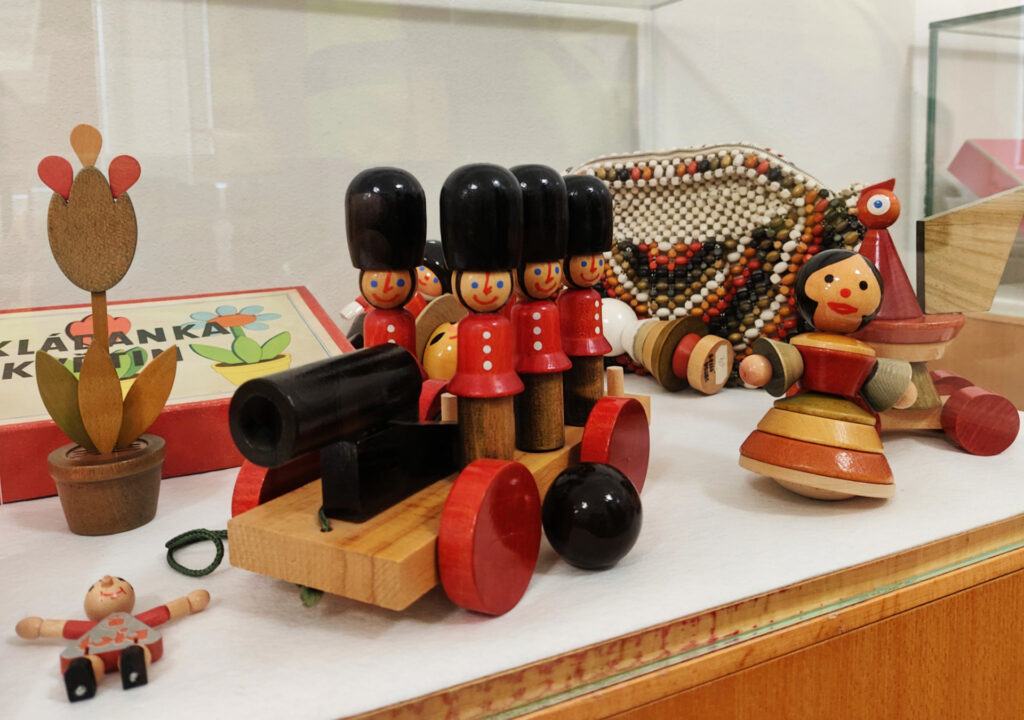
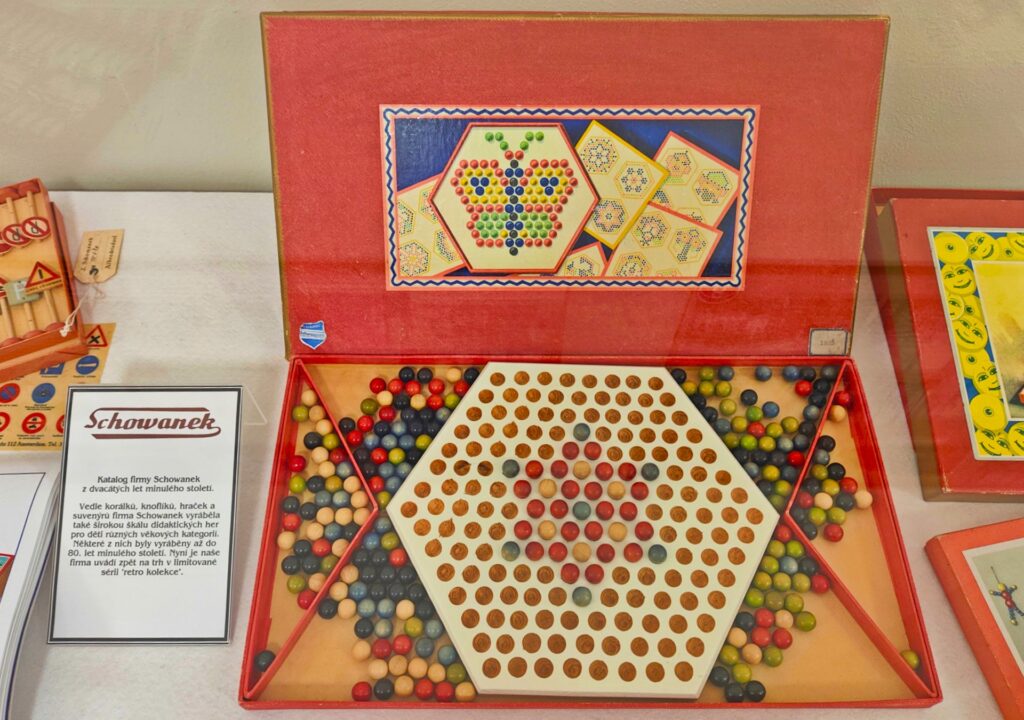
Just 13 km from the village of Pěnčín lies a unique place – Detoa Albrechtice, one of the last European manufacturers of wooden toys. Originally, the company produced beads and buttons, but it soon became famous for toys that conquered the world—from the legendary Krteček (Little Mole) to press up toys that even adults now bring home as original souvenirs.
-
- Detoa Albrechtice

-
- Detoa Albrechtice

During your visit to the factory, you will embark on a fascinating journey from a raw wooden log to a finished product. You will see century-old machines as well as current production, which still follows traditional methods. In the creative workshop, you can make your own toy, and if the charm of the place captivates you, you can take home a piece of this tradition from the company store.
Address: Jiřetín pod Bukovou 6
And where to park your car? No worries—you can park for free just a few steps away from the factory, right beneath the train stop.