




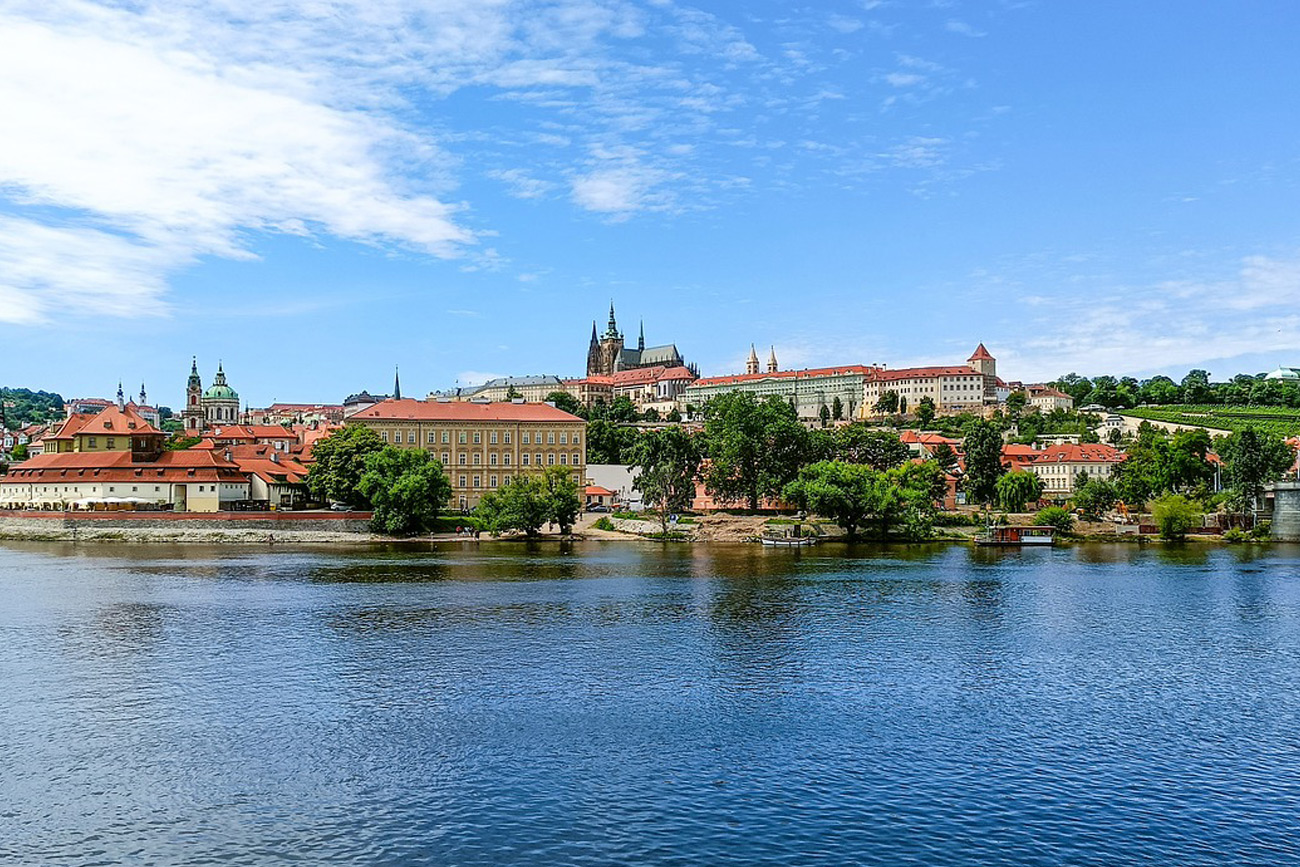
Every year, on the occasion of certain national holidays, state buildings that are not normally accessible to the public open their doors. This year, we took advantage of the pleasant weather and visited some of Prague’s beautiful palaces. Today we will introduce you to some of them.
Hrzánský Palace
Over the centuries, the breathtaking view from Hrzánský Palace has been enjoyed by various owners who modified and reconstructed the palace complex in different ways. One of them was Count Zikmund Valentin Hrzán of Harasov, who bought this house for its location near Prague castle. Although he later fell into debt and had to sell the property, the palace still bears his name today.
An interesting fact is that the palace is built on a steep terrain slope, which is why the part facing Loretánská street has only two floors, while the southern section facing Úvoz and Malá Strana (Lesser Town) has five floors.
-
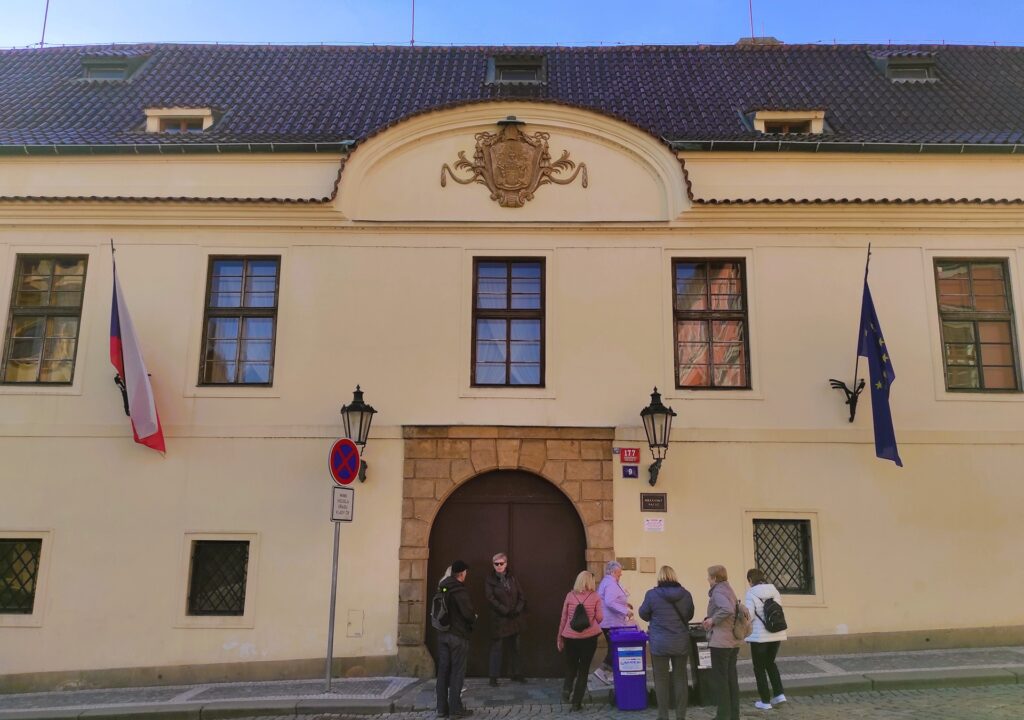
- Hrzánský Palace
-
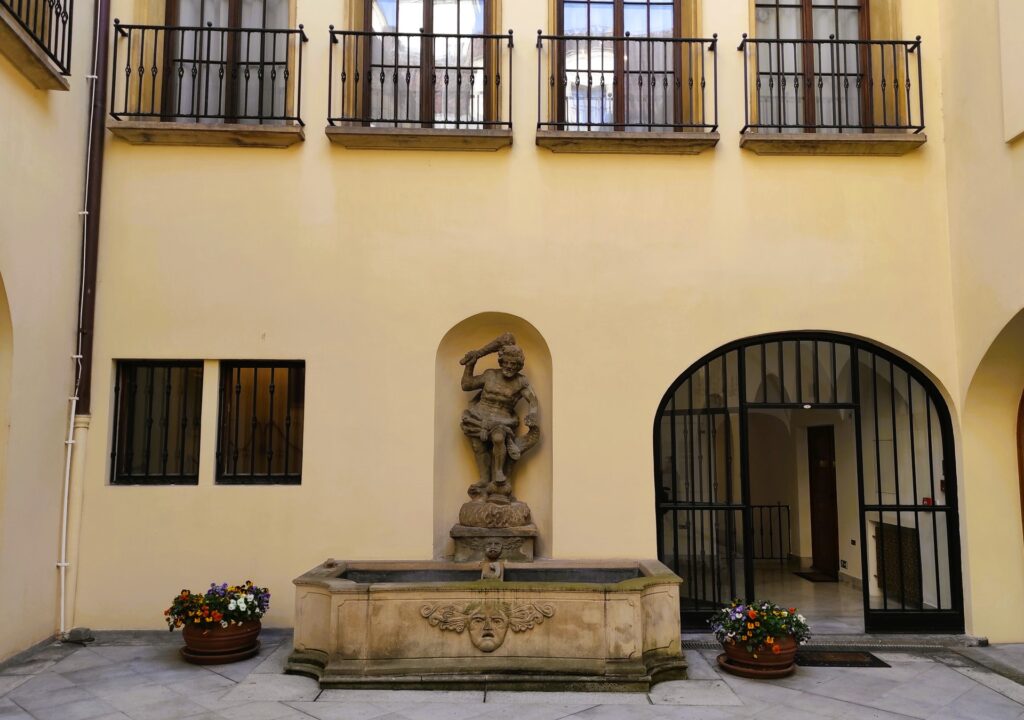
- Fountain of Hercules in the courtyard
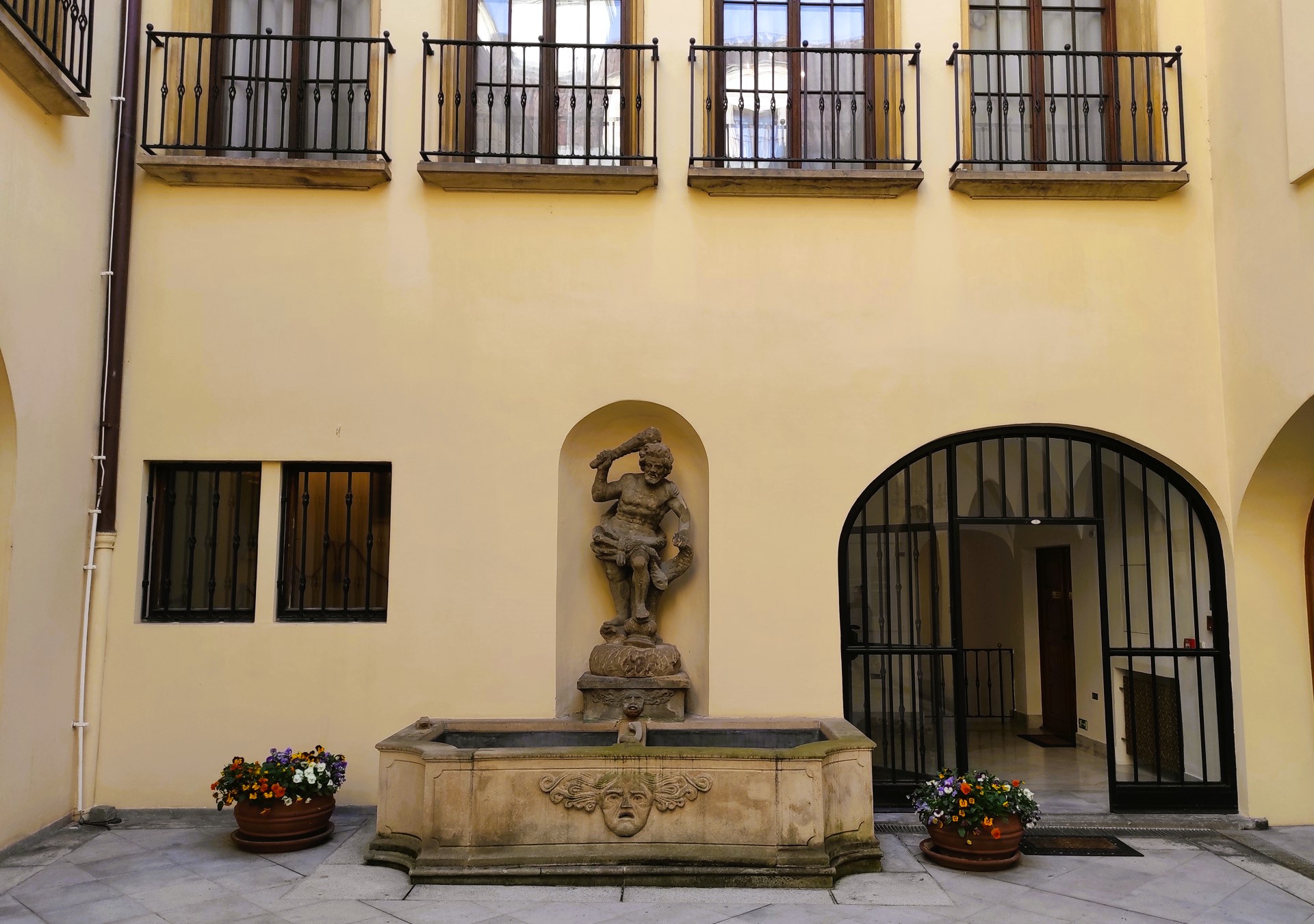
Among the prominent personalities who lived here were the first Czechoslovak president Tomáš Garrigue Masaryk and the painter Jan Slavíček, who even had one of the palace's windows modified, from which he later painted several famous paintings with views of Prague.
-
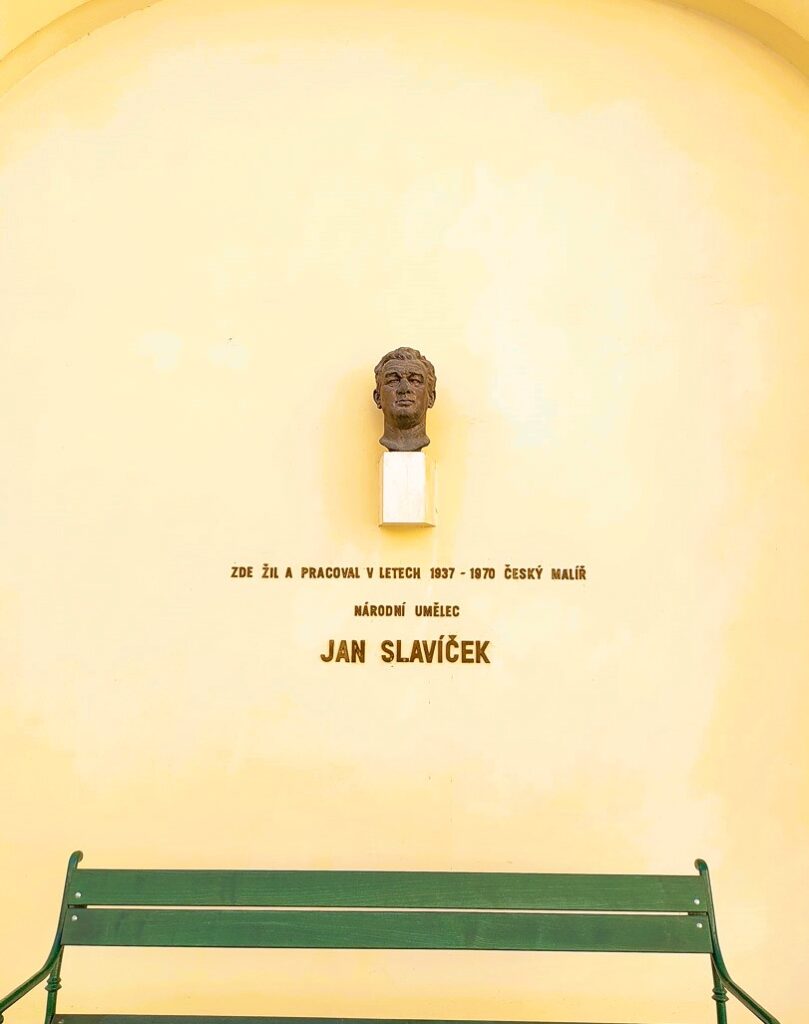
- Memorial plaque of Jan Slavíček
-
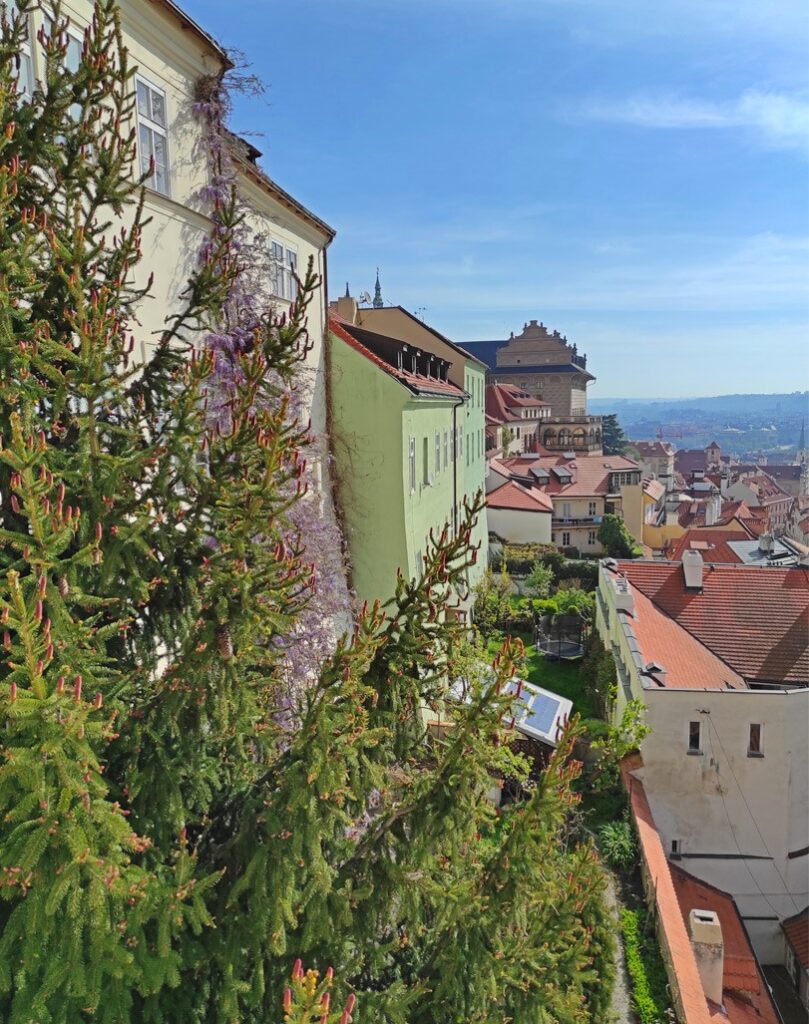
- View from the terrace
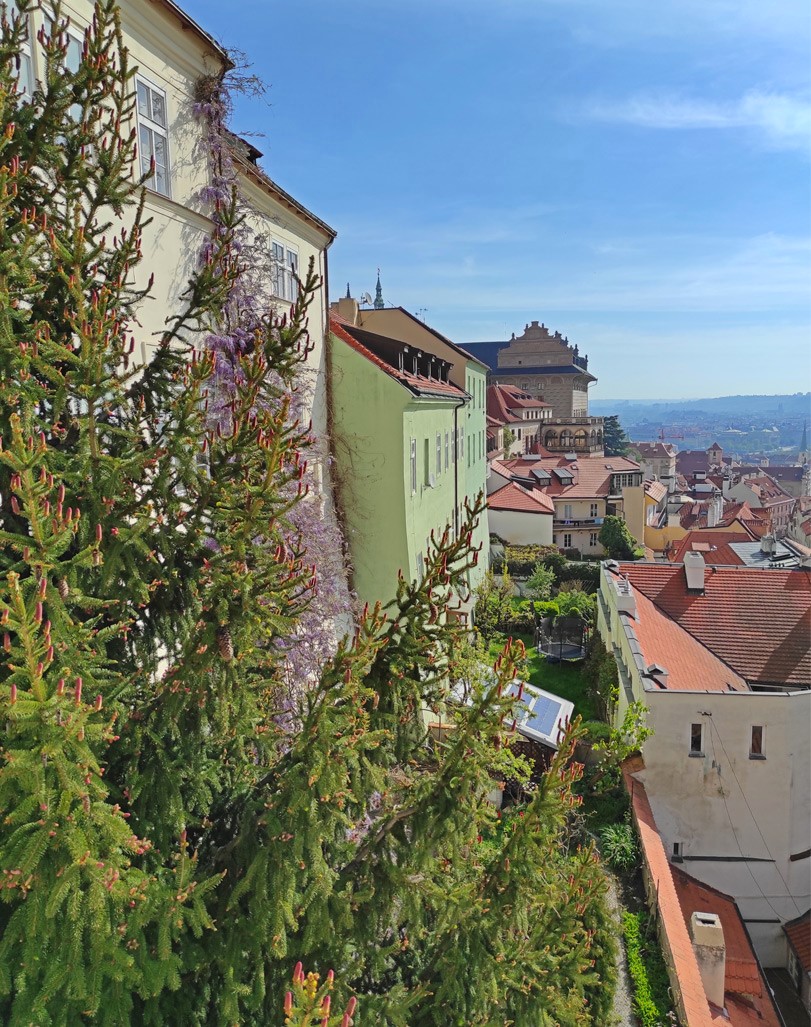
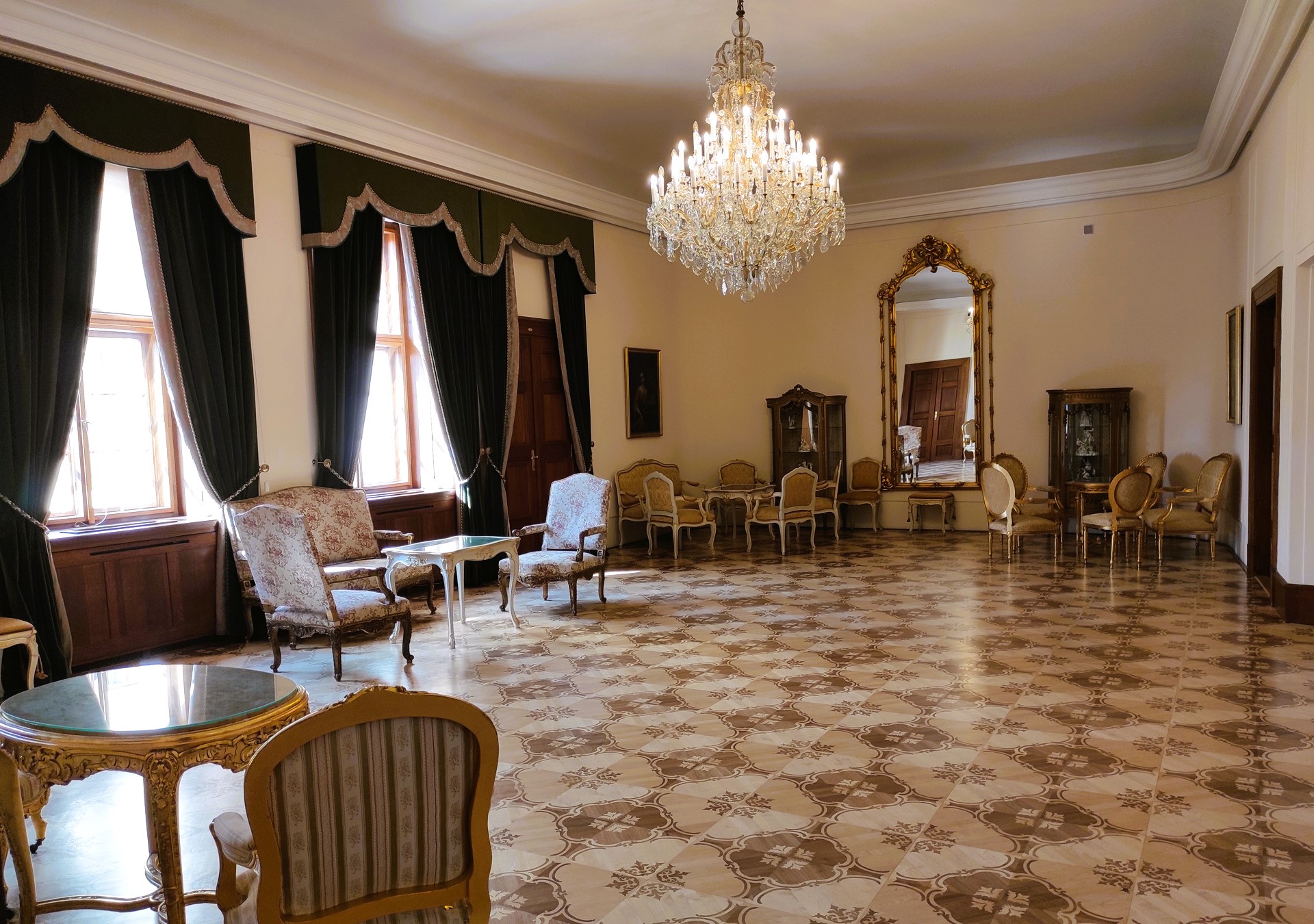
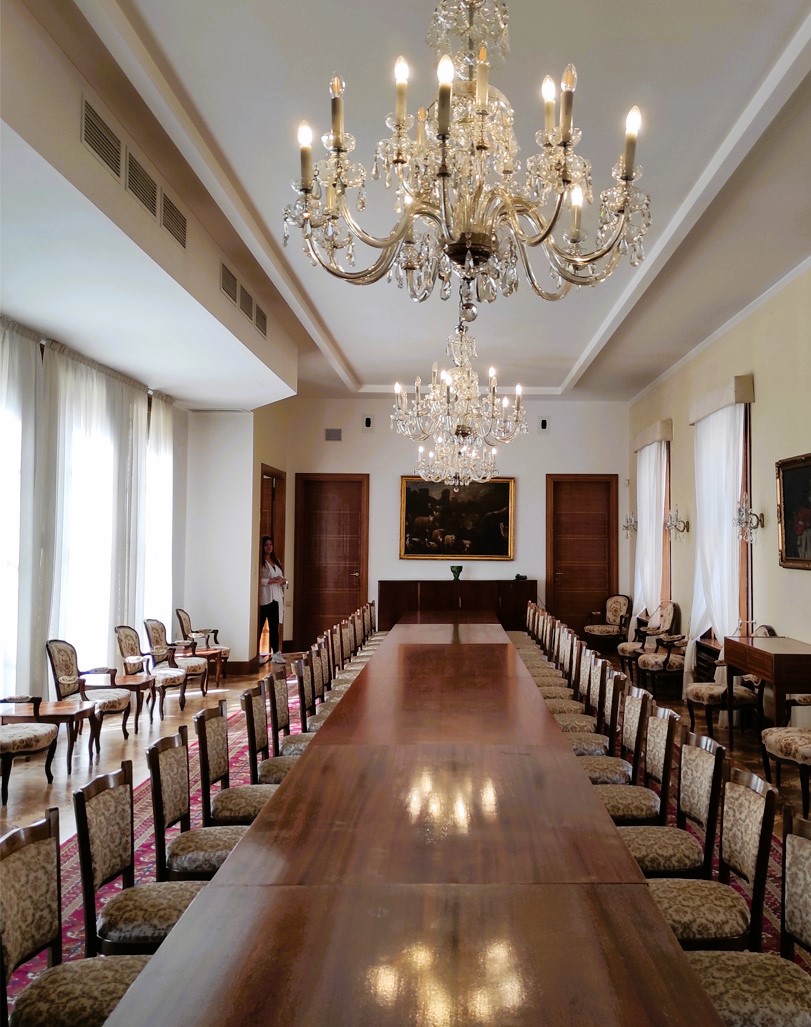
Currently, the building is used for the representative purposes of the Prime Minister of the Czech Republic. These lavish premises host state visits, ceremonial lunches and dinners, and during government negotiations, the newly appointed Prime Minister traditionally resides here.
Address: Loretánská 177/9, Prague
-
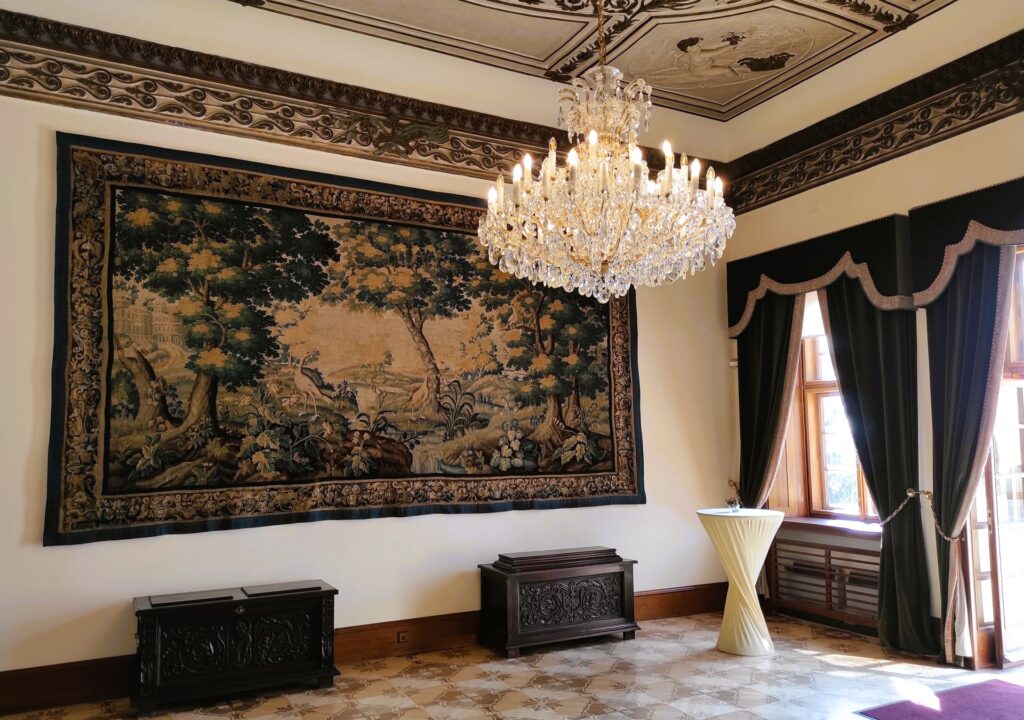
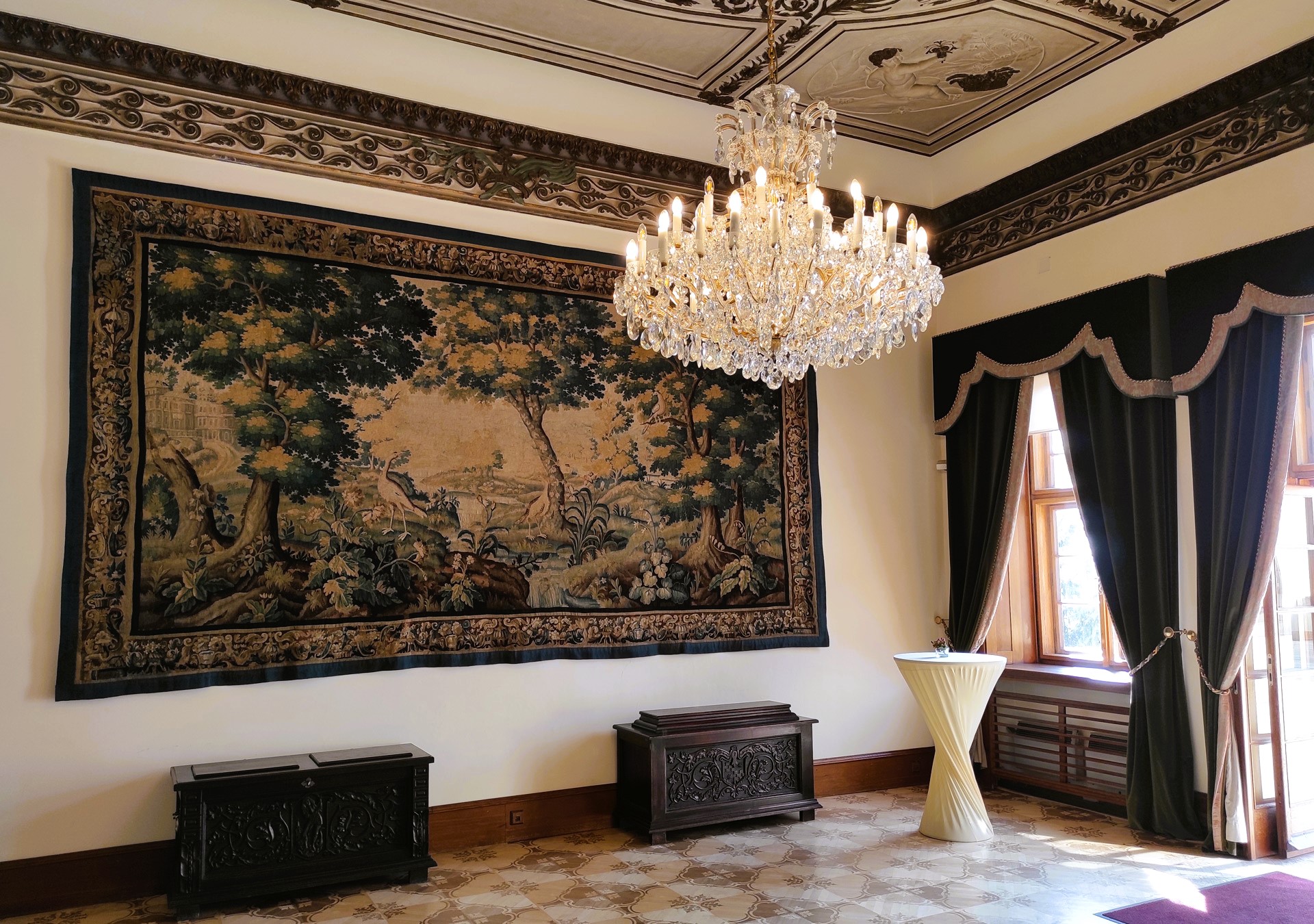
- Interiors with precious tapestries
-
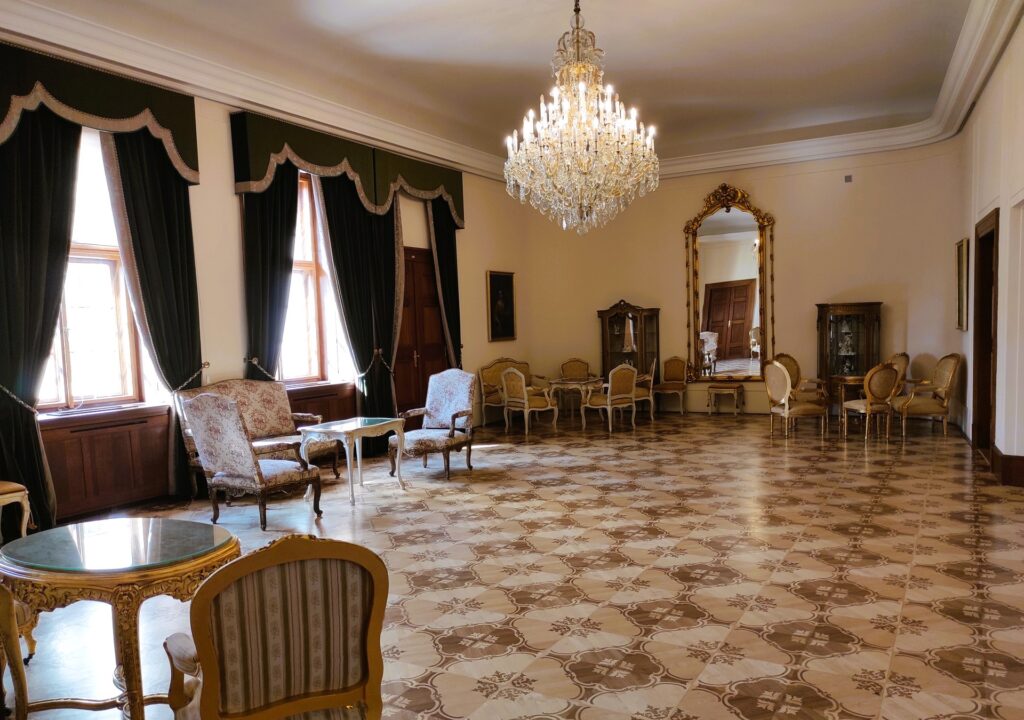
- Palace Hall
-
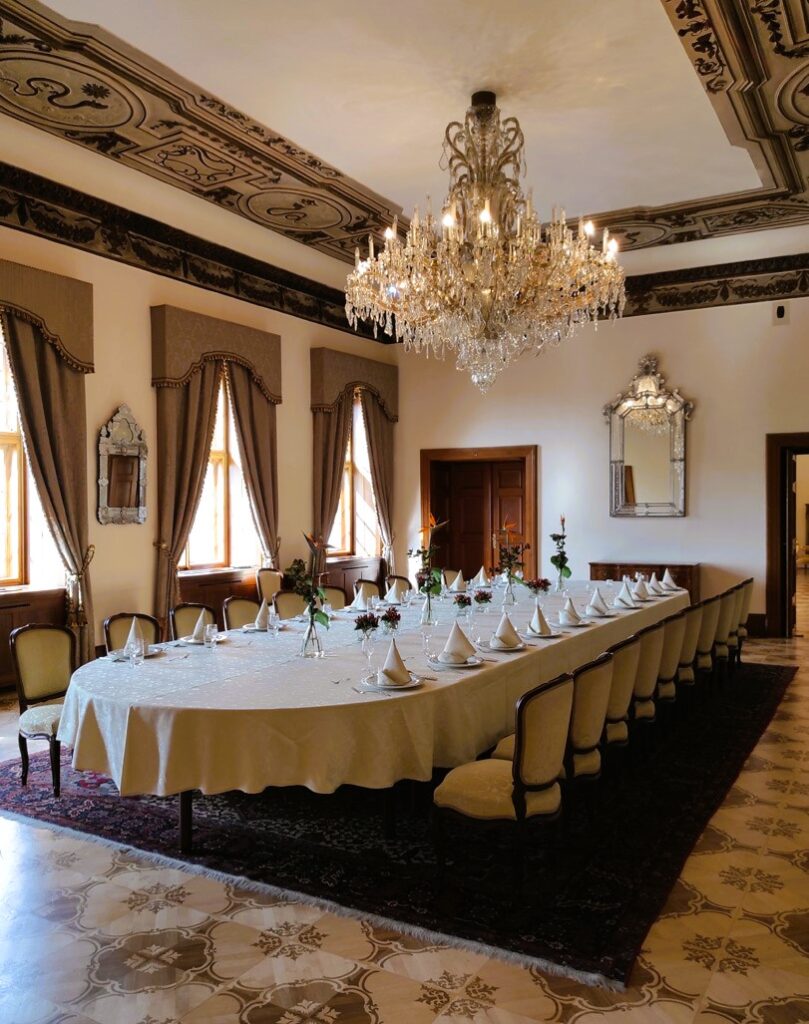
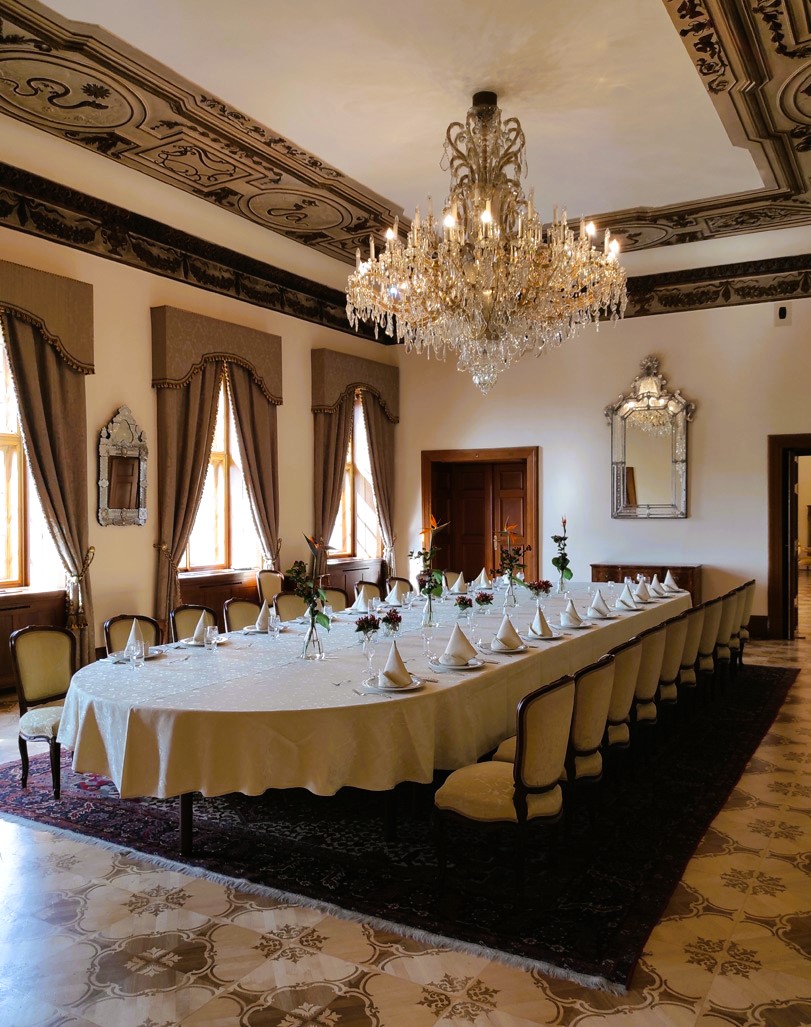
- Festive Dining Room
-
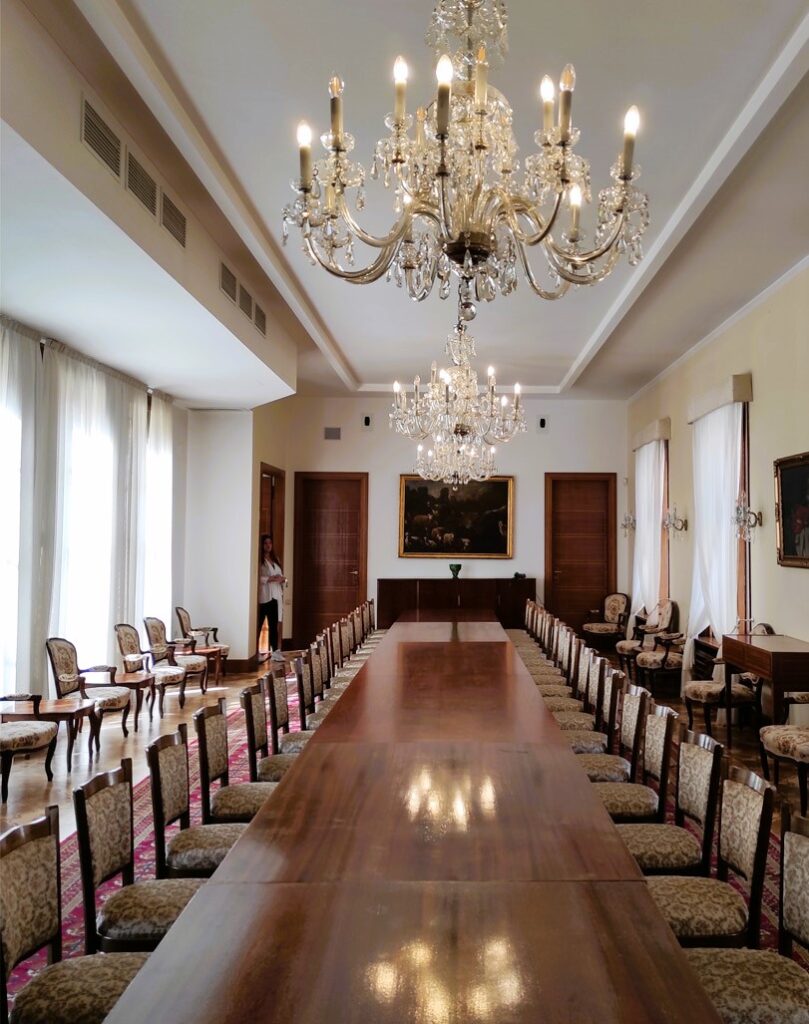
- Session Hall
From Hrzánský Palace, we then walked comfortably down through Hradčanské square and Nerudova street to Malostranské square, where the Chamber of Deputies is located in several palaces.
The Chamber of Deputies
The Chamber of Deputies of the Parliament of the Czech Republic is located in a complex of several palaces in Malá Strana beneath Prague castle.
In the Thun Palace, which is now its main building, was proclaimed the independent Czechoslovak Republic in 1918, and the first Czechoslovak president, Tomáš Garrigue Masaryk, was elected.
The palace was built at the end of the 17th century and served as the representative residence of the Thun family. However, it was severely damaged by fire at the end of the 18th century and subsequently sold to the Bohemian estates, who adapted the palace for the needs of the provincial diet and committee. Thus, the current classicistic exterior appearance of the façade dates back to the early 19th century.
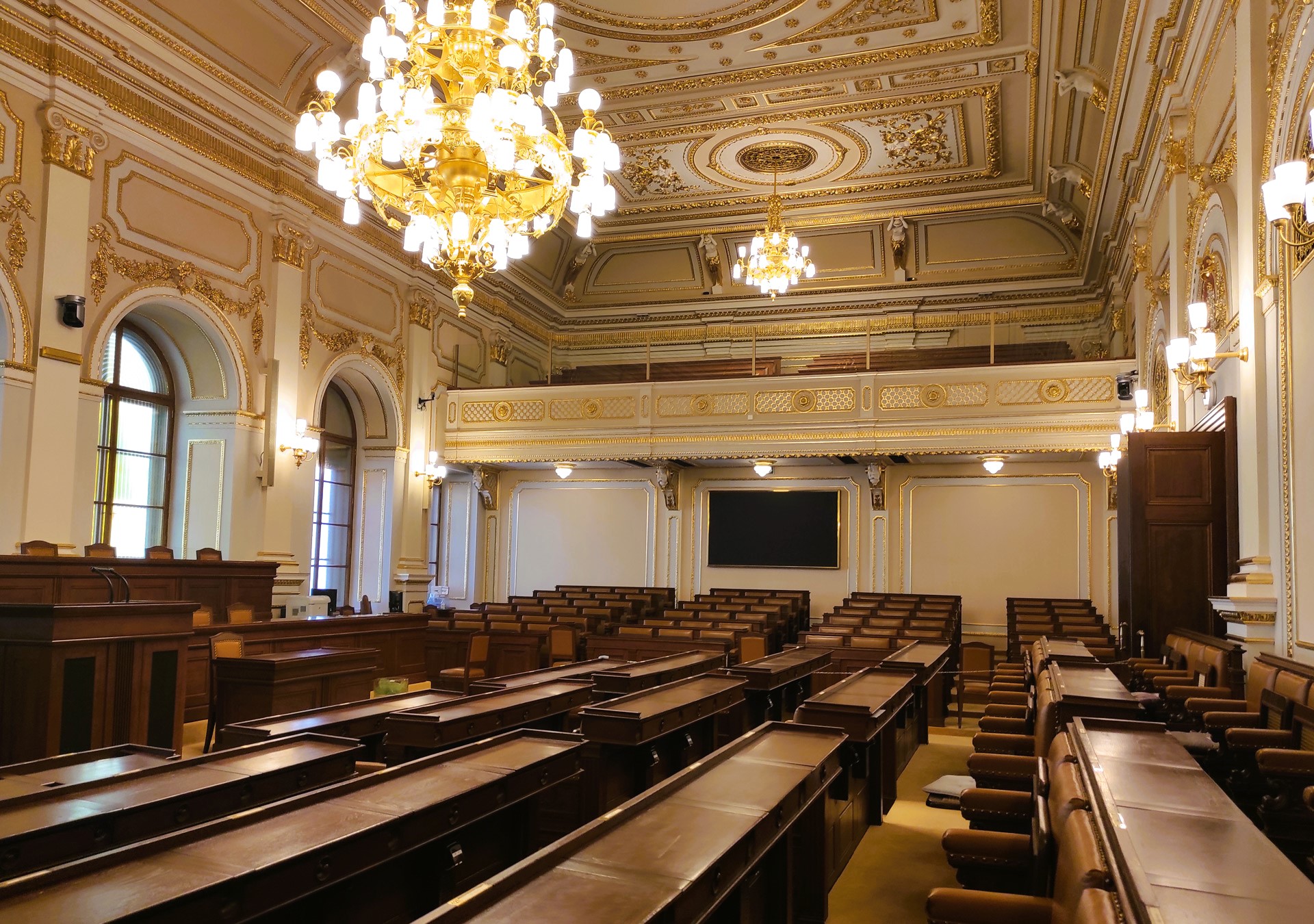
The Thun palace also houses the Chamber Hall with late classicistic gilded decorations. Among other materials, papier-mâché was used for the decoration—a mixture of shredded paper, water and glue that is poured into moulds and then left to dry.
If you're as lucky as we were and the security allows it, you can take a photo behind the speaker's lectern familiar from TV reports of Chamber of Deputies sessions.
-
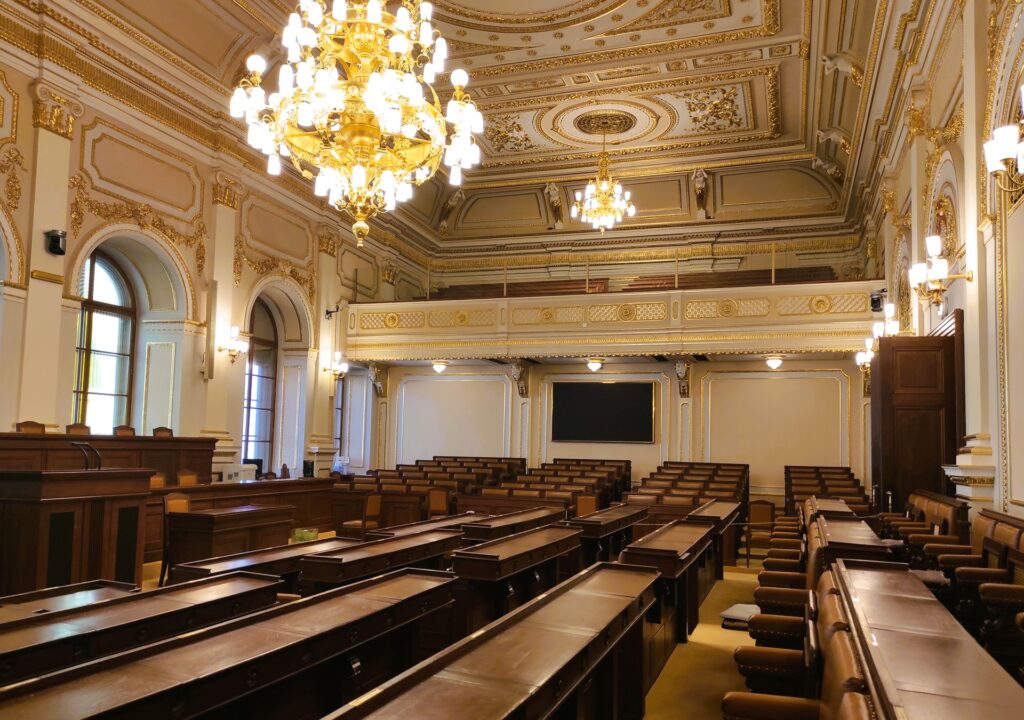
- Chamber Hall
-
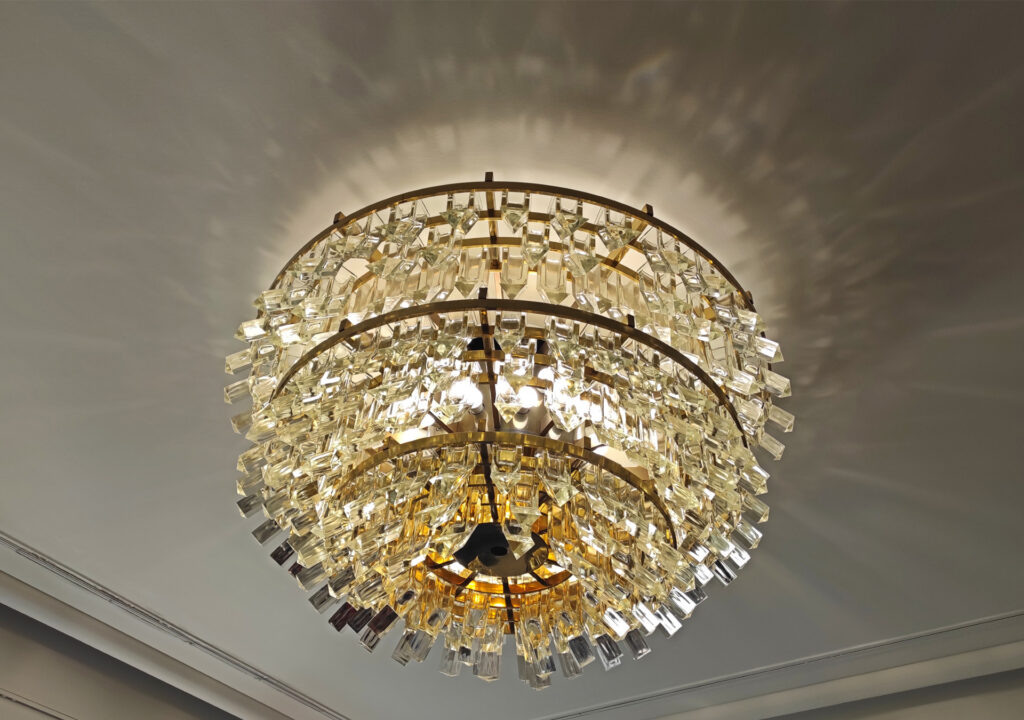
- Crystal chandelier
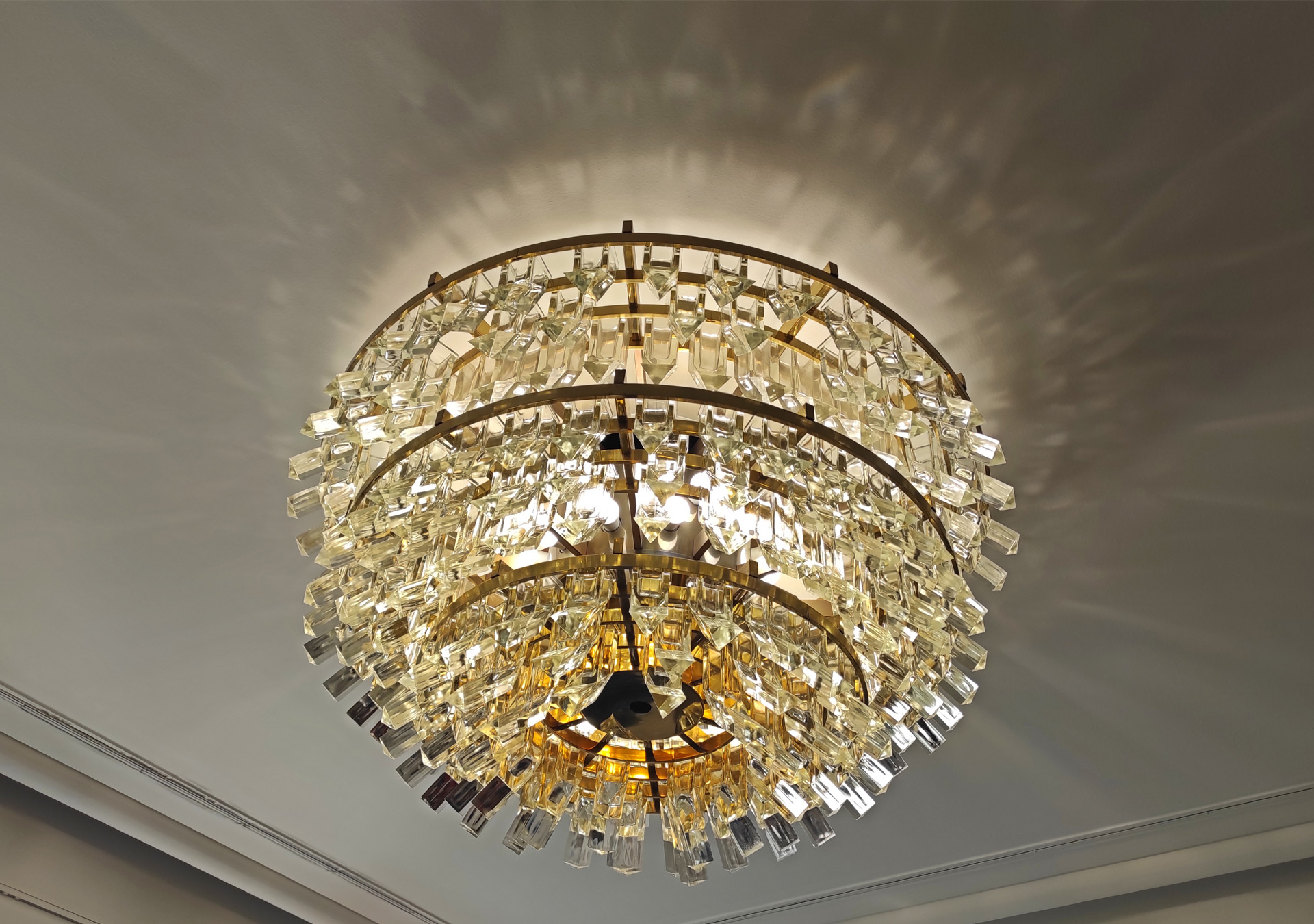
-
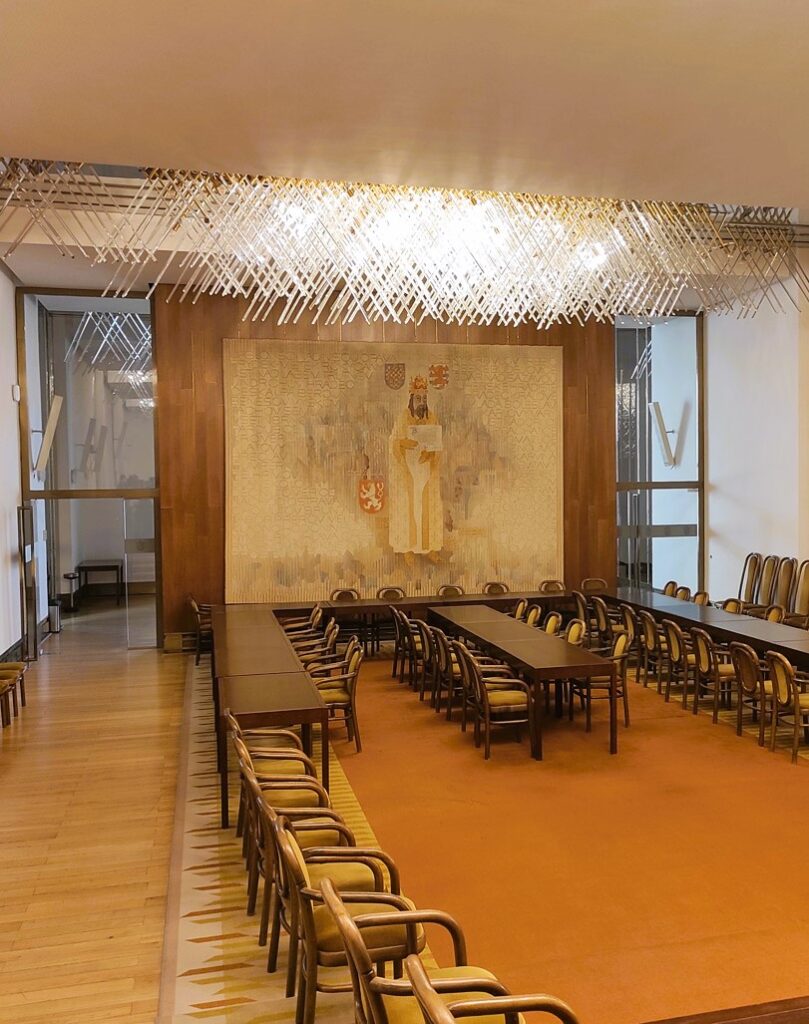
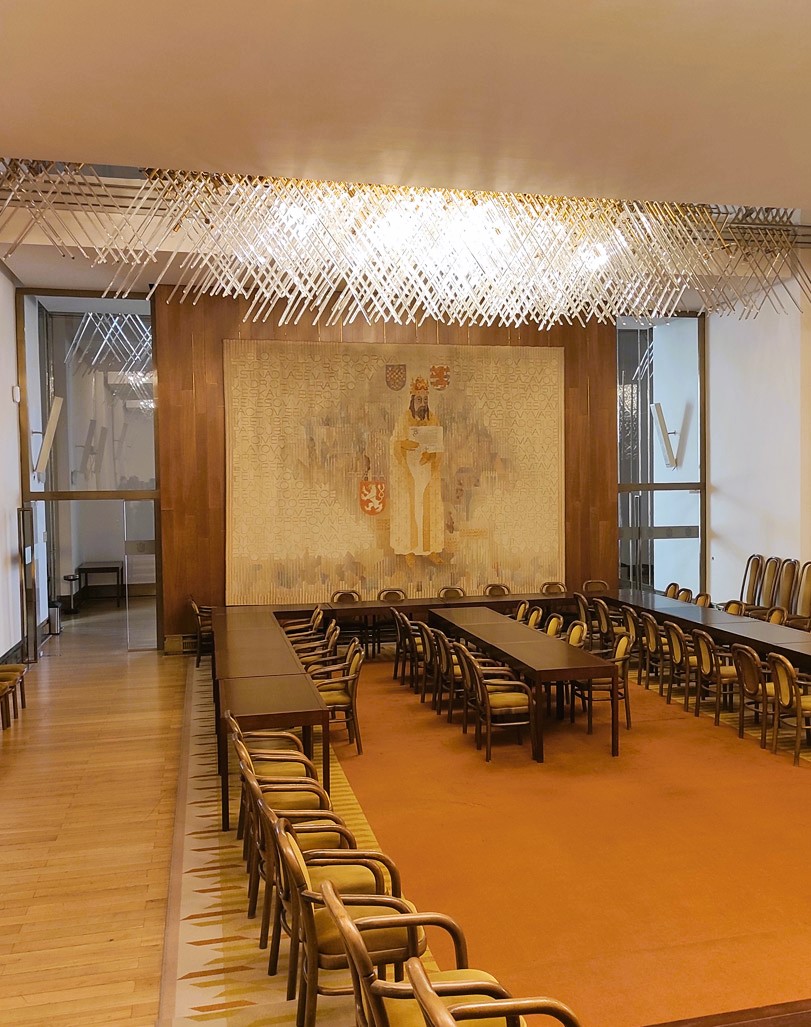
- Hall of State Acts
-
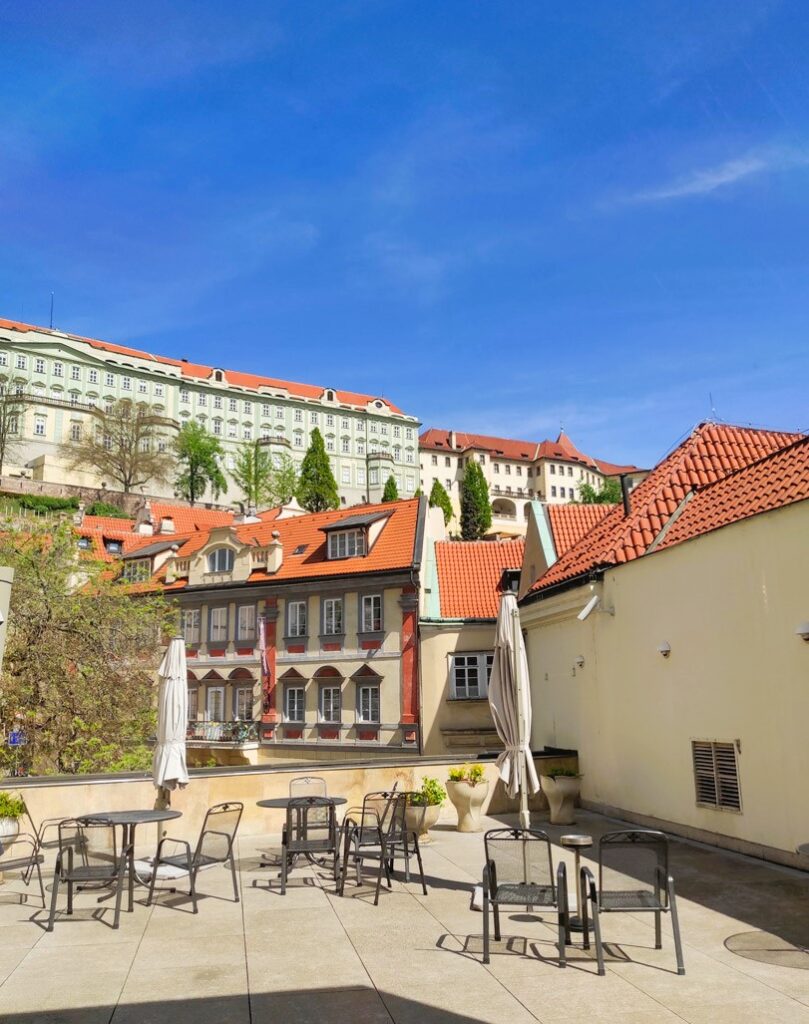
- View of the Prague Castle area
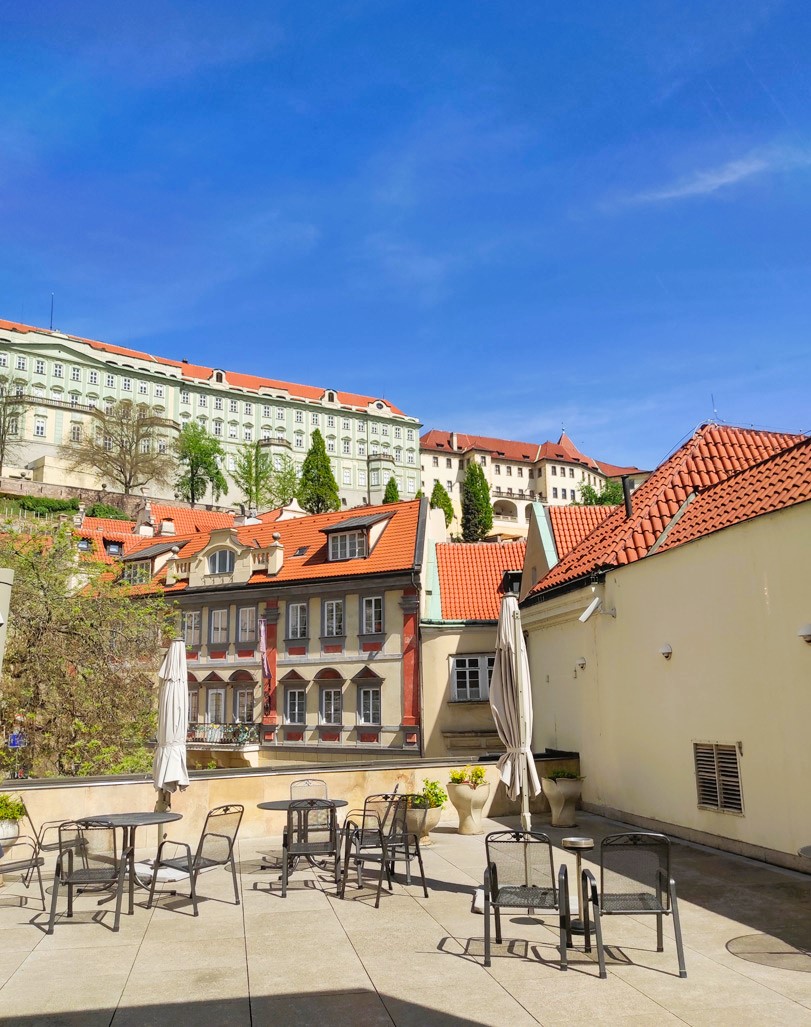
The Smiřický Palace was built in the early 17th century by connecting several houses. In May 1618, the palace tower was the site of a conspiratorial meeting of members of the rebellious anti-Habsburg protestant nobility. It was here that the plan to carry out the defenestration of the imperial governors was devised. After the lost Battle of White Mountain, the palace changed owners several times. At the end of the 19th century, the building was purchased by the Provincial Committee of the Kingdom of Bohemia.
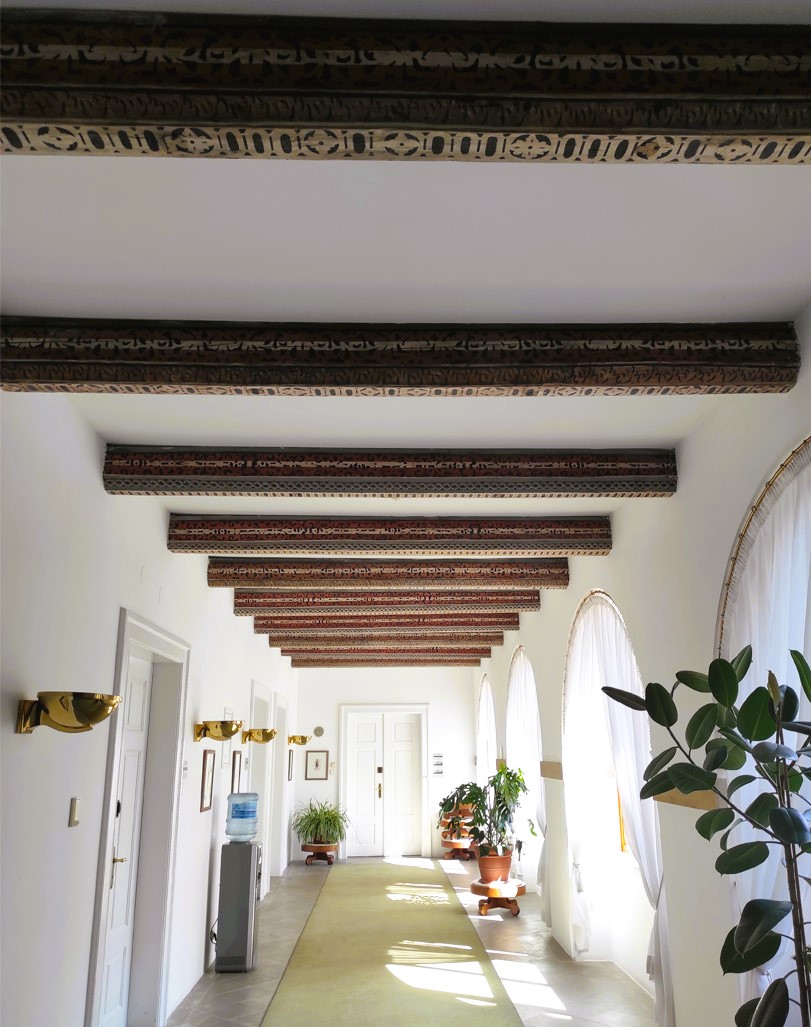
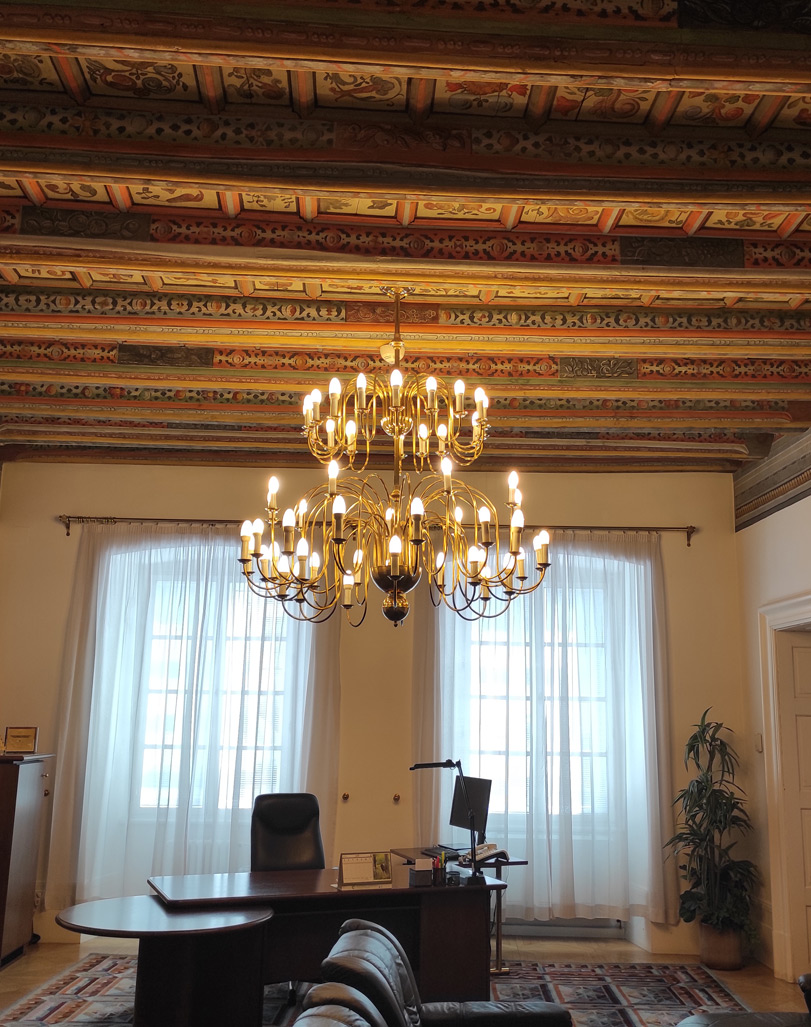
During the last reconstruction in the 1990s, the painted renaissance beam ceilings and rich sgraffito decorations were also restored.
-
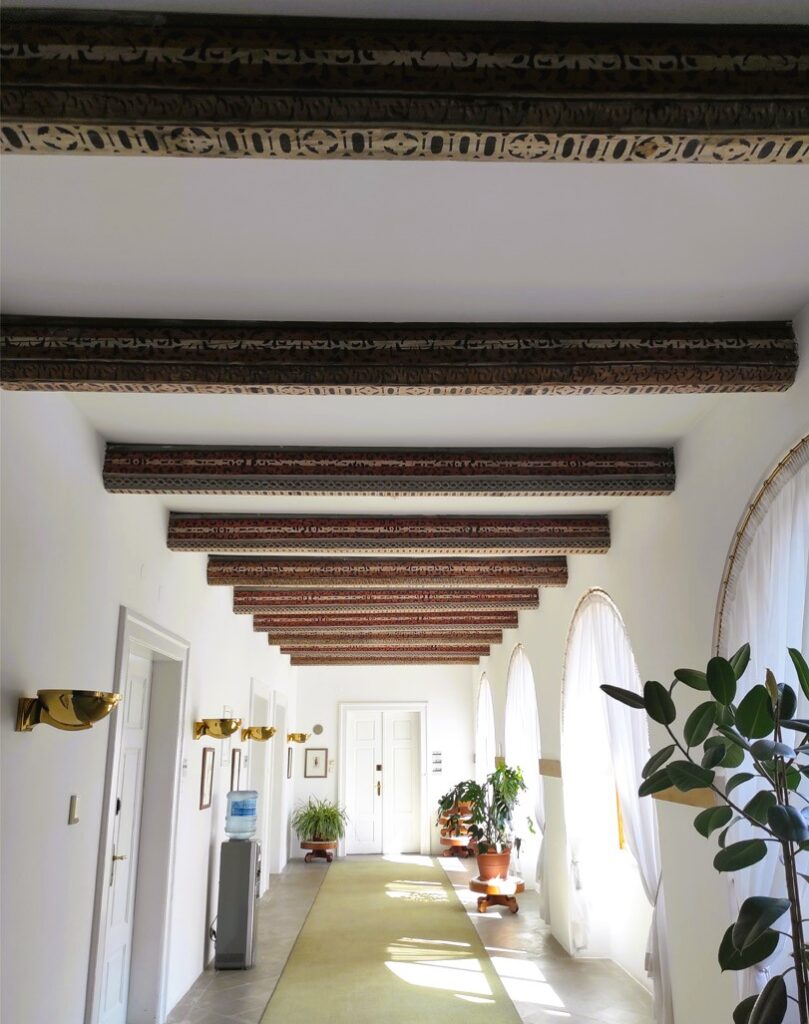
- Renaissance beam ceilings
-
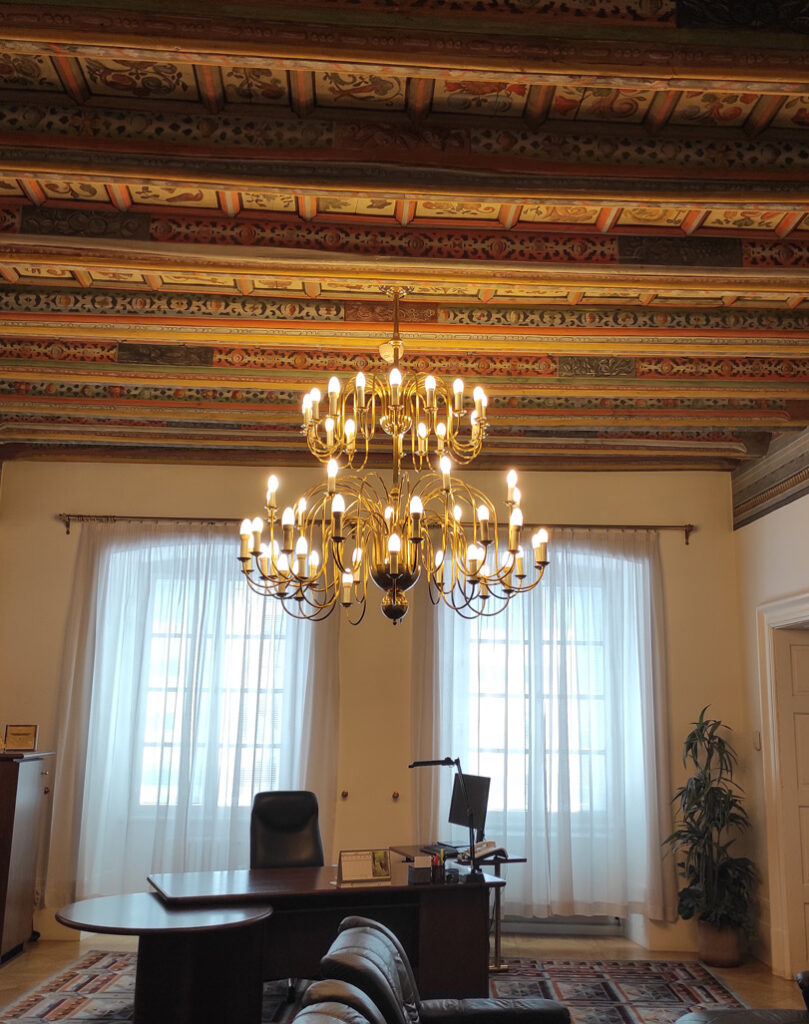
- Smiřický Palace
The disparate facade of the Sternberg Palace reveals that it originally consisted of two houses. These Gothic buildings from the 14th century were connected through a major Renaissance reconstruction and later Baroque modifications.
In one of these houses, a fire broke out in 1541. Unfortunately, the master of the house was not present at the time, and the servants were afraid to let strangers inside to help extinguish the flames. The fire spread rapidly and eventually destroyed two-thirds of the houses in Malá Strana, sparing neither Hradčany nor Prague castle. The house was long afterward considered cursed.
During the Czech national revival, the guests of then-owner Kaspar Sternberg included prominent figures of the emerging Czech science and culture, such as Dobrovský and Palacký.
-
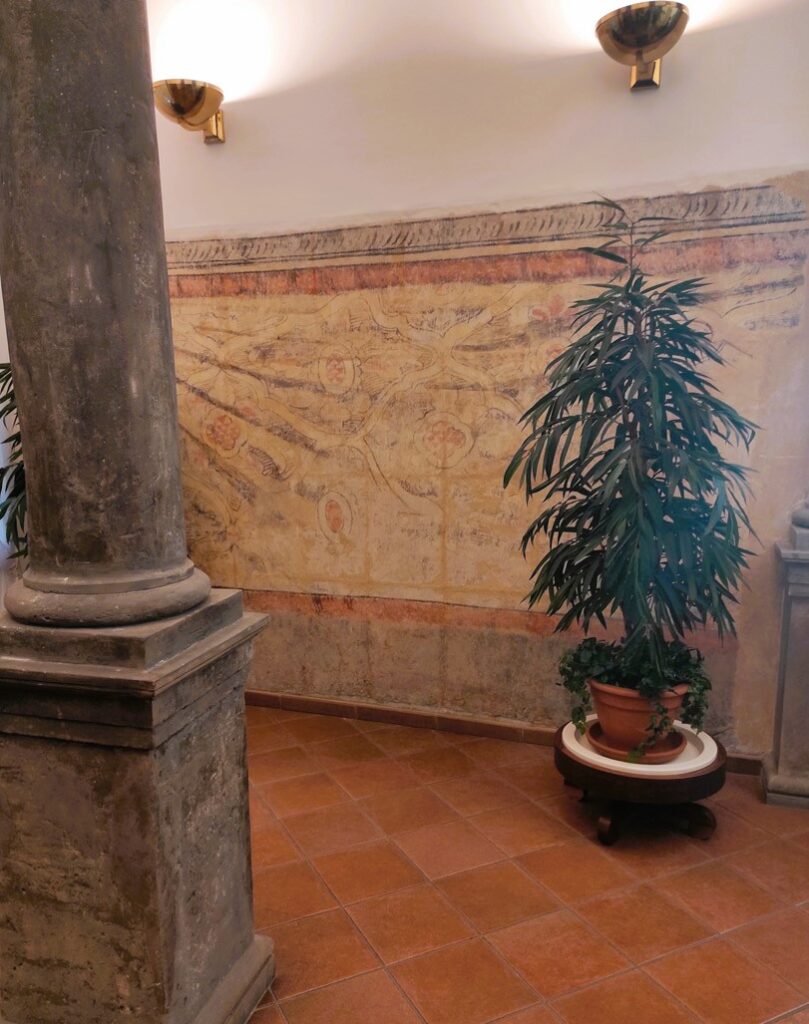
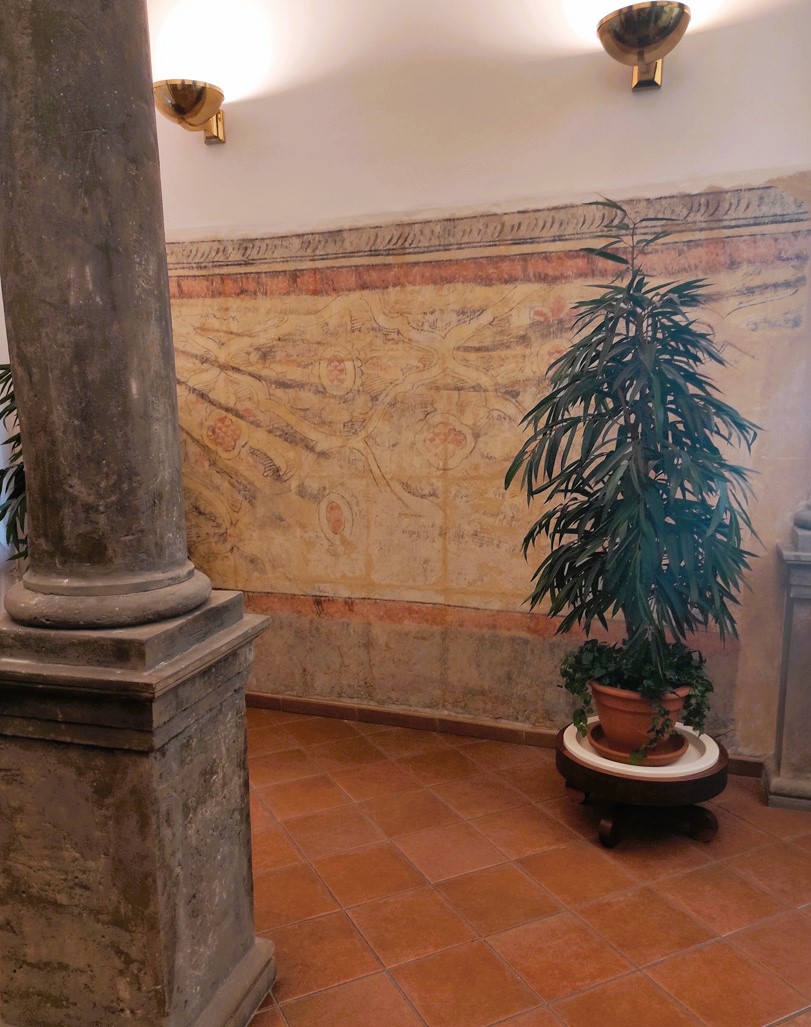
- Original mural
-
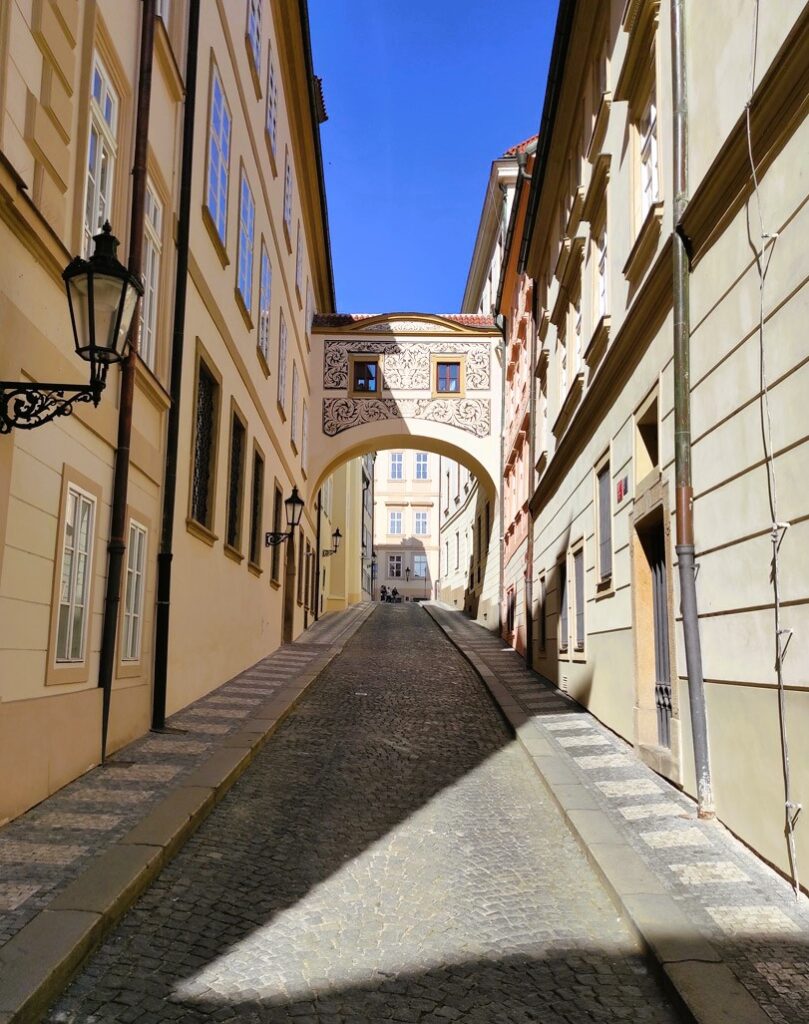
- Small bridge connecting Sternberg and Thun Palaces
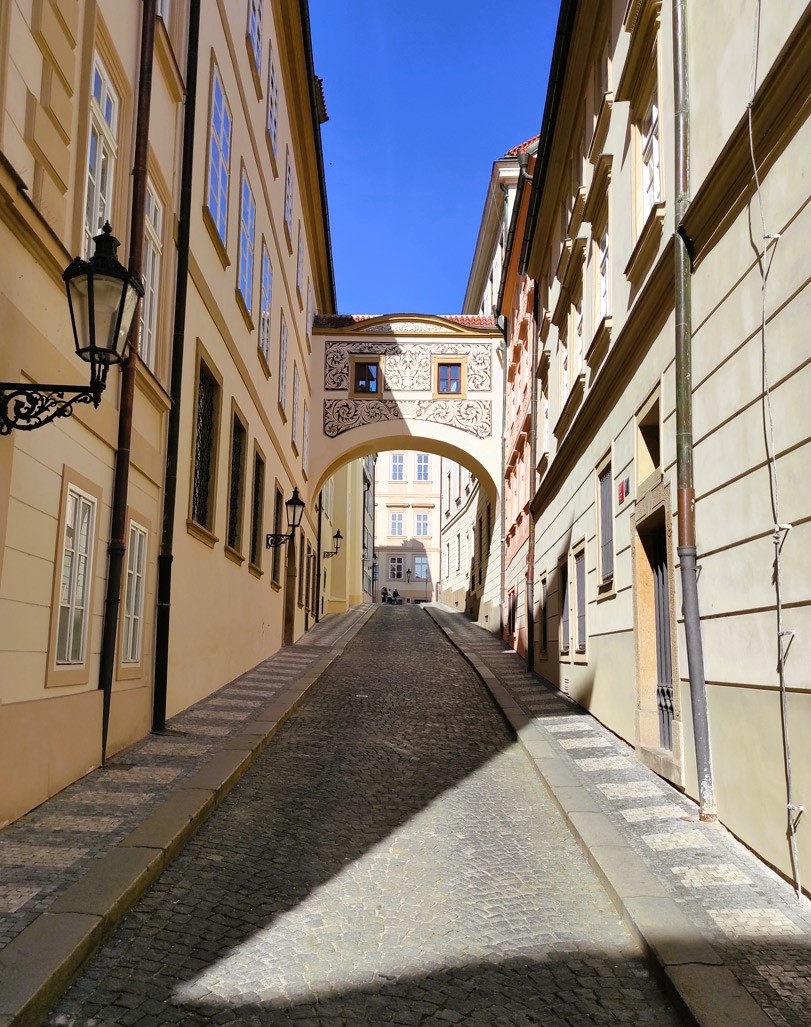
At the beginning of the 20th century the Sternberg Palace was bought by the Provincial Committee and connected to the neighbouring Thun Palace by a bridge.
Address: Sněmovní 176/4, Prague
Useful tips:
To visit the palaces, just arrive about 10 to 15 minutes before opening time, and you’ll easily be among the first visitors (roughly the first 30 people). The palaces usually open at 9 a.m.
The tour is led by professional guides who will also answer any curious questions you may have. Photography of the interiors is allowed.
And where can you find information about open days?
Preferably on the official websites of the Government and the Chamber of Deputies (under the " Media Centre" tab). We also recommend that you follow the website "Open Doors Day".
Invitation to the end:
Get inspired to visit the Senate buildings and Liechtenstein Palace in the upcoming article titled Open Days in Prague: palaces (not) only for the elite II.