



Are you planning to visit Prague while also relaxing and discovering something new? Then dive into the tips below, which will reveal both traditional and hidden gems of Prague.
Strahov Monastery
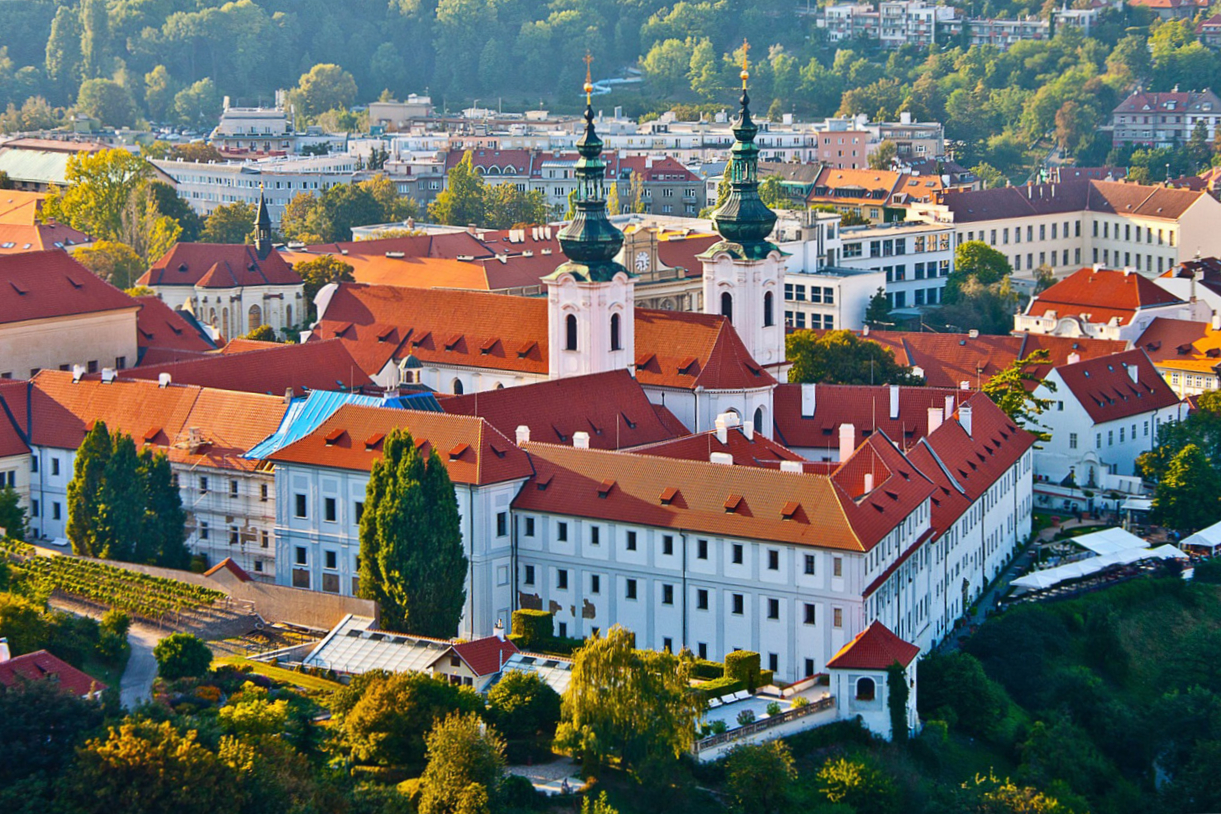
One of Prague's famous treasures is undoubtedly Strahov Monastery. This unique complex, founded in the 12th century, is one of the oldest still-existing Premonstratensian monasteries in the world. We visited it during the winter season to avoid the largest crowds of tourists that come here every year.
Address: Strahovské nádvoří 132/1, Prague
-
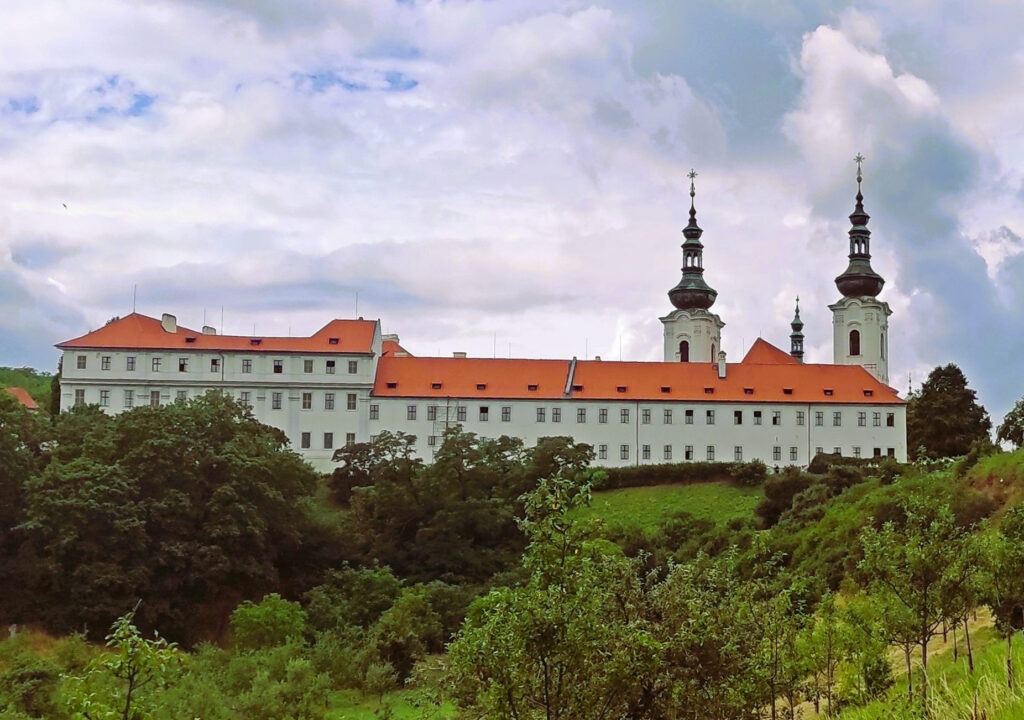
- Strahov Monastery

-
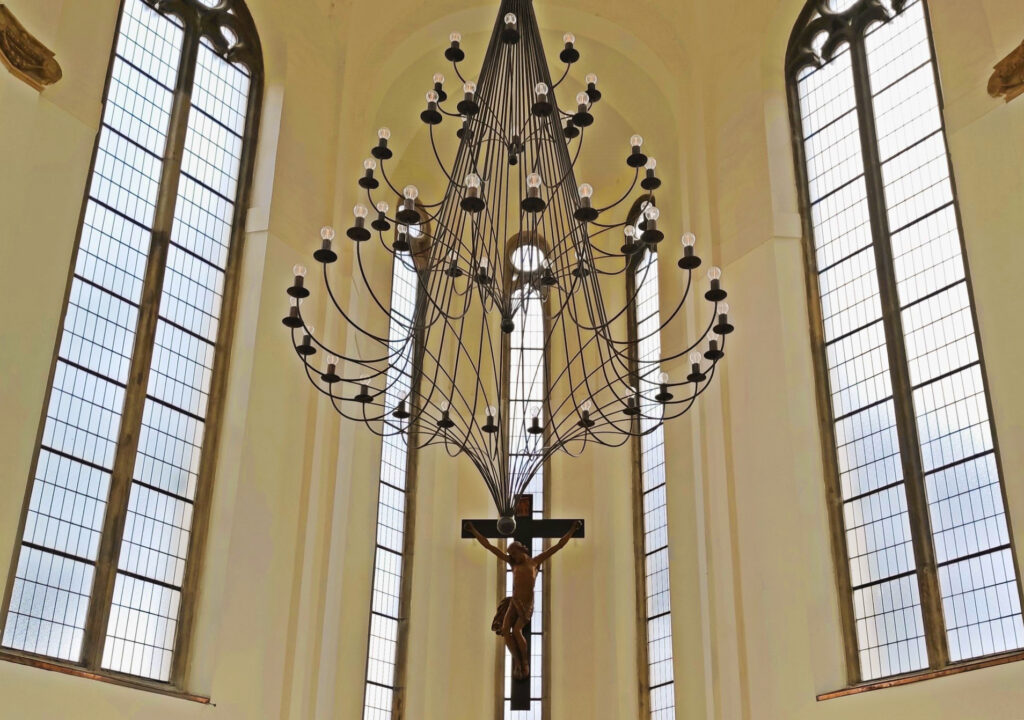
- Church of St. Roch
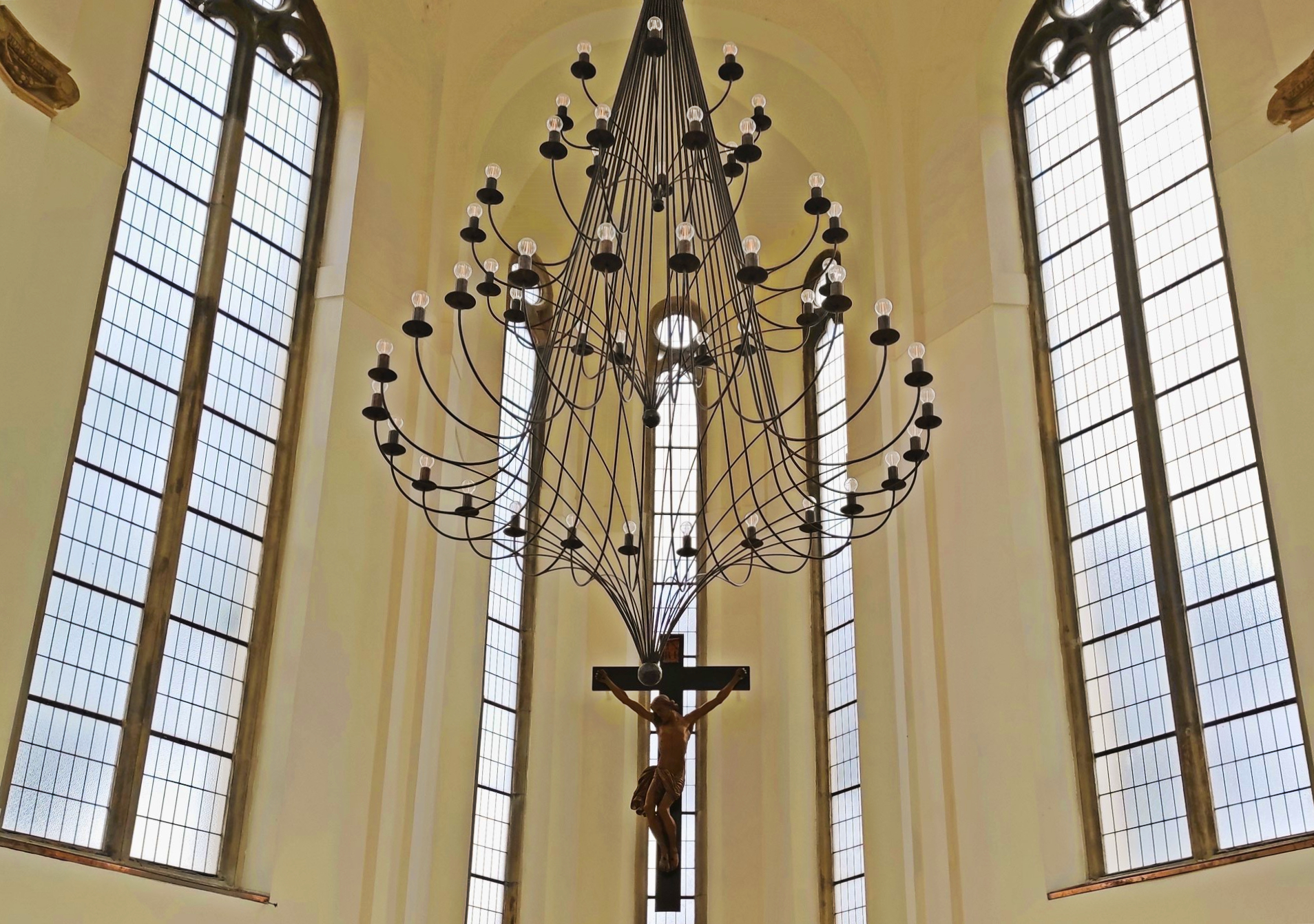
Our tip:
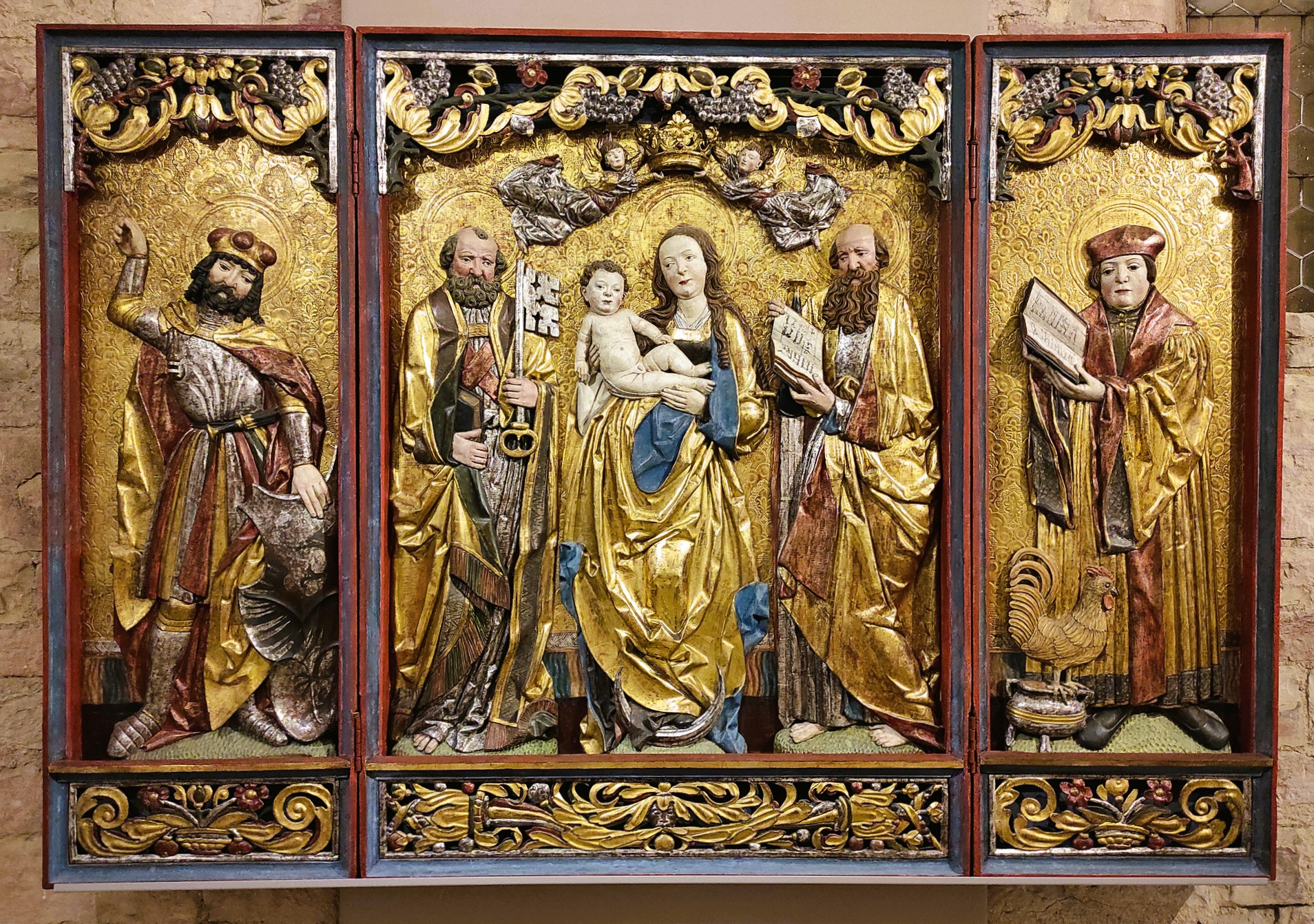
At the newly opened ticket office in the Church of Saint Roch, we bought a combined ticket that includes not only the monastery library but also the convent building with an art gallery, featuring a selection from an impressive collection of the finest works from the Middle Ages to the present day.
-
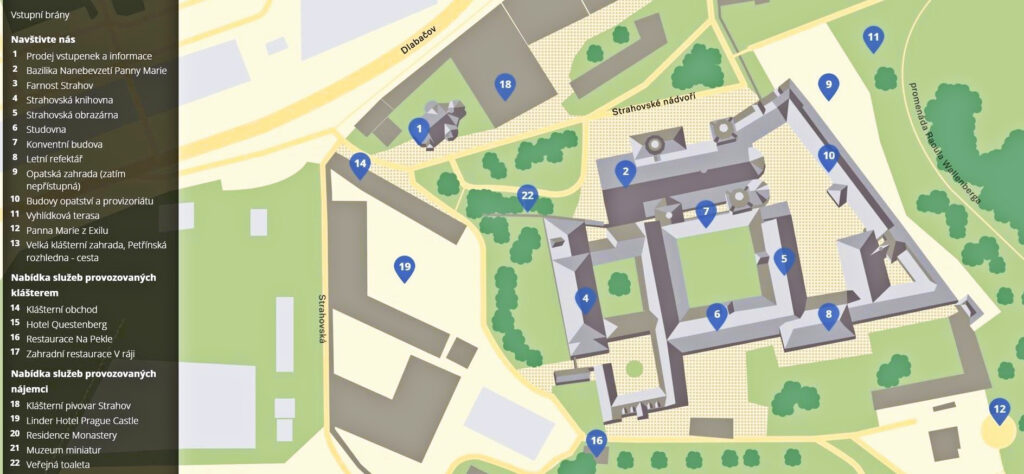
- Map of the Strahov Monastery
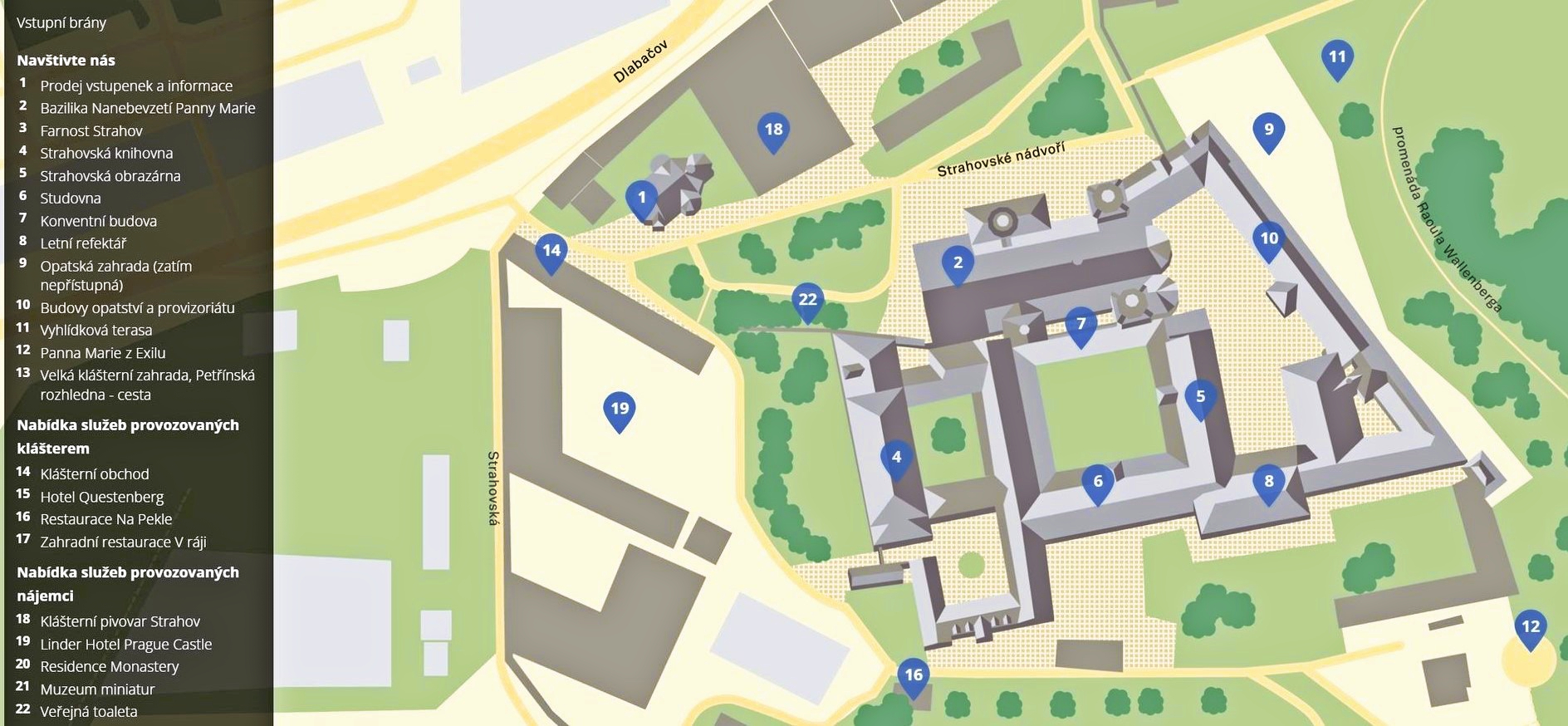
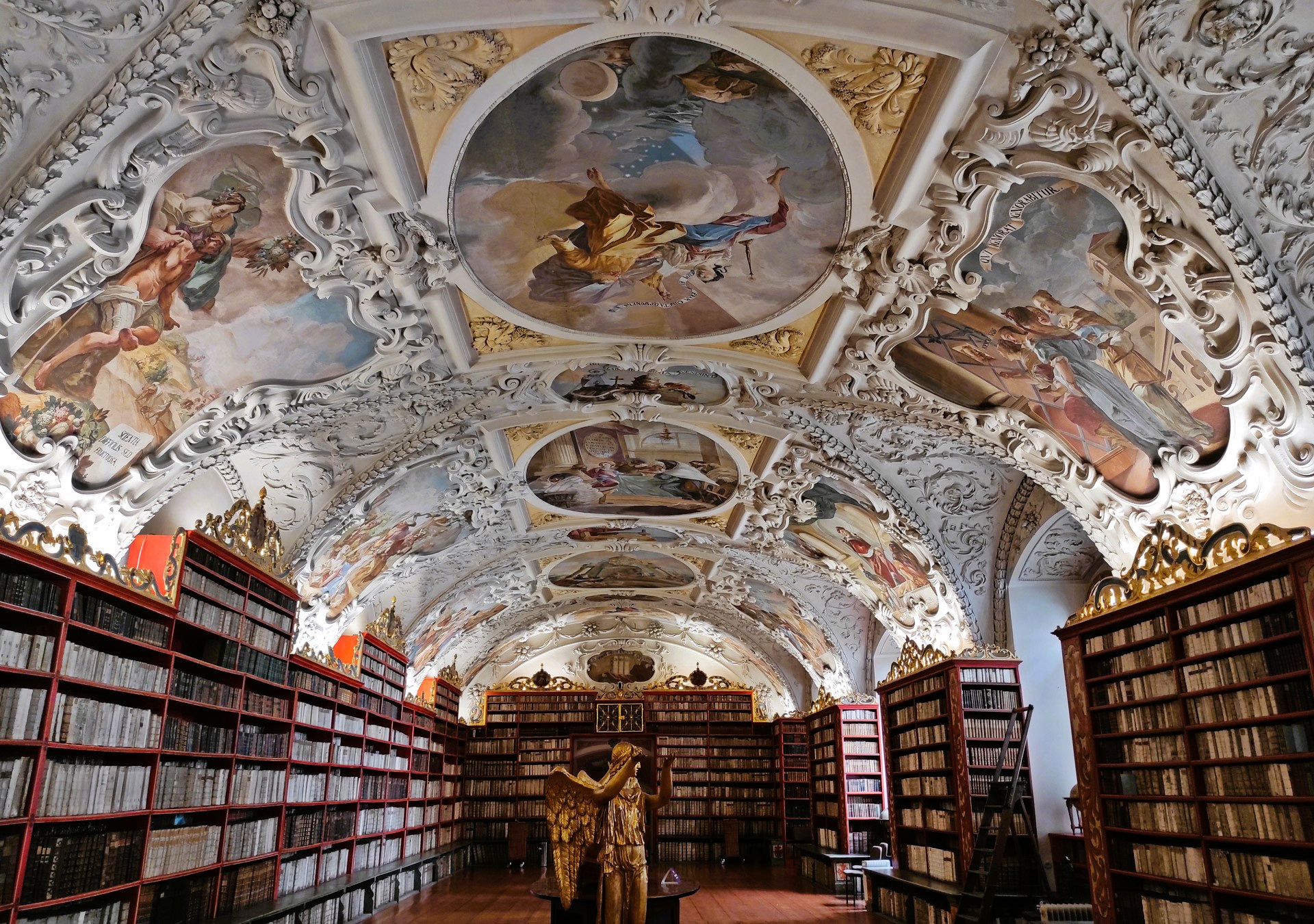
The most famous spaces are located in the Strahov Library, where you can admire the magnificently constructed Theological Hall and Philosophical Hall. The library is 800 years old and ranks among the finest in Bohemia, partly because it escaped the dissolution of monasteries in the 18th century. And how was that possible? At that time, it was deliberately converted into a research institute, whose exhibits you can still see today as part of the Cabinet of Curiosities exhibition.
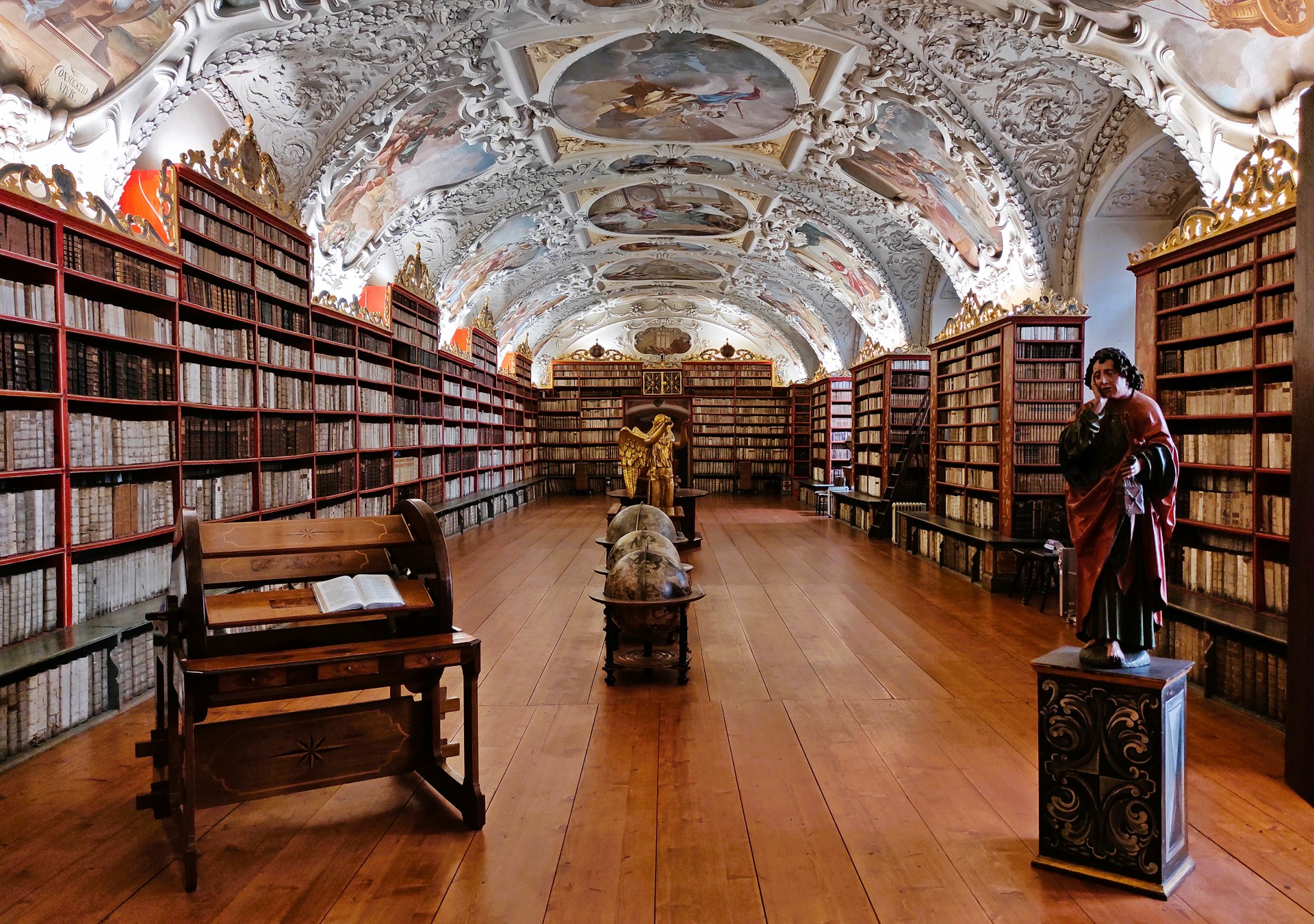
The Baroque-style Theological Hall was built in the 17th century, but in the 18th century, on the occasion of the 100th anniversary of the transfer of Saint Norbert’s relics to the Strahov Monastery, it was extended by several meters. The author of the exquisite frescoes was Strahov Premonstratensian monk and painter Siard Nosecky, who depicted true wisdom gained through piety and fear of God in his paintings. Another significant work is the Gothic wooden statue of Saint John the Evangelist, holding a book in a so-called sack binding, which was once used for travel bindings.
Another interesting feature is the compilation wheel, which was made specifically for the library and used for assembling texts. The scribe would simply place the sources he was drawing from on the wheel’s shelves, and as needed, he would rotate the wheel—along with the shelves, which remained at the same angle—thus preventing any unwanted slipping of books.
-
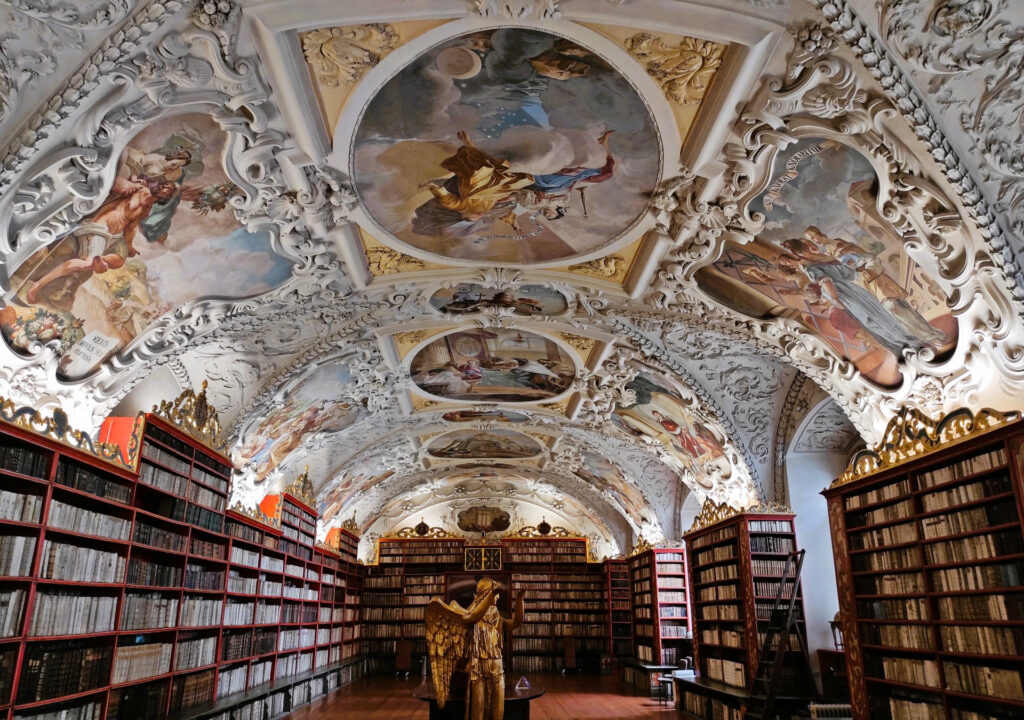
- Theological Hall
-
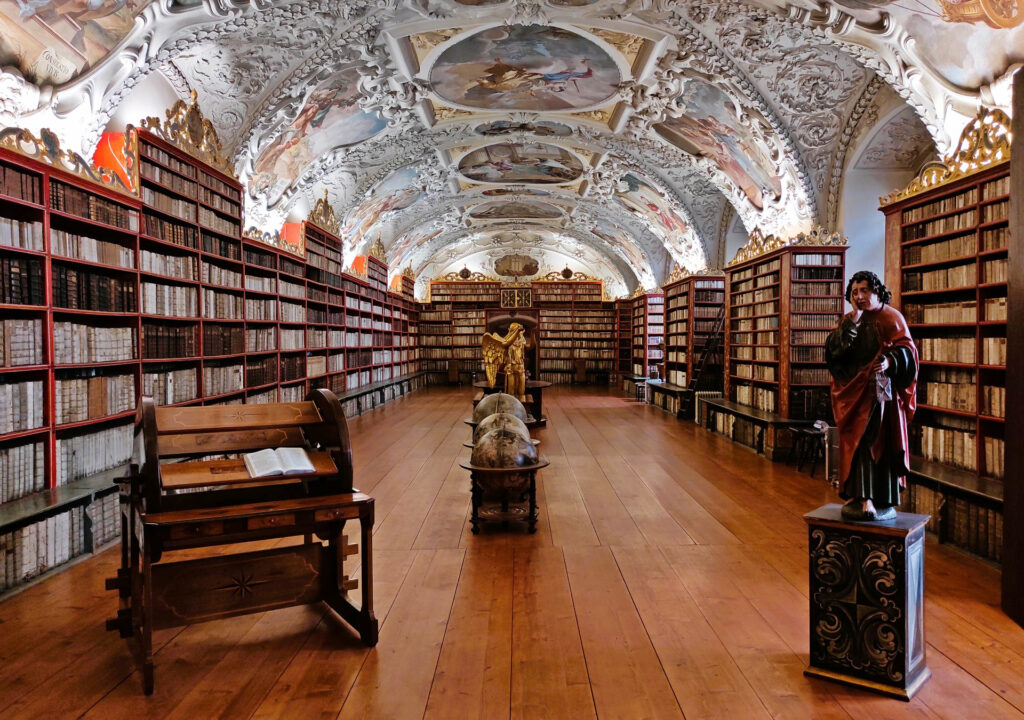
- Compilation wheel and statue of St. John the Evangelist
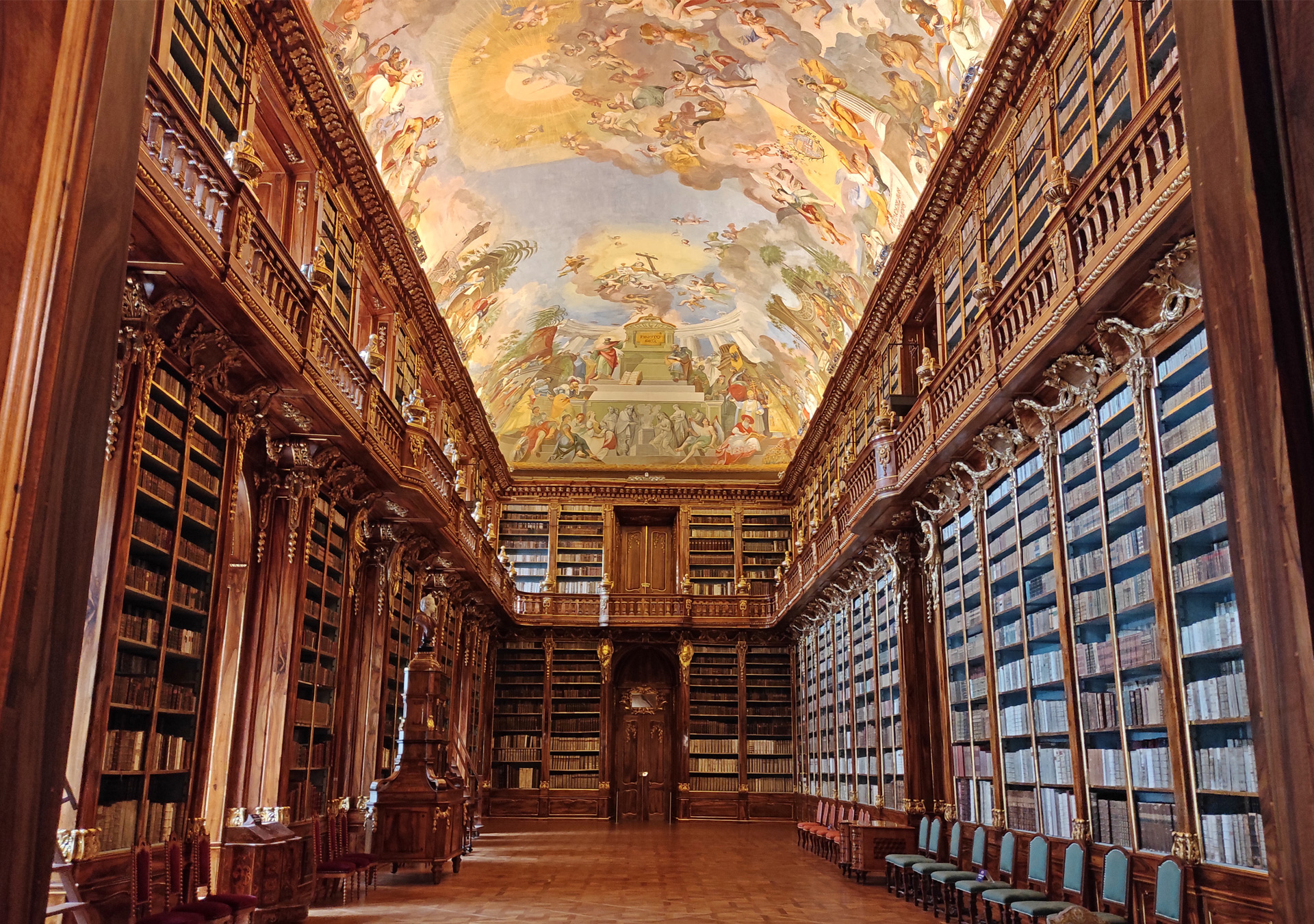
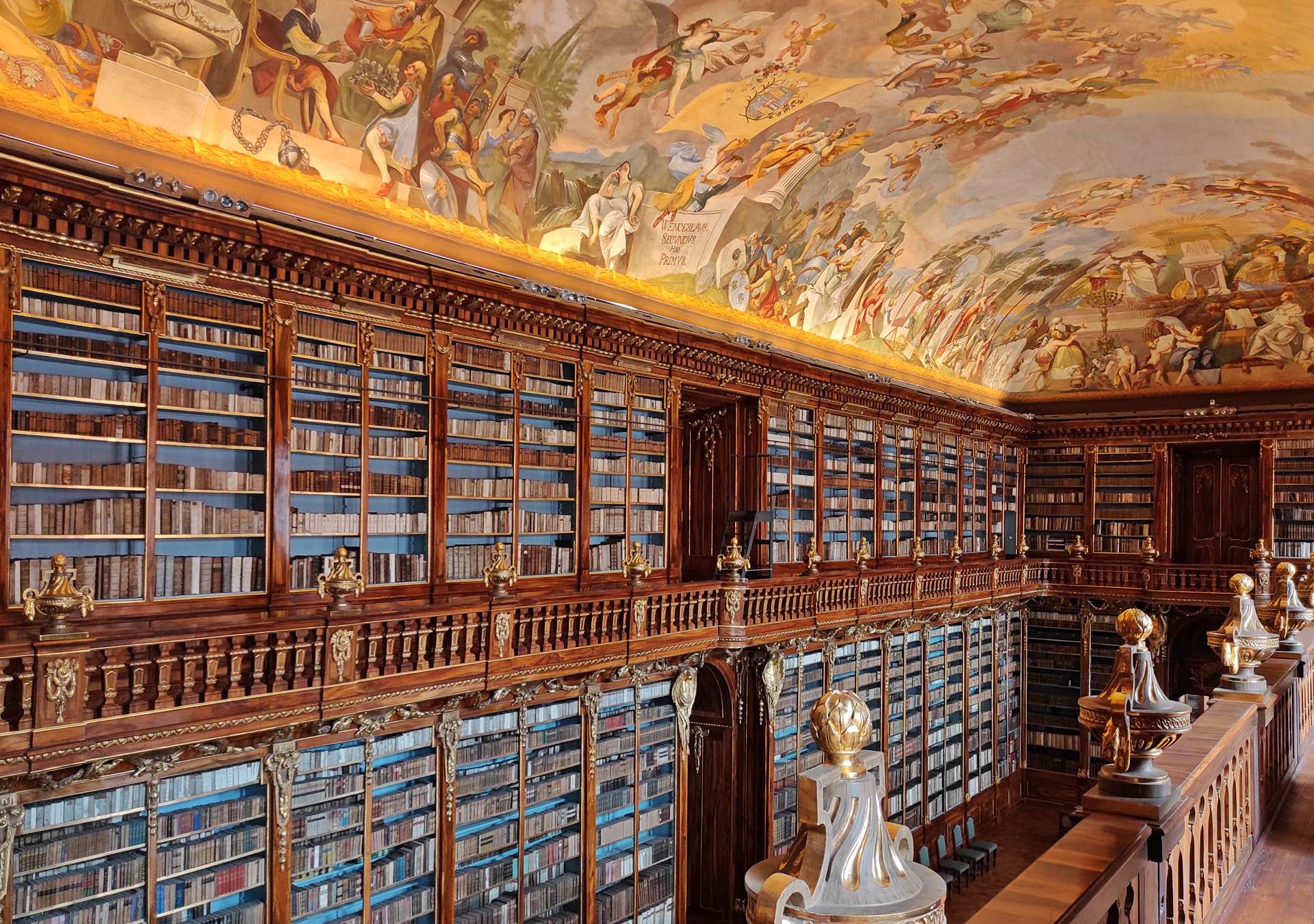
The grandeur of the 18th-century Philosophical Hall in the library is enhanced by the ceiling painting created by Viennese painter Anton Maulbertsch. The painting, titled The Spiritual Development of Humanity, depicts the mutual influence of science and religion throughout the ages. It is also worth noting that the highest rows of books are accessible only from the gallery, reached by hidden spiral staircases disguised as false book spines.
Our tip:
Ask your guide if you could exceptionally go up to the gallery – the view from there is breathtaking! Normally, access upstairs is forbidden, so this is a unique opportunity.
-
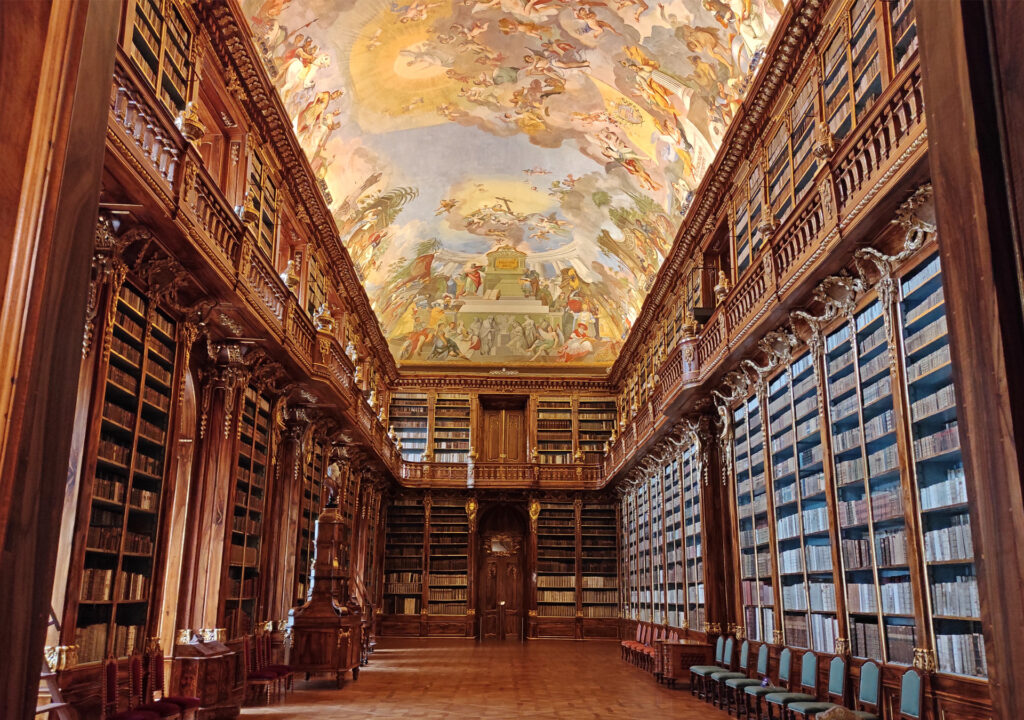
- Philosophical Hall
-
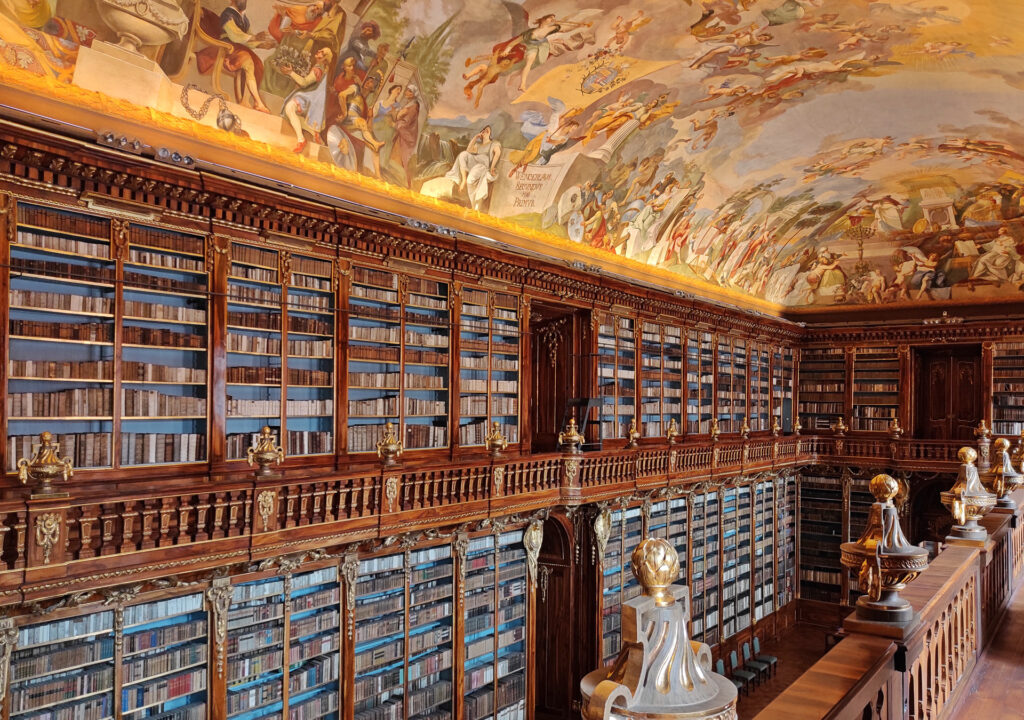
- View from the gallery of the Philosophical Hall
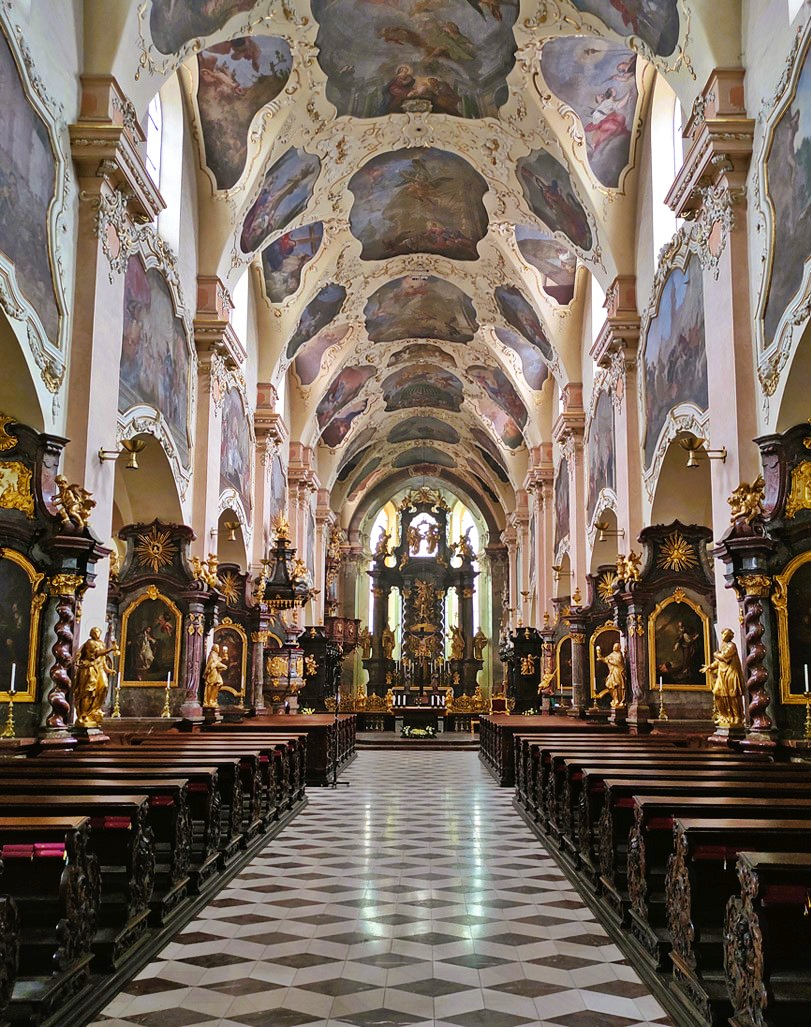
The Baroque Church of the Assumption of the Virgin Mary, located right next to the library, was elevated to the status of a minor basilica by Pope John Paul II in 1991. This is a special honorary title that generally enhances the significance of the church. Moreover, the Austrian composer Wolfgang Amadeus Mozart played the local organ here in 1787.
-
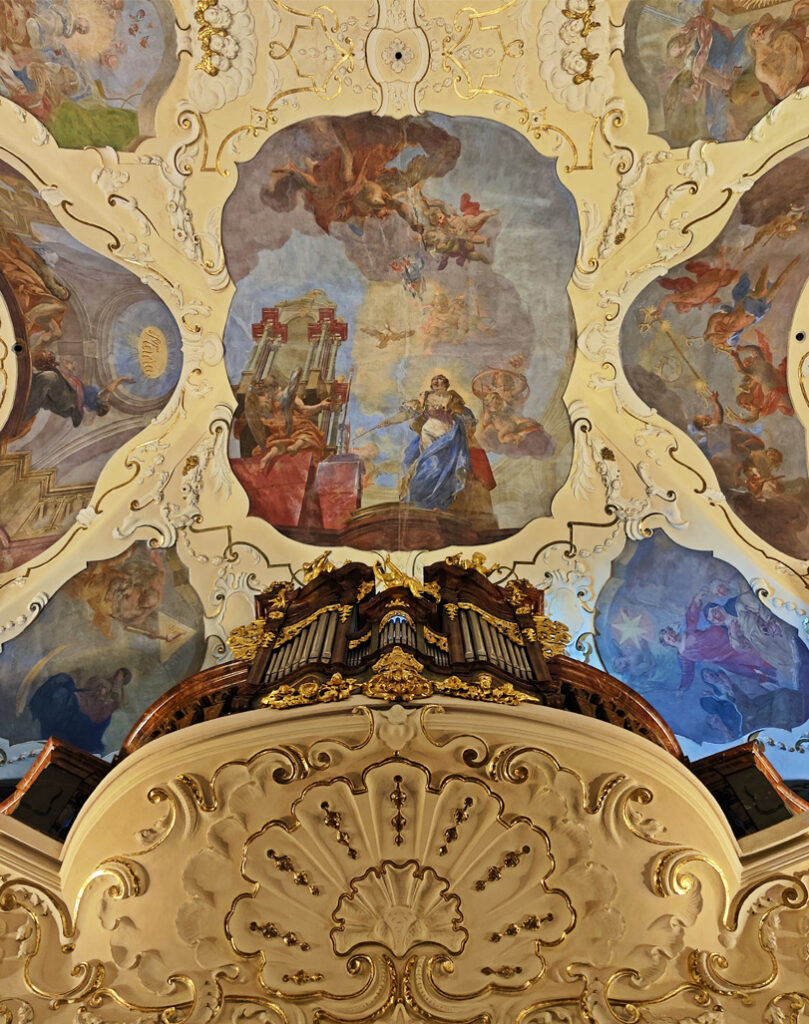
- Basilica of the Assumption of the Virgin Mary
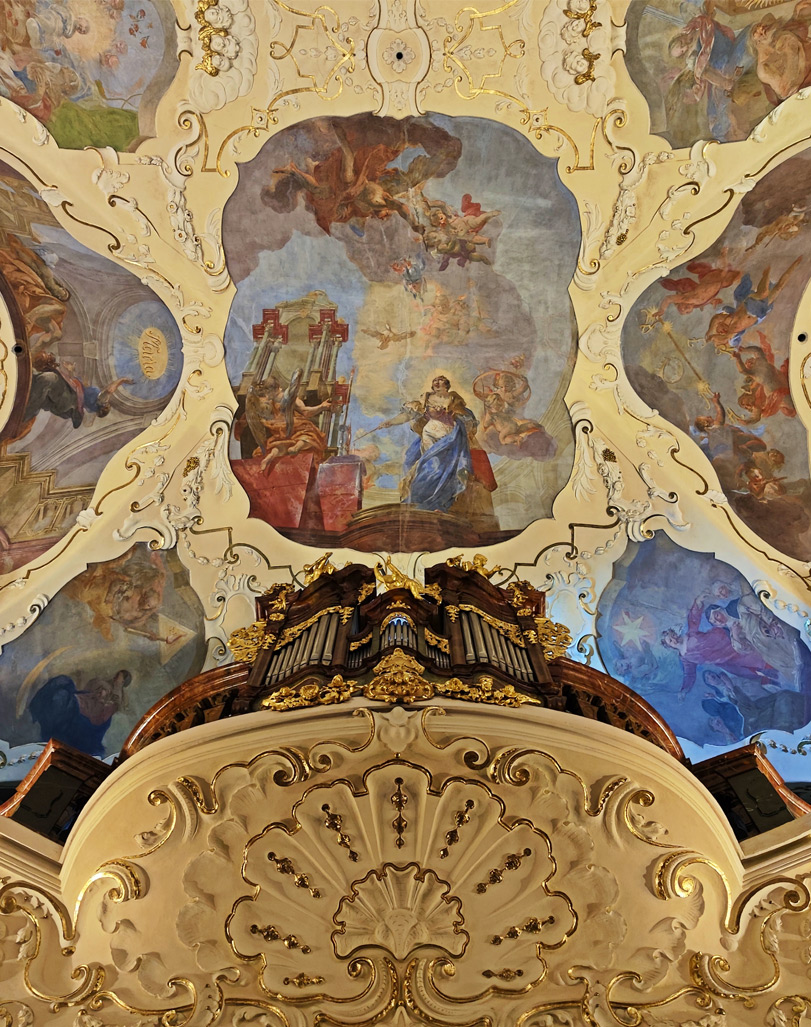
-
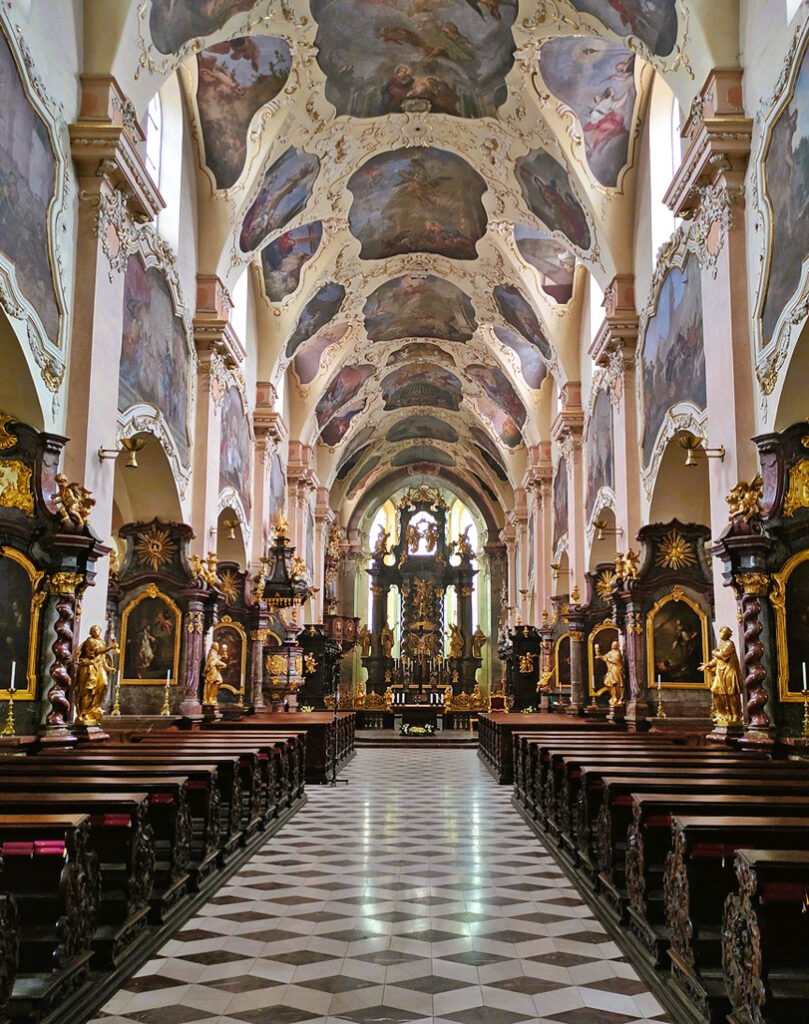
- Basilica of the Assumption of the Virgin Mary
The charm of the convent building lies primarily in its original Romanesque cloister, whose walls are adorned with preserved 18th-century frescoes depicting scenes from the life of Saint Norbert, painted by Siard Nosecký.
-
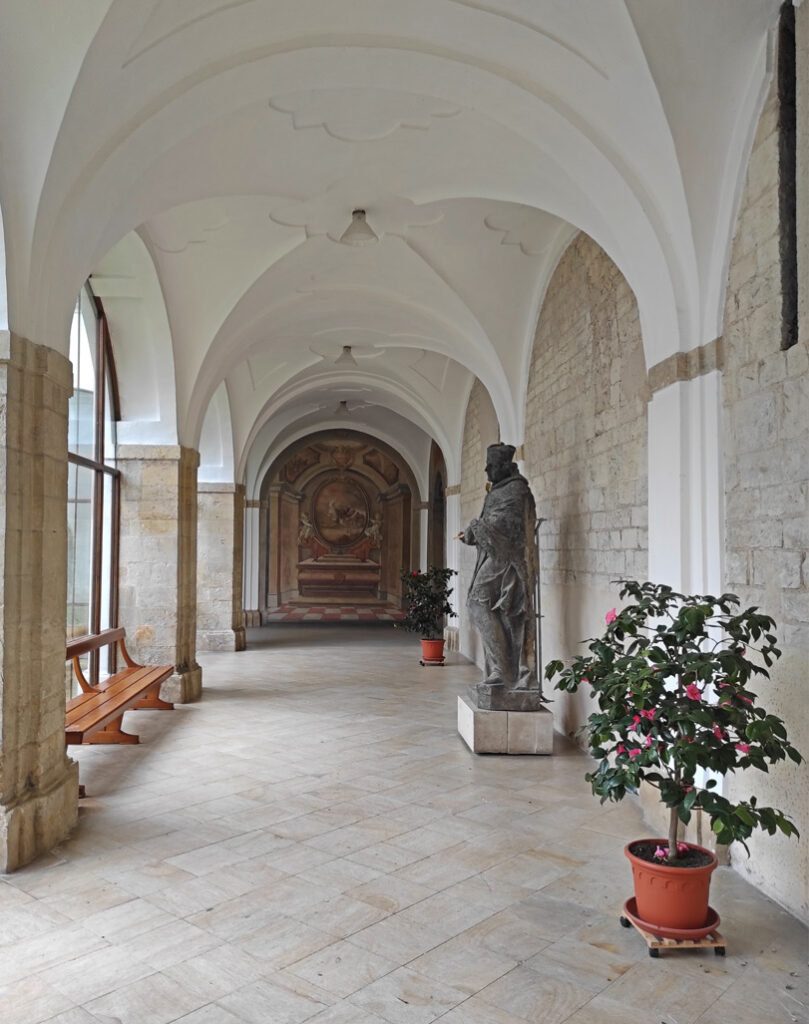
- Cloister in the monastery

-
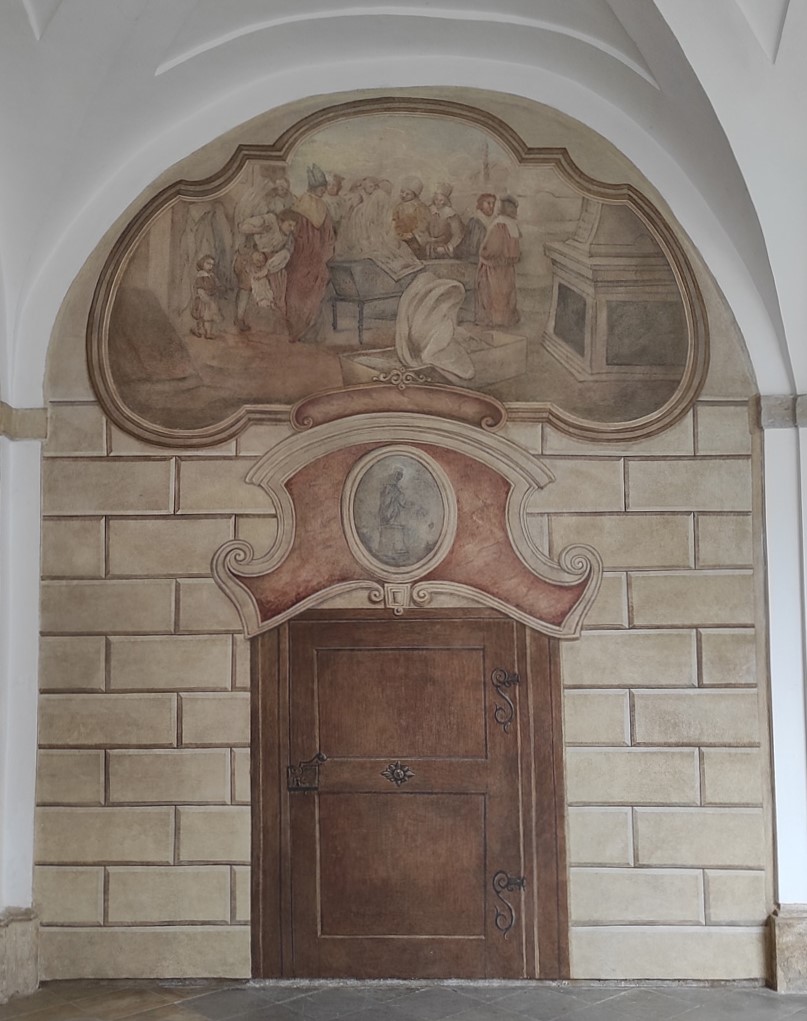
- Fresco from the life of St. Norbert
The cloister then surrounds a unique paradise garden, whose pool is supplied with water from the historic monastery pipeline.
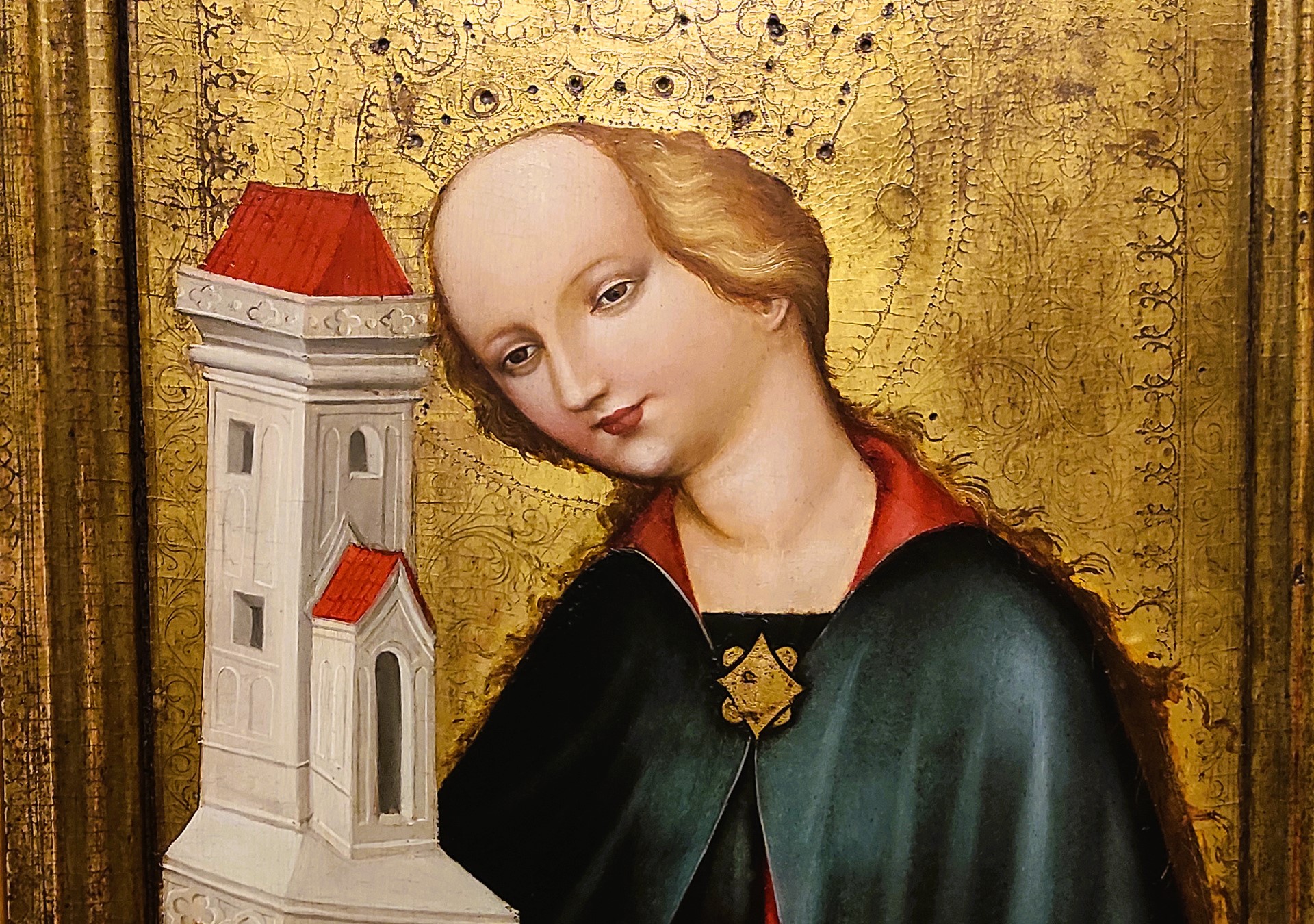
The Strahov Monastery has served as a center of education and culture for centuries. Thanks to this fact, the Strahov Picture Gallery now houses more than 1,500 works of art. The most valuable part of the collection is displayed in the corridors of the cloister on the first floor of the convent building. The unique paintings and brilliant sculptures transported us to the period from the 14th to the 19th century, bringing us closer to the forgotten atmosphere of bygone times.
-
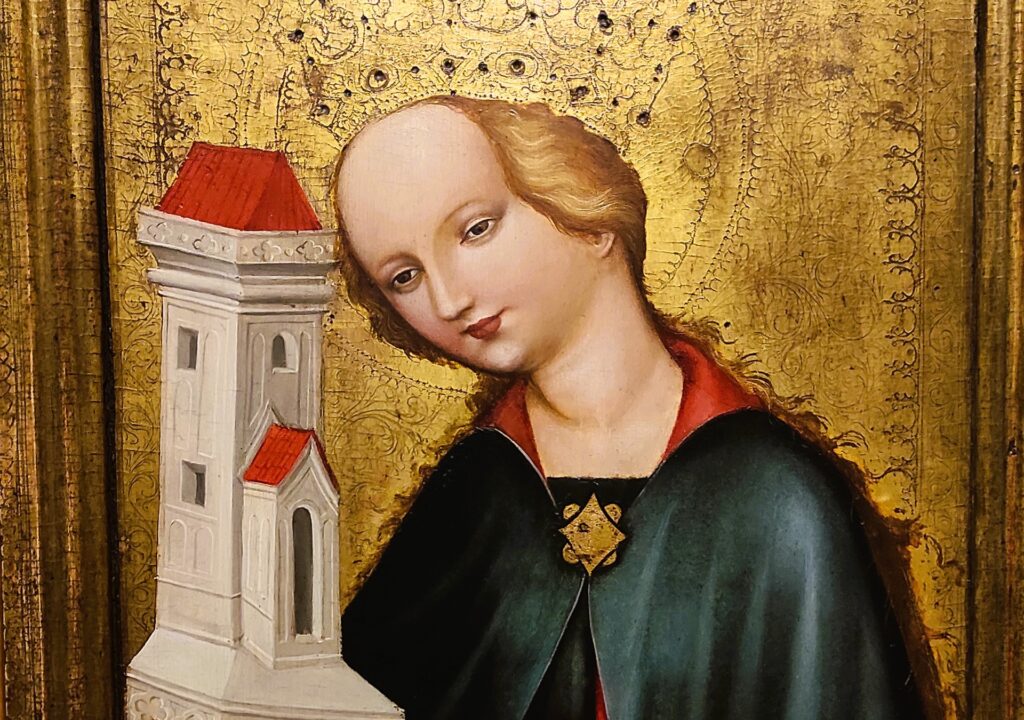
- Painting of St. Barbara
-
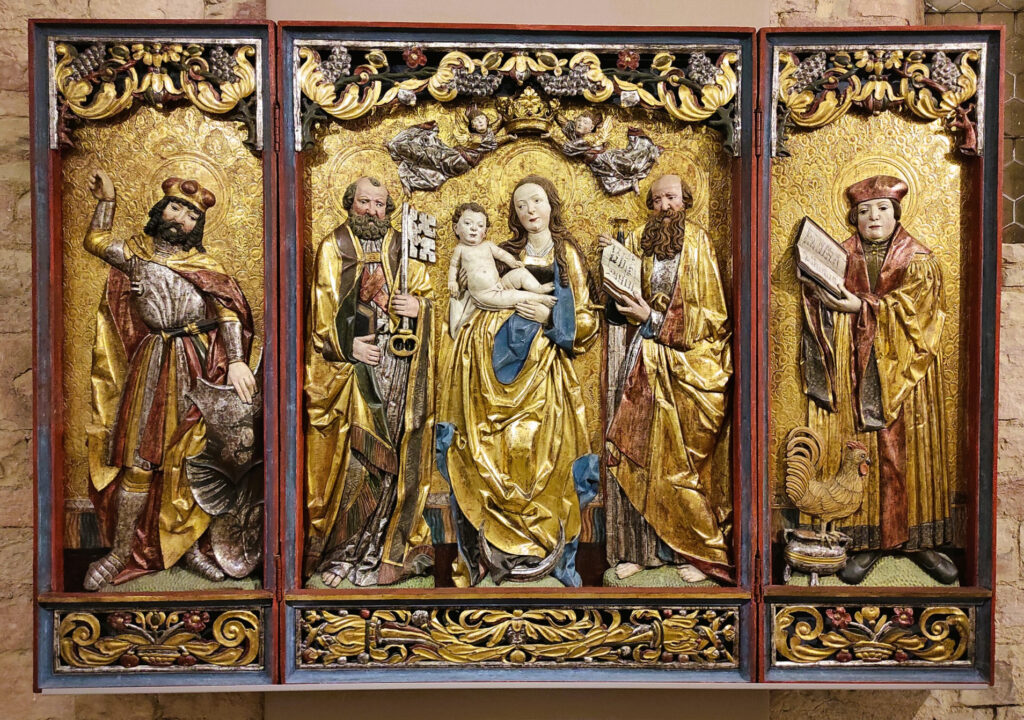
- Altar featuring St. Wenceslas, the Virgin Mary and St. Vitus
Army Museum Žižkov
We experienced an unconventional exhibition at the Army Museum Žižkov, which has undergone a comprehensive reconstruction. The museum reopened at the end of 2022, and its audiovisual and interactive exhibits drew us grippingly into the military history of the Czech lands from the earliest times to the present day. It’s also worth mentioning that admission to the museum is completely free of charge.
For relaxation, we were then tempted by the aroma of Café Kupka, located on the top floor, whose outdoor terrace offers a stunning view of much of Prague's historic centre and Prague Castle.
Address: U Památníku 2, Prague
Our tip for great accommodation:
We fell in love with Lindner Hotel Prague Castle. The property is located near Strahov Monastery, tucked away in a quiet area behind the castle walls, yet just a short distance from the vibrant city life and its landmarks. Plus, every morning, we enjoyed a delicious breakfast buffet with a wide selection.
After a winter walk through the city, we warmed up in the sauna, which is available 24/7. Since we stayed during the off-season and most hotel guests didn’t use the sauna, we basically had private sauna sessions whenever we wanted.
You can also book a room at a very favourable price, especially in February when there are fewer tourists.
Address: Strahovská 128, Prague
-
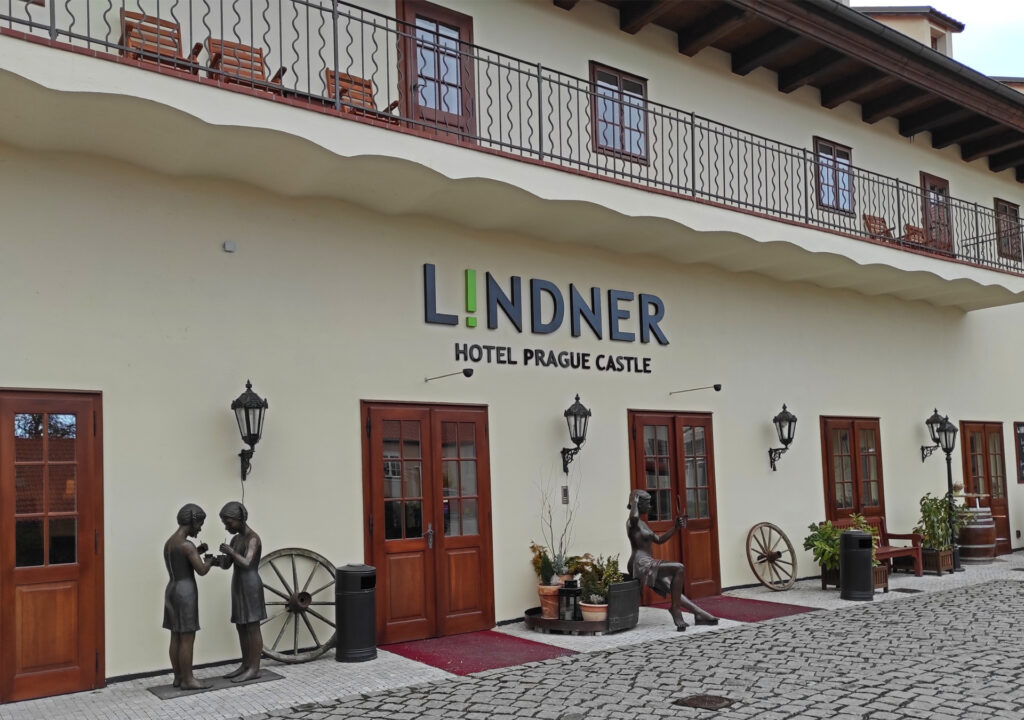
- Lindner Hotel

-
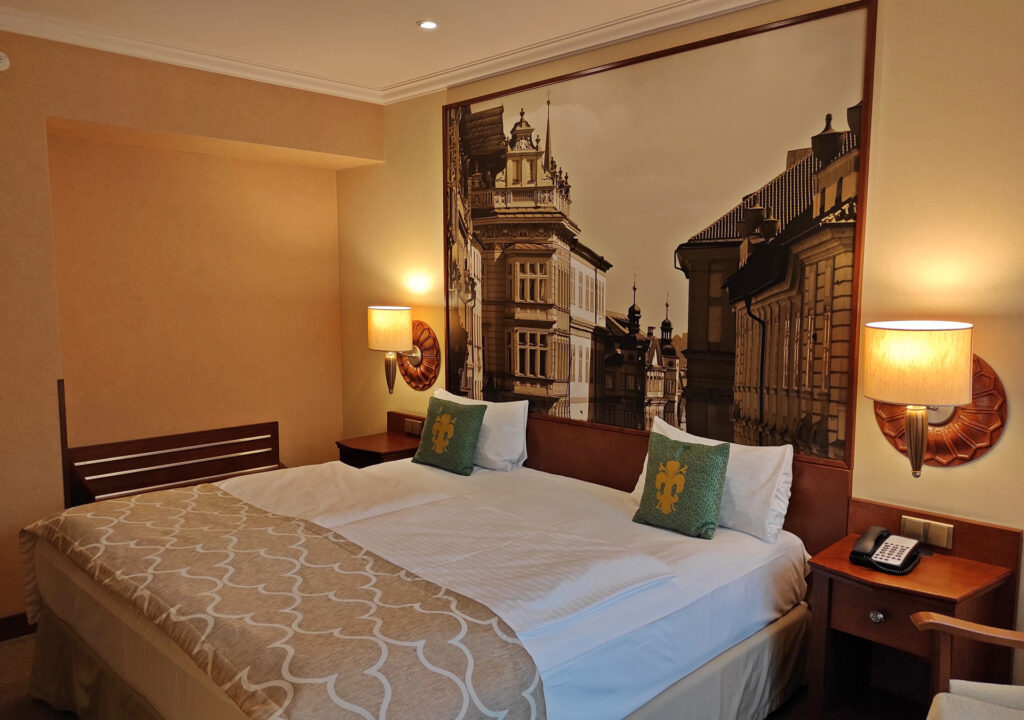
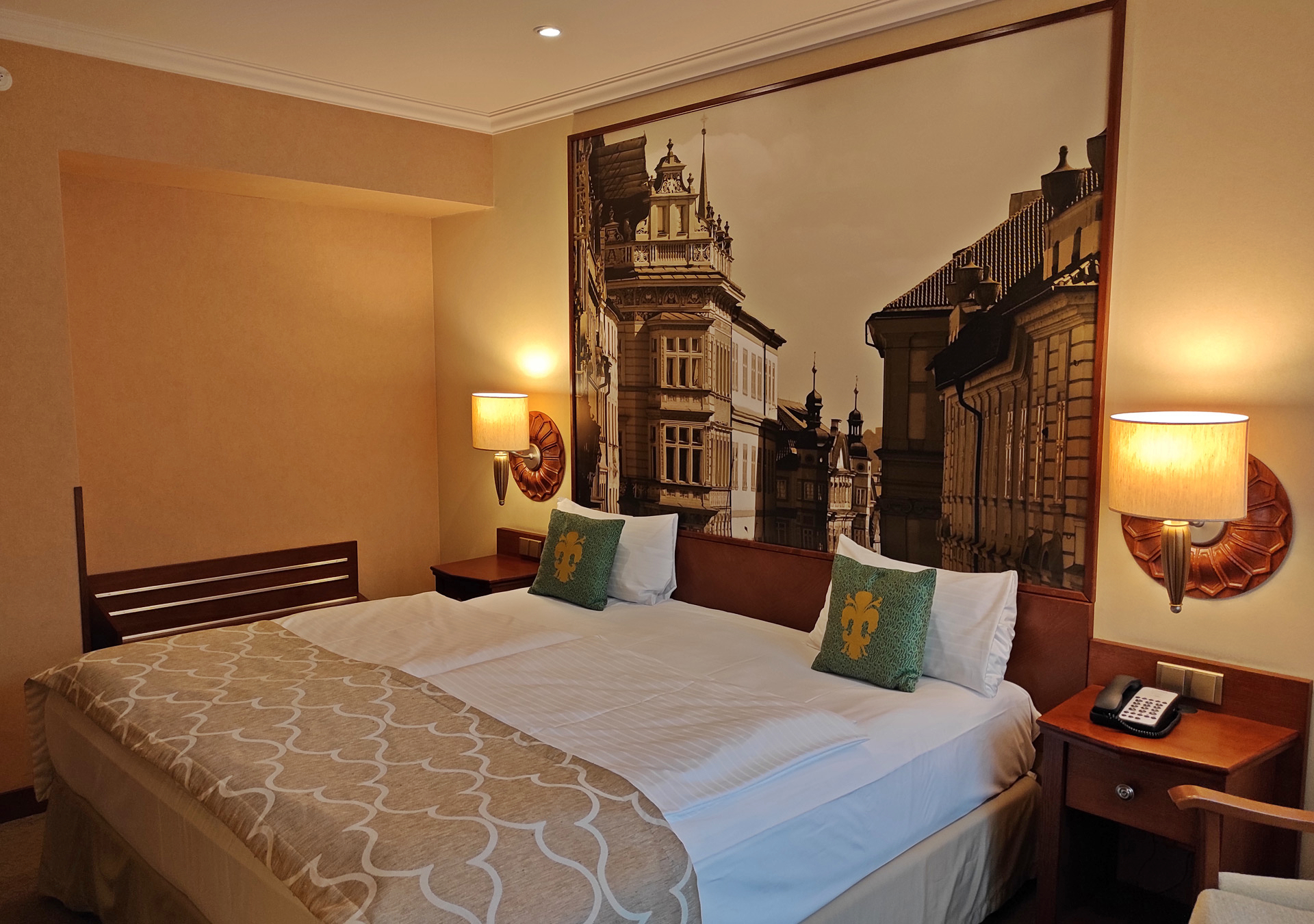
- Our cozy hotel room
Where’s a good place to eat?
We enjoyed dinner at our favourite restaurant U Labutí. The friendly staff also recommended delicious beer and wine from their wide selection.
Address: Hradčanské náměstí 11, Prague
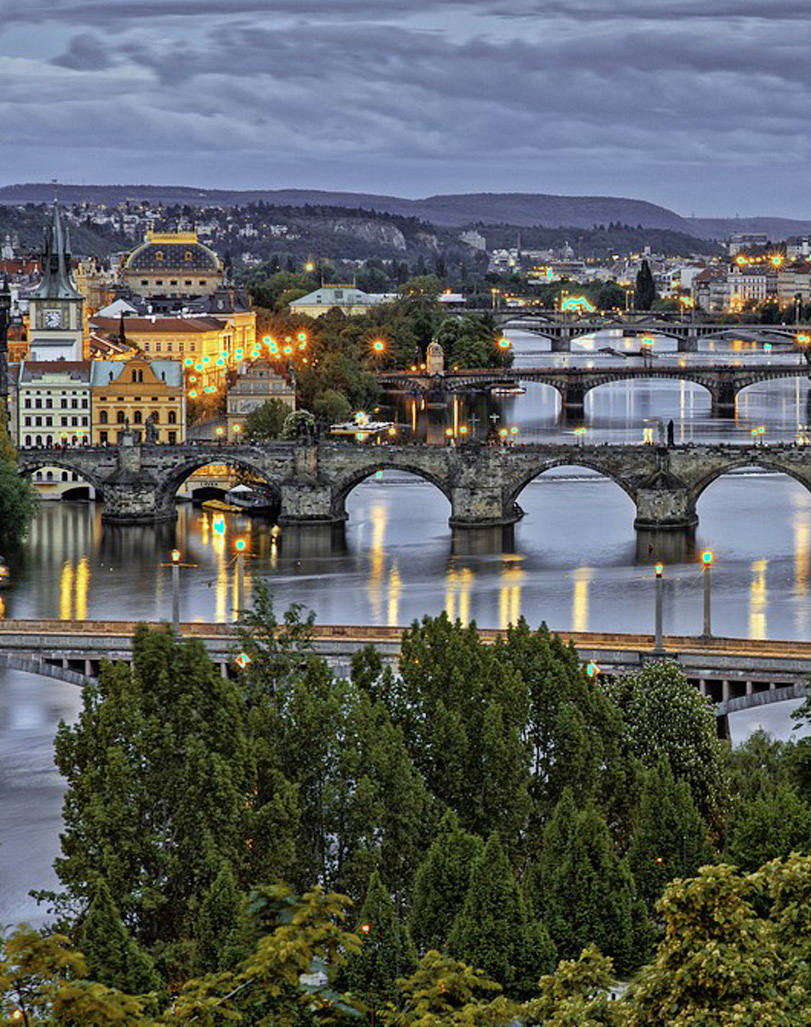
On the way back to the hotel, we stopped at the viewpoint in front of Prague Castle and were enchanted by the sight of illuminated Prague at night.
Our secret tip to conclude:
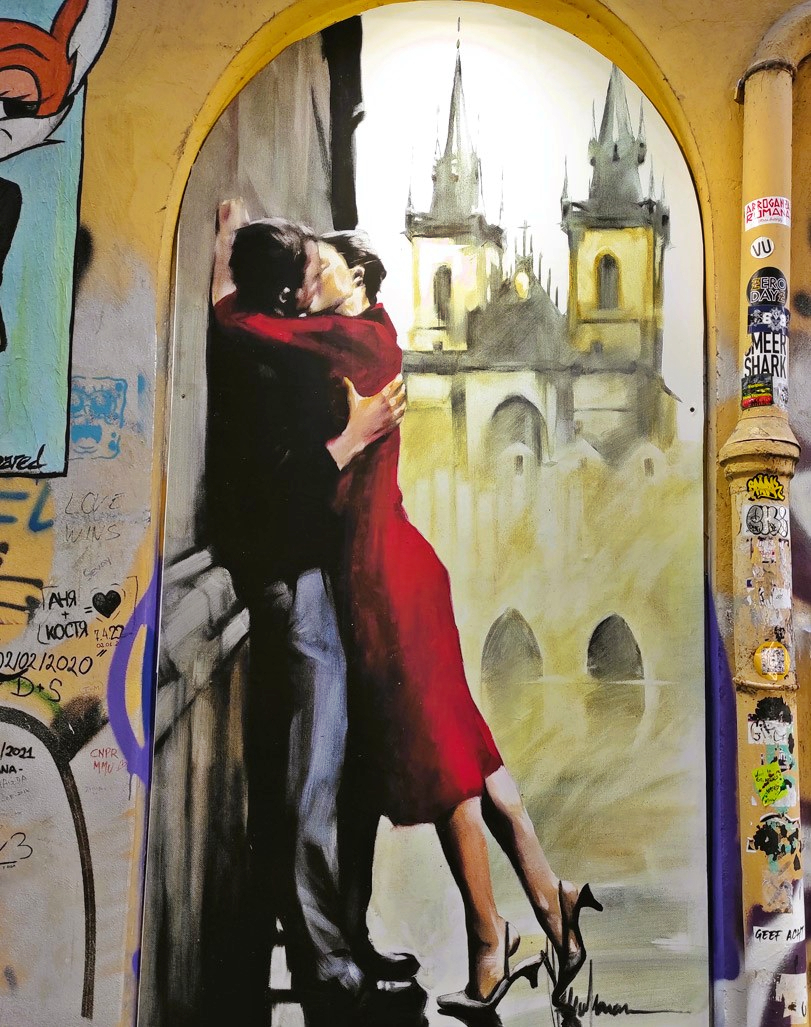
While walking under the Charles Bridge, we discovered a romantic piece of art on one of the adjacent walls, hidden under the bridge arch near Saská Street.
-
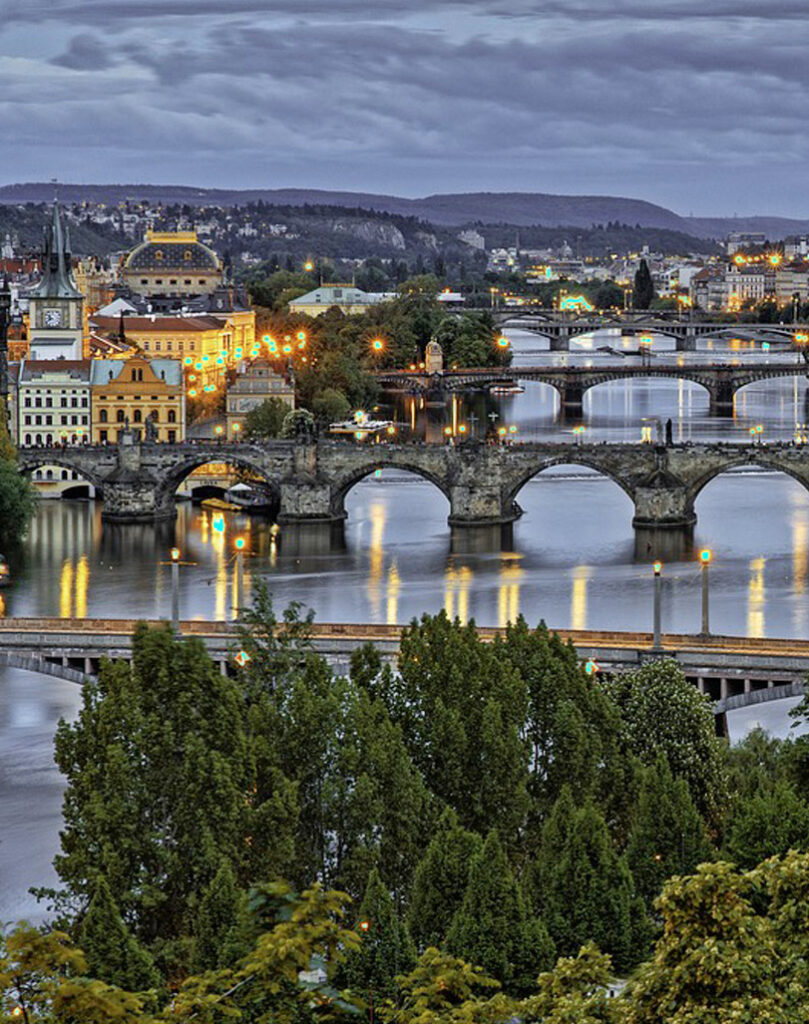
- Charles Bridge
-
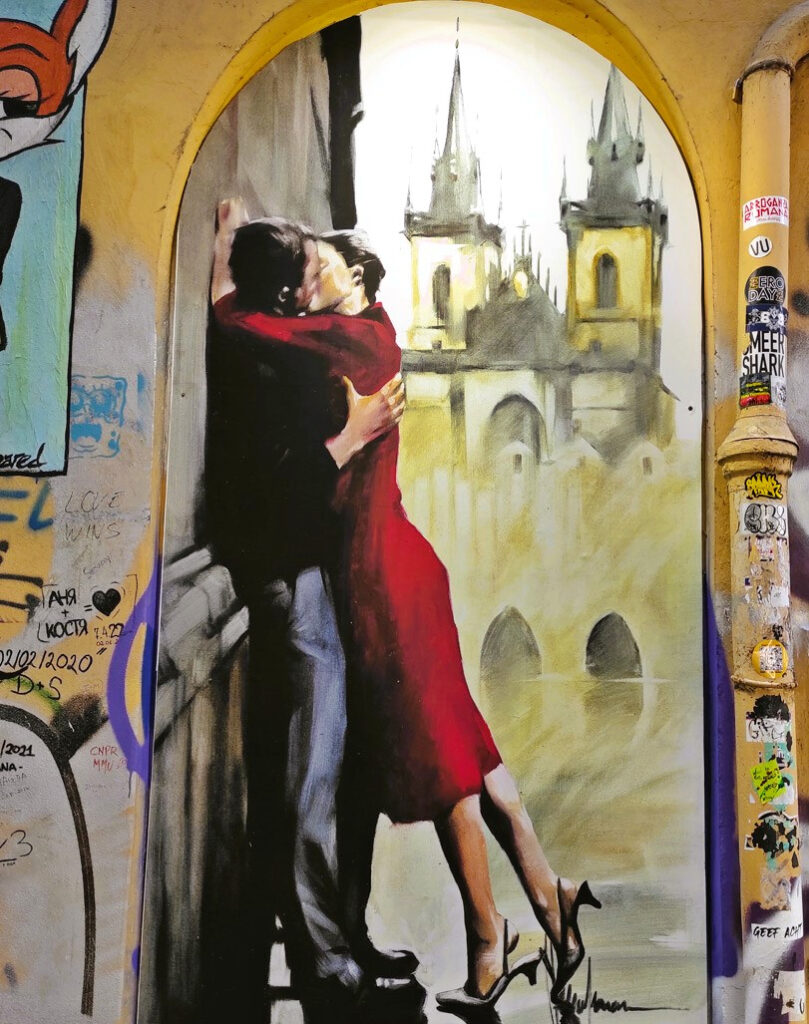
- Painting under the Charles Bridge