




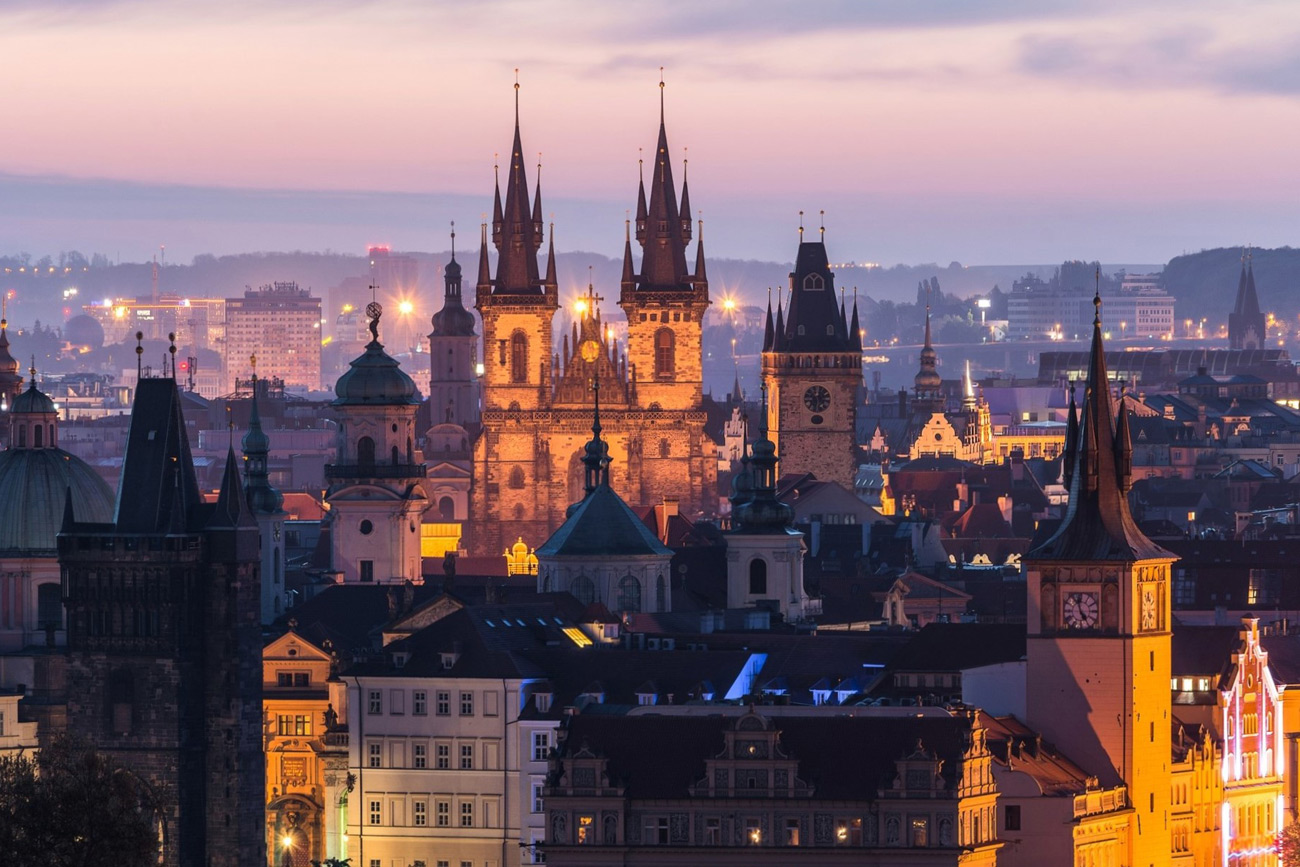
Tired of weaving through crowds in Prague's narrow streets? Have you ever wished to see Prague from a different perspective? We swapped the traditional view from the ground for the most stunning one possible—the view from above.
We embarked on a pilgrimage to eight of Prague’s most magnificent towers, which are not just silent guardians of history but living gateways to spectacular panoramas.
Your breath will catch at the mosaic of old rooftops that look like the backs of sleepy cats. You’ll discover hidden green courtyards you never knew existed. From above, the Vltava River is a tranquil ribbon, its surface crossed by elegant swans and bustling tourist boats. You’ll see how historic squares intertwine with winding streets to form one living organism.
Come along with us as we share excerpts from our travel diary and let yourself be tempted. Perhaps the next time you’re in Prague, you’ll trade a few steps on the Charles Bridge for a climb that offers the most mesmerizing show of all—Prague in the starring role, as you’ve never seen it before.
Petřín Lookout Tower
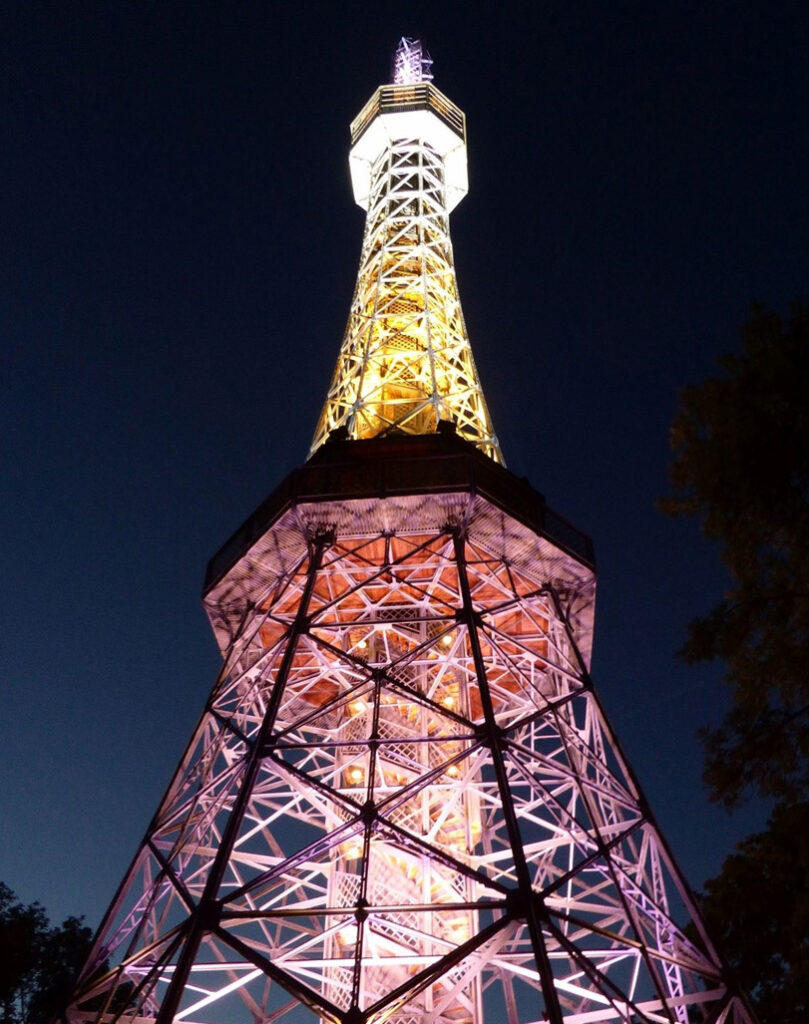
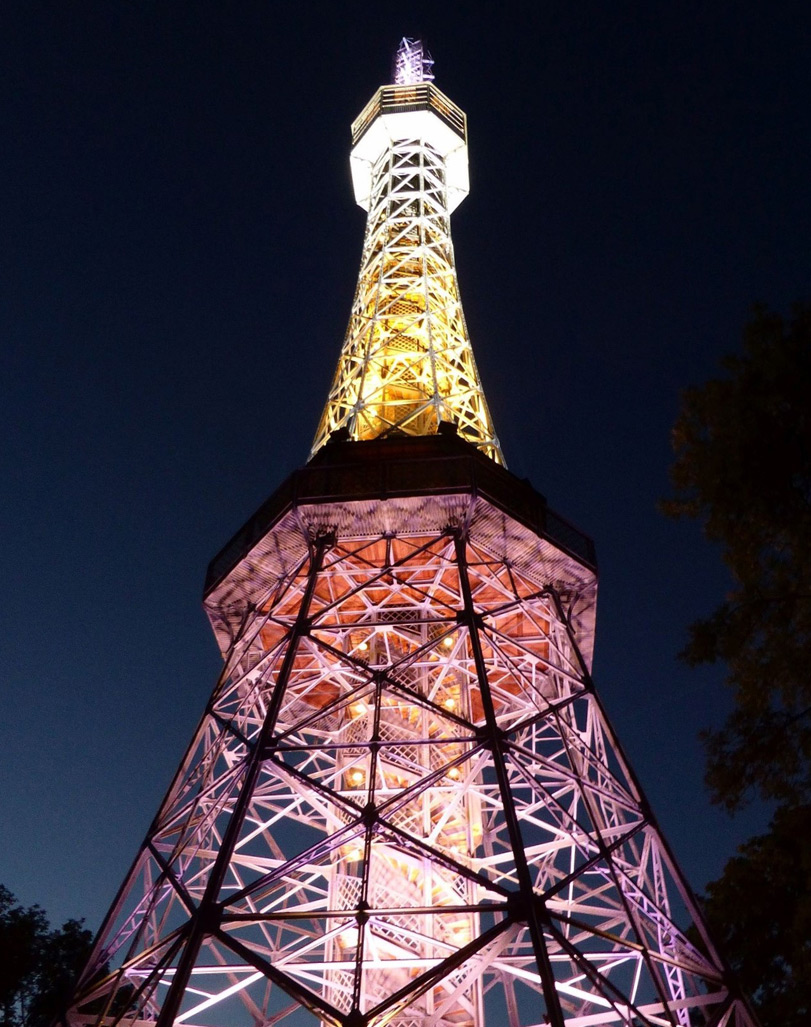
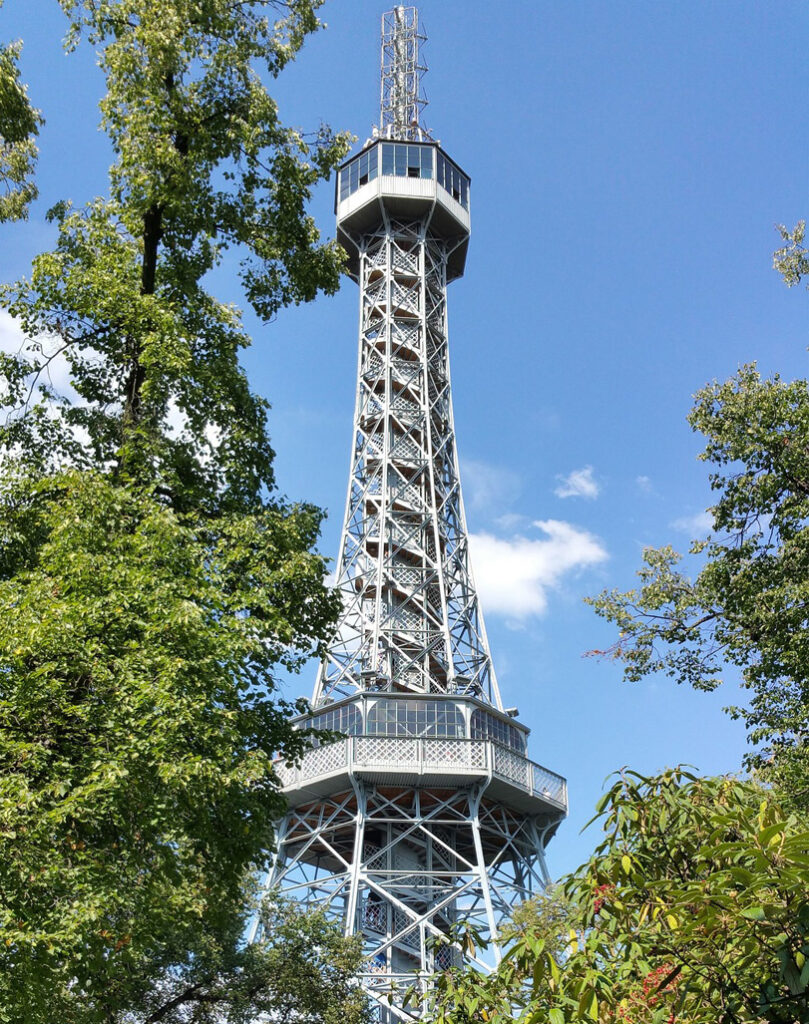
We began our adventurous journey at the "Prague Eiffel Tower," one of the city's main landmarks.
-
- Petřín Lookout Tower
-
- Petřín Lookout Tower
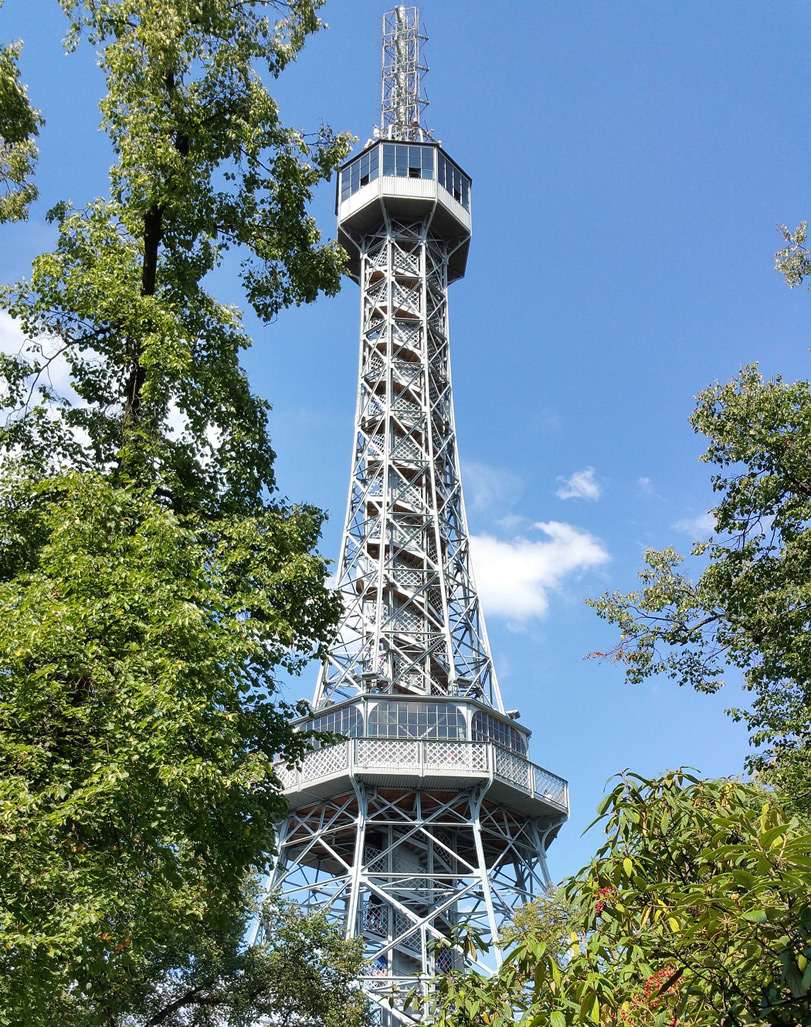
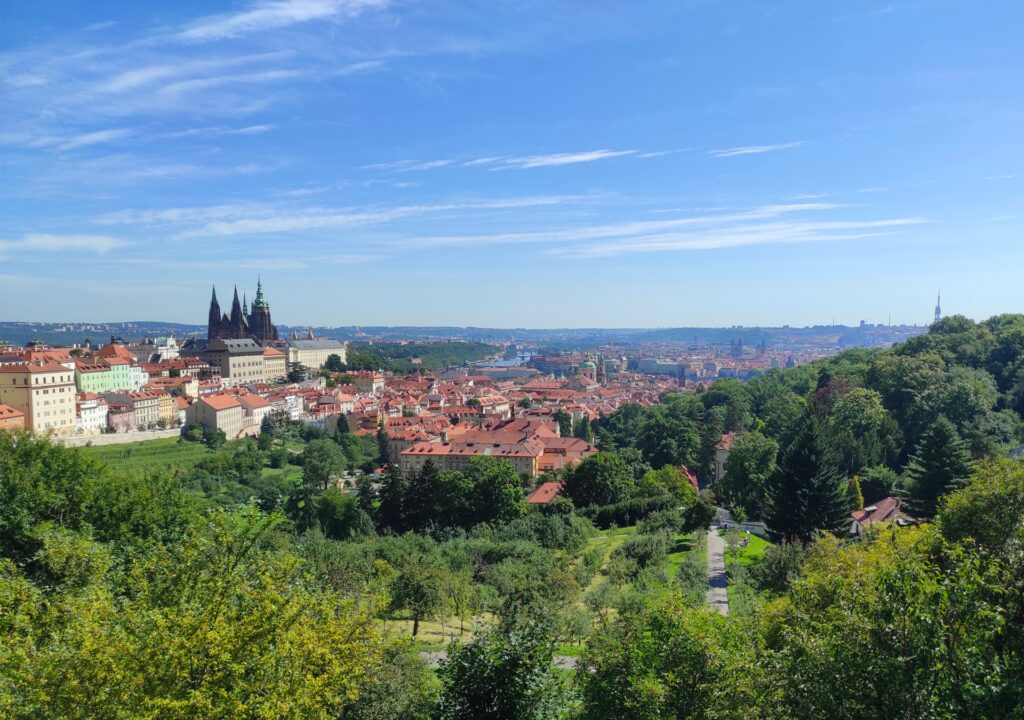
This steel beauty was built at the urging of the Czech Tourist Club, which fell in love with the Eiffel Tower at the World's Fair in Paris. The nearly sixty-meter-tall Petřín Lookout Tower, constructed in the 19th century for the Jubilee Exhibition, rises atop its namesake hill and offers breathtaking views not only of the nearby Prague Castle and Lesser Town but also of the Prague panorama, and even distant landmarks like Říp Mountain and the Ore Mountains.
We enjoyed this magnificent view from the observation platform after climbing a total of 299 steps. However, you can also use the cable elevator located in the centre of the structure or just climb to the lower platform at a height of 20 meters. If your physical condition allows it, it's better to walk to the top of the tower like we did, as crowds of tourists usually gather around the elevator.
-
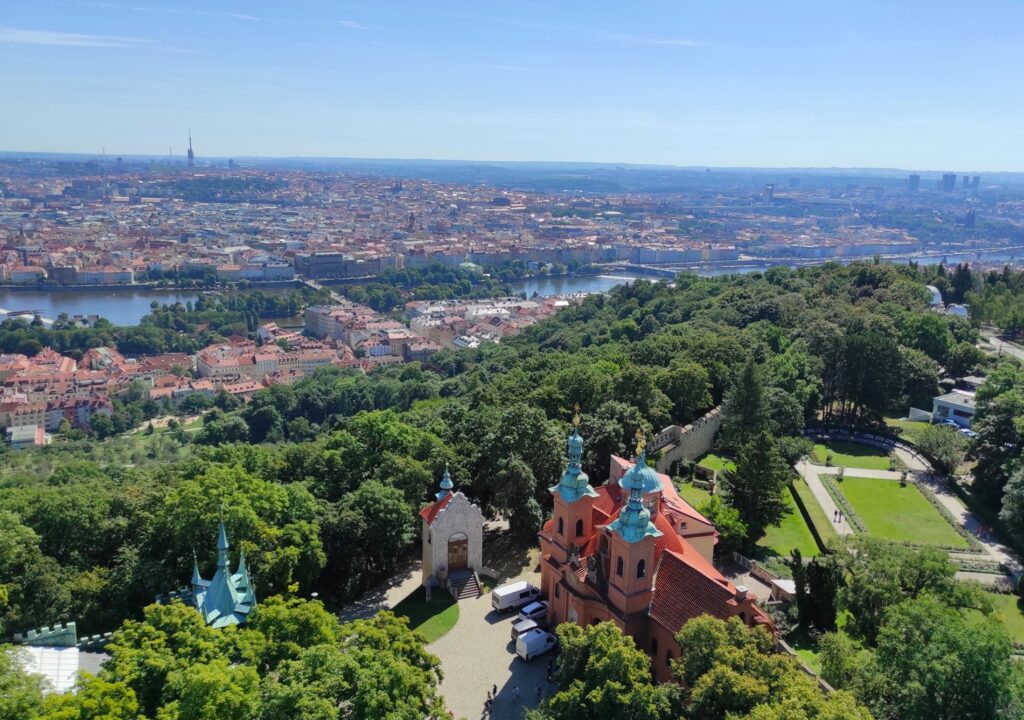
- View from the Petřín Tower
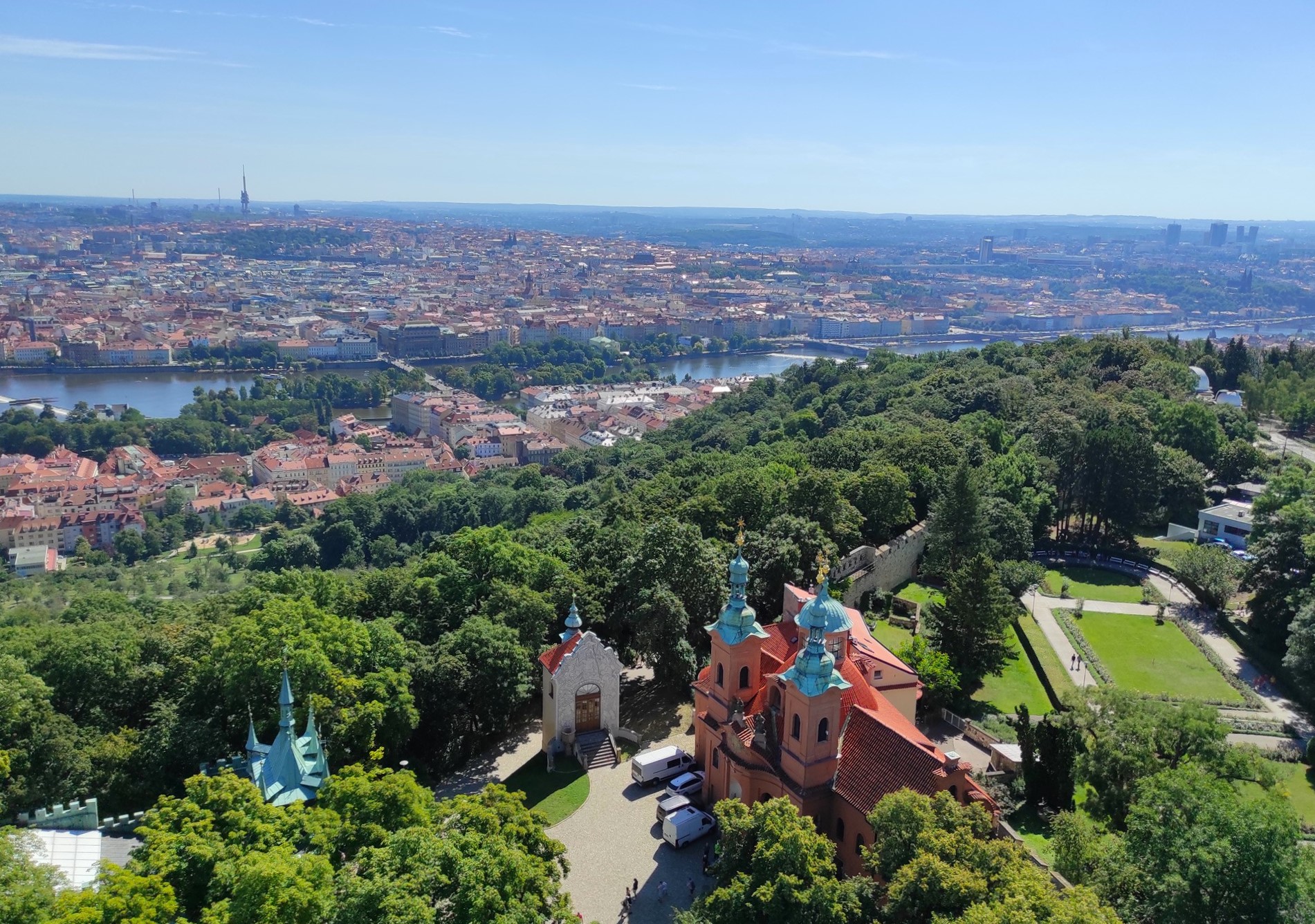
-
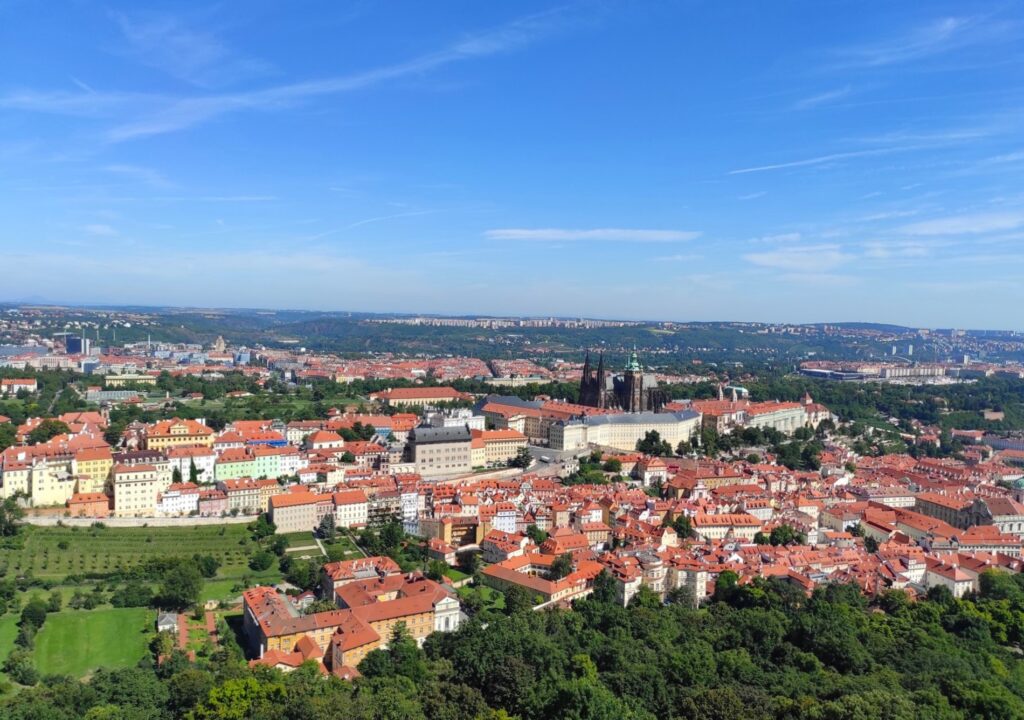
- View from the Petřín Tower
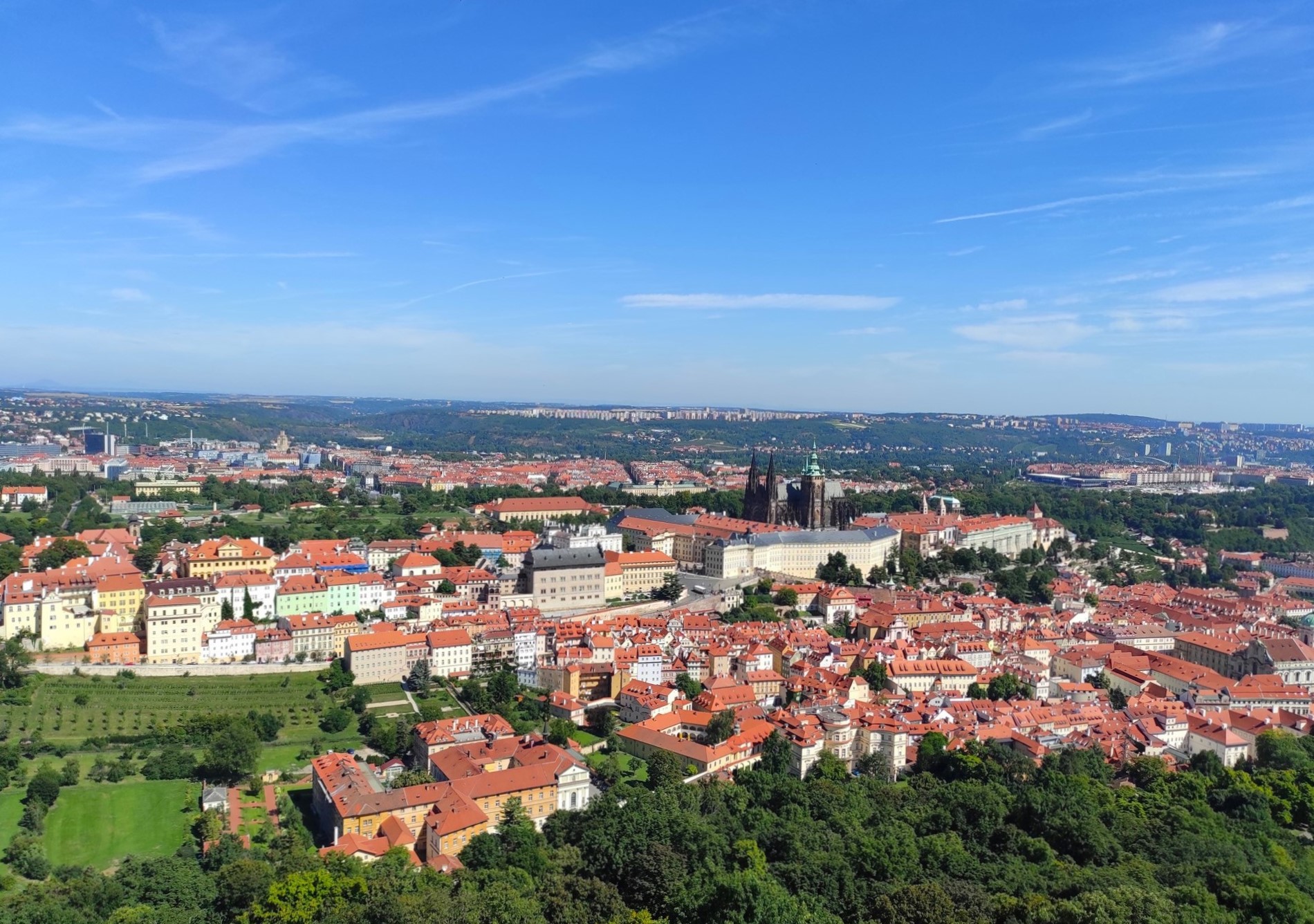
The base of the tower is formed by a Neo-Renaissance masonry building, where we had the chance to explore a permanent exhibition about the transformations of Petřín Hill. However, we cannot recommend the café and snack bar due to its exorbitant tourist prices. It’s better to bring your own bottle of water instead.
The lookout tower itself can be easily reached on foot from Strahov Monastery, or you can take the Petřín funicular from the Újezd stop.
It's also worth mentioning that during the Nazi occupation, Adolf Hitler expressed a desire to have the tower demolished because, in his opinion, it spoiled the view from Prague Castle. Fortunately, this never ultimately came to pass.
Address: Petřínské sady 633, Prague
Mirror Maze
Just a few steps from the lookout tower is the Mirror Maze, one of the most curious structures in Prague. The maze, originally located near the Industrial Palace at the Exhibition Grounds in Holešovice, was built as a wooden pavilion for the Czech Tourist Club. The entire structure is a replica of the former Gothic Vyšehrad gate called Špička, which was crowned with nine small towers.
-
- Fight of the Praguers with the Swedes
-
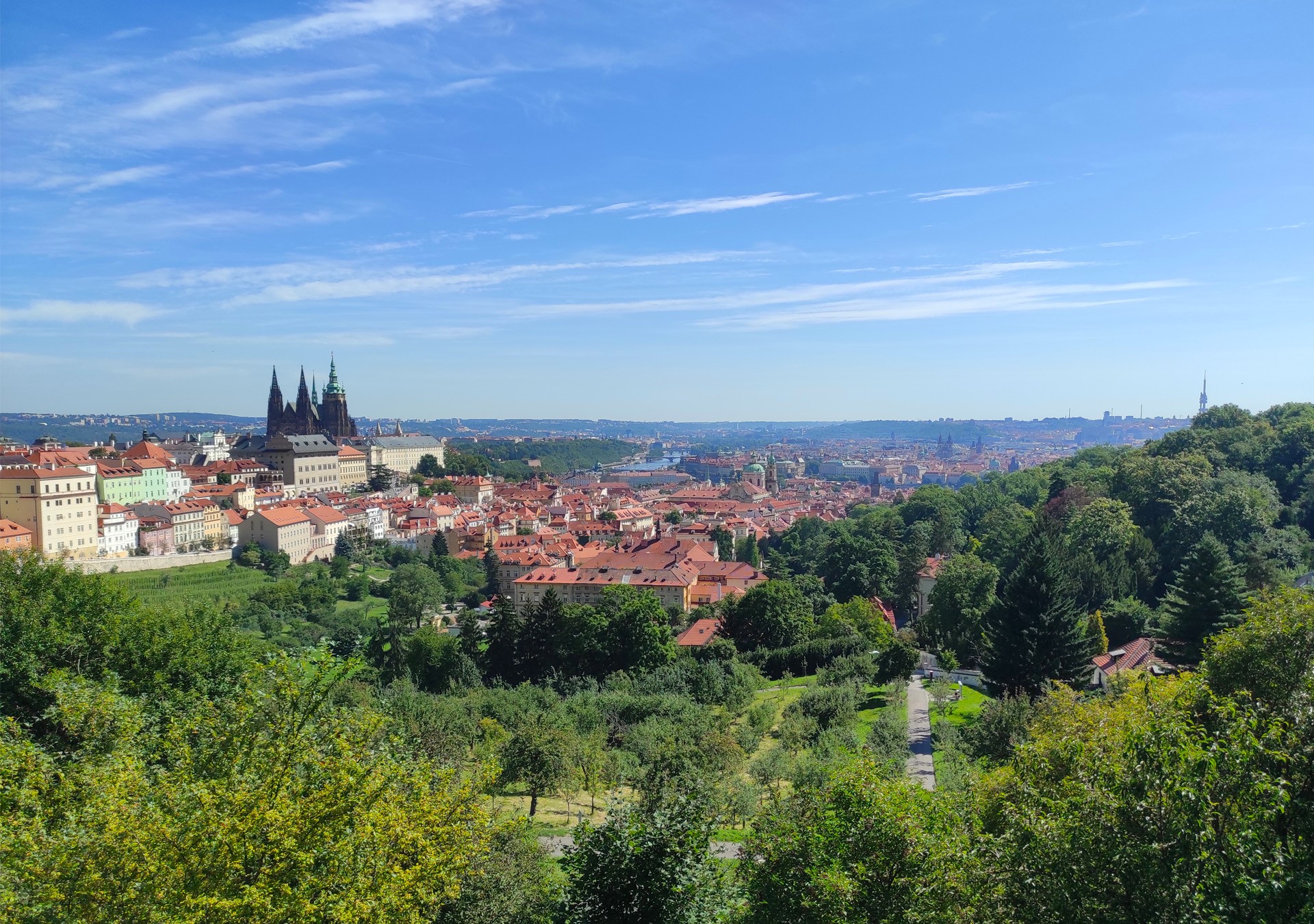
- View from Petřín Hill
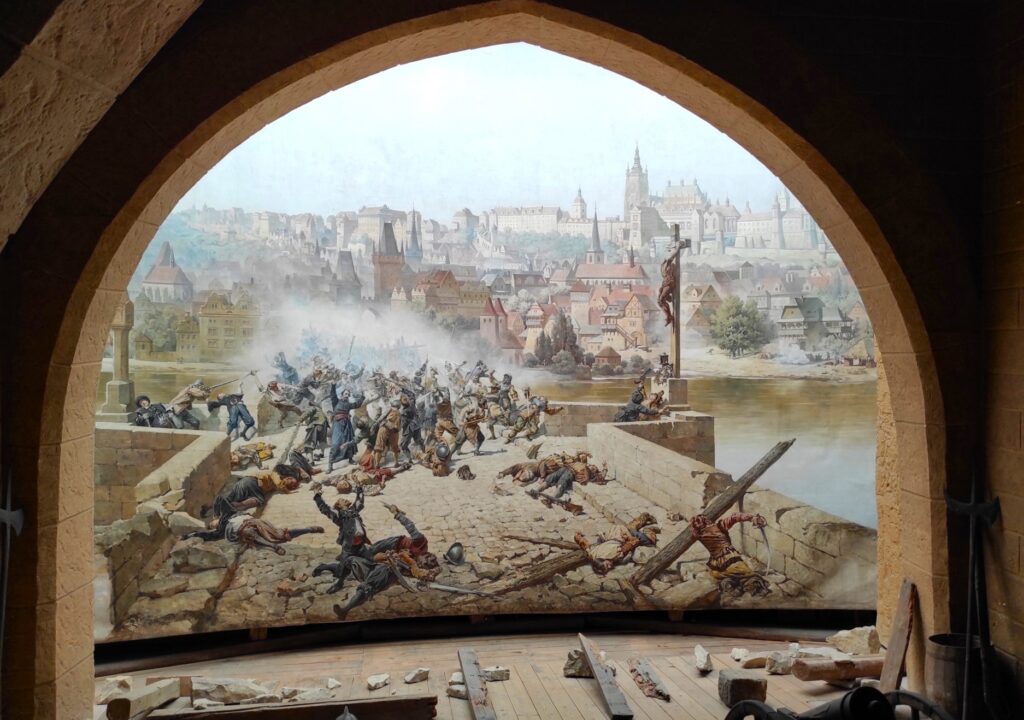
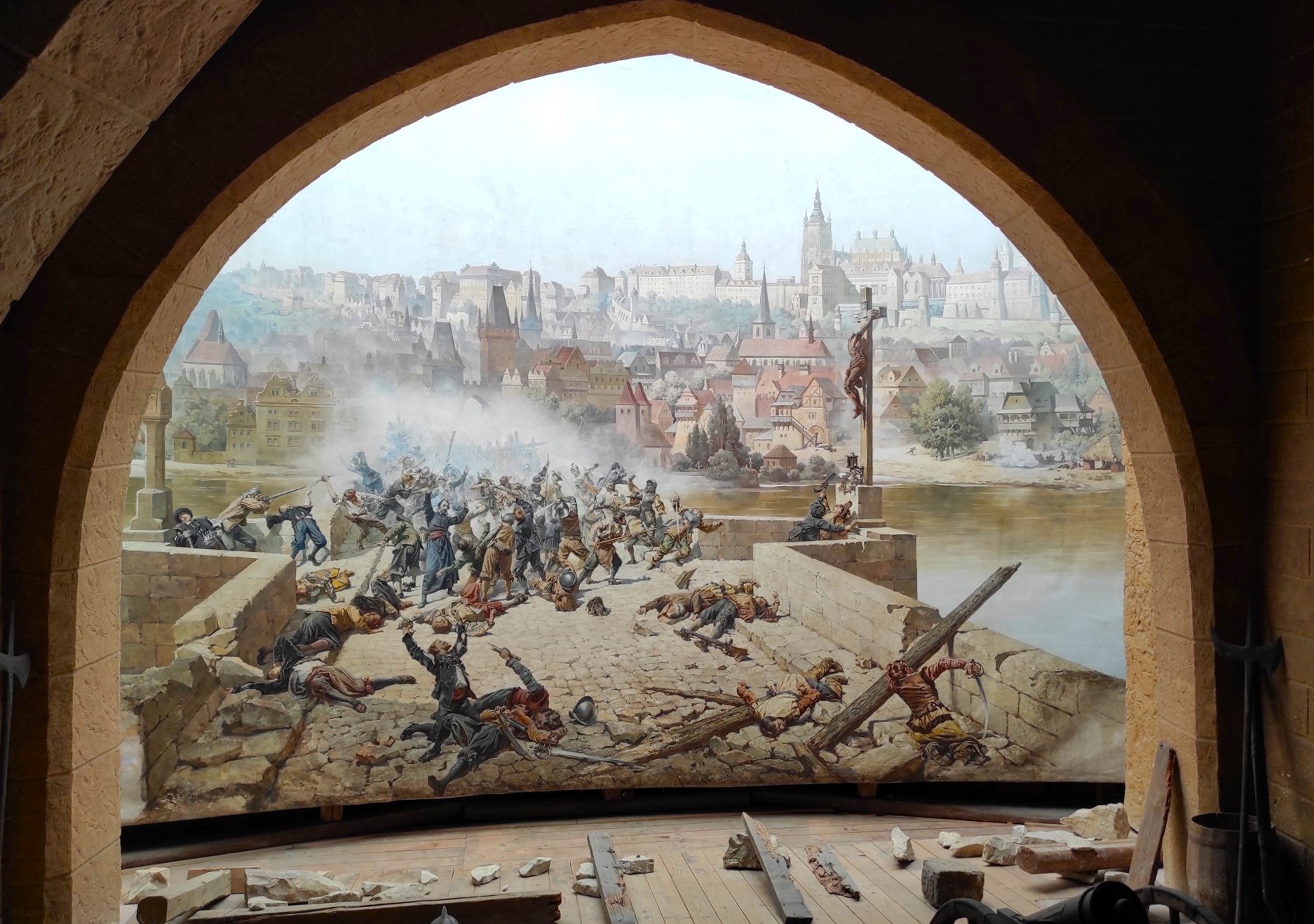
Inside, we walked through a mirror maze, inspired by the one in Vienna's Prater, all the way to an impressive diorama depicting the fight of the Praguers with the Swedes on Charles Bridge in 1648. This work, measuring 80 square metres, was created in just 50 days.
The last room, called the Hall of Laughter, is equipped with distorting mirrors that turned us into dwarfs, lanky giants, or chubby figures. On the very roof of the building, there is a weather vane bearing the names of all the craftsmen who took part in its construction.
Saint Nicholas Municipal Bell Tower
From the top of the hill, we walked comfortably down through Petřín Gardens to Újezd and headed towards Malostranské Square, where the Saint Nicholas Bell Tower stands proudly.
-
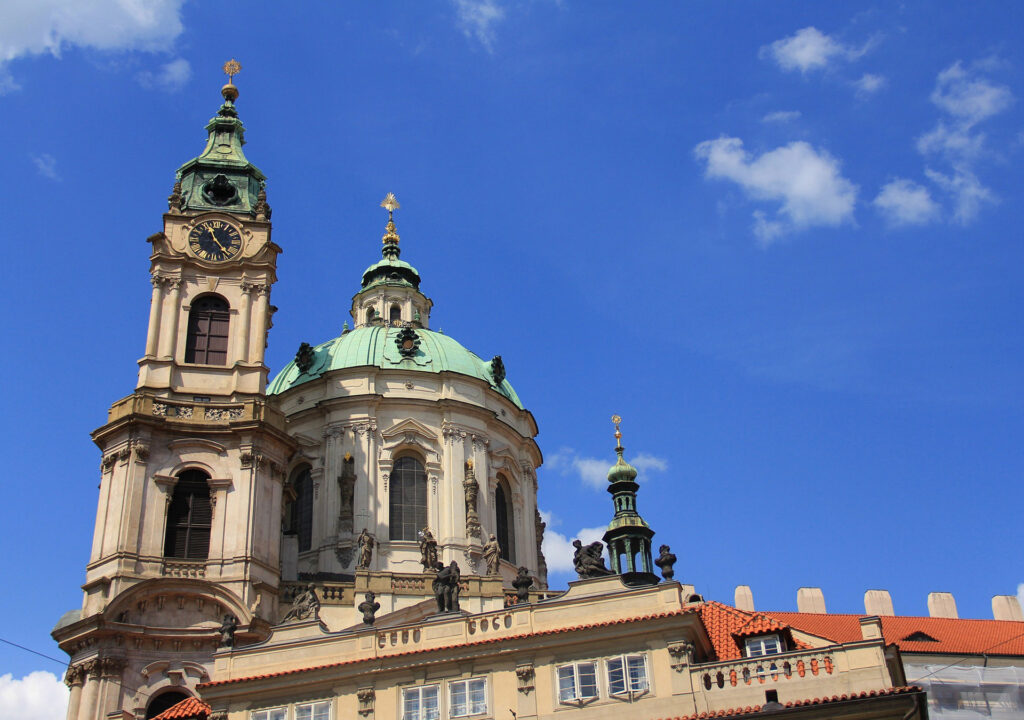
- St. Nicholas Bell Tower
-
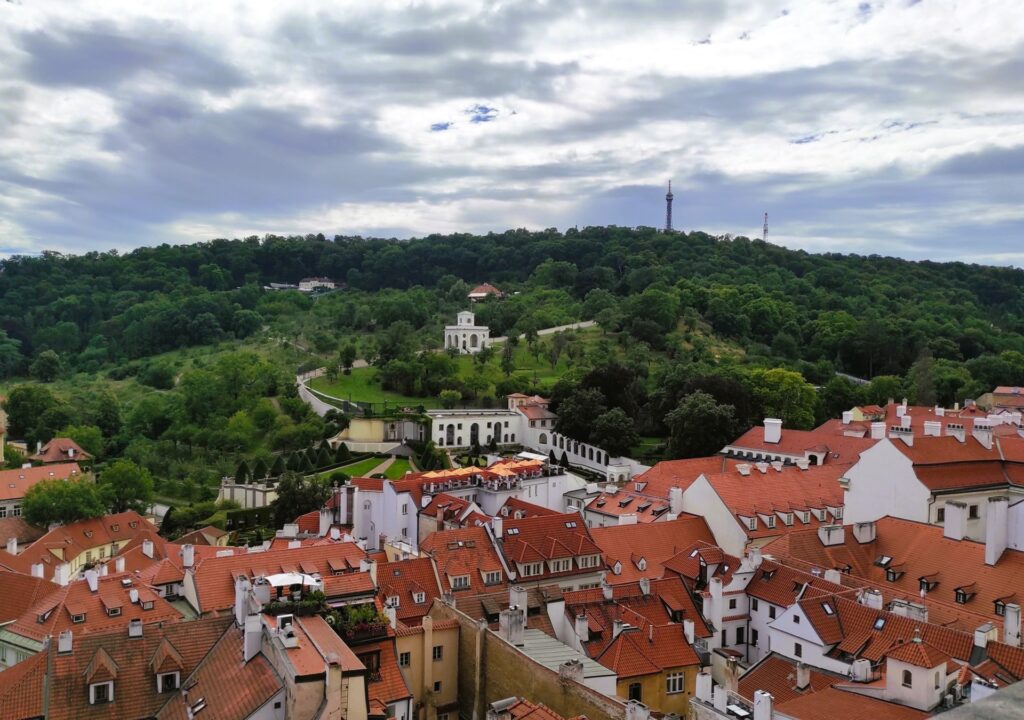
- View from the bell tower
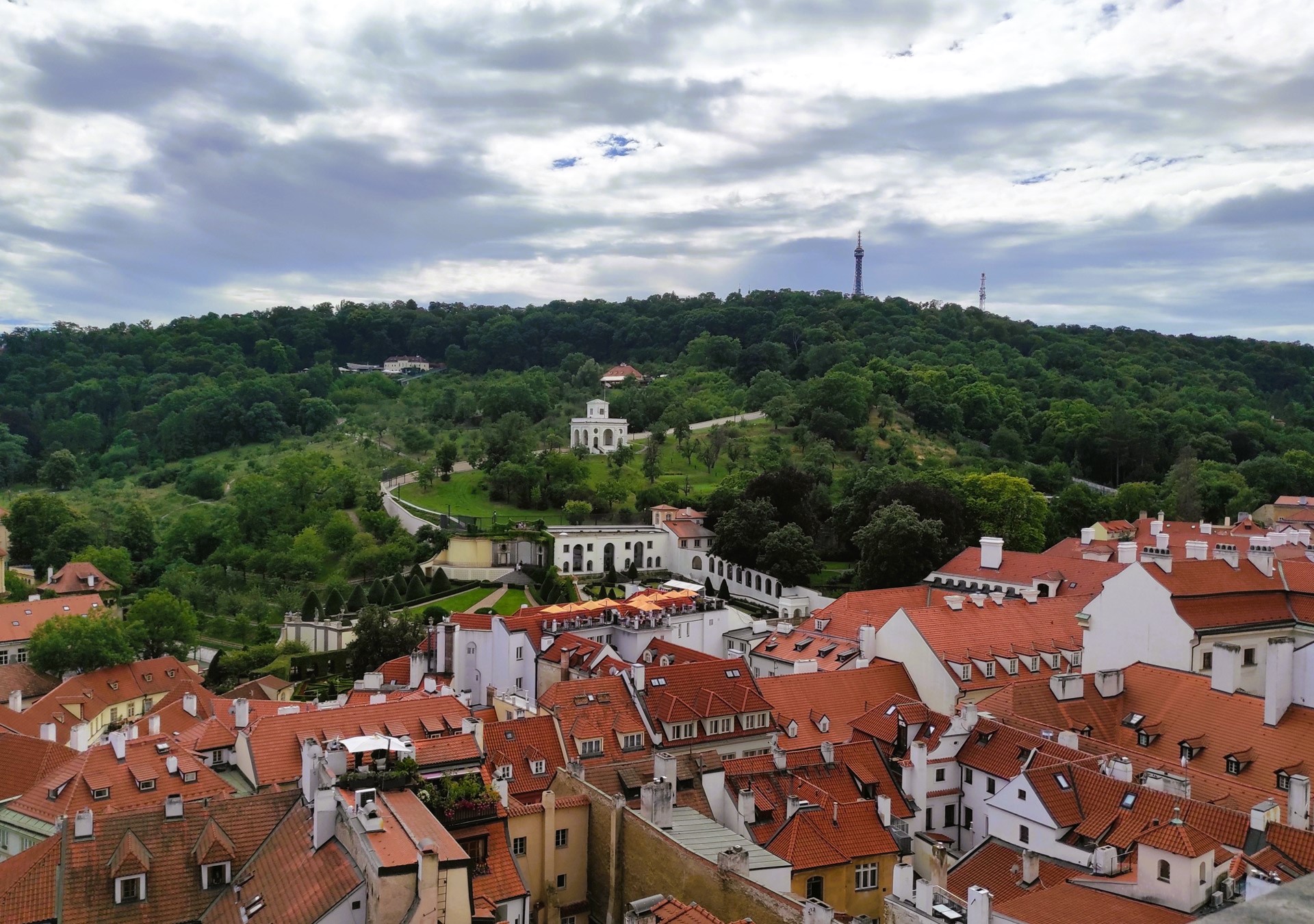
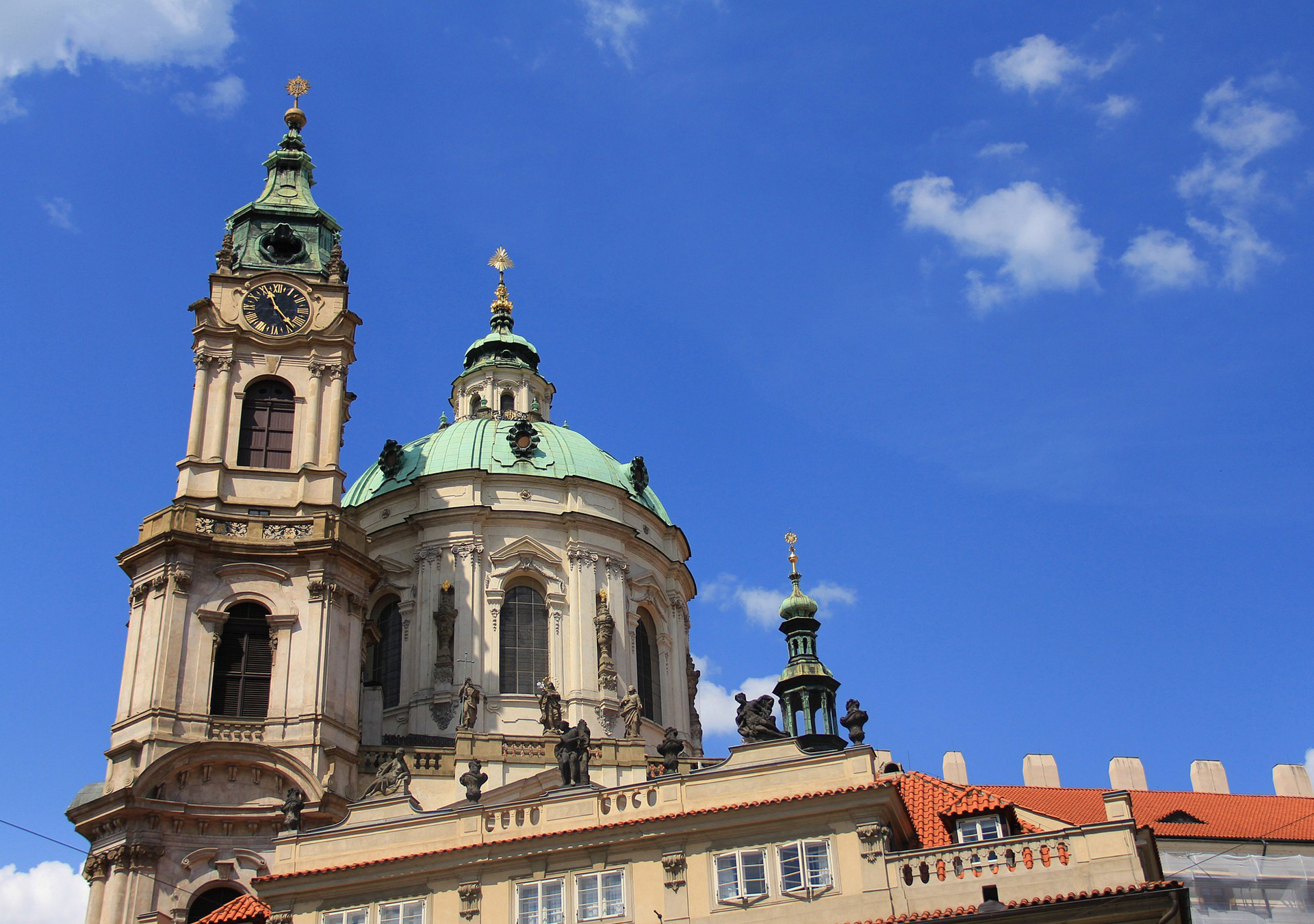
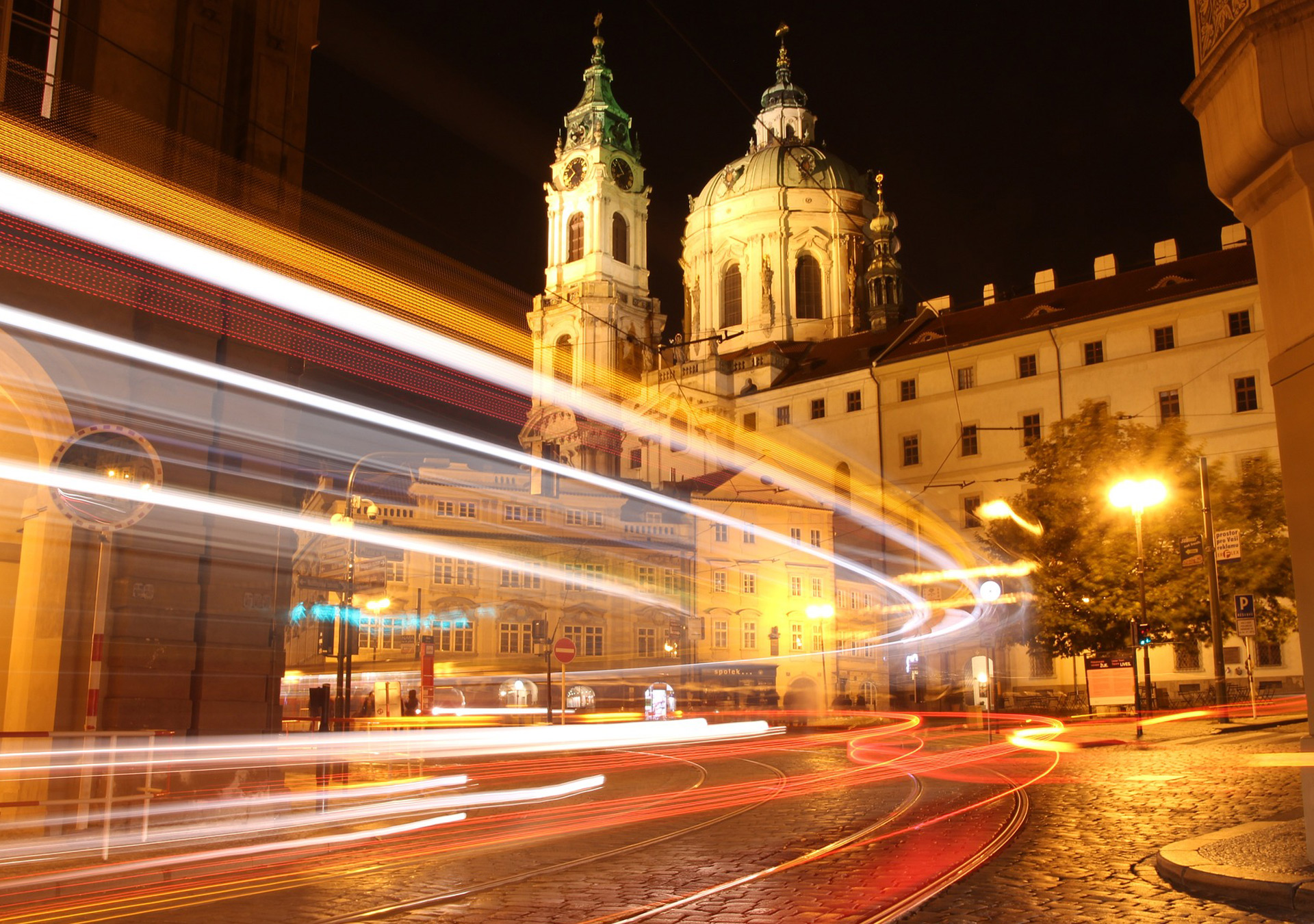
The Baroque bell tower, which once served as a fire watchtower and clock tower, was built in the 18th century by the famous architect Kilián Ignác Dientzenhofer. The height of the tower is exactly the same as the dome of the adjacent Church of Saint Nicholas, although it was never a part of it and has always belonged to the municipal property, which is also indicated by the coat of arms of the Lesser Town above the tower's entrance.
During the Communist regime, the tower served as an observation post for the State Security, thanks to its advantageous location near many foreign embassies of the former Western Bloc.
-
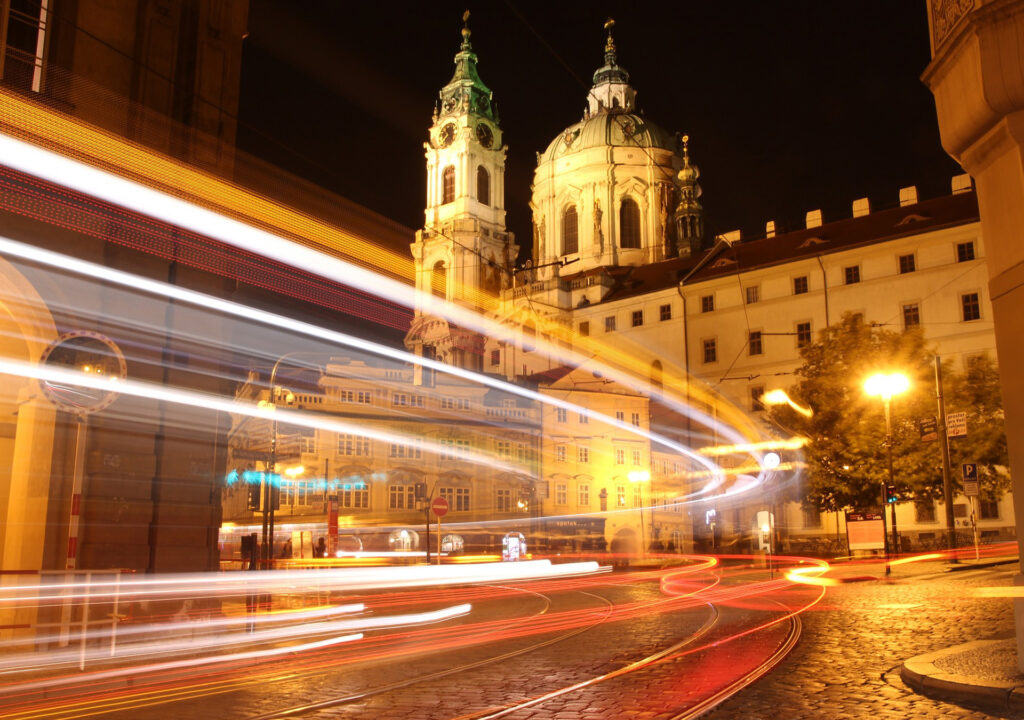
- St. Nicholas Bell Tower
-
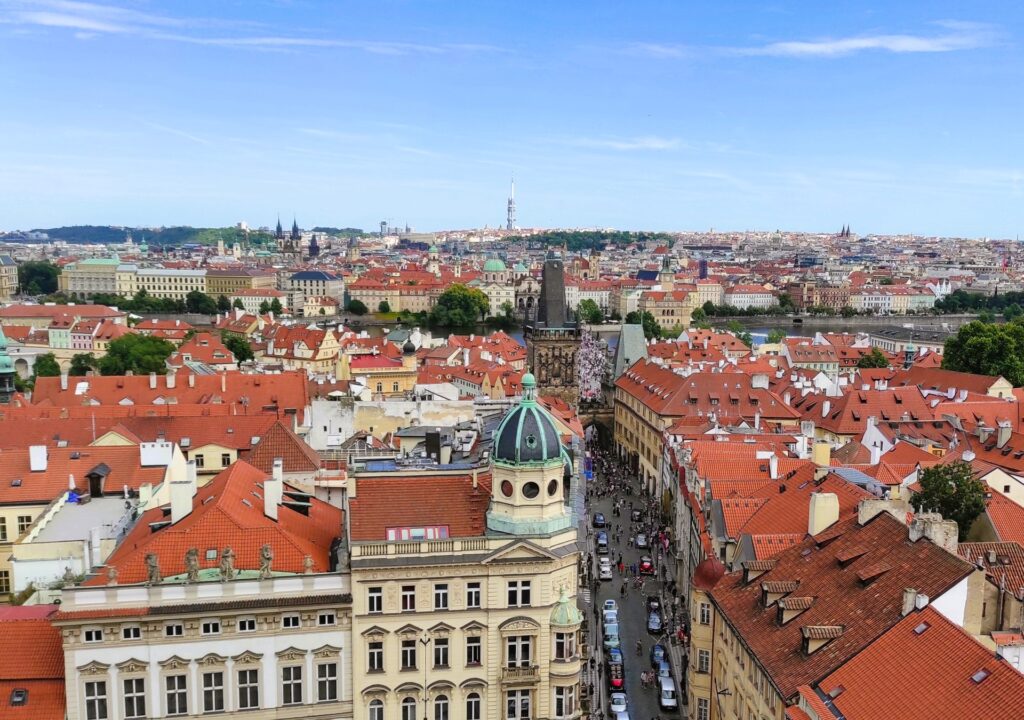
- View from the bell tower
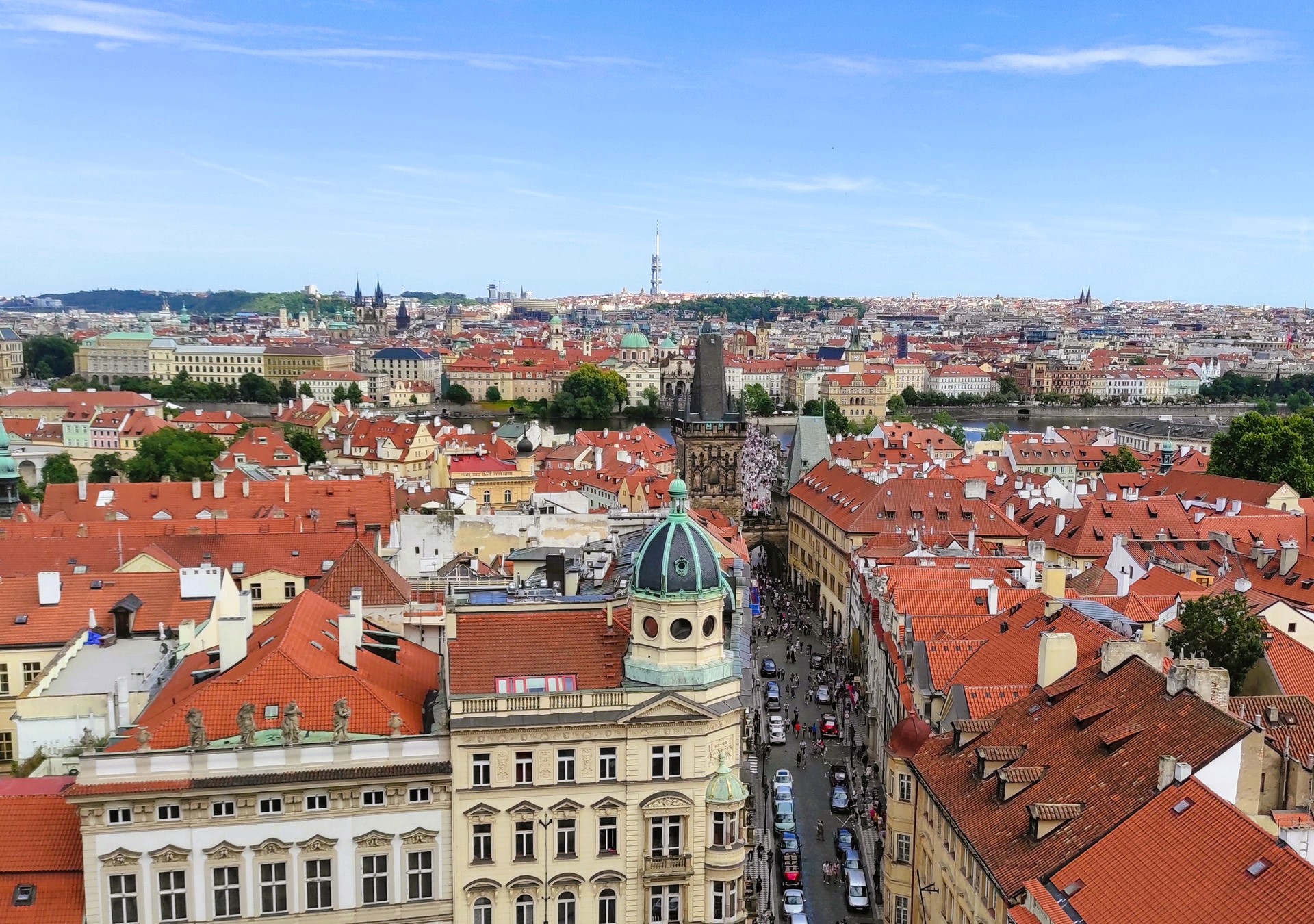
A total of 215 steps, mostly masonry, and in the last section wooden, led us to the viewing gallery. The structure also contains a unique tower keeper's flat including a black kitchen, a Baroque sewerage system and the 16th-century Bell of Saint Nicholas. The apartment itself is a unique example of the living conditions of the lower classes at that time.
It is also worth mentioning that during the 2018 reconstruction, a walled-up corridor with a staircase leading to the tower's underground was discovered. However, the corridor, which is blocked by rubble, has not yet been fully uncovered. Perhaps future research will reveal where the corridor leads and what secrets it holds.
Address: Malostranské náměstí 556/29, Prague
Lesser Town and Old Town Bridge Towers
Just opposite the Saint Nicholas Municipal Bell Tower winds Mostecká Street, at the end of which stands Charles Bridge and its Lesser Town Bridge Tower. On the other side of the bridge, the Old Town Bridge Tower rises.
If you want to learn more about these unique architectural gems, read our separate article titled Prague's Charles Bridge: a mystery-shrouded journey through time between two towers.
Clementinum and Old Town Hall
Just a few steps from the Old Town Bridge Tower lies the Clementinum. This vast Baroque complex is a gateway to the past, where you can find the famous Baroque Library and, above all, the Astronomical Tower with an absolutely stunning view.
From the Clementinum, we then took a pleasant stroll to the Old Town Square, home to one of the Czech Republic's most significant monuments—the Old Town Hall with its Astronomical Clock, where the world stops every hour on the hour.
We have thoroughly explored these two gems—both the Clementinum and the Old Town Hall—and have written a separate article about them titled Prague's Old Town Hall and Clementinum: treasures full of history and breathtaking views.
Powder Gate
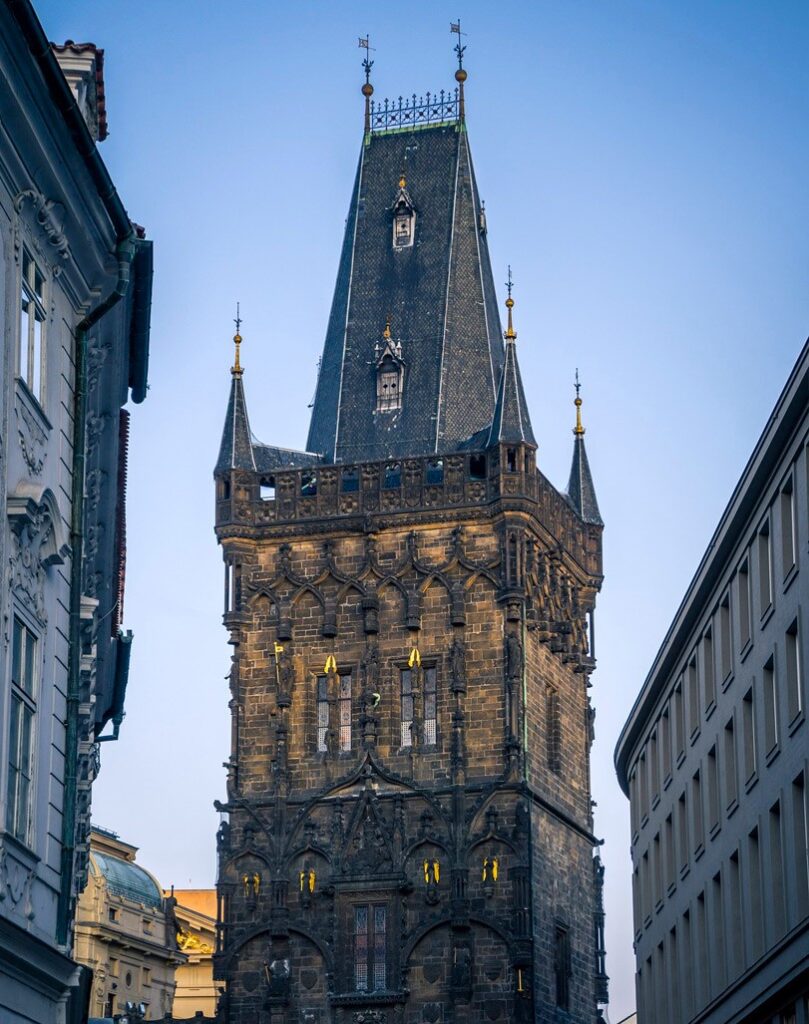
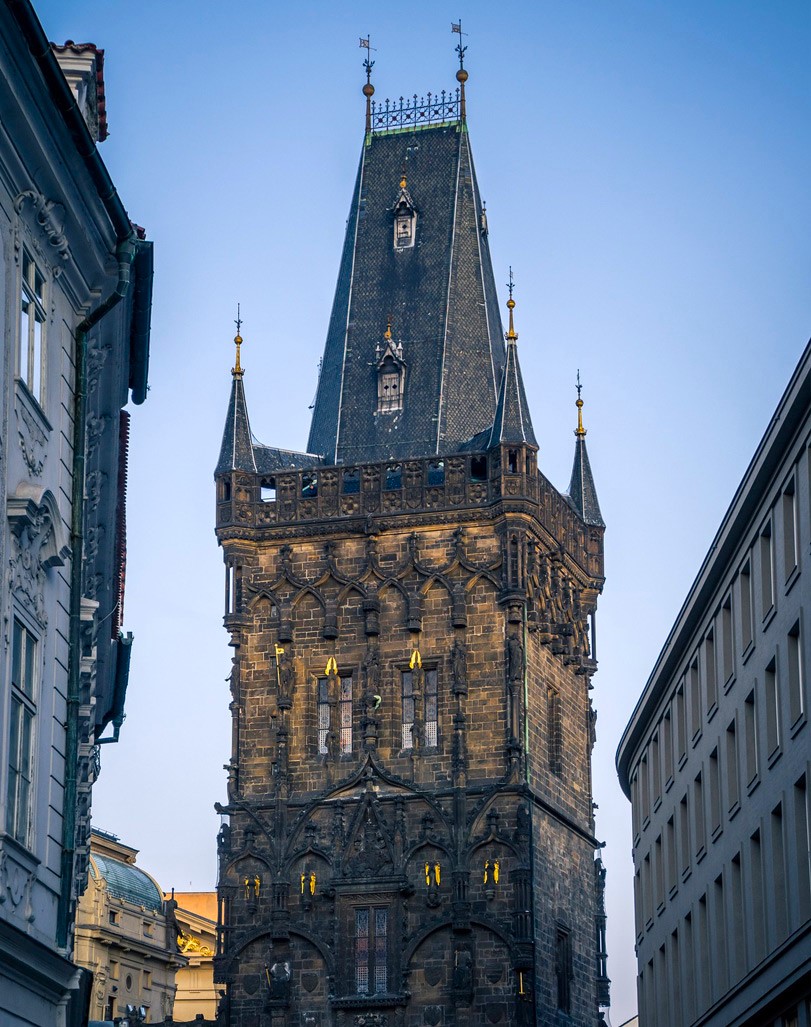
From Old Town Square, we set off down Celetná Street, where at its end another architectural gem awaited us: the late Gothic Powder Gate, dating back to the 15th century. This ceremonial structure represents the monumental entrance to the Royal Route, the path taken by coronation processions of Czech kings on their way to Prague Castle.
-
- Powder Gate
-
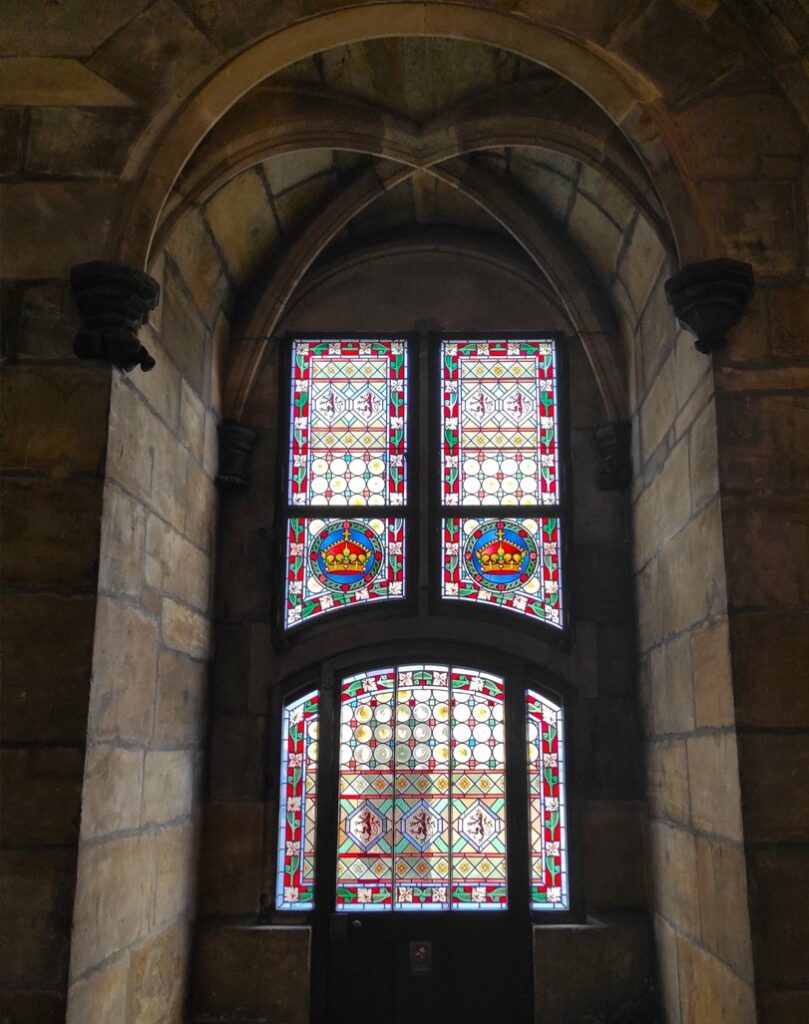
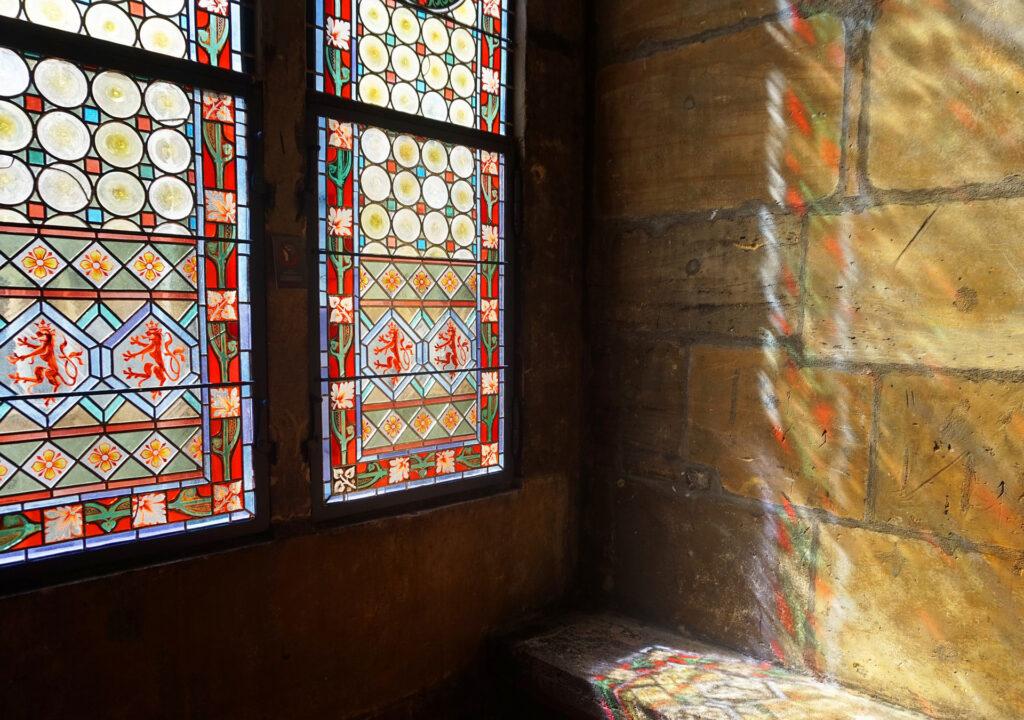
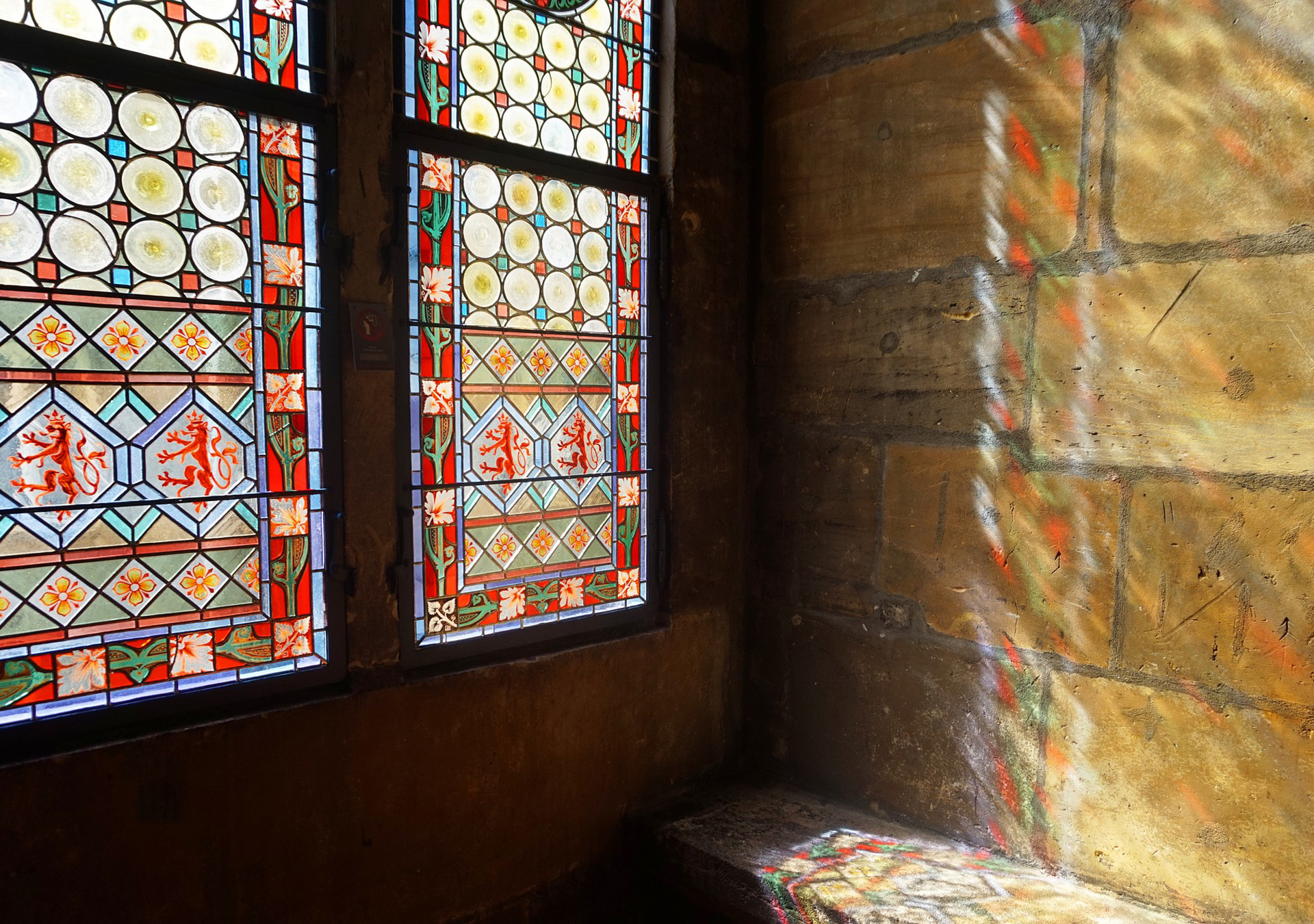
- Stained glass on the Powder Gate
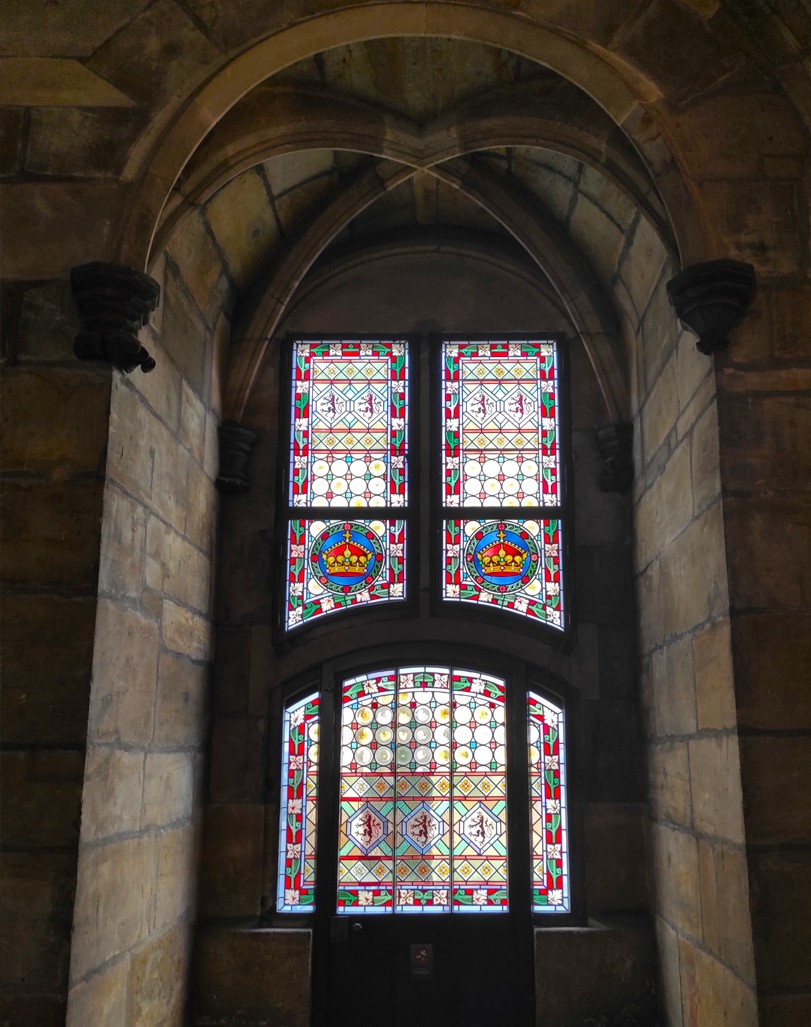
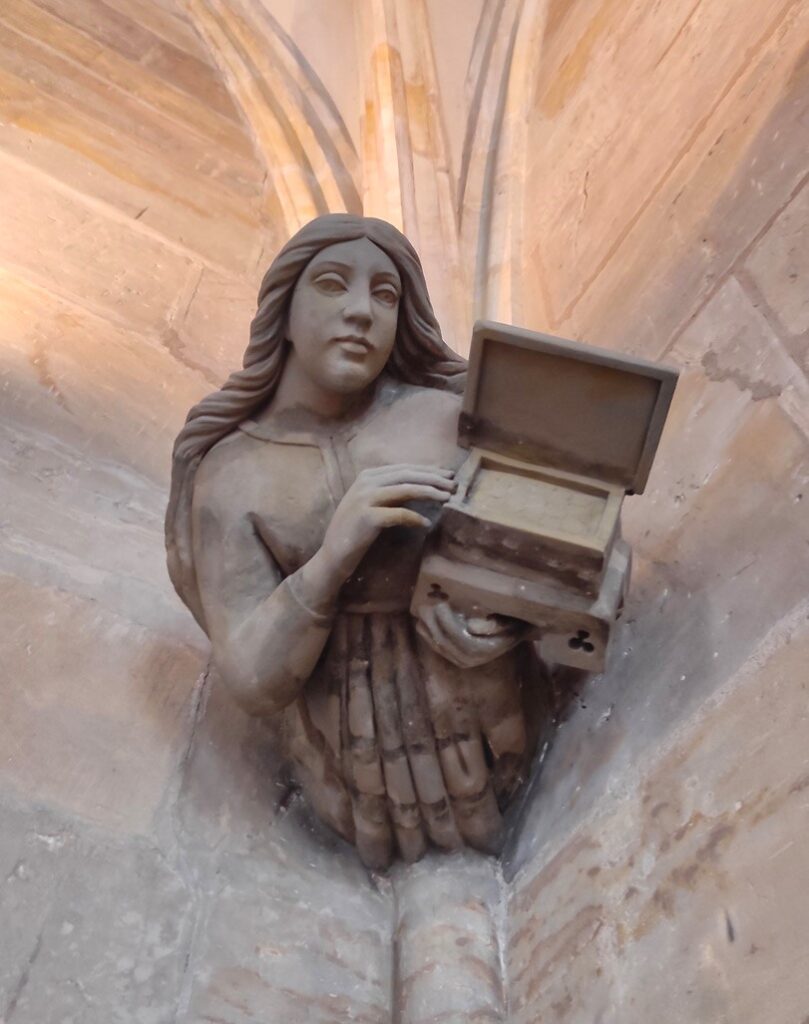
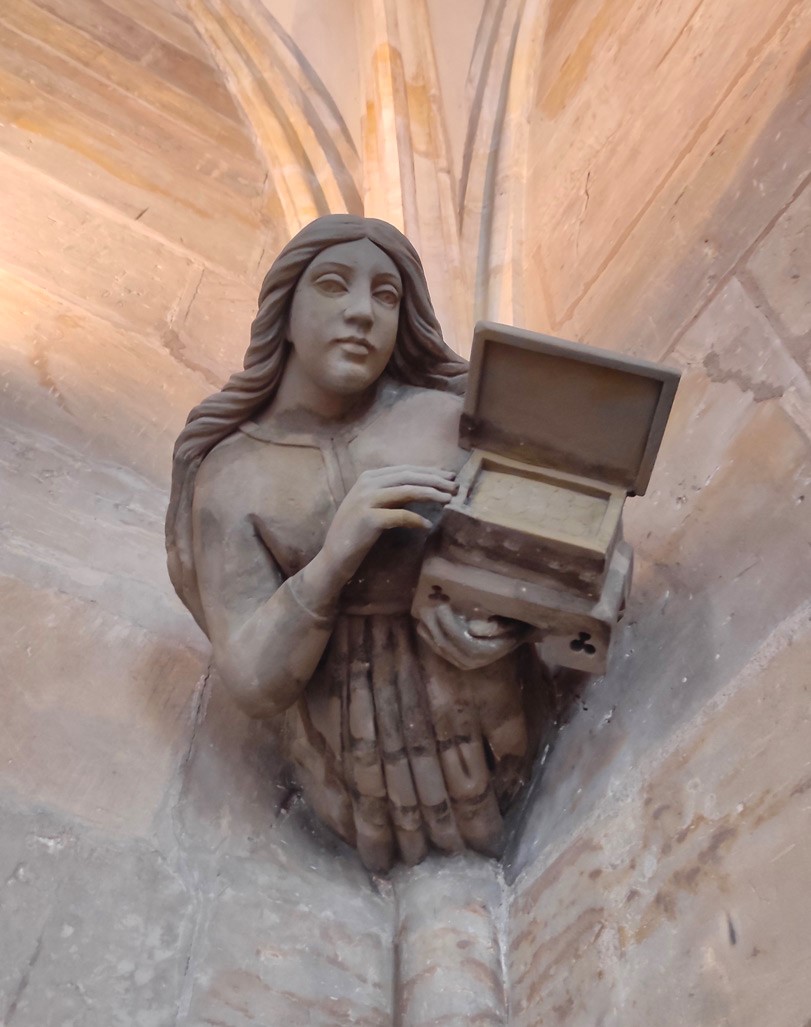
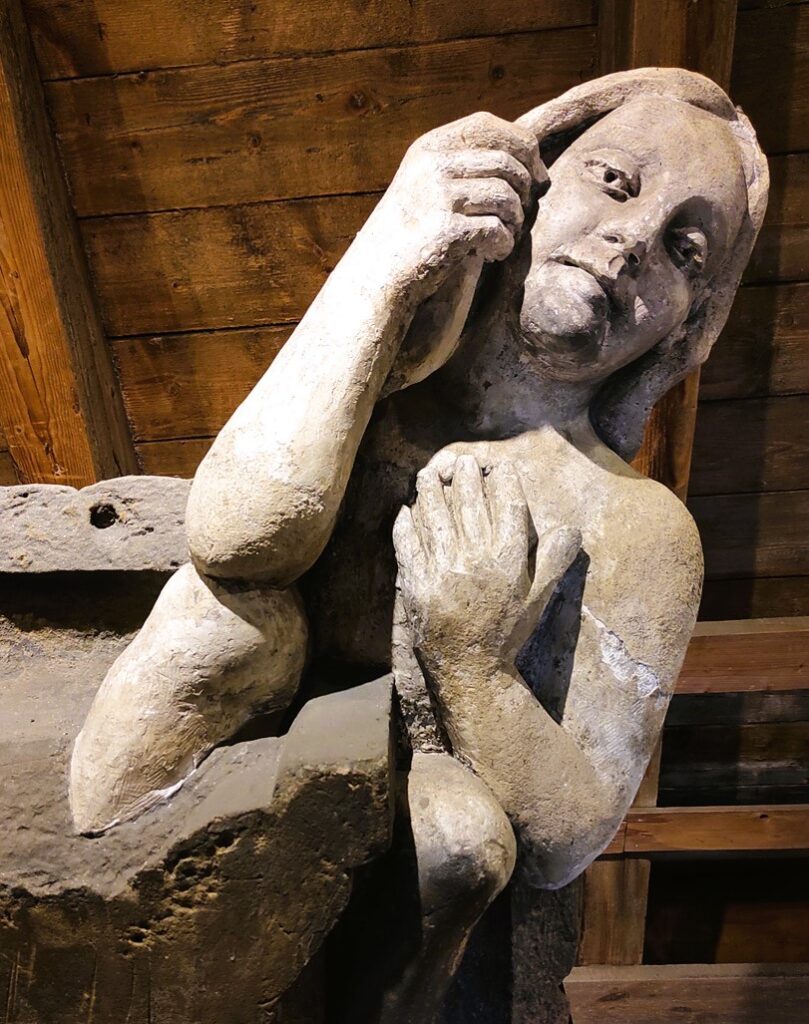
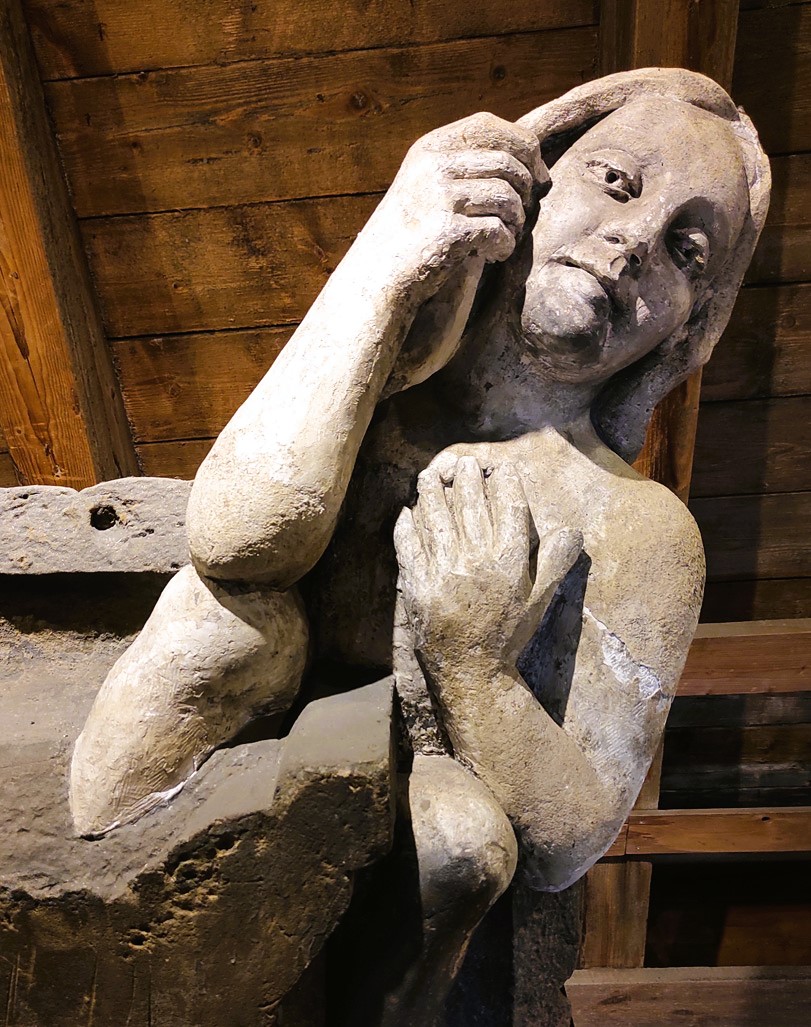
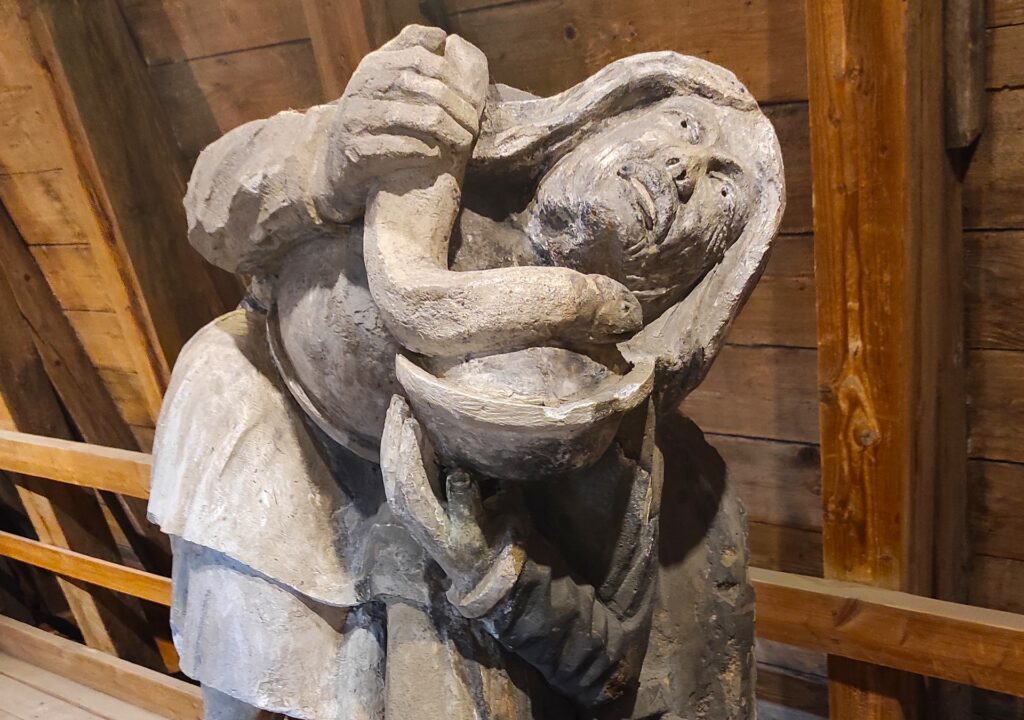
Standing 65 meters tall, the gate is distinguished by its stone sculptural decorations. From its facade, we can still see the gazes of kings Premysl Ottokar II, Charles IV, George of Poděbrady, and Vladislav II Jagellonian, in whose honour the Powder Gate was built. Also visible are statues of Czech patrons and saints, including Christ, the Virgin Mary with child, and Adam and Eve.
Above the passageway, a Latin inscription proclaims the following words: "Behold, Prague. To the honest, I am a mother; to the deceitful, a stepmother. Let those flee, and let those come who themselves desire good." On the side facing Na Příkopě Street, there is an oriel window that once served as a privy.
-
- Powder Gate
-
- Powder Gate
-
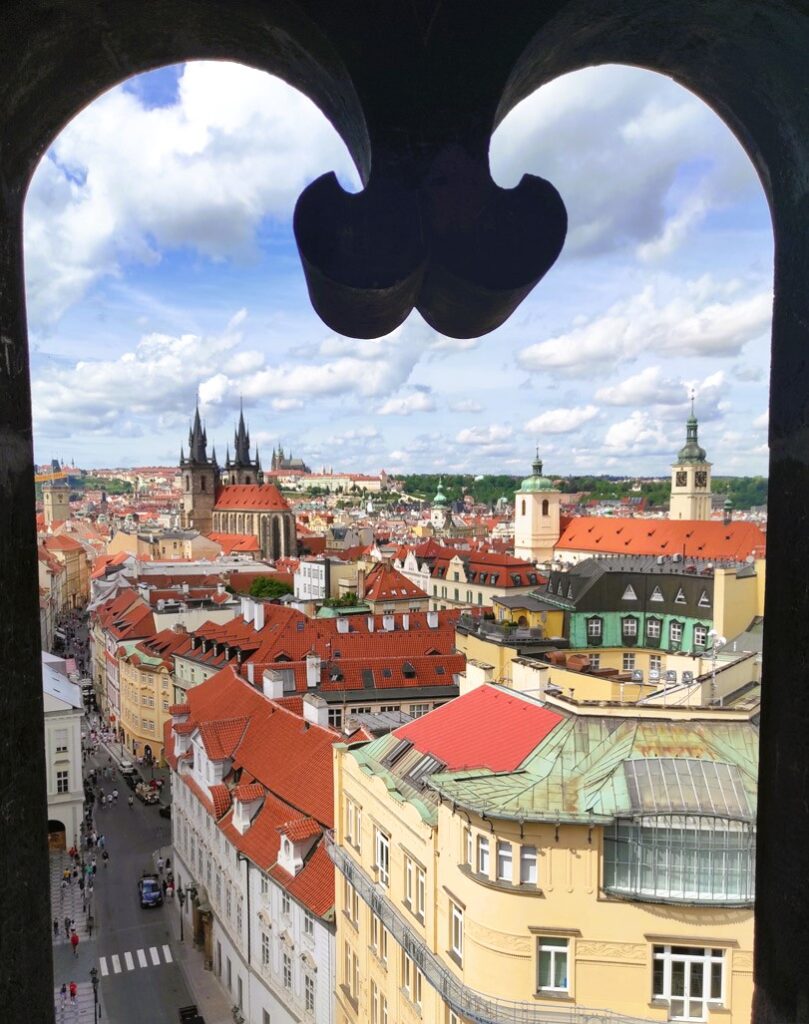
- View from the Powder Gate
-
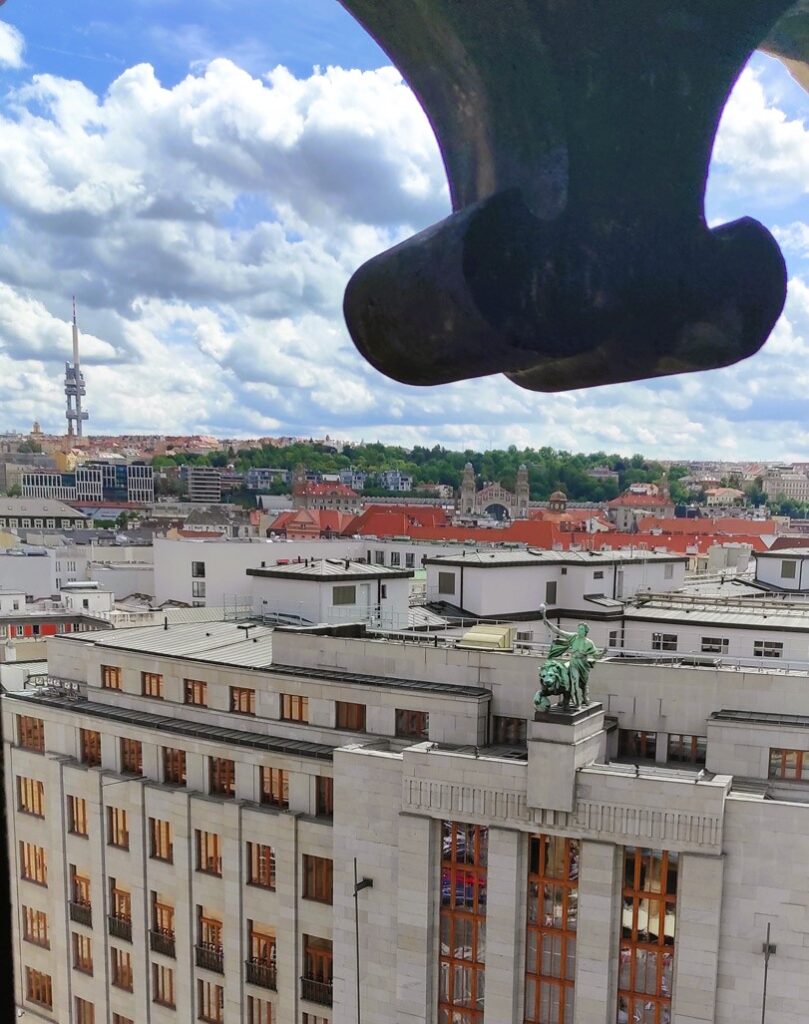
- View from the Powder Gate
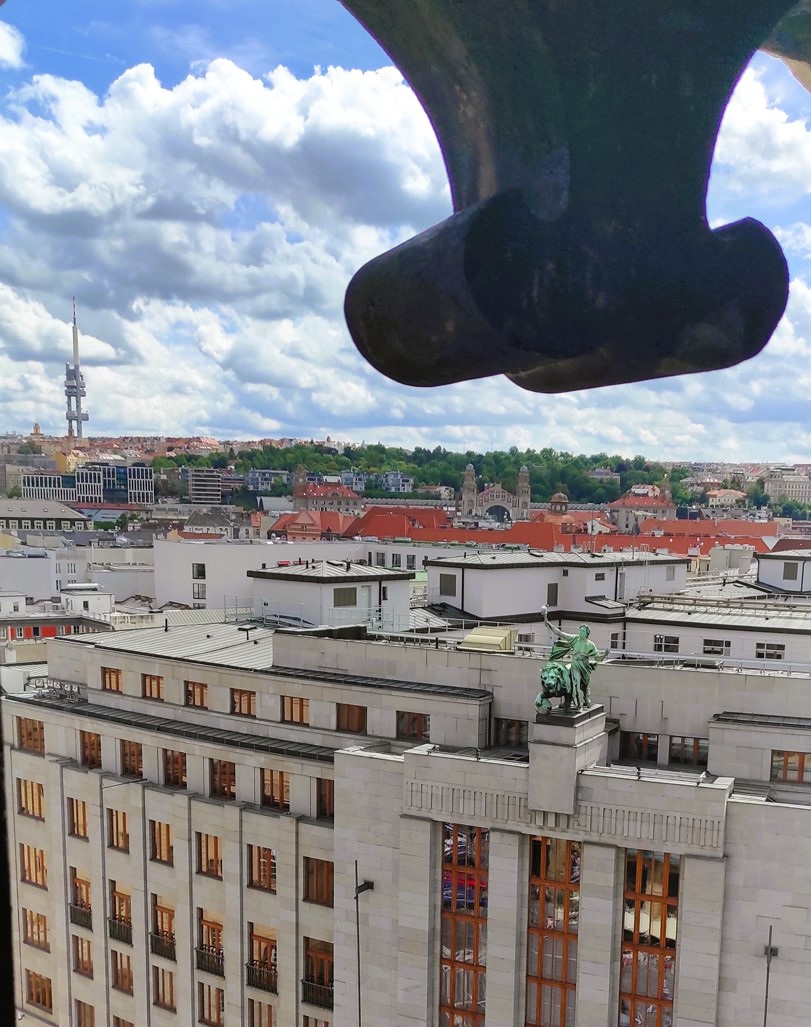
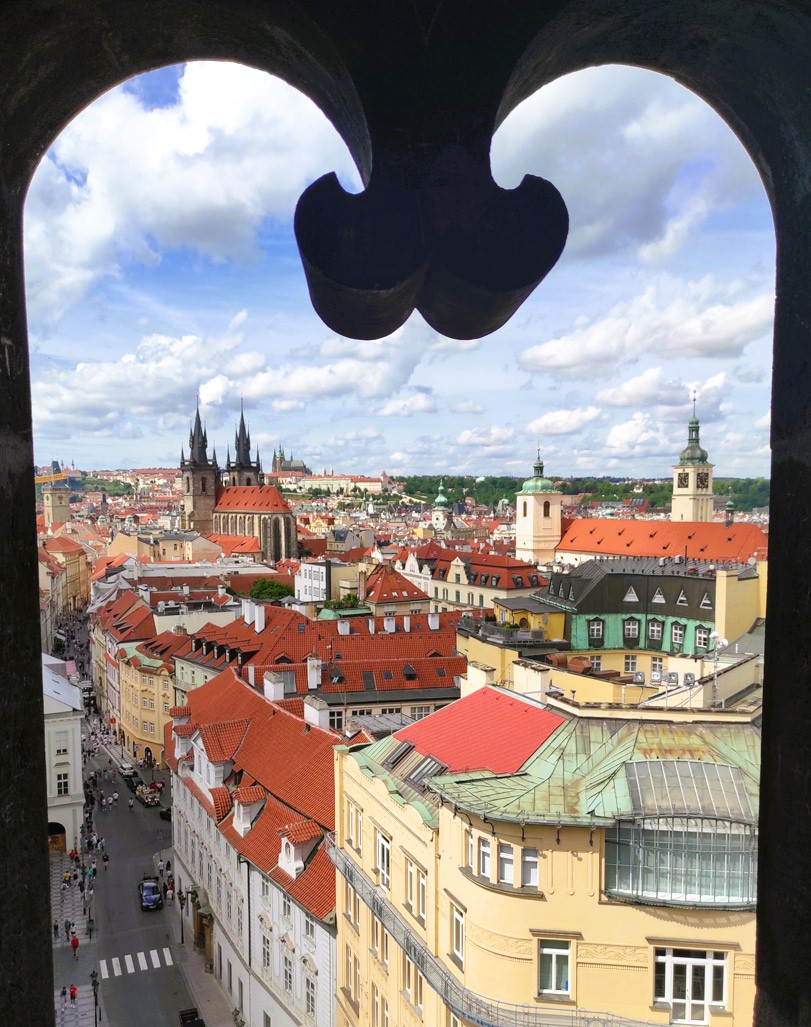
An interesting fact is that even though the gate is named "Powder," there are no real historical sources that confirm it was ever actually used to store gunpowder throughout its long history. Be that as it may, it's undeniable that from its gallery at a height of 44 meters, reached via a stone spiral staircase, you are offered an exceptional view of Prague's historic centre.
Address: náměstí Republiky 5, Prague
-
- Stained glass on the Powder Gate
-
- Powder Gate
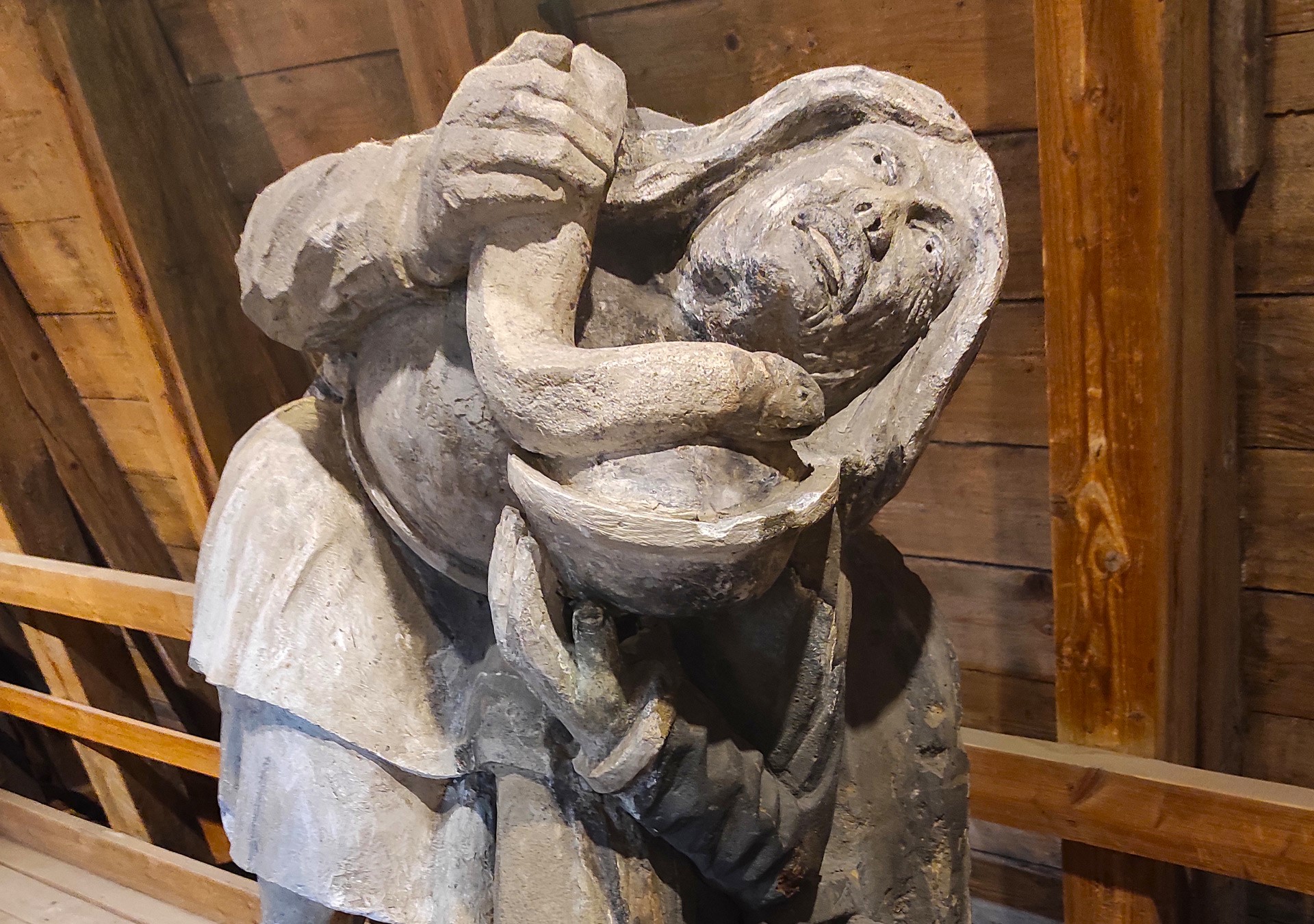
New Mill Water Tower
From the Powder Gate, we headed through Republic Square and Revoluční Street to the last of the visited monuments, which adorns the right bank of the Vltava River. As its name suggests, this Baroque tower from the 17th century was used to supply water to the lower part of Prague's New Town until the 19th century.
The time-worn tower once stood directly on the bank of the Vltava; however, due to silt deposits and modern modifications, it has moved a considerable distance from it. Water from the Vltava was mechanically pumped into a tank in the upper part of the tower and then descended through pipes to town fountains and several breweries. The pipes were originally heated in the winter by an open fire to prevent them from freezing.
-
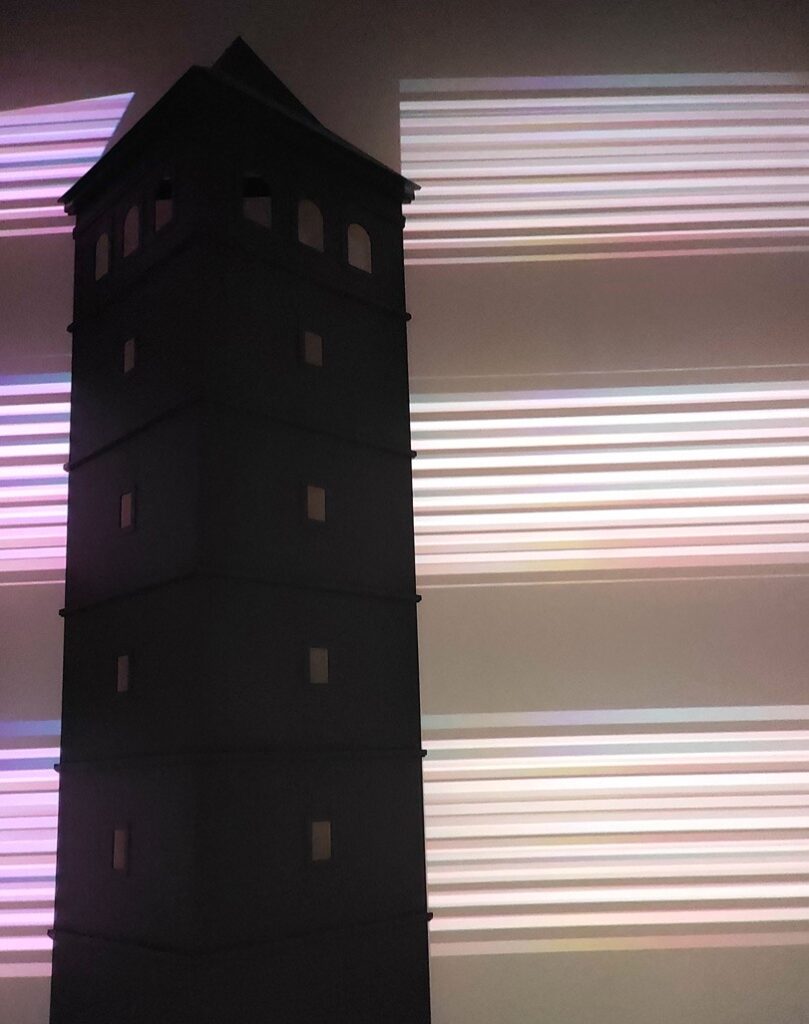
- Videomapping in the tower
-
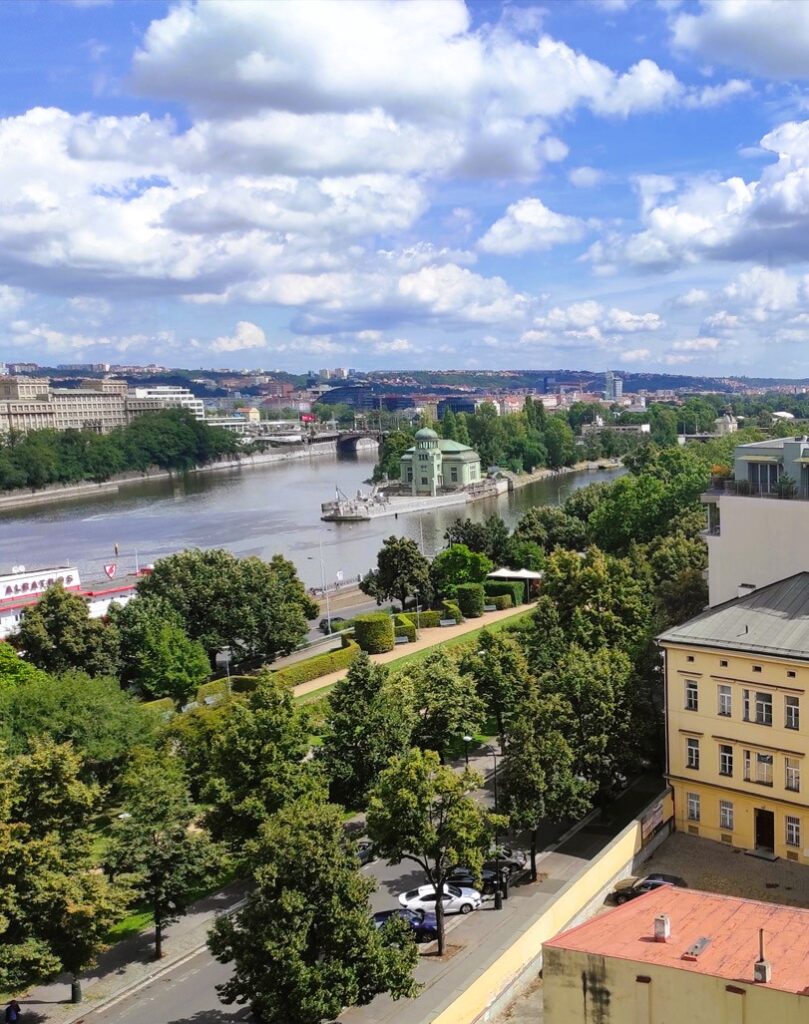
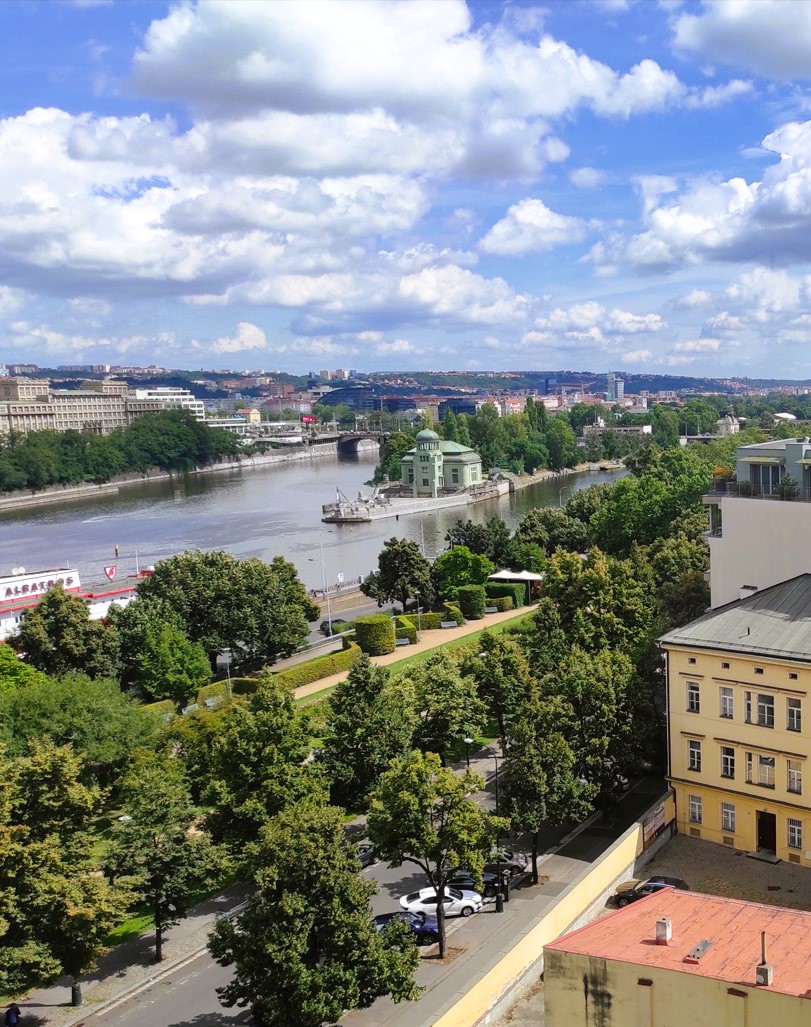
- View from the tower
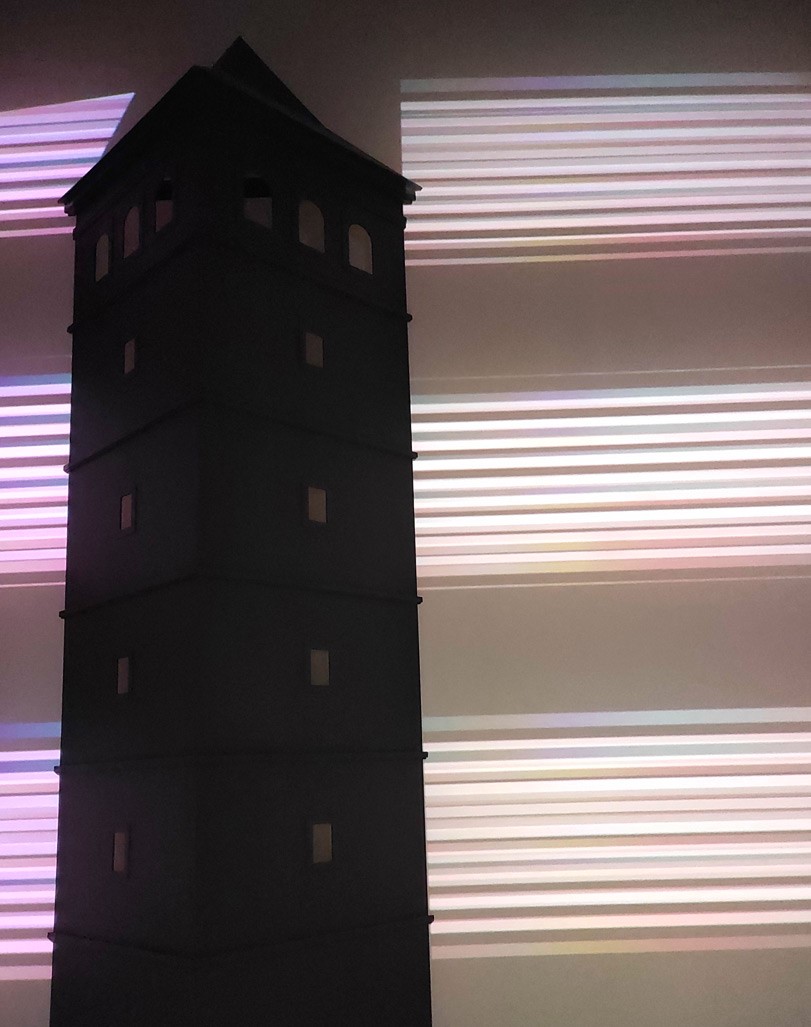
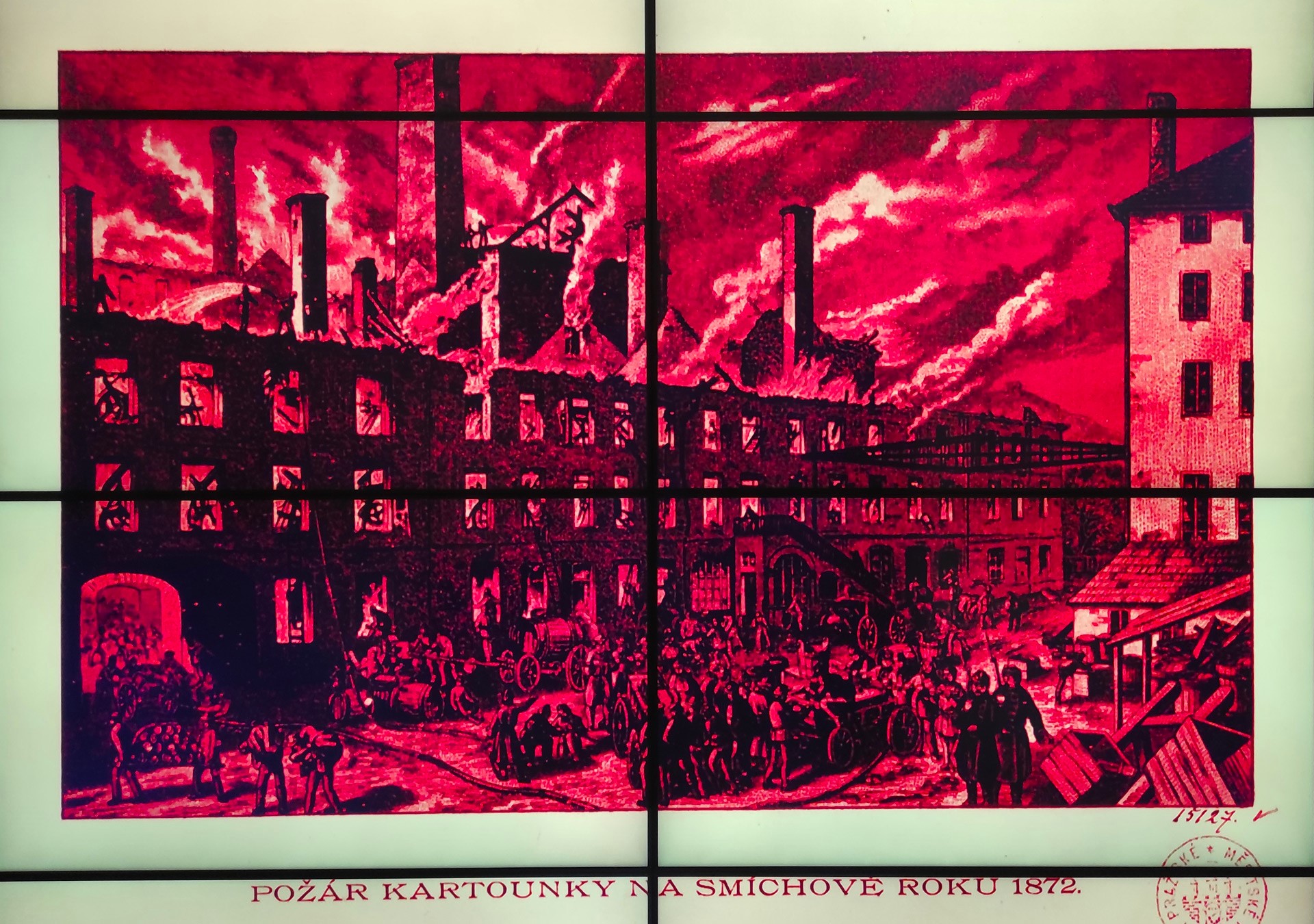
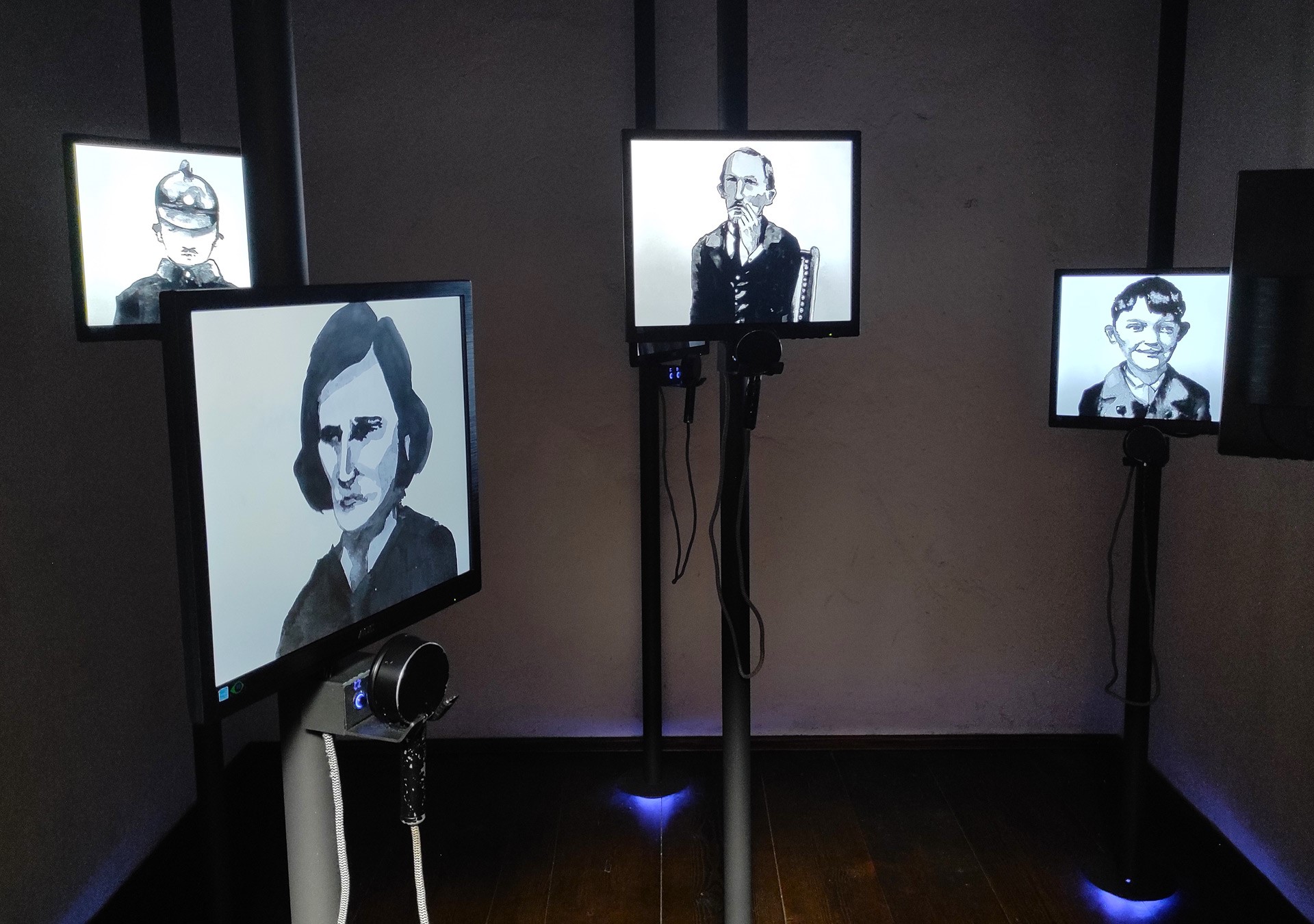
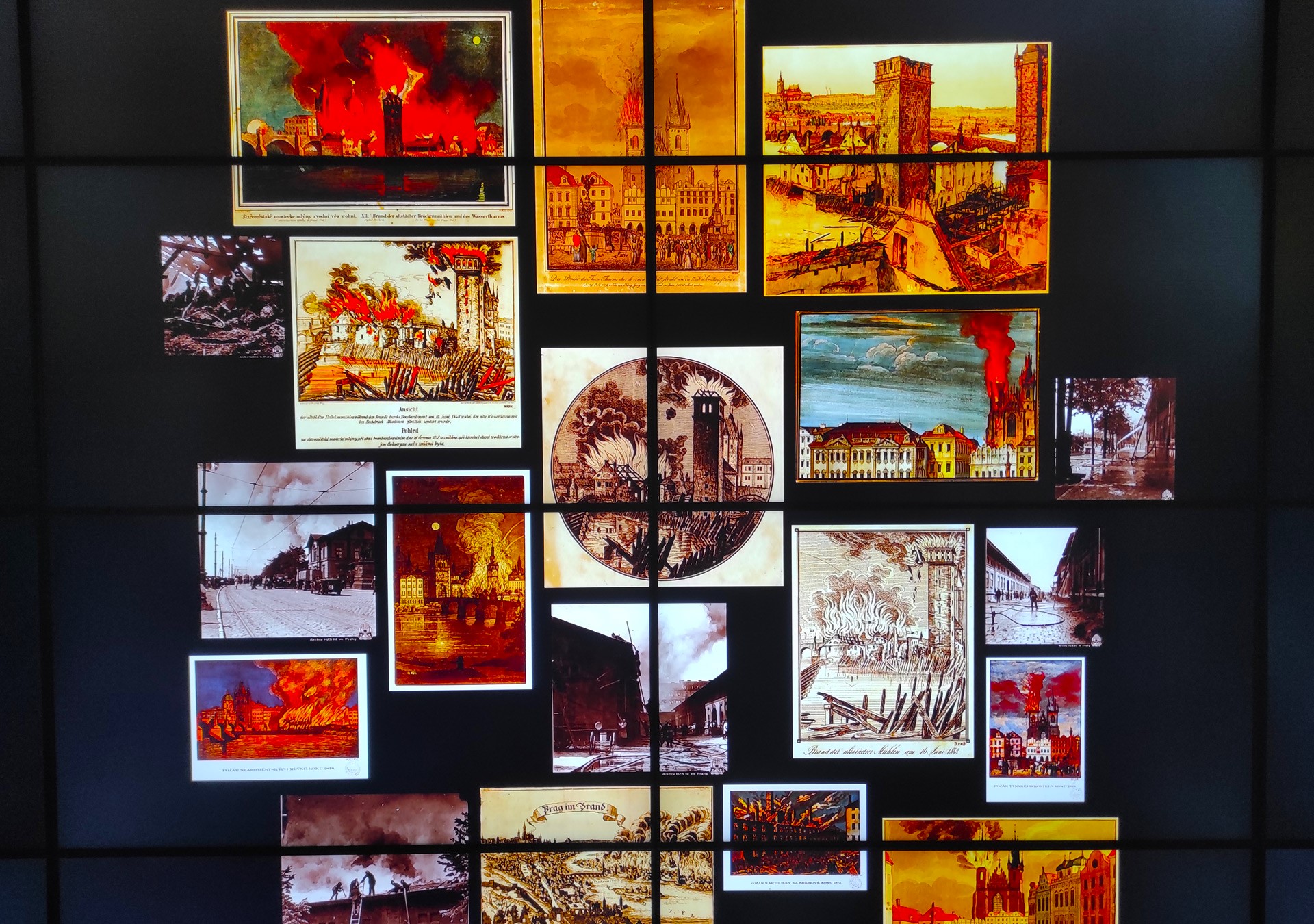
The New Mill Tower is the only one of Prague's preserved water towers that is open to the public. Across a total of six floors, there is now an exceptional multimedia exhibition called "Prague is burning," which uses video mapping, animations, and virtual reality to introduce visitors not only to the history and purpose of the water tower, but especially to the captivating stories of Prague's firefighters and the fires of Prague from the very beginning of the city itself.
-
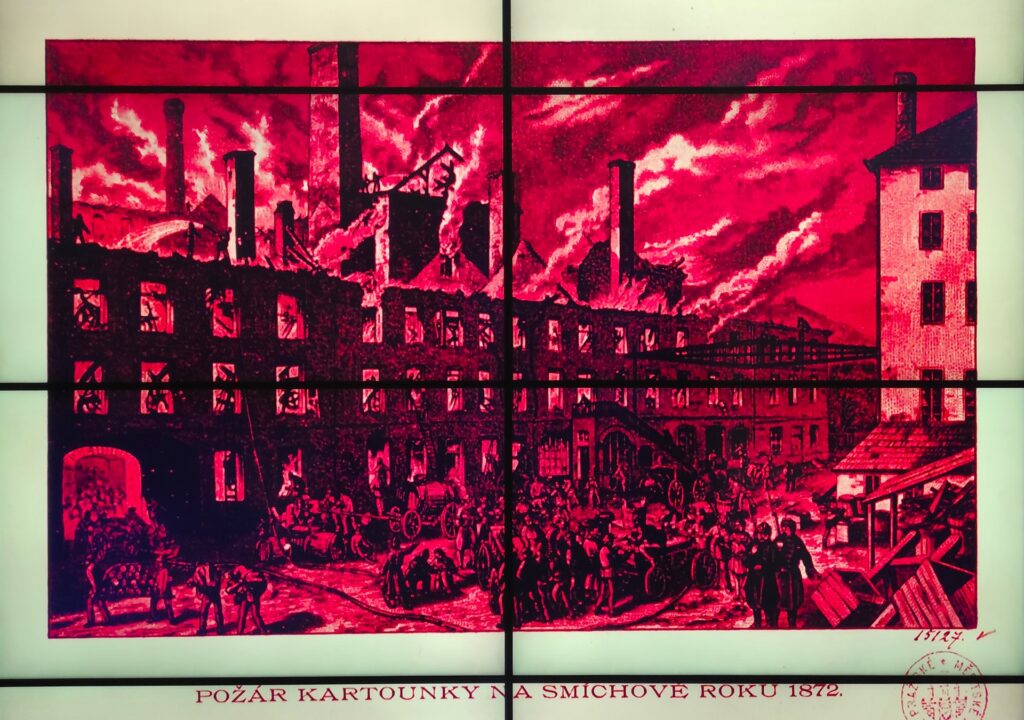
- Videomapping in the tower
-
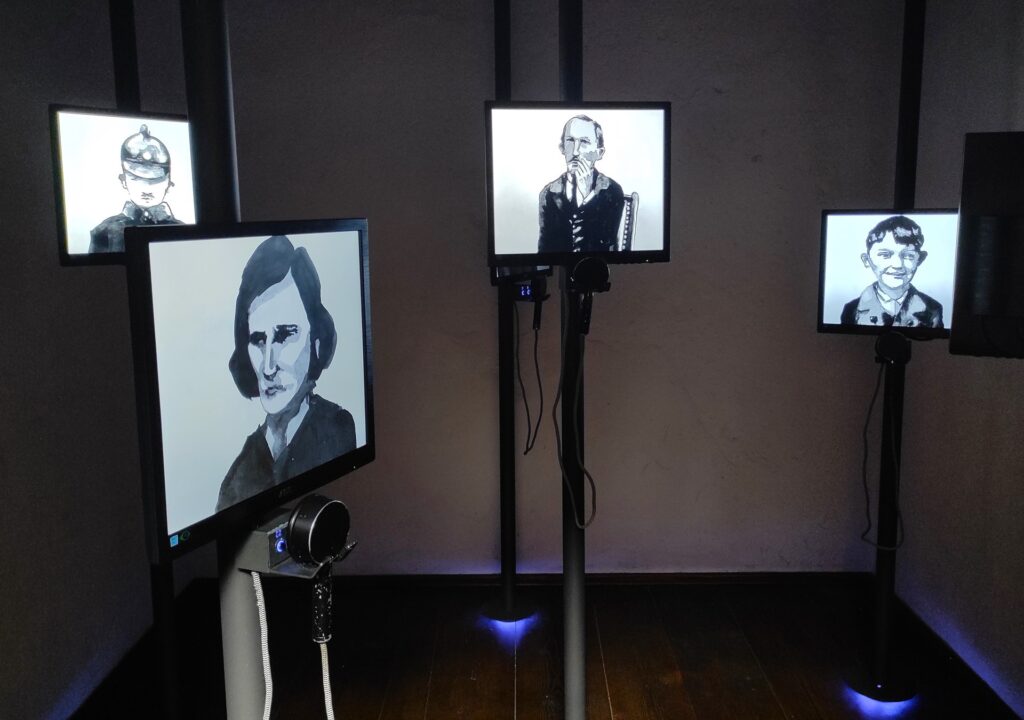
- Stories of Prague's firefighters
On the top floor, at a height of 30 meters, there is a hall with a panoramic view of Prague. The so-called Lusthaus, with windows facing all four cardinal directions, is a rarity worldwide and is considered the first historically known lookout tower in Prague. The Lusthaus, or summer house, was built by wealthy city councillors who were following the contemporary fashion of summer houses constructed on the roofs of aristocratic residences.
Address: Nové mlýny 3a, Prague
-
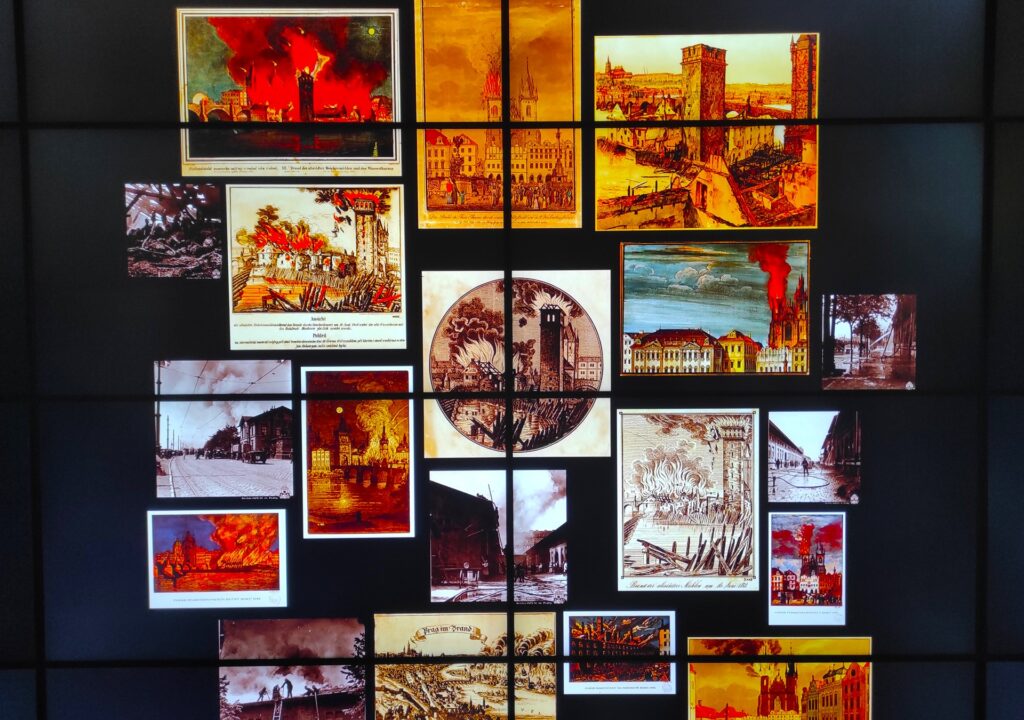
- Prague fires on postcards
-

- Videomapping in the tower

Our final tip:
If you decide to explore the hidden stories of Prague's towers like we did, we recommend buying a single multi-entry ticket for all the monuments, "9 attractions in 365 days." Not only is it cheaper, but it's also valid for 365 days from the date of purchase.
You can also take advantage of the morning discount, where entry to each tower is 50% off for the first hour after opening.