




The Old Town Hall and the Clementinum. Two symbols of Prague. One tells the story of secular power and town life, the other is a silent ode to science, education, and the endless beauty of the Baroque. And both are an essential stop on the journey to discover the true heart of this amazing city.
The Old Town Hall
It is not just another historic building. It is the centre of Old Town Square, a guardian of time, and a silent witness to uprisings, celebrations, and tragedies.
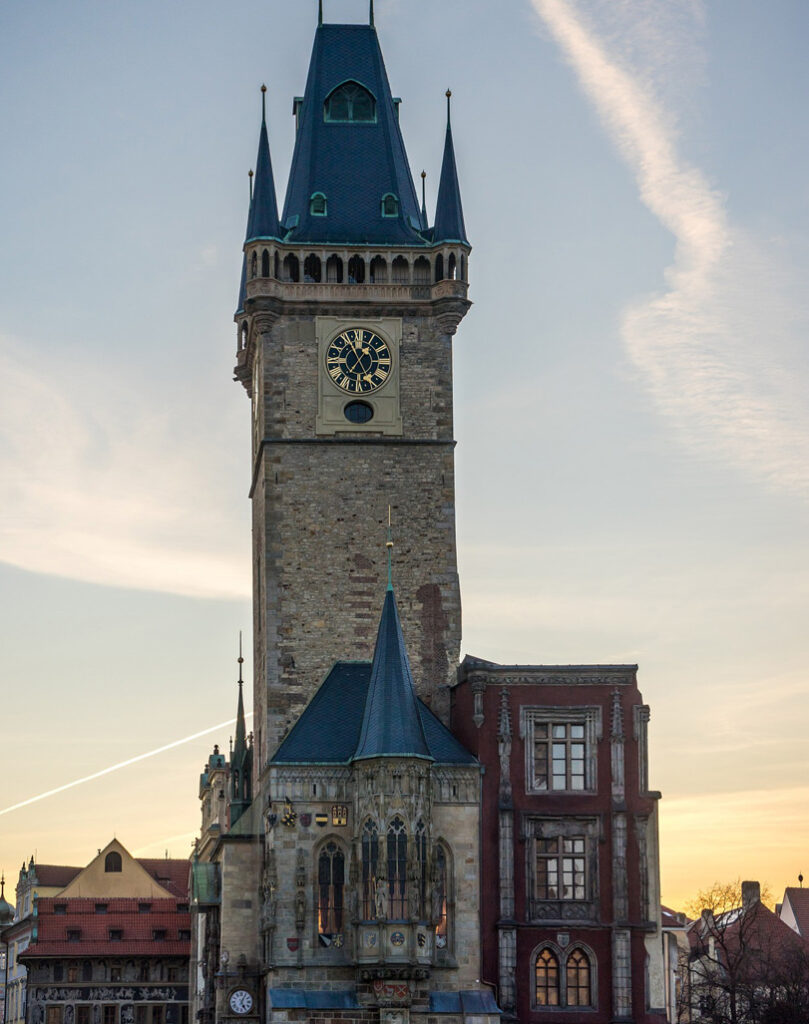
The Old Town Hall, which was established in the 14th century as the seat of Prague's Old Town administration, consists of a complex of several historic buildings. However, the hall also served a representational function, as evidenced by its historic interiors preserved in their original appearance.
-
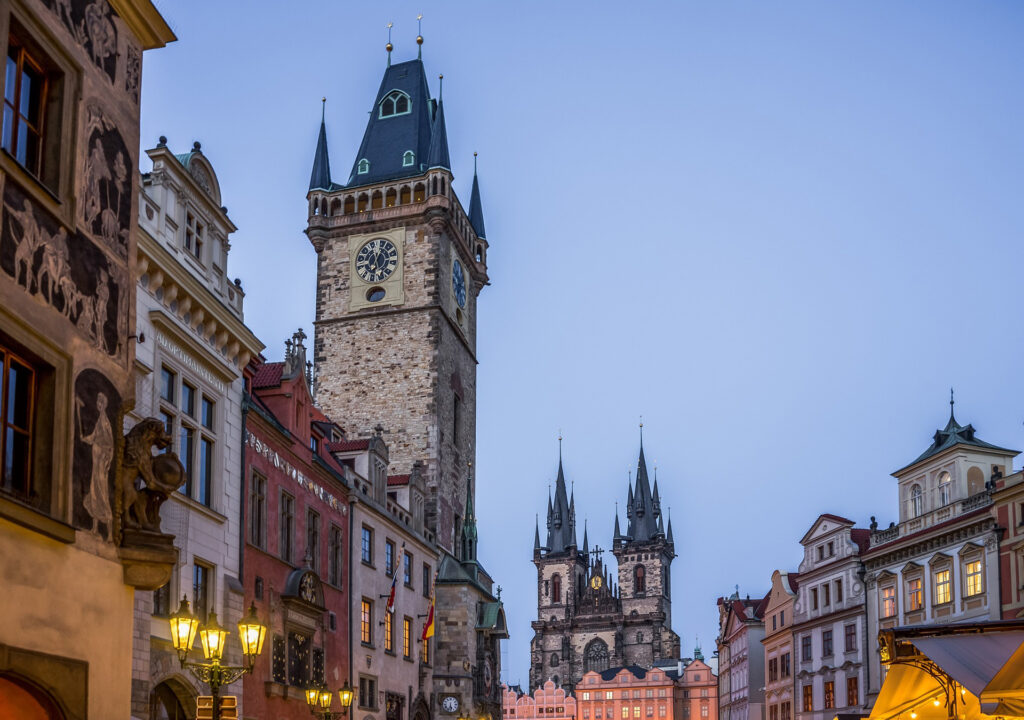
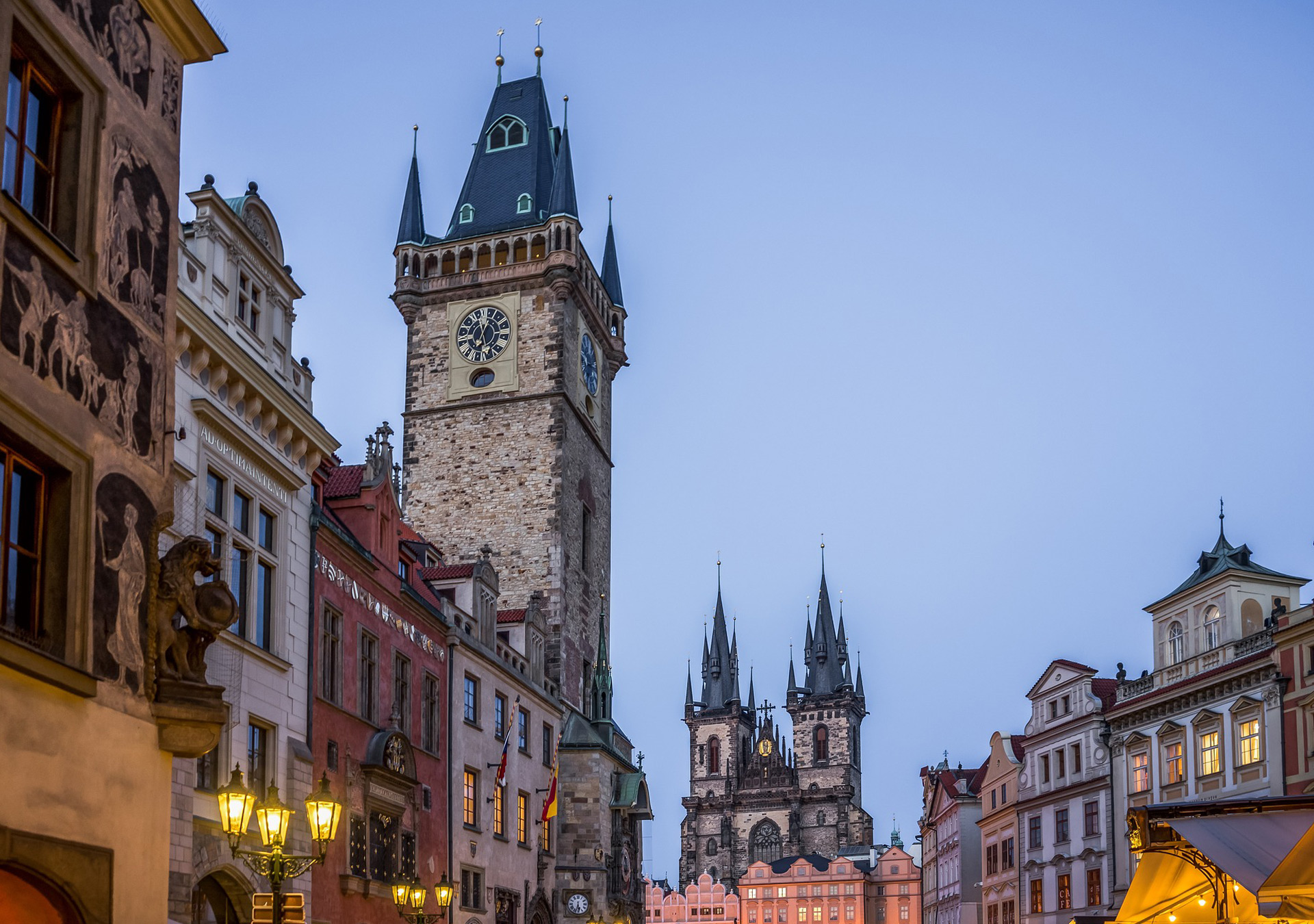
- Tower of the Old Town Hall
-
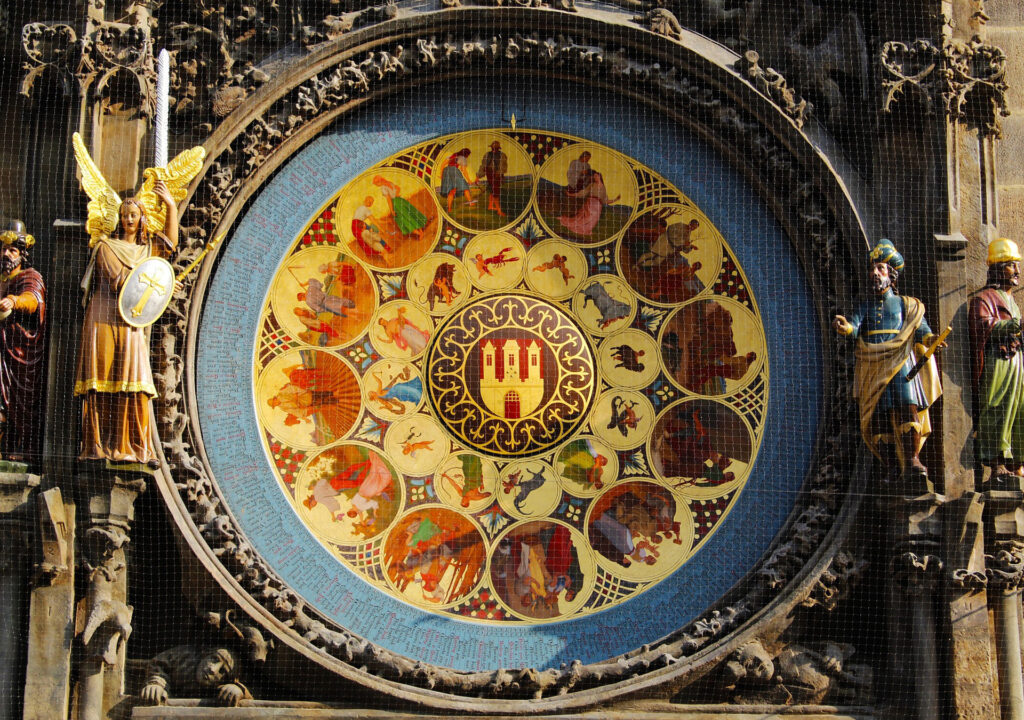
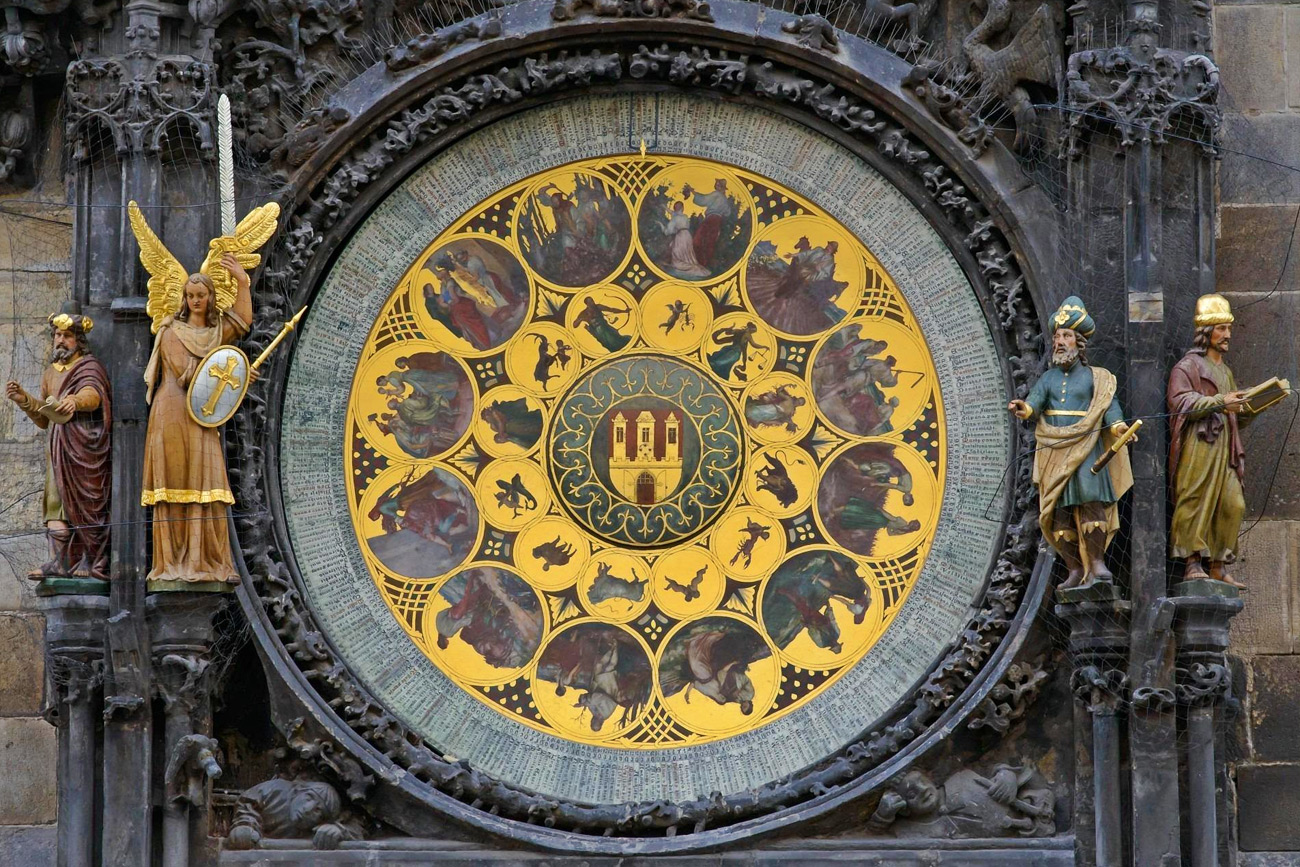
- Astronomical Clock
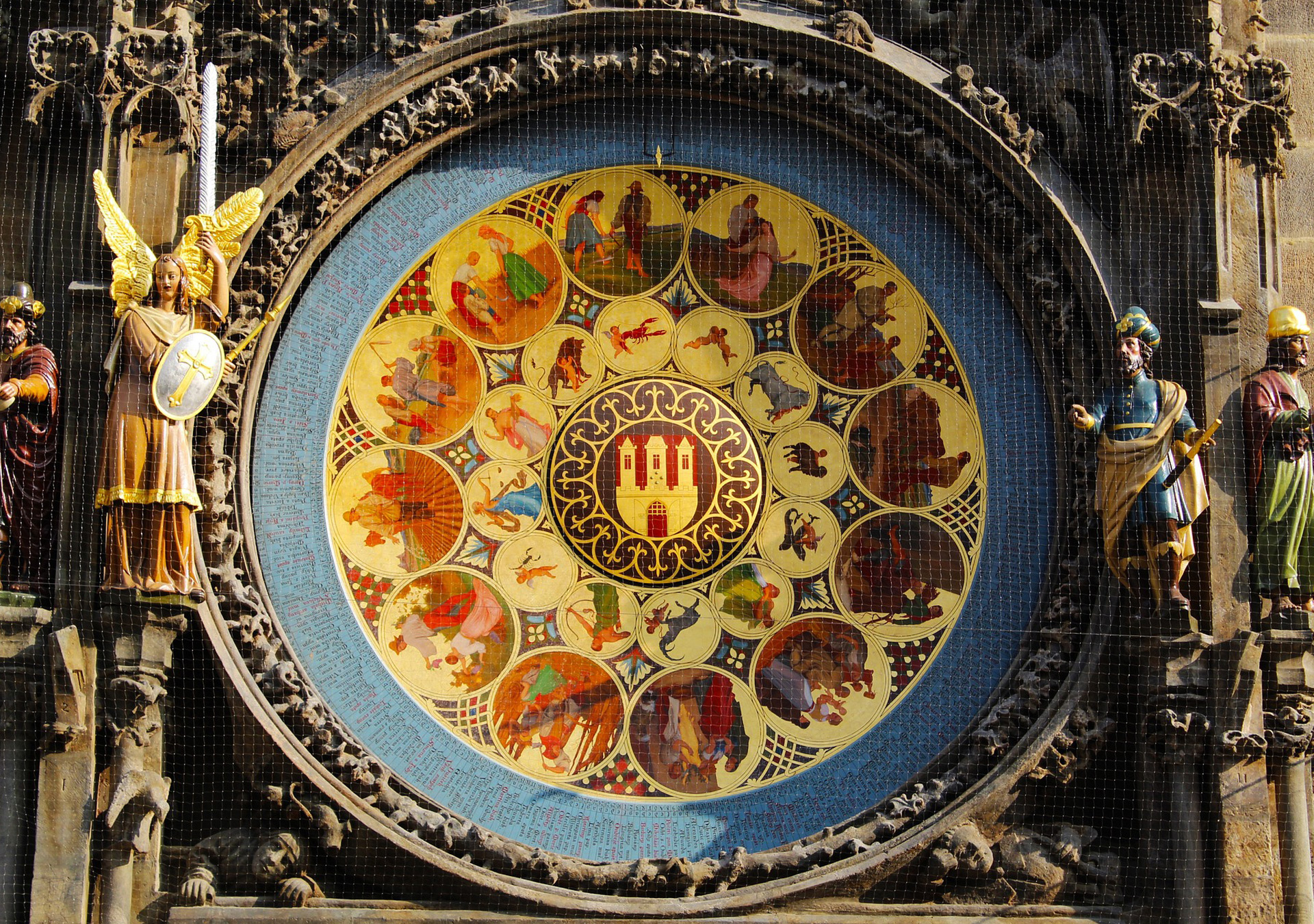
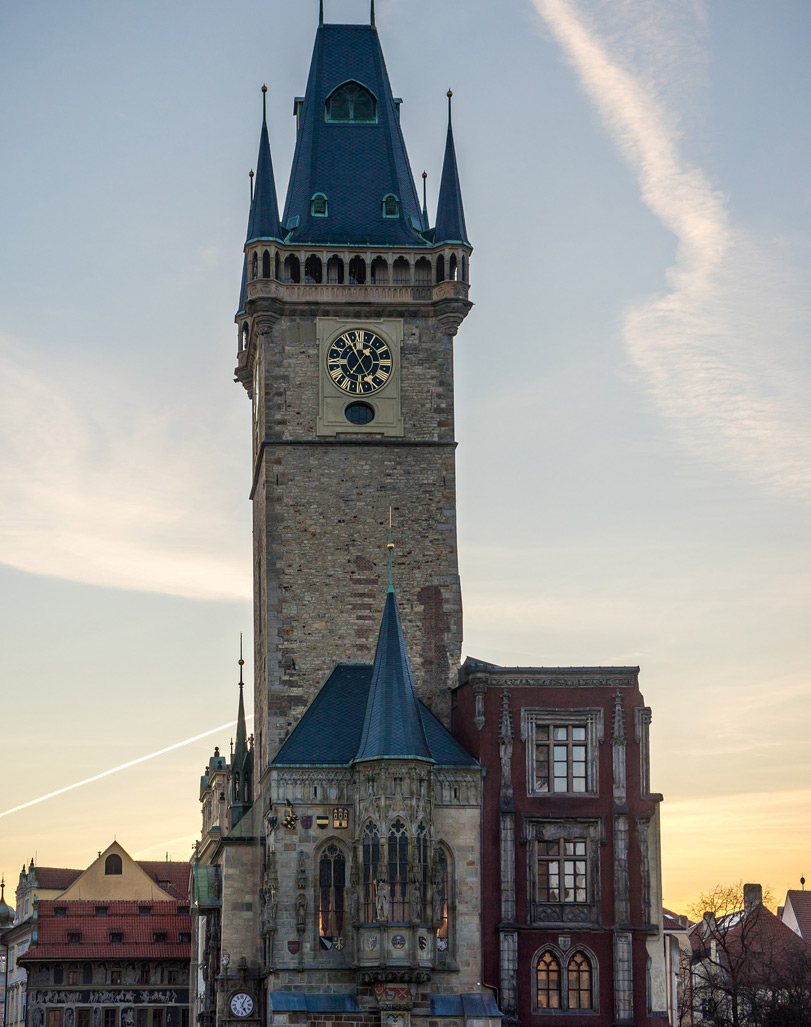
As part of the tour, we had the opportunity to visit the 70-meter-high Gothic tower. From its gallery, you can admire not only the square and surrounding historic buildings like the Týn Church, but also Prague Castle and countless towers and domes that arch over the streets and houses of Prague. In earlier times, the tower was used to give a warning signal to the city in case of approaching danger.
A glass elevator can also be used to ascend the tower, though you must pay extra for it when purchasing your ticket.
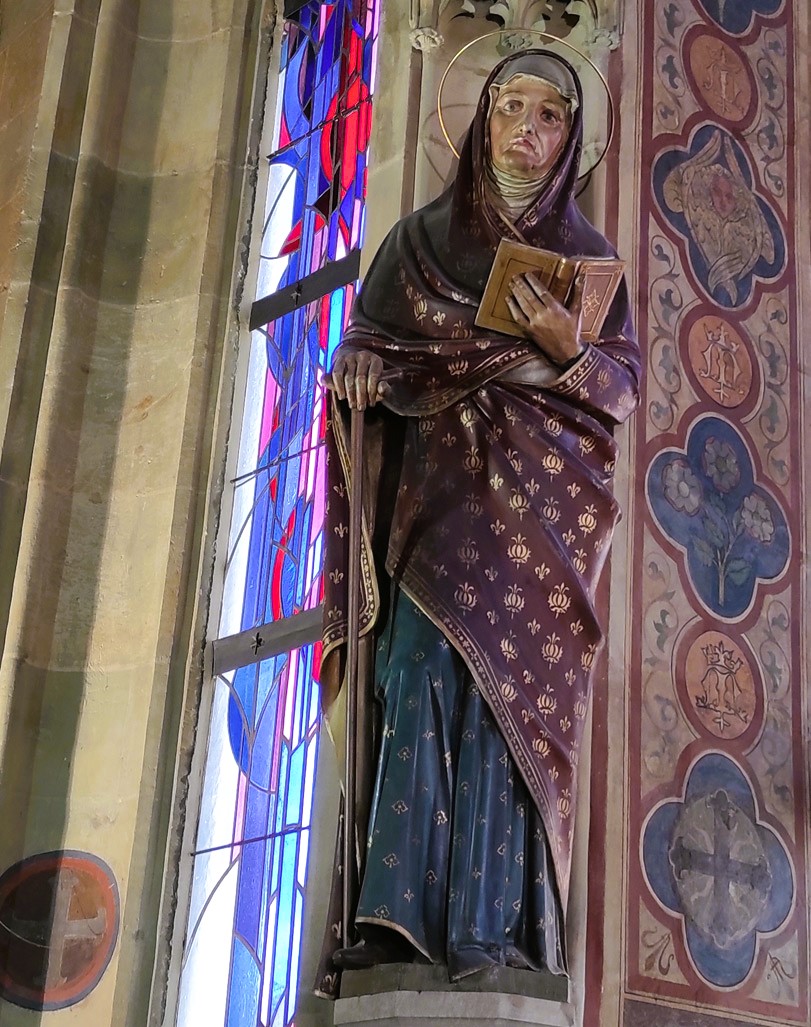
With our guide, we then took a tour of the Gothic chapel, the representative halls, and the Romanesque-Gothic underground. Services were held in the Chapel of the Virgin Mary before every town council meeting, but also for convicts sentenced to death as they walked to the execution site. The most captivating feature of the chapel is undoubtedly its beautiful stained-glass windows; however, we also took note of the Gothic statue of the Old Town Madonna, which is mounted externally on the oriel of the chapel protruding from the building's facade.
-
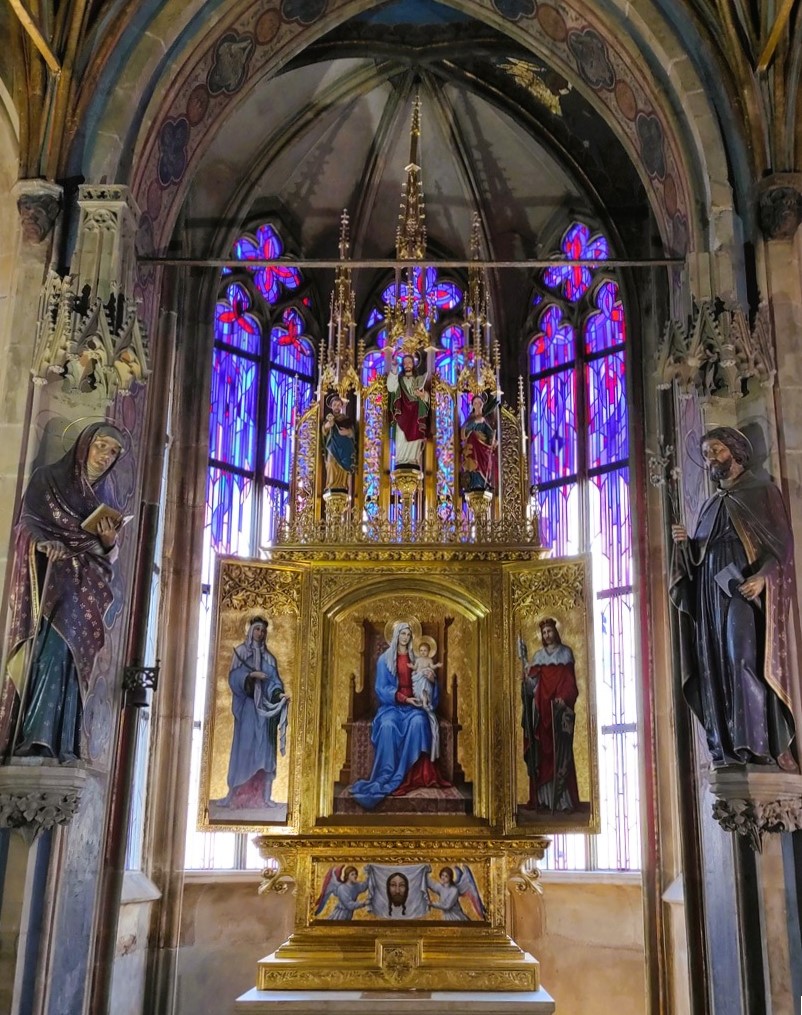
- Chapel of the Virgin Mary
-
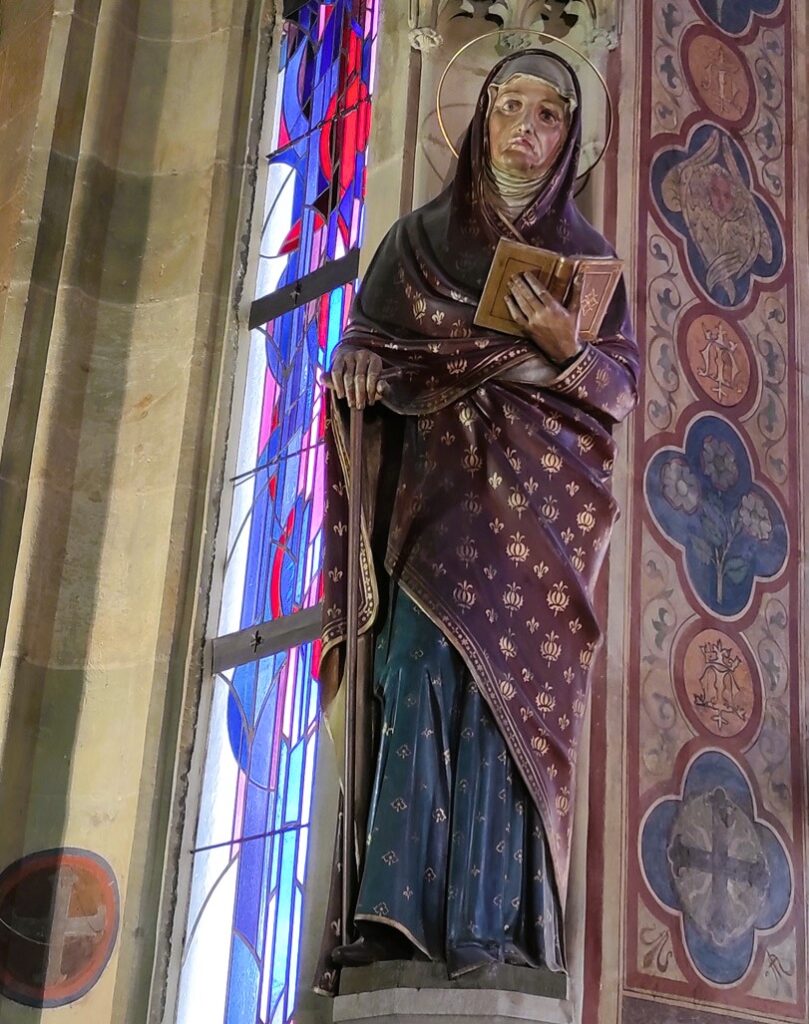
- Chapel of the Virgin Mary
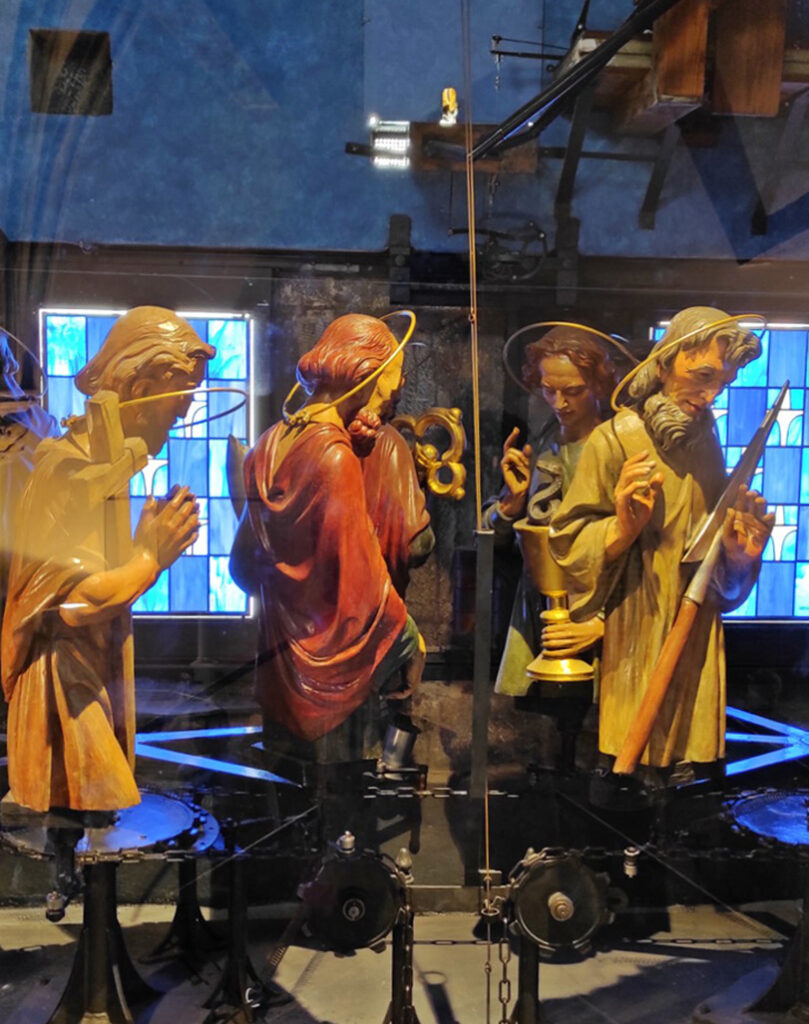
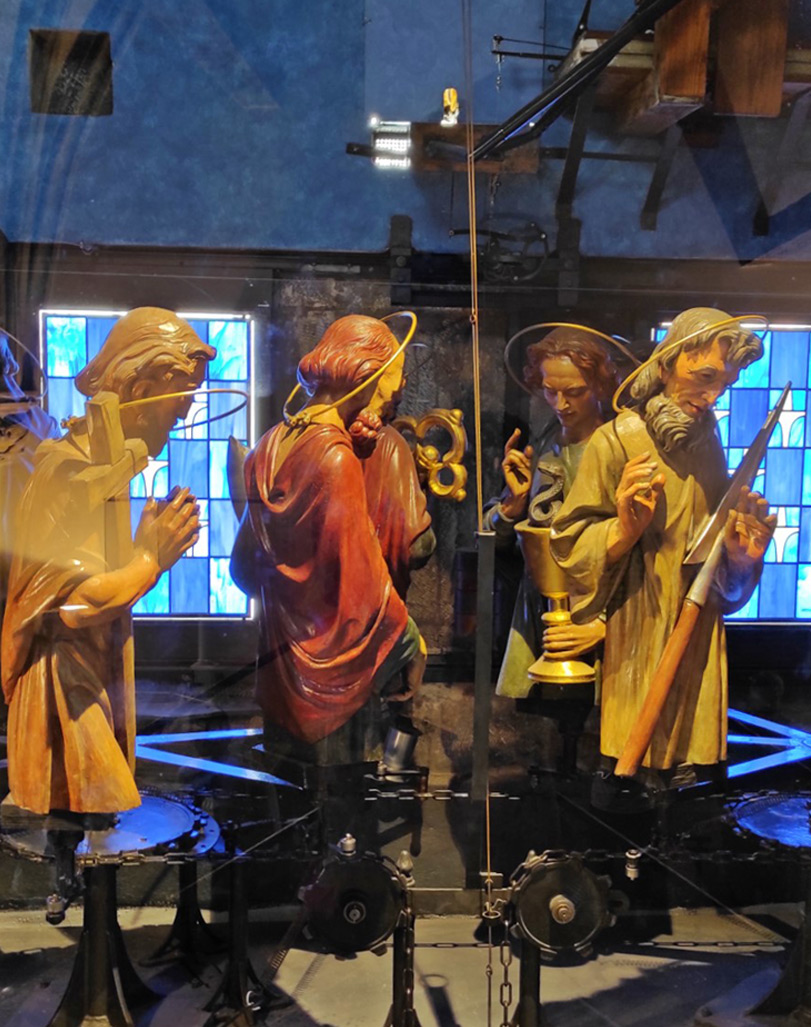
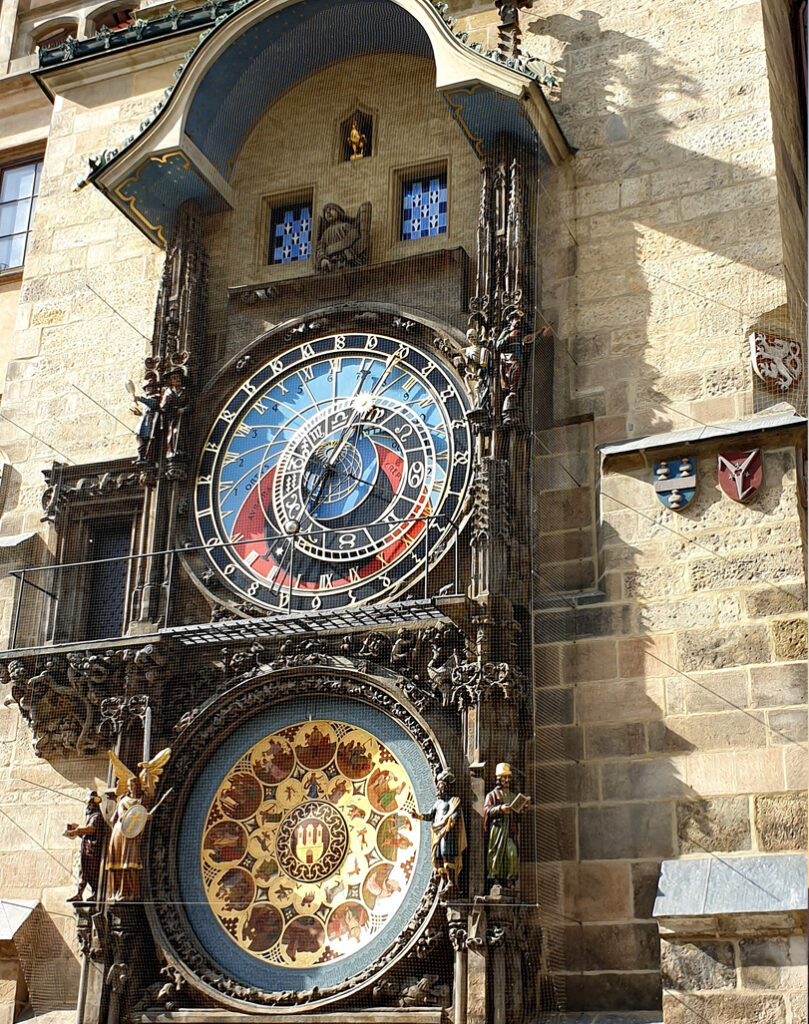
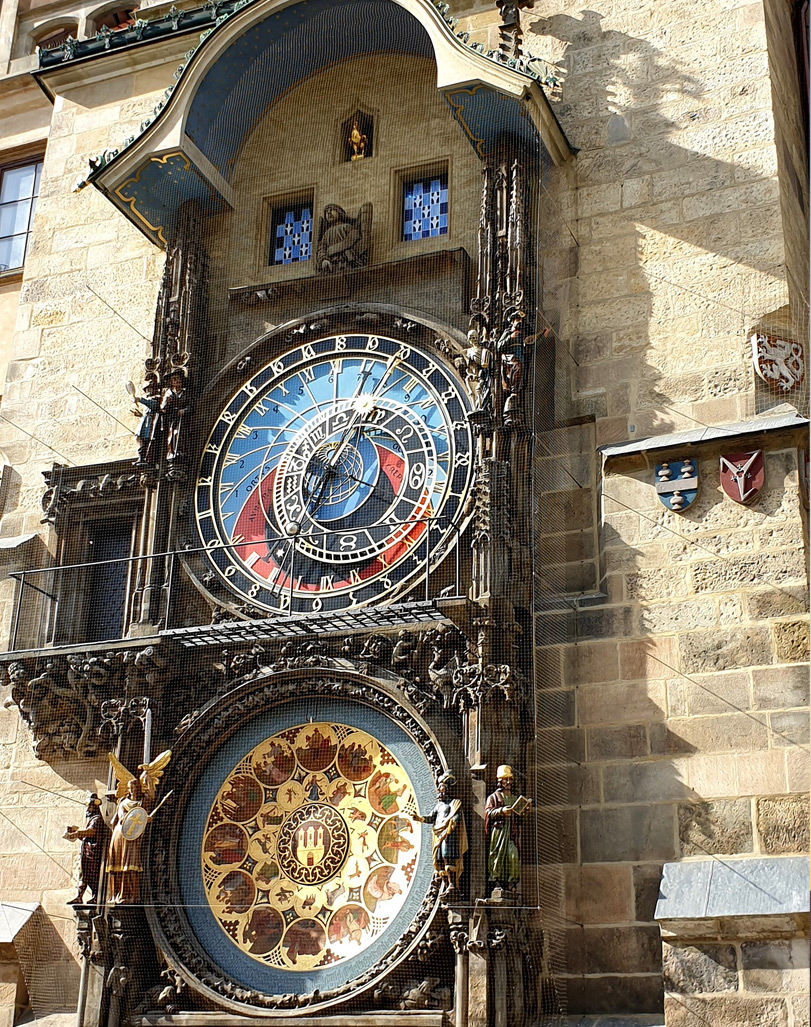
From the town hall's chapel, we could also peer into the inner workings of the Prague Astronomical Clock and view the procession of the Apostles from the inside. The parade of the 12 Apostles, which form part of the famous Prague Astronomical Clock, can of course be watched mainly from the Old Town Square, where the clock adorns the facade of the town hall.
The Apostles appear in two small windows every full hour between 9 a.m. and 11 p.m. Other figures on the clock also come to life, such as Death, who rings a bell and turns an hourglass, indicating to the Turk standing nearby that his time is up. An interesting fact remains that the appearance of the Apostles themselves has changed over the centuries, and the current one dates back to 1947.
-
- Astronomical Clock
-
- Underground
A tour of the representative halls took us to the Council Chamber, where the most important administrative matters of the town were once discussed. The dominant feature of the room is a tapestry with the coat of arms of Prague. Unfortunately, the original Renaissance decoration has not been preserved, as this part of the town hall was completely destroyed at the end of the Second World War.
However, the most valuable interior is housed in the old Council Hall, which ranks among the most beautiful late Gothic halls in Europe. The room also served as a judicial tribunal, a fact commemorated by the depicted goddess of justice on the tile stove.
Unique Renaissance doors then led us to the anteroom of the assembly hall, where Emperor Charles IV founding Prague University and the founder of modern pedagogy, Jan Amos Comenius, at the town hall in Amsterdam are depicted by the famous Czech painter Václav Brožík.
The captivating Brožík Hall of Assembly also contains, among other things, a painting by the artist Václav Brožík depicting the preacher Jan Hus in his final moments as he stands before the Council of Constance. This room, in the late Art Nouveau style, is still used by the city's mayor for ceremonial events.
The adjacent room is the Jiřík Hall, named after George (Jiří) of Poděbrady, who was elected King of Bohemia right there in the Old Town Hall. This event is commemorated there by a white marble bust of the king.
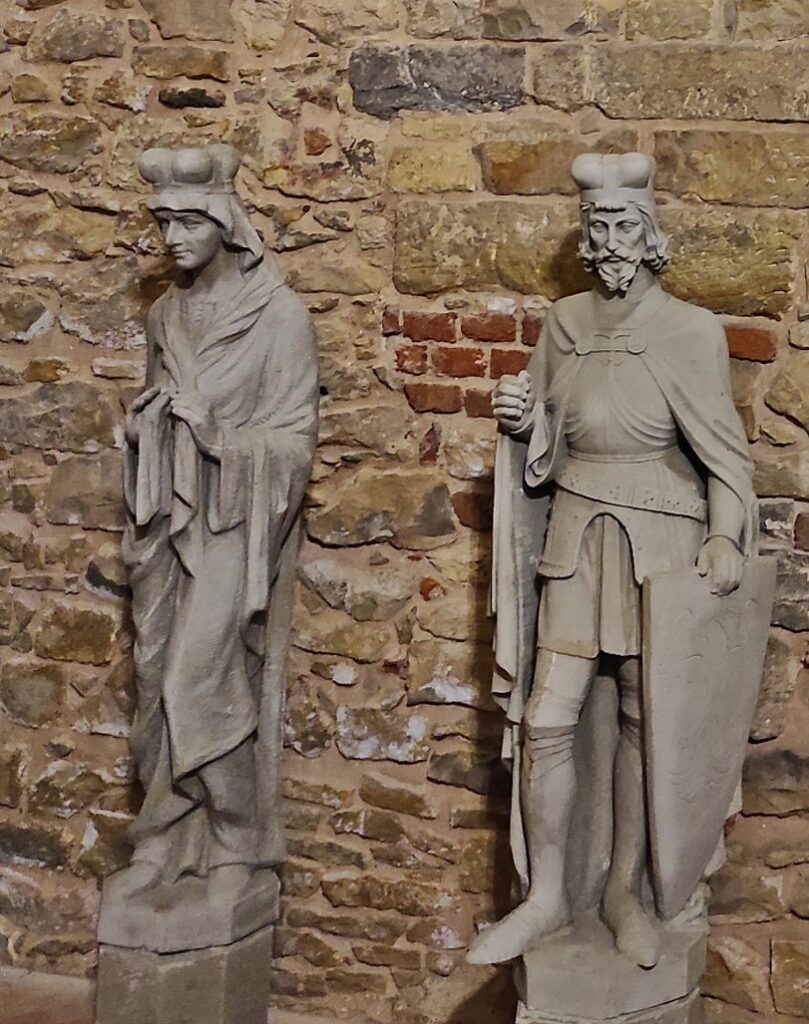
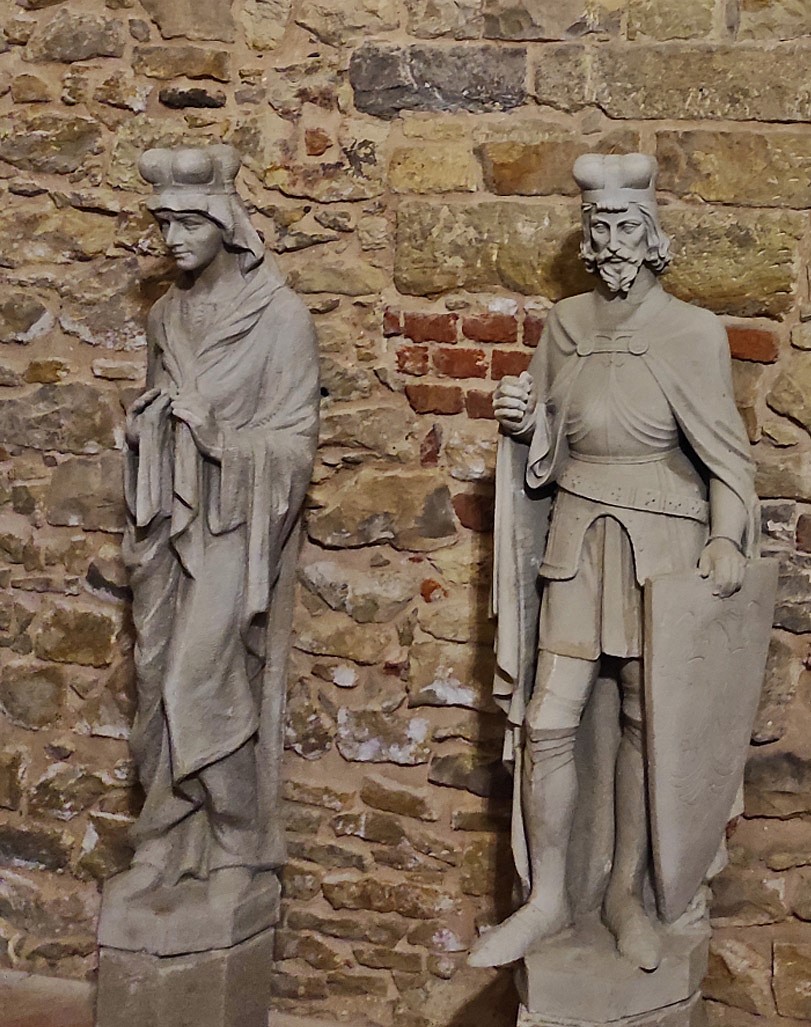
We also had the opportunity to explore the intricate underground system, which is older than the Town Hall itself, as the Romanesque and Gothic town was located at the level of what is today the Town Hall's underground. We were thus able to uncover the secrets of medieval halls, passageways, tunnels, and alleyways.
And how is it possible that today's street level is several meters higher? Unfortunately, the medieval town was often flooded by the Vltava River and consequently had to be artificially raised. Over time, the ground floors of the original houses thus became cellar spaces.
Address: Staroměstské náměstí 1/3, Prague
-
- The Old Town Hall
-
- Astronomical Clock
Our tip:
You can do the entire tour of the Old Town Hall, except for the underground areas, on your own. However, we used the services of a guide, which are included for free with the ticket, and enriched our visit with a captivating commentary. We did have to reserve the tour in advance for a specific day directly at the town hall ticket office.
the Clementinum
Just a few minutes' walk from the Prague Astronomical Clock lies one of Europe's greatest architectural treasures – the Clementinum. This vast complex of Baroque buildings owes its name to the Church of Saint Clement standing on its grounds.
In the 16th century, the Jesuits were summoned to Bohemia, and this strategically located site near the Charles Bridge became their college, which contributed to the recatholization of the local population. Over the centuries, the Jesuits built a complex that featured, among other things, the first flushing sewer system in Prague.
After the dissolution of the Jesuit order, the buildings subsequently served, among other purposes, the Prague University and also as a library. Today, it houses the National Library, which is the largest and also one of the oldest public libraries in the Czech Republic.
As part of the tour, we visited the most attractive places in the Clementinum, which are undoubtedly the unique spaces of the Astronomical Tower and the Baroque Library.
-
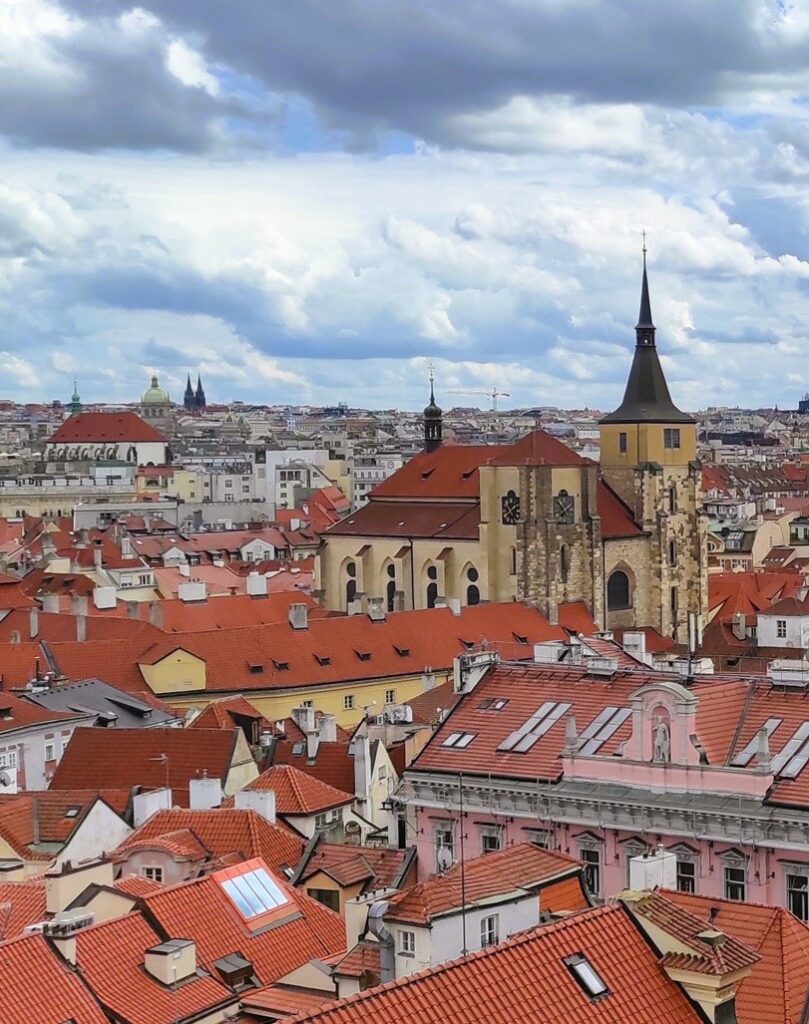
- View from the Astronomical Tower
-
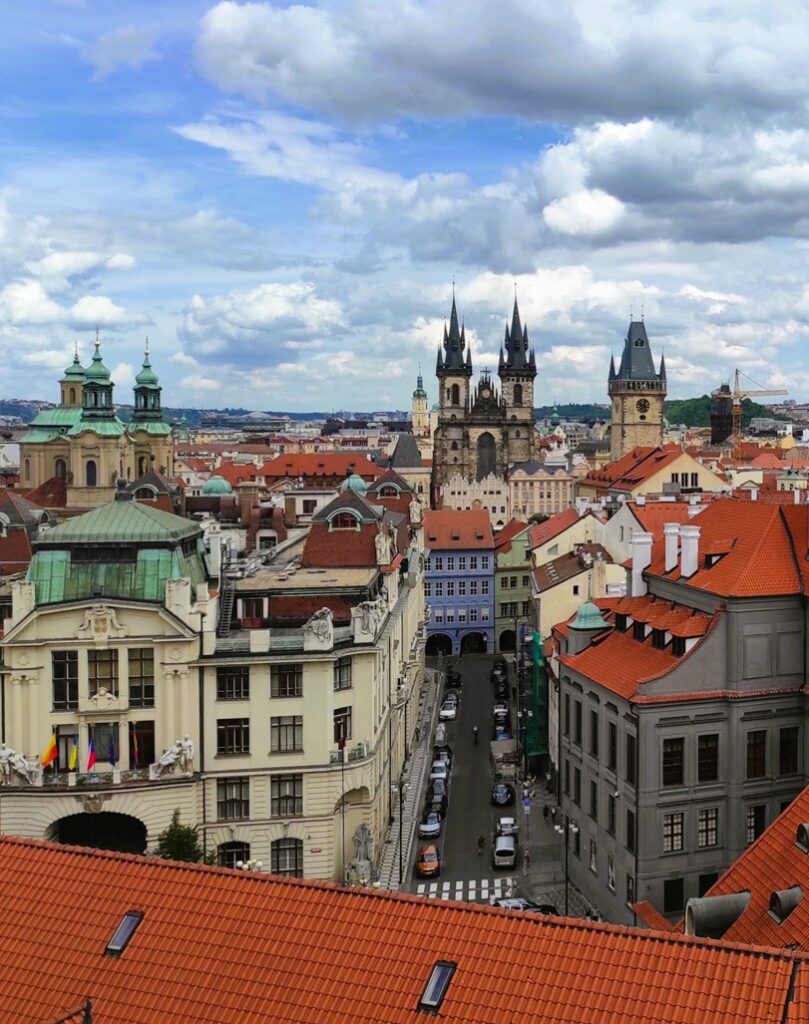
- View from the Astronomical Tower
The Baroque Library was completed in the 18th century according to the plans of architect Kilian Ignaz Dientzenhofer. In the library hall, which can only be viewed from the entrance, we could admire the beautiful fresco decoration on the theme of science and art and valuable large globes. The space is especially unique for its original appearance, which has remained untouched for centuries. The oak shelves contain mostly foreign-language theological literature, but also books dedicated to philosophy or the natural sciences.
The Astronomical Tower that is 68-meter high is crowned with a statue of Atlas by the workshop of Matthias Bernard Braun, carrying the celestial sphere on his shoulders. In the 18th century, when the tower was completed, astronomical and daily meteorological measurements also began here. The measurements continue to this day, and you can spot the unassuming measuring instrument in an annex on the northern side of the courtyard behind the Church of Saint Clement.
On the 2nd floor of the tower is the Meridian Hall with unique slit sundials, where a small opening high in the wall allows a ray of sunlight to enter. When this ray aligns with a string stretched across the floor, it indicates true noon, which was announced to the people of Prague by a flag waved from the tower's gallery until 1928.
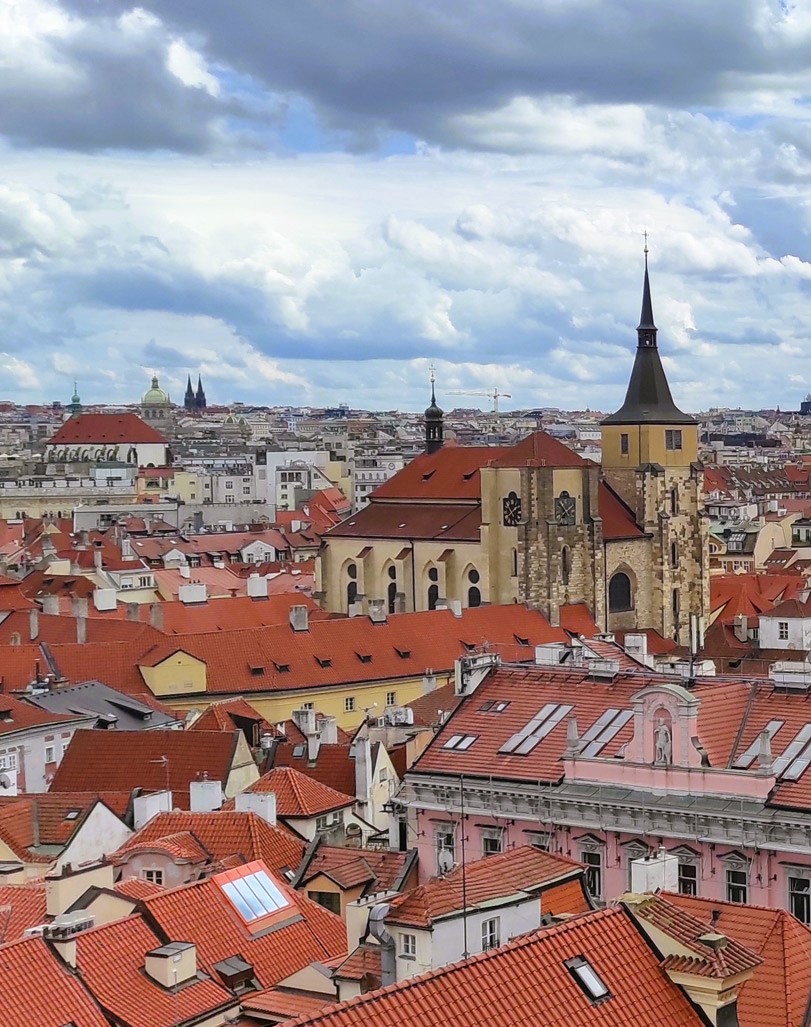
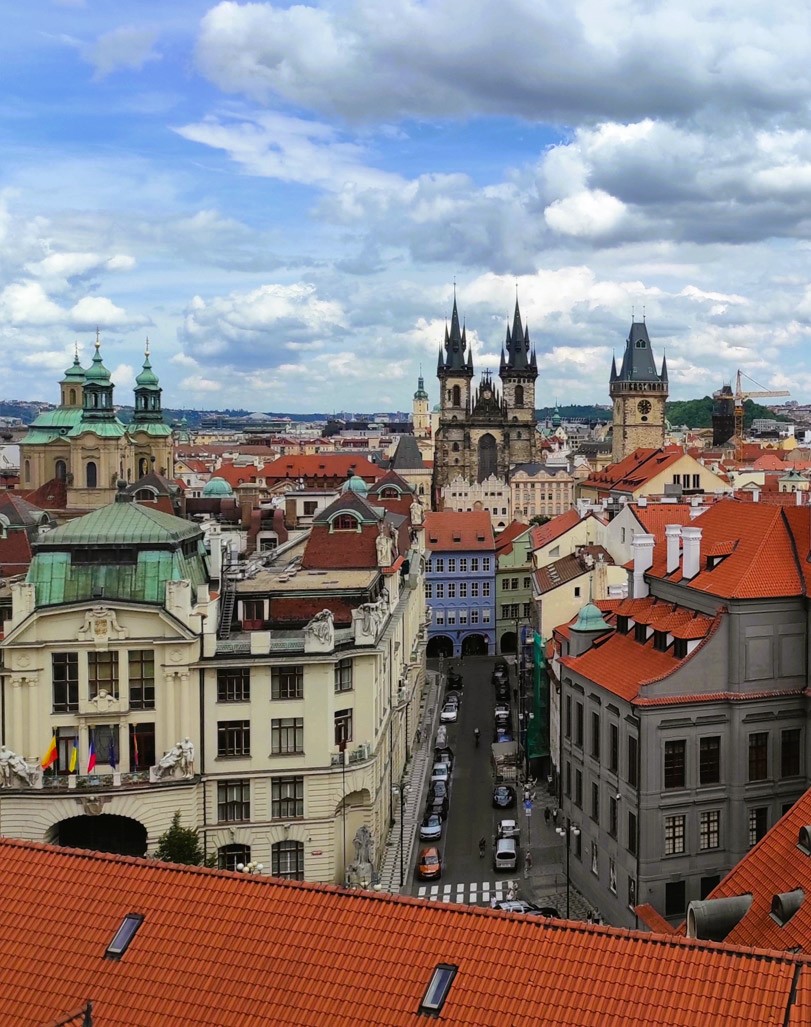
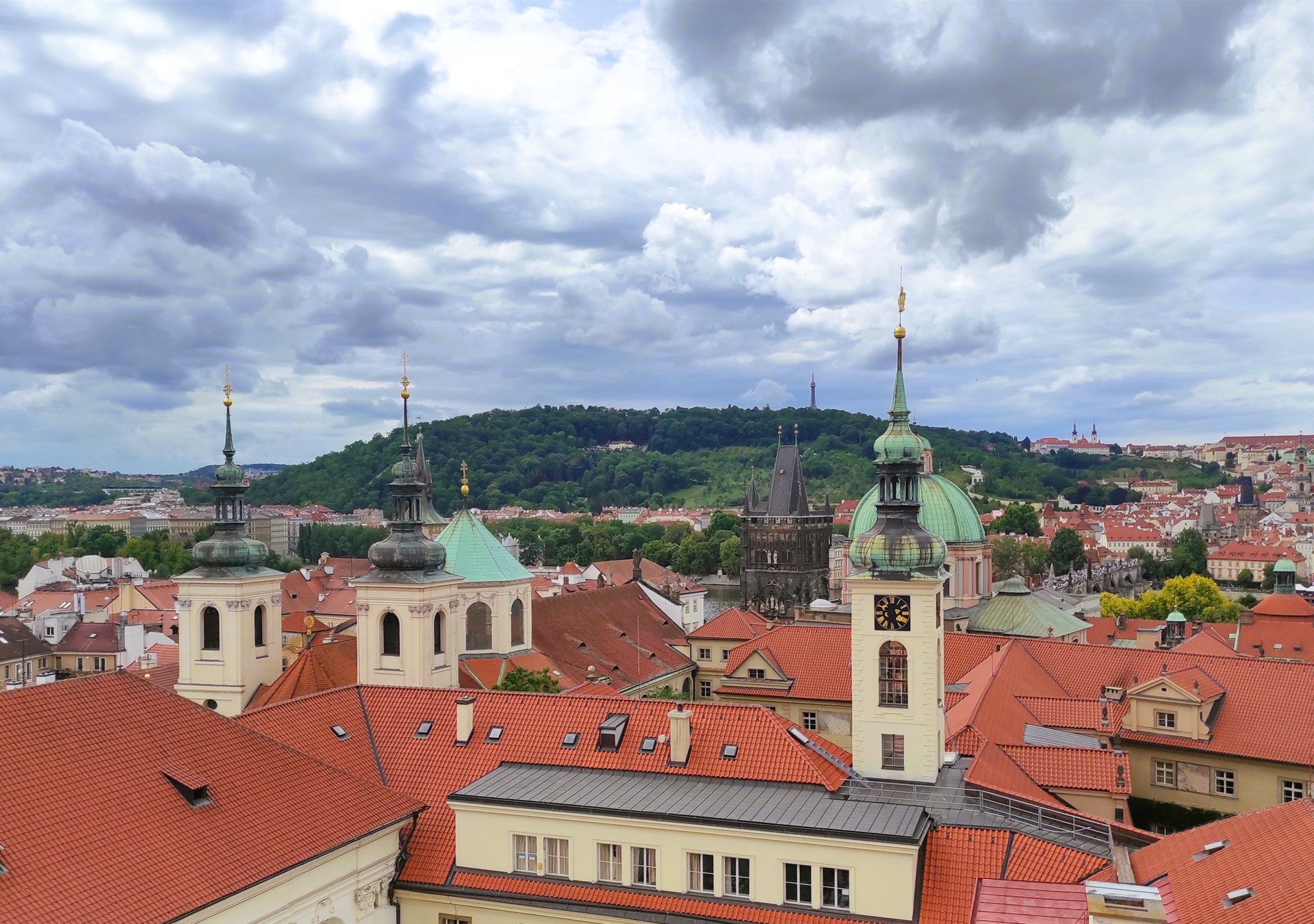
Afterwards, we climbed up to the circular gallery at a height of 52 meters, which offered a unique view not only of the Clementinum complex but also of the historic part of Prague.
-
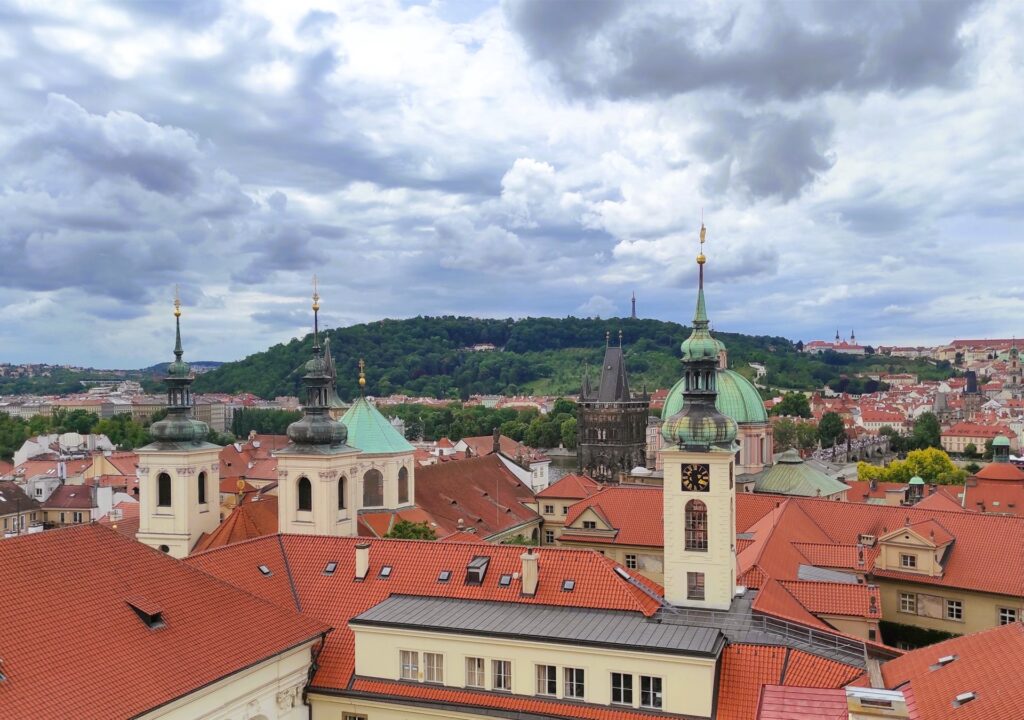
- View from the Astronomical Tower
-
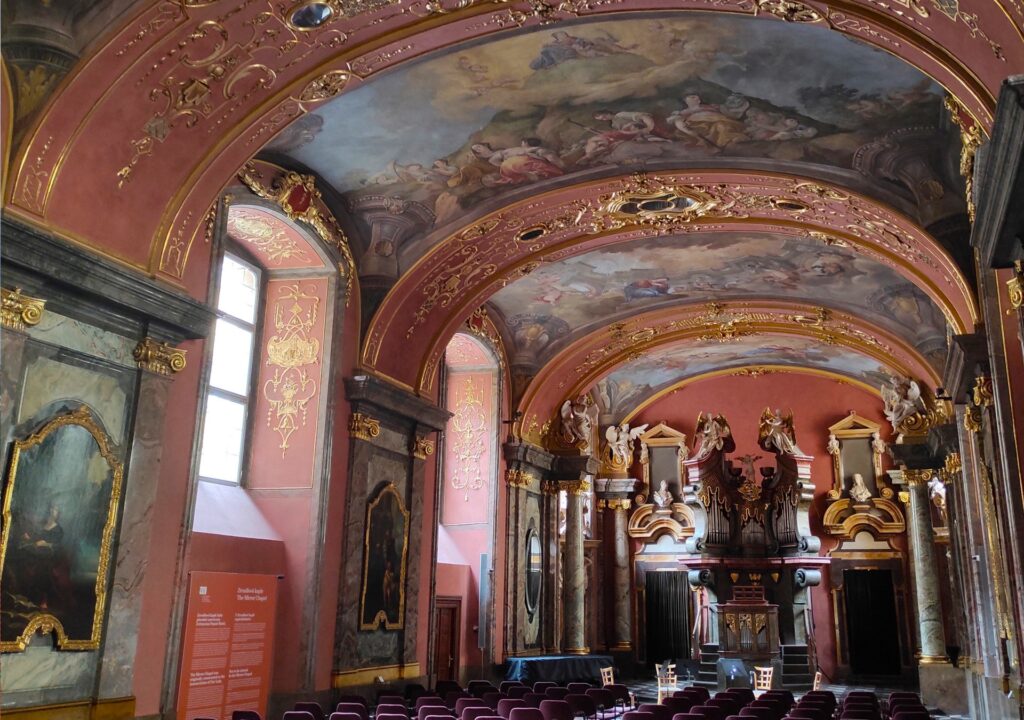
- Mirror Chapel
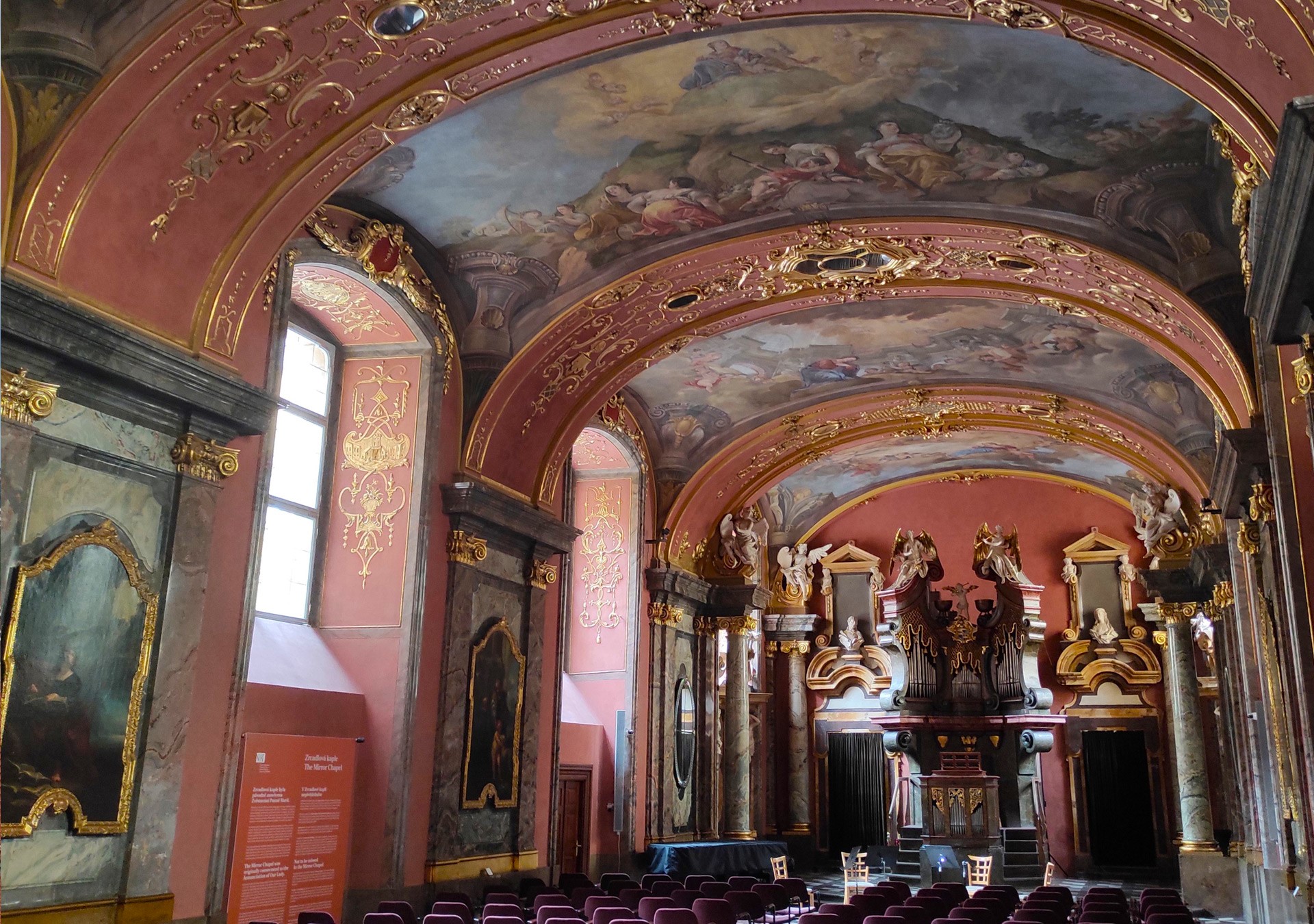
Another beautiful room worth visiting is the unique Mirror Chapel with its richly decorated interior adorned with mirrors. Although the chapel is not part of the standard tour, our excellent guide let us take a peek inside this magnificent space. However, you can also visit the chapel by attending one of the classical music concerts regularly held there.
Address: Klementinum 190, Prague
Our tip:
Due to the high demand for tours of the Clementinum, it is essential to book your entry for a specific time slot in advance.
Our final invitation:
To learn more about Prague's other towers and their secrets, read our standalone article titled Prague from a bird's-eye view: a walk in the clouds across eight iconic towers.