



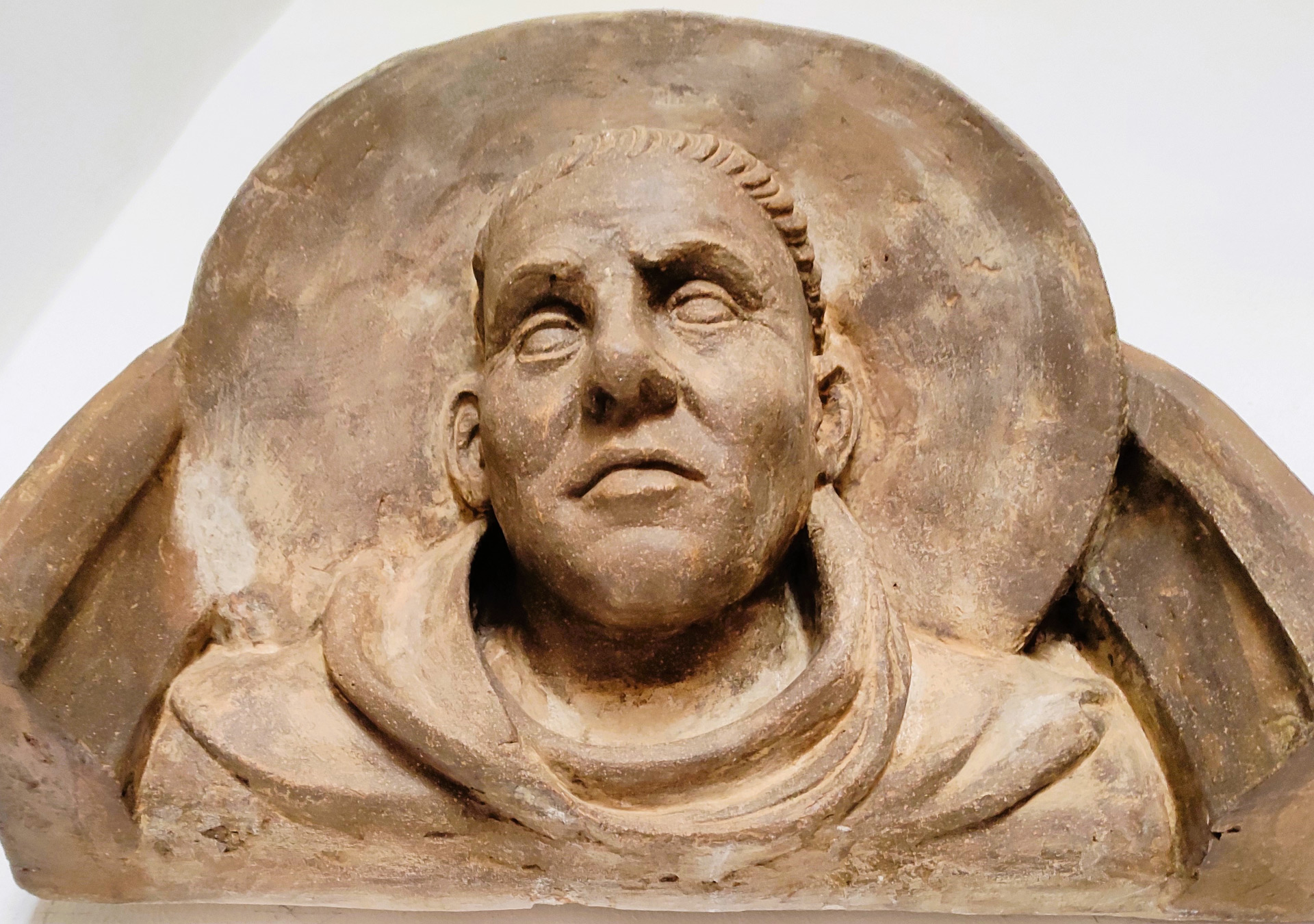
The Sázava Monastery is associated with the Czech patron saint of the country, Saint Procopius, who settled in a cave above the Sázava River at the beginning of the 11th century. Over time, he gathered a community of hermits around him, who then built this Benedictine monastery. The Slavic Benedictines continued the legacy of the Great Moravian missionaries Saints Cyril and Methodius and created a number of significant Slavic written works. During the reign of the Czech King Přemysl Otakar I (Ottokar I of Bohemia), Procopius was officially canonized in a solemn ceremony in Sázava on July 4, 1204.
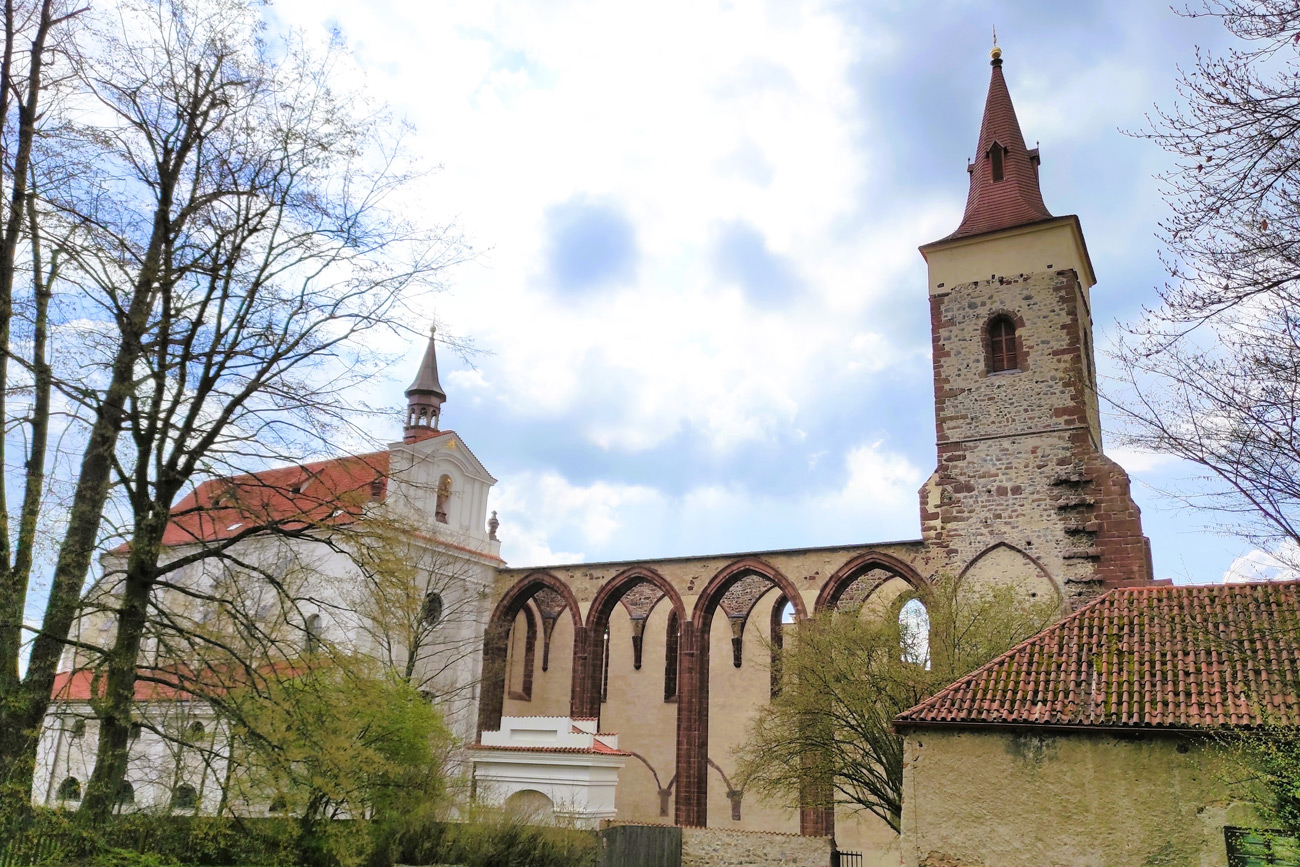
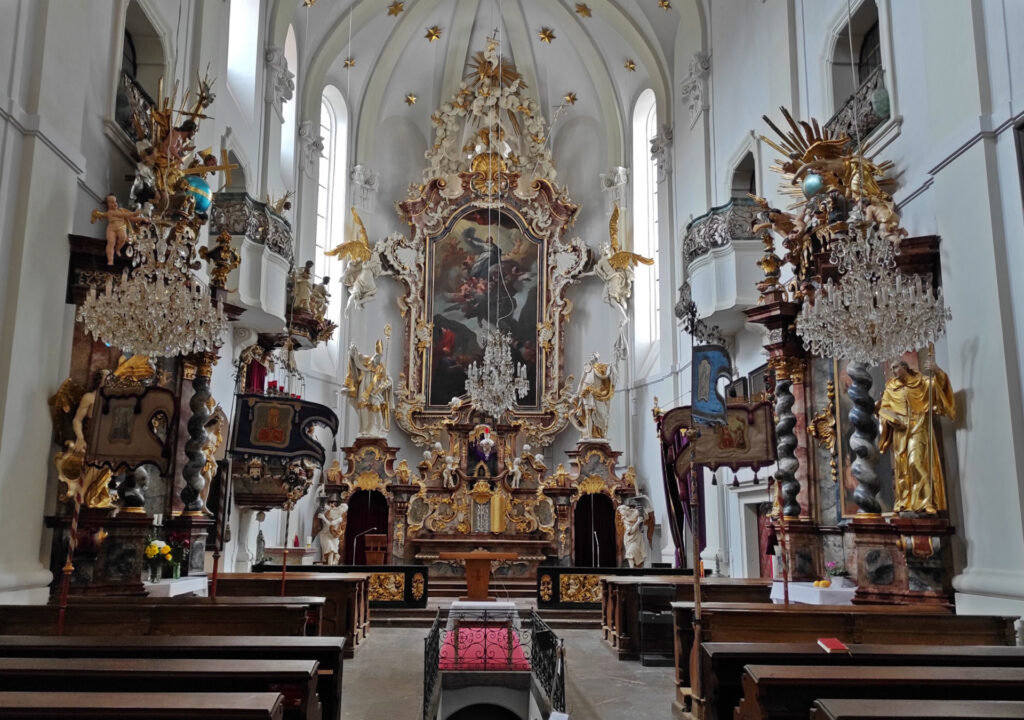
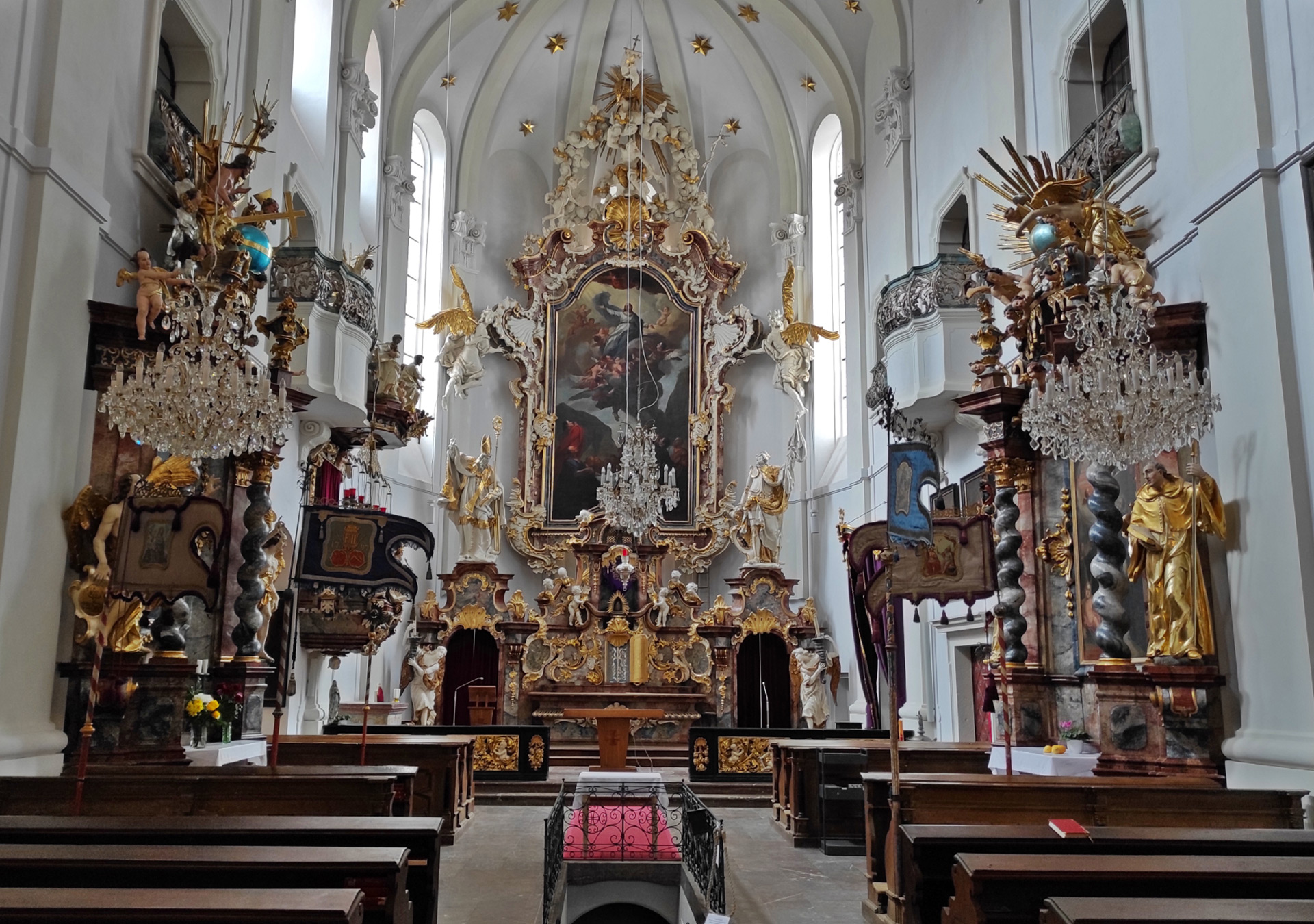
It is also worth mentioning that the Gothic church of Sázava Monastery was never completed, as in 1421, Hussite troops from Prague invaded Sázava. All the monks and builders were expelled and the construction was halted. Today, the dominant feature is the unfinished Gothic Church of Saint Procopius, whose choir was reconstructed and decorated in the Baroque style, giving it the appearance of the present-day church.
-
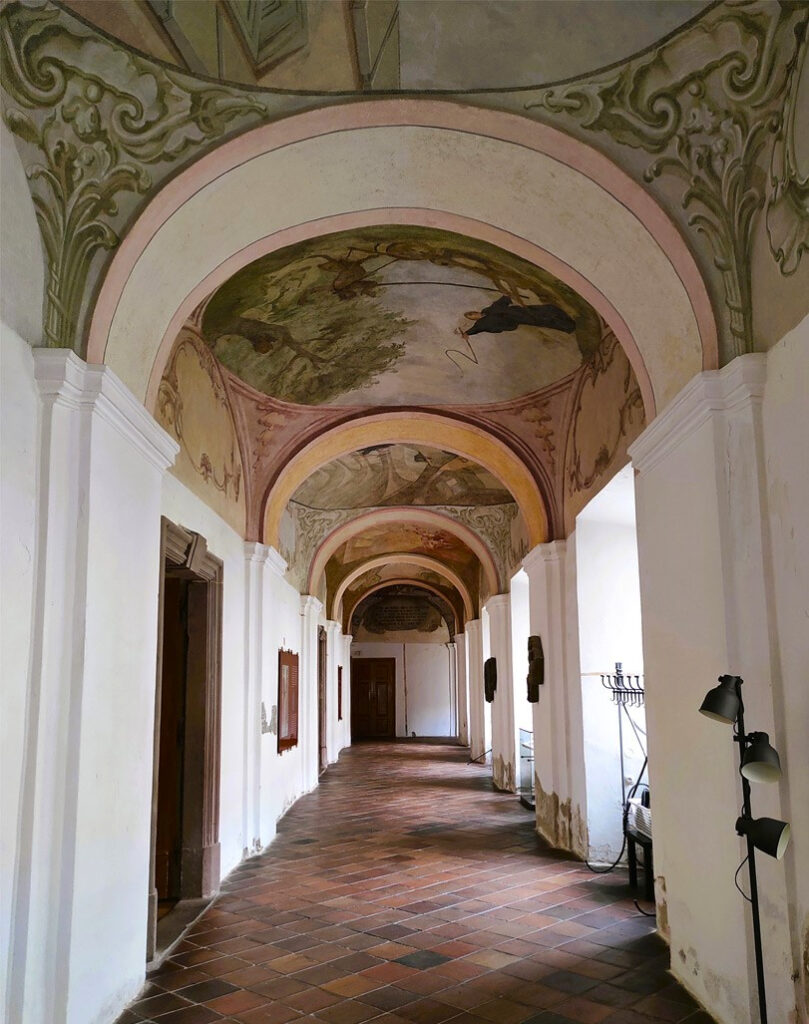
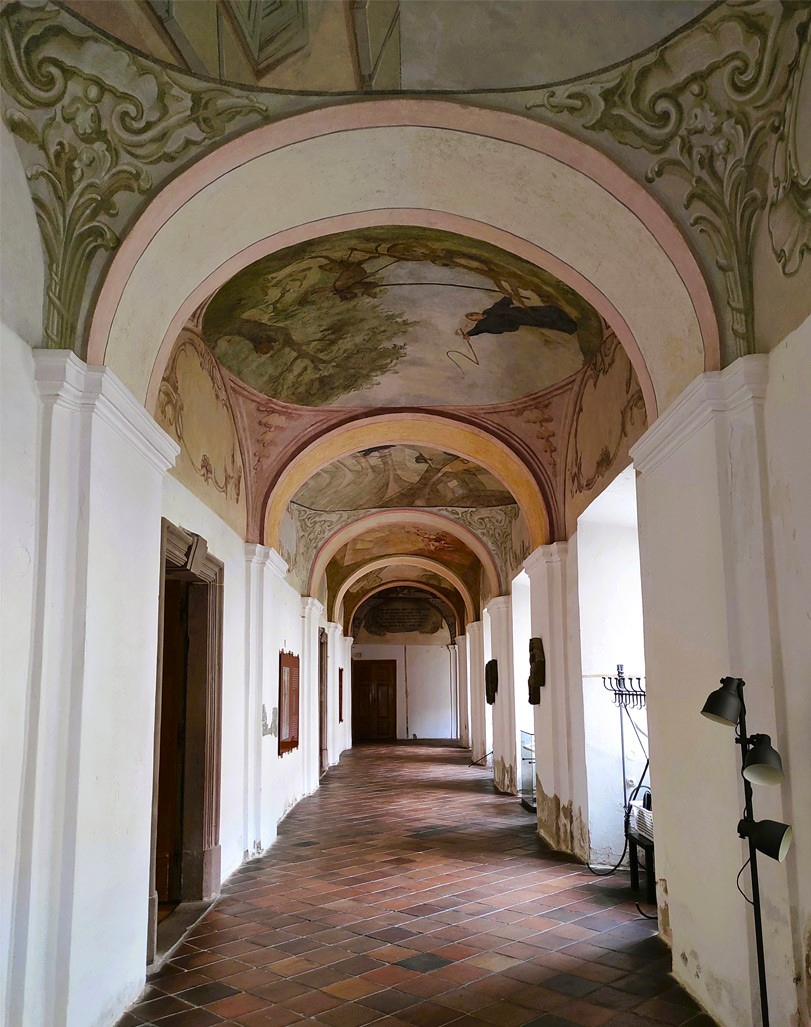
- Cloister with frescoes
-
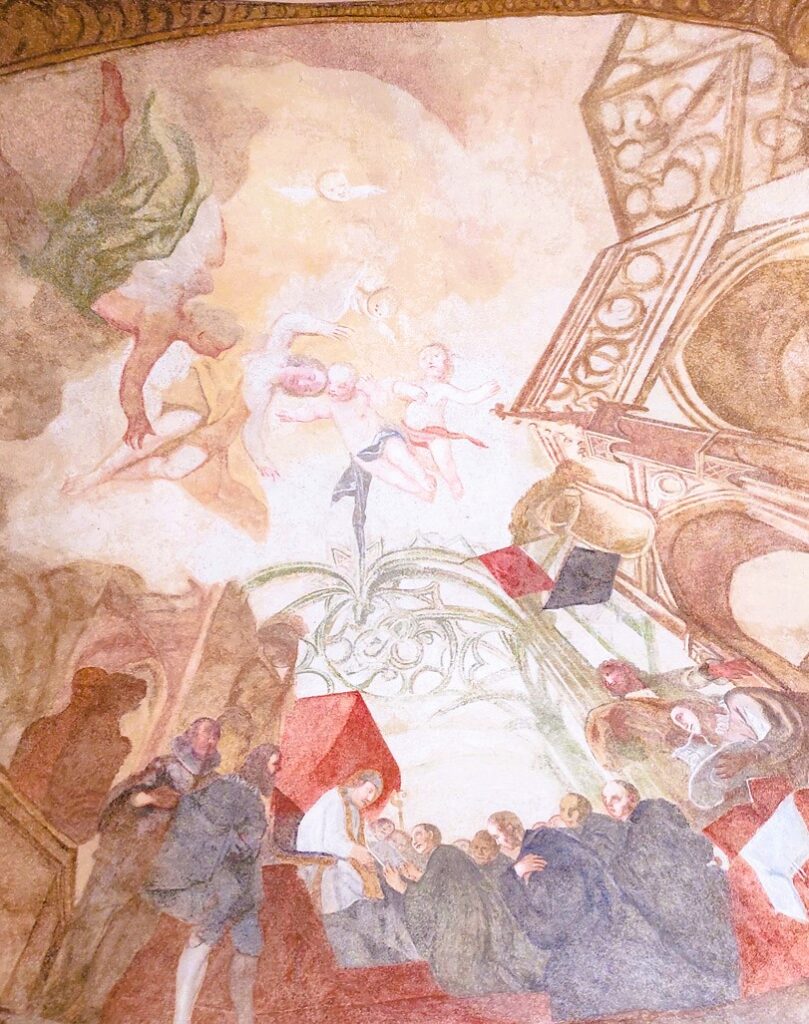
- St. Procopius receives the vow from the monks
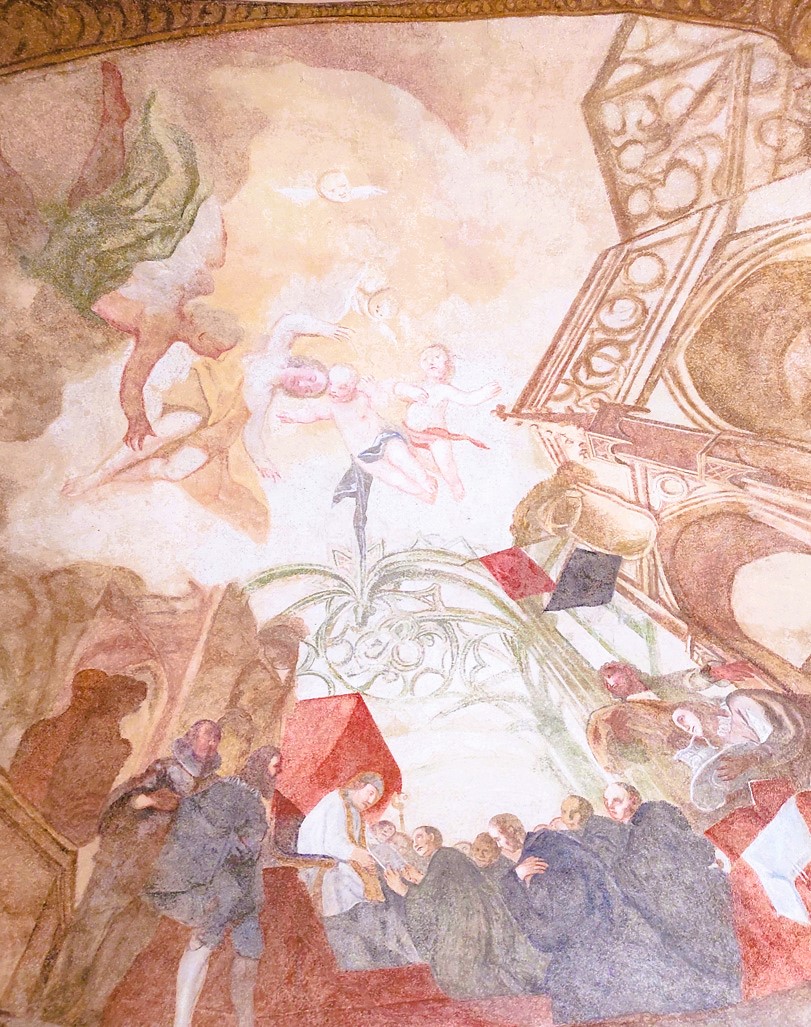
In the 19th century, the complex began to be used as a chateau, though a functioning church still stood in the middle of the grounds. Unfortunately, during this time, the precious Baroque frescoes in the cloister of the former convent were lost—they were whitewashed. Today, however, these original frescoes are being gradually uncovered and restored.
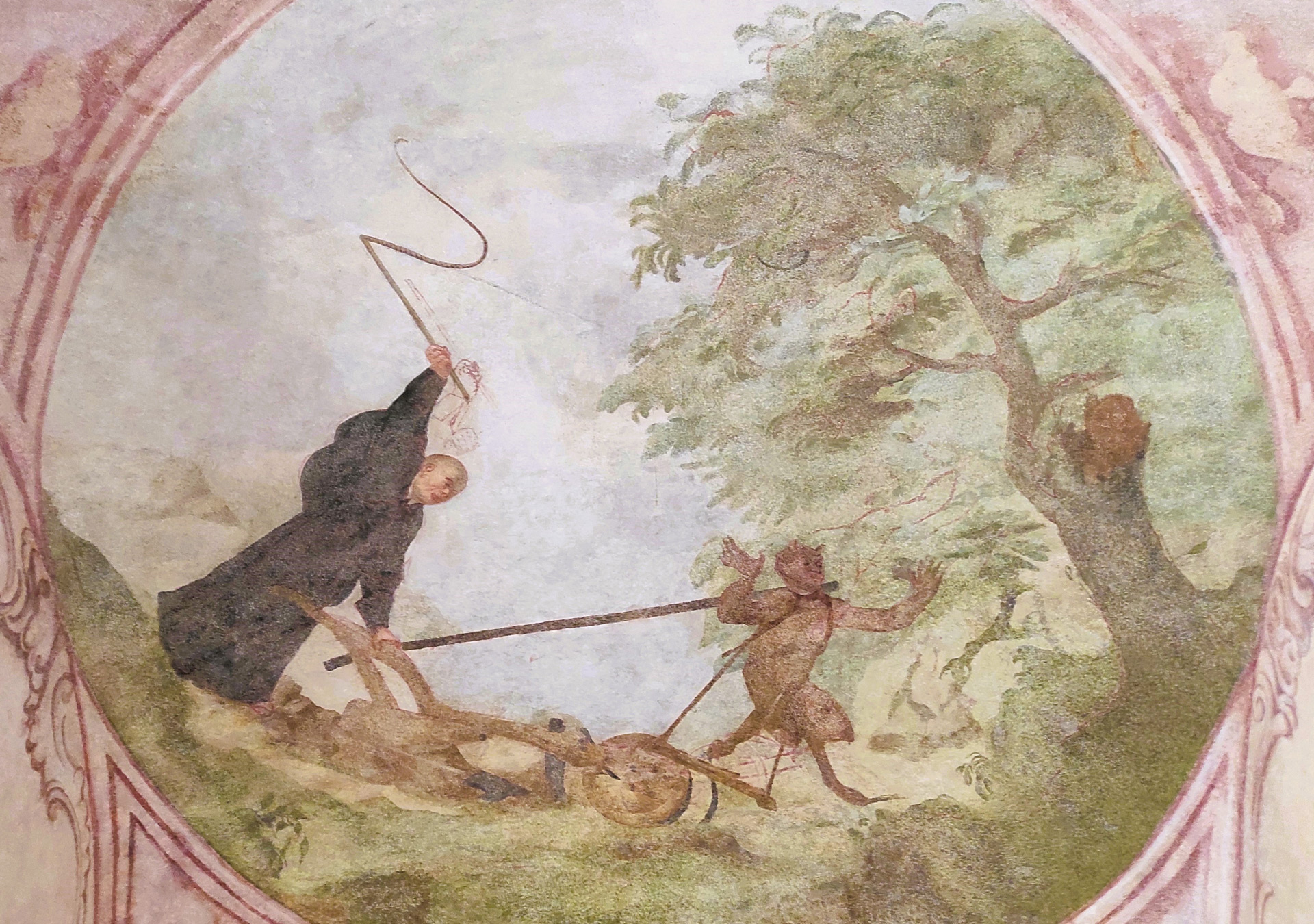
One of them is a fresco depicting the legend of Saint Procopius ploughing with the devil harnessed to a plough. According to the legend, Saint Procopius thus created the so-called Devil's Furrow, one of the greatest mysteries of Central Europe. It is a line dozens of kilometres long, carved into the landscape between Sázava and Chotouň.
-

- St. Procopius ploughs with the devil
-

- Chapter hall with frescoes
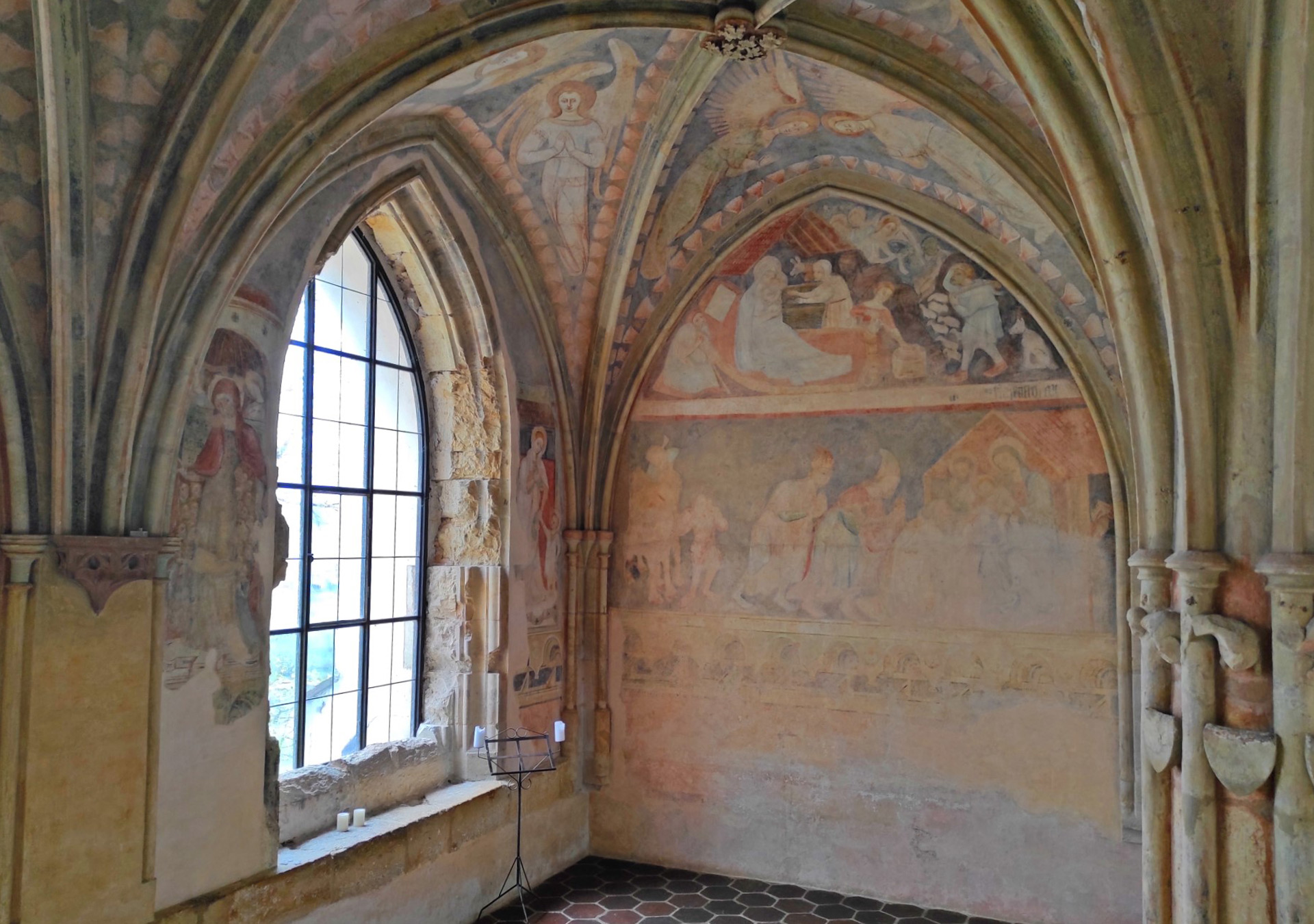
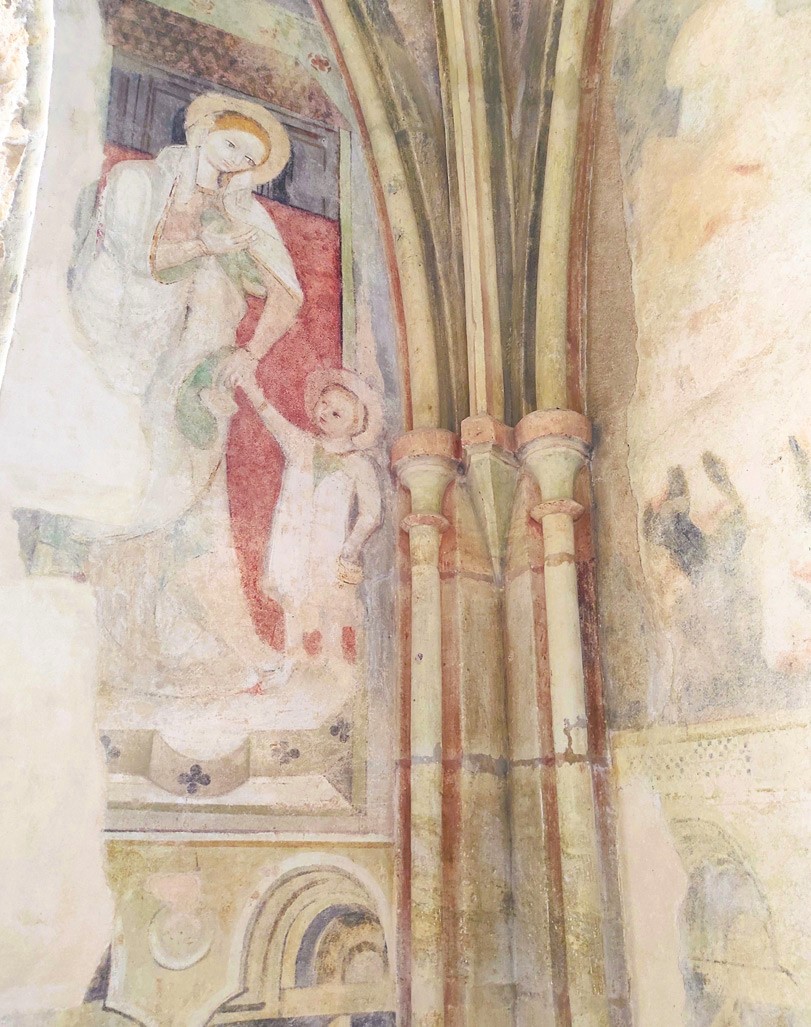
Another gem of the Sázava Monastery is the set of Gothic frescoes from the Marian cycle in the chapter hall. The cycle presents a chronologically arranged sequence of scenes from the life of Jesus Christ and the Virgin Mary. The most precious of these is the Madonna of Sázava, unique in both its thematic and artistic conception. Here, the Mother of God does not hold the Infant Jesus in her arms as usual but instead leads him by the hand, while the Christ Child carries a small basket with colourful balls.
-
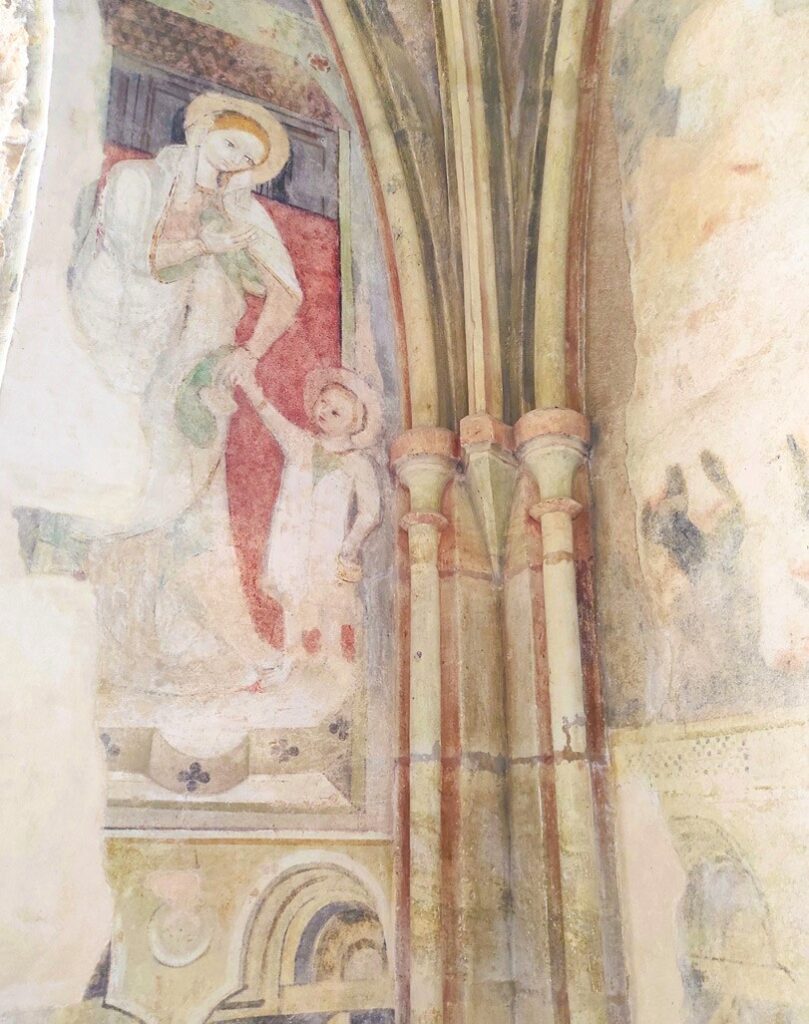
- Admonishing Madonna of Sázava
-
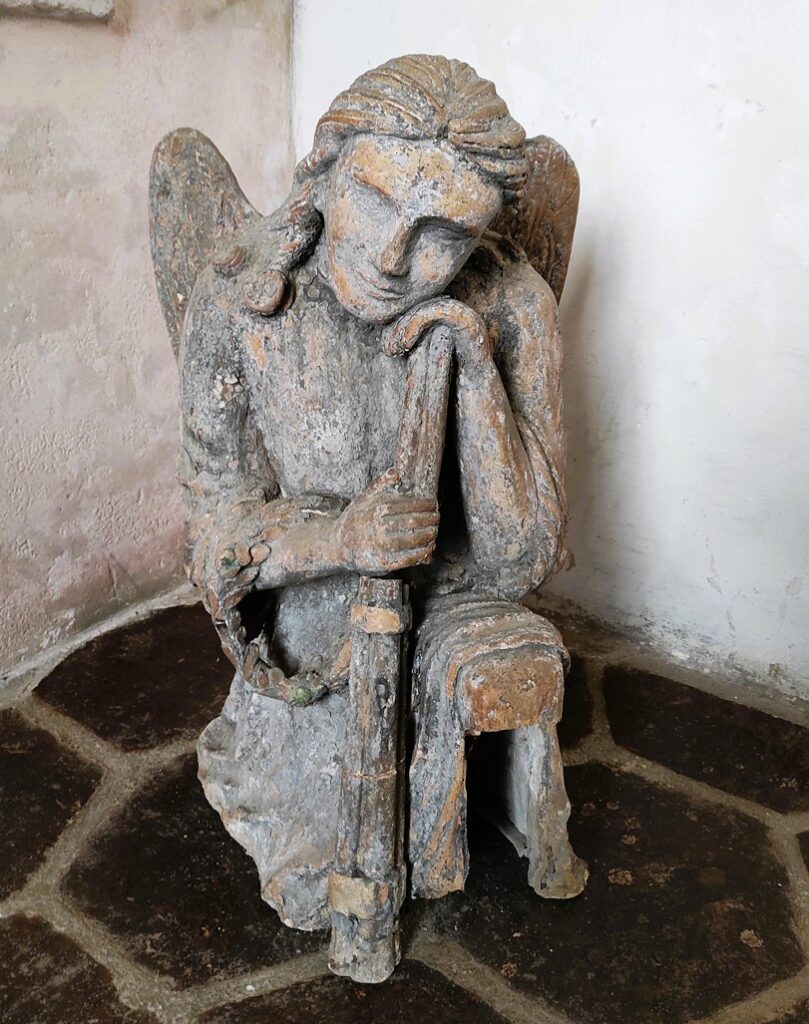
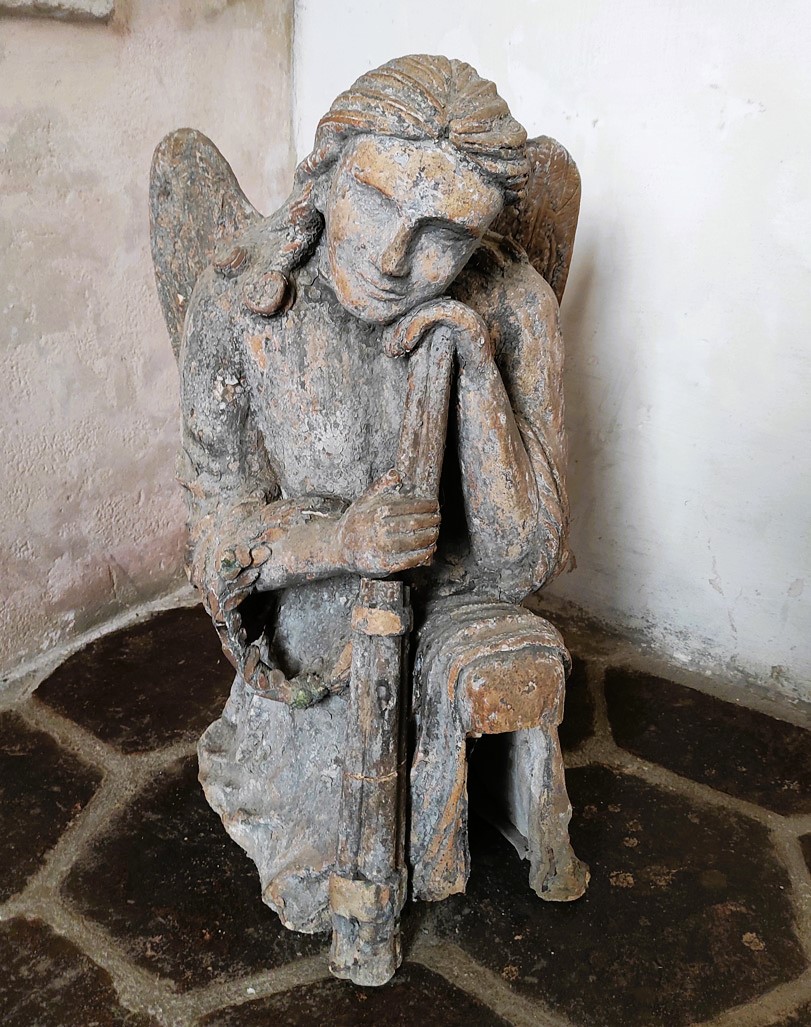
- Chapter hall
However, despite its turbulent history, Sázava Monastery has preserved its tradition as a pilgrimage site of Saint Procopius, associated with his life, prayers and work.
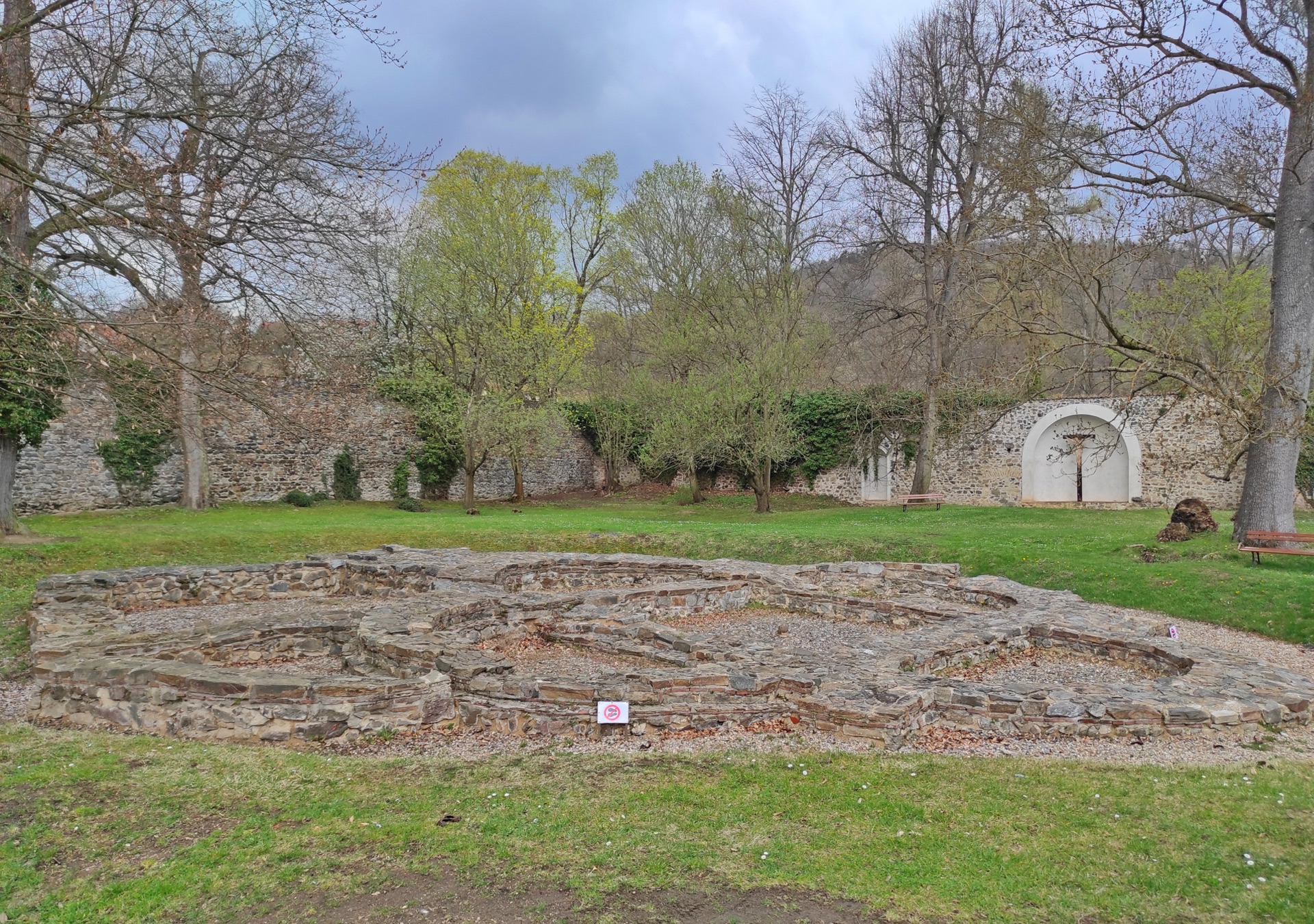
You can freely explore the monastery's northern garden, where the foundations of the Church of the Holy Cross are located. The model for this church, with its Greek cross floor plan, was the Church of the Holy Sepulchre in Jerusalem.
-
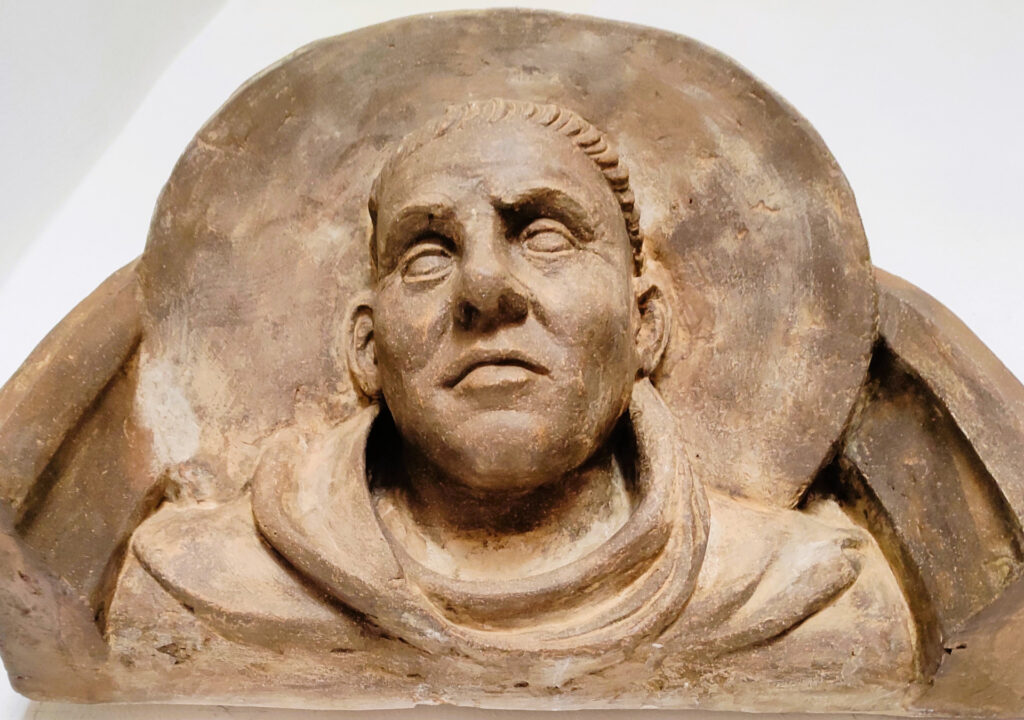
- St. Procopius
-
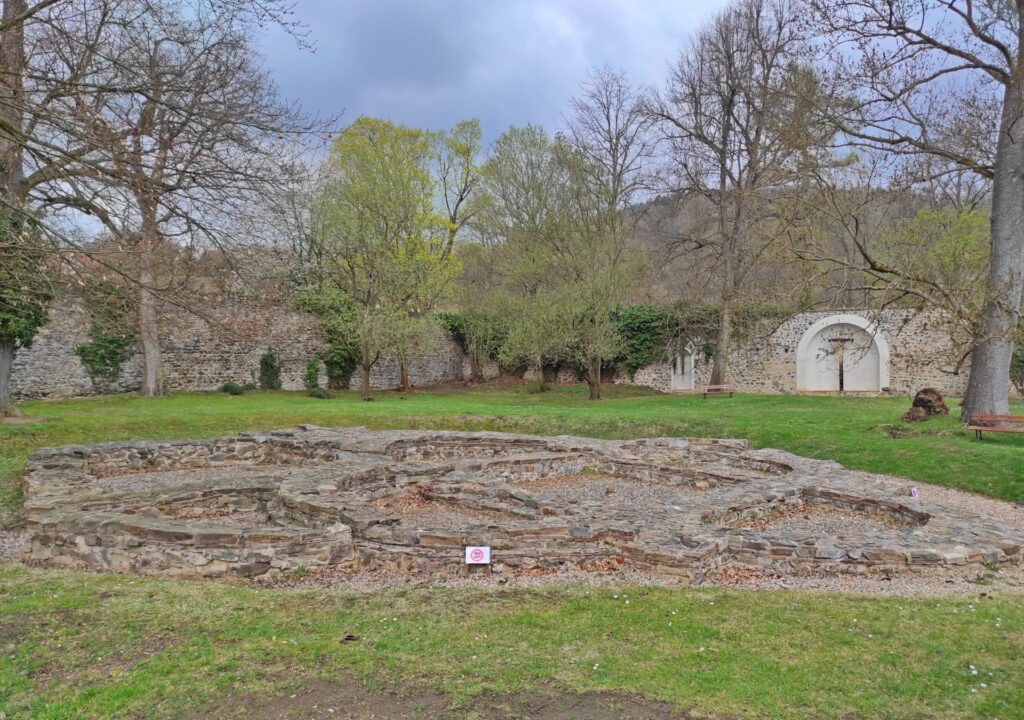
- Northern garden
Our useful tip:
In connection with church restitution and the return of part of the monastery complex to the Roman Catholic Church, there are now two tours available in the area, meaning two ticket offices as well.
Tour: Saint Procopius' Sázava– visit to both exteriors and interiors (garden, chapter hall, cloister, refectory and the “Old Slavonic Sázava” exhibition) is provided by the National Heritage Institute.
Address: Zámecká 72, Sázava
Tour: Czech Patron Saint Procopius– visit to the Pilgrimage Church of Saint Procopius, managed and operated by the Roman Catholic Parish of Sázava-Černé Budy. The tour includes the church itself and an installed exhibition display.
Address: Zámecká 75, Sázava
We chose the Saint Procopius´ Sázava tour, which introduced us to most parts of the complex, including precious frescoes. Additionally, you can peek into the church through the gate anytime free of charge.
-
- Church of St. Procopius
-

- Clock tower
Parking:
You can park in Uhlířskojanovická Street right below the monastery. The monastery does not provide its own parking spaces for the public.
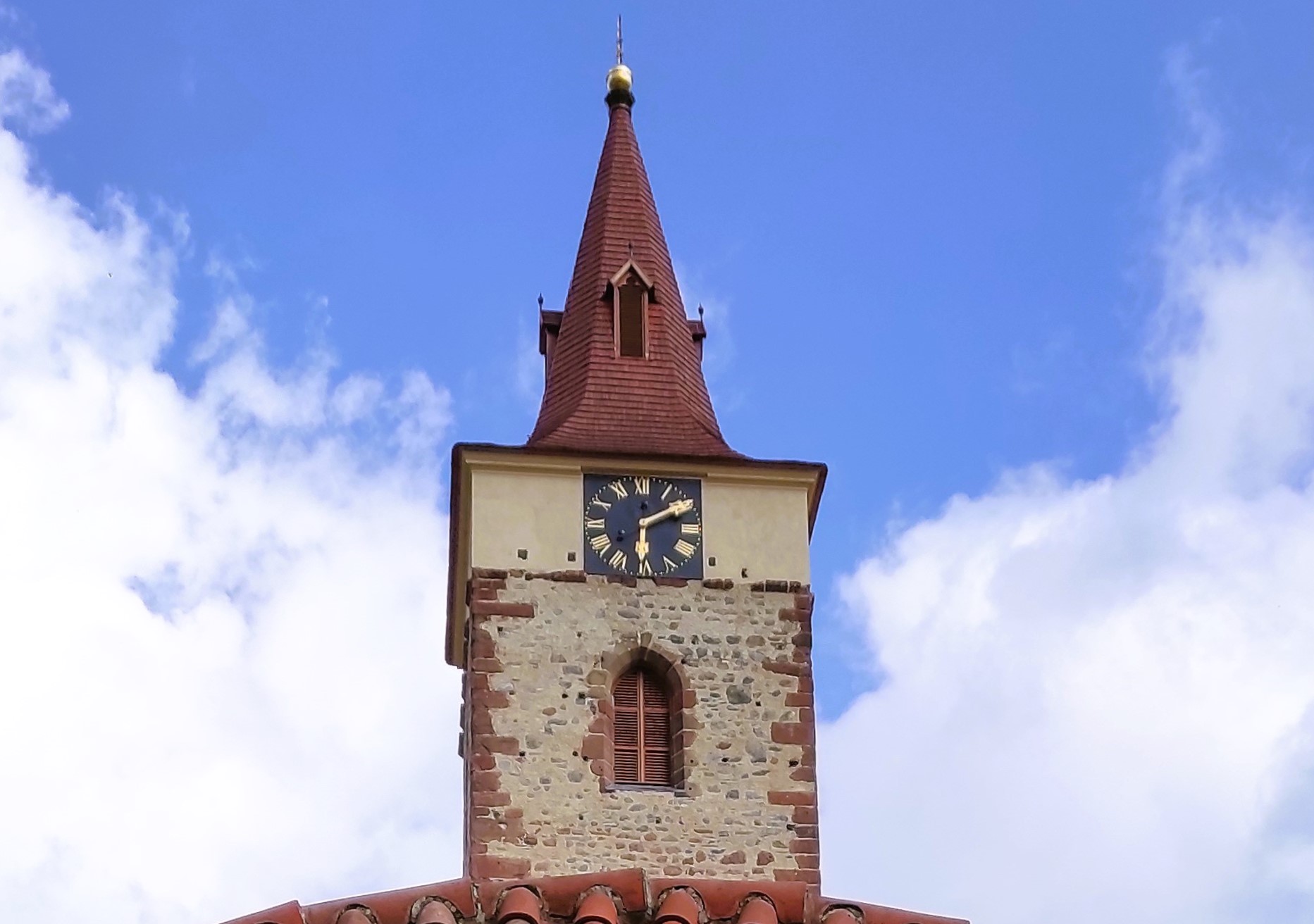
To conclude, we add a legend about good luck:
Find the three carved stars on the tall Gothic tower. If you succeed, legend says your deepest wish will come true. We can confirm that the stars are indeed there.