



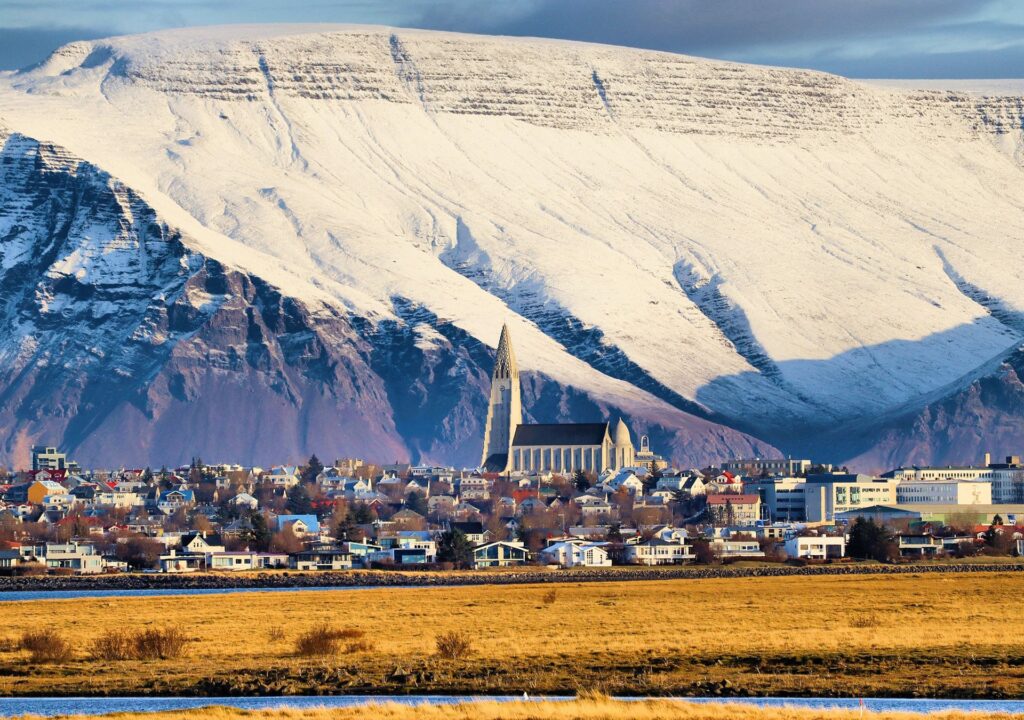
This northernmost capital in the world is a place where modern urbanism blends with Iceland’s wild nature. Though not particularly large in size, the city offers not only cultural attractions, vibrant nightlife and interesting boutiques with local products but also breathtaking views of the surrounding landscape.
Austurvӧllur Square
We began our walk on the grassy Austurvӧllur Square, where, as legend has it, the first Viking settler dried his hay. The square features a statue of Jón Sigurðsson, who fought for Iceland’s independence from Danish rule, as well as Hotel Borg, the first hotel in the city.
-
- Reykjavík
-
- Cathedral and Parliament
Parliament
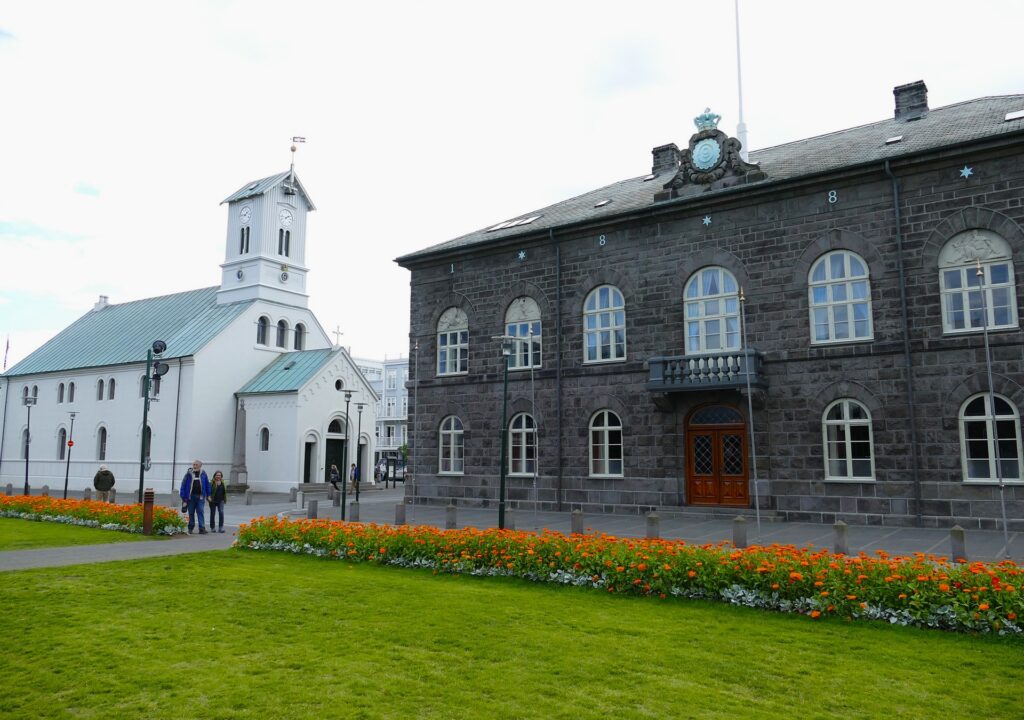
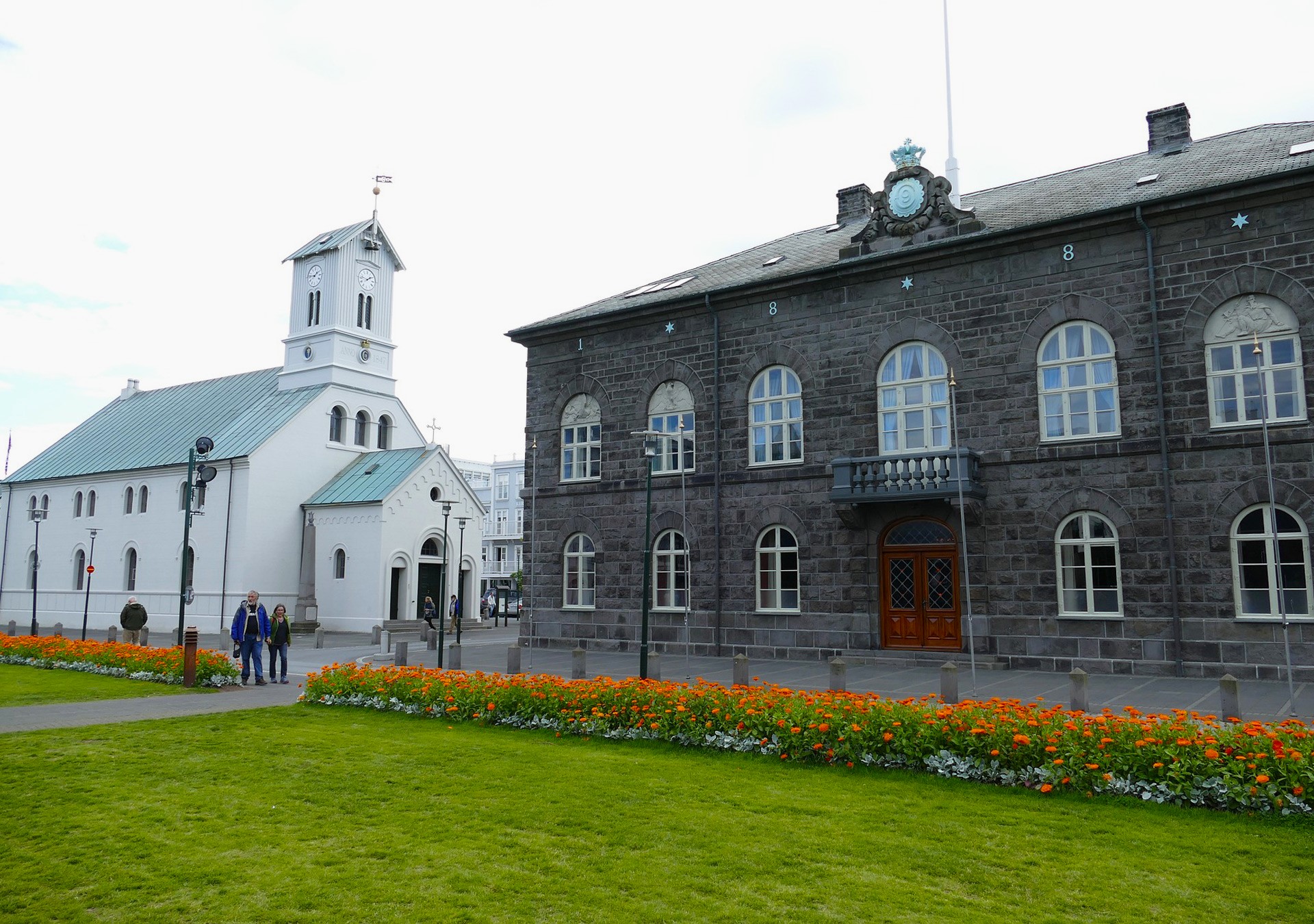
Right across from the square stands the Alþingishúsið (Parliament House), whose classical lines and elegant façade make it a striking landmark. Today, the building is open to the public and offers guided tours, where you can learn many interesting facts about Iceland’s history and how its parliament operates.
Address: Kirkjutorg, Reykjavík
Dómkirkjan Cathedral
Next to the parliament stands the white Lutheran Dómkirkjan Cathedral, the spiritual heart of the city. Interestingly, every session of the Icelandic parliament begins with a mass at Dómkirkjan, after which the members of parliament proceed together to the Parliament House. This symbolic act highlights the role of the church in Icelandic society.
However, Dómkirkjan is not only a place of worship but also a centre of cultural and social life. During your visit, you might come across interesting concerts or exhibitions.
Address: Kirkjustræti, Reykjavík
Town Hall
Behind the parliament, you’ll find Lake Tjörnin, on whose shore stands the modern Reykjavík City Hall (Raðhús Reykjavíkur), built of glass and concrete. Its smooth lines, large glass surfaces and natural materials create a harmonious whole. From here, we also enjoyed a stunning view of the surrounding mountains.
Inside, we discovered a tourist information centre and a large 3D map of Iceland, which not only details the coastline but also the glaciers and volcanoes. A visit to City Hall is a unique opportunity to explore modern Icelandic architecture while learning about the country’s history and culture. You can also grab a coffee or a snack at the City Hall café.
Address: Tjarnargata 11, Reykjavík
We continued on to the main street Lækjargata, walking away from the lake. On the right, we saw the Menntaskólinn í Reykjavík high school building, which also appears on the 500-króna banknote.
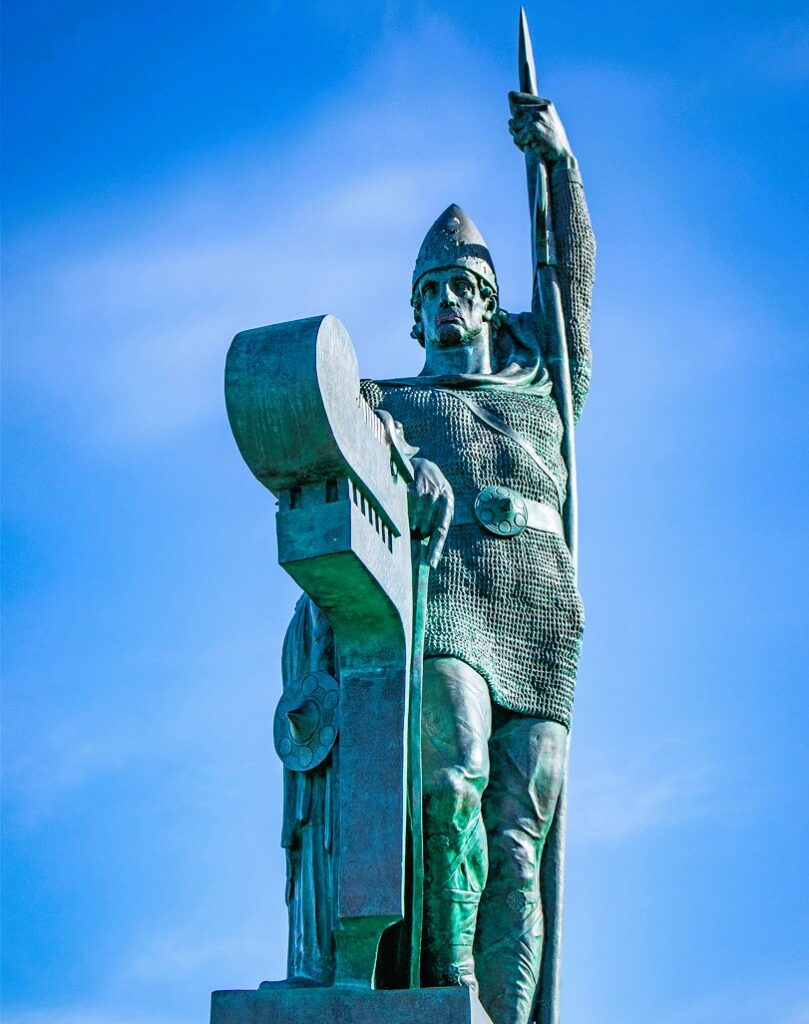
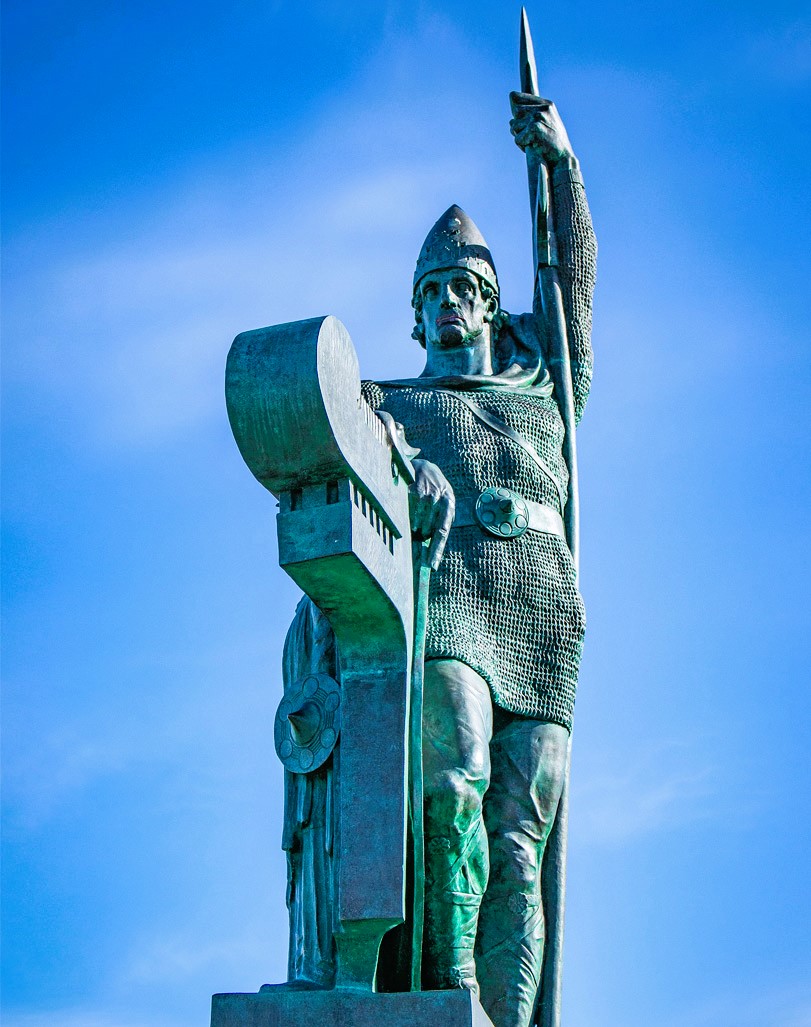
As we walked further, we strolled through Austurstræti and Bankastræti, where you’ll find many restaurants and shops. We also took a small detour up the hill via Hvergisgata, where the statue of Ingólfur Arnarson, the first documented settler of Iceland, stands.
Address: Arnarhóll, Reykjavík
-
- Statue of the first settler
-
- Hallgrímskirkja Church
Laugavegur Street
Our journey then led us to Laugavegur Street, the city’s main shopping street, where we discovered not only boutiques with local goods but also cafés, restaurants and bars. An interesting fact is that this street, whose name can be translated as "The Path to the Hot Springs," was once a trail leading to the natural pools in the green district of Laugardalur, home to open-air thermal baths.
Hallgrímskirkja Church
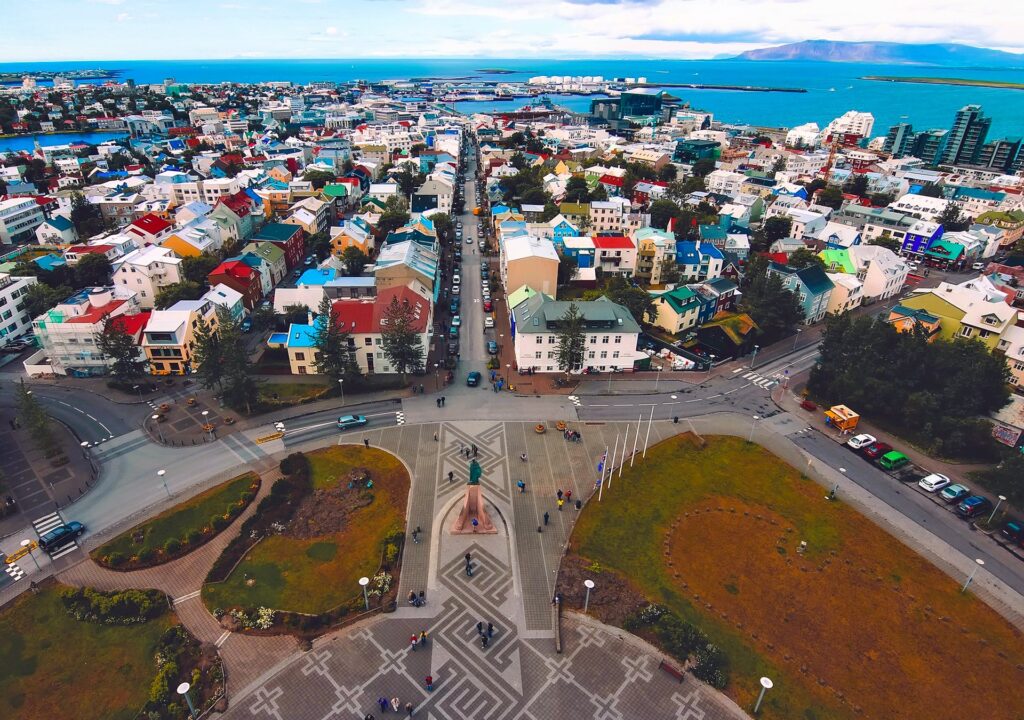
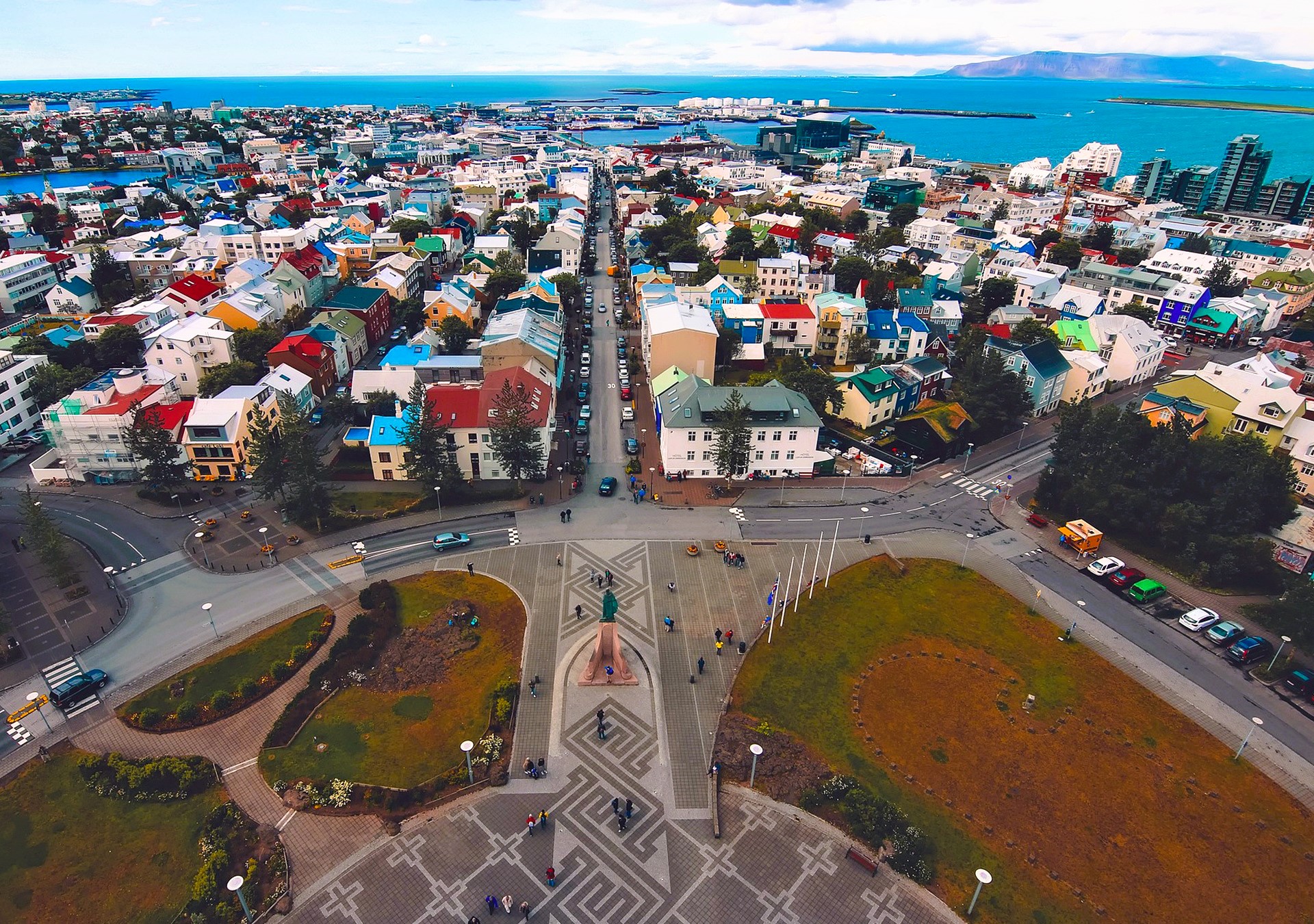
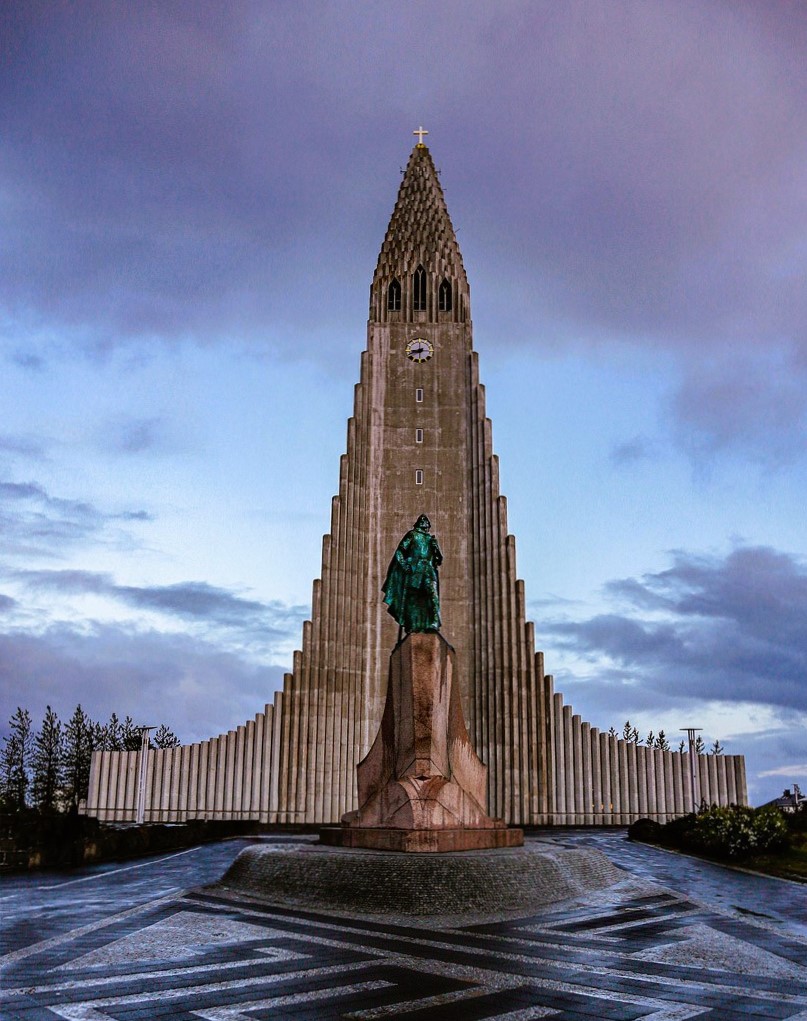
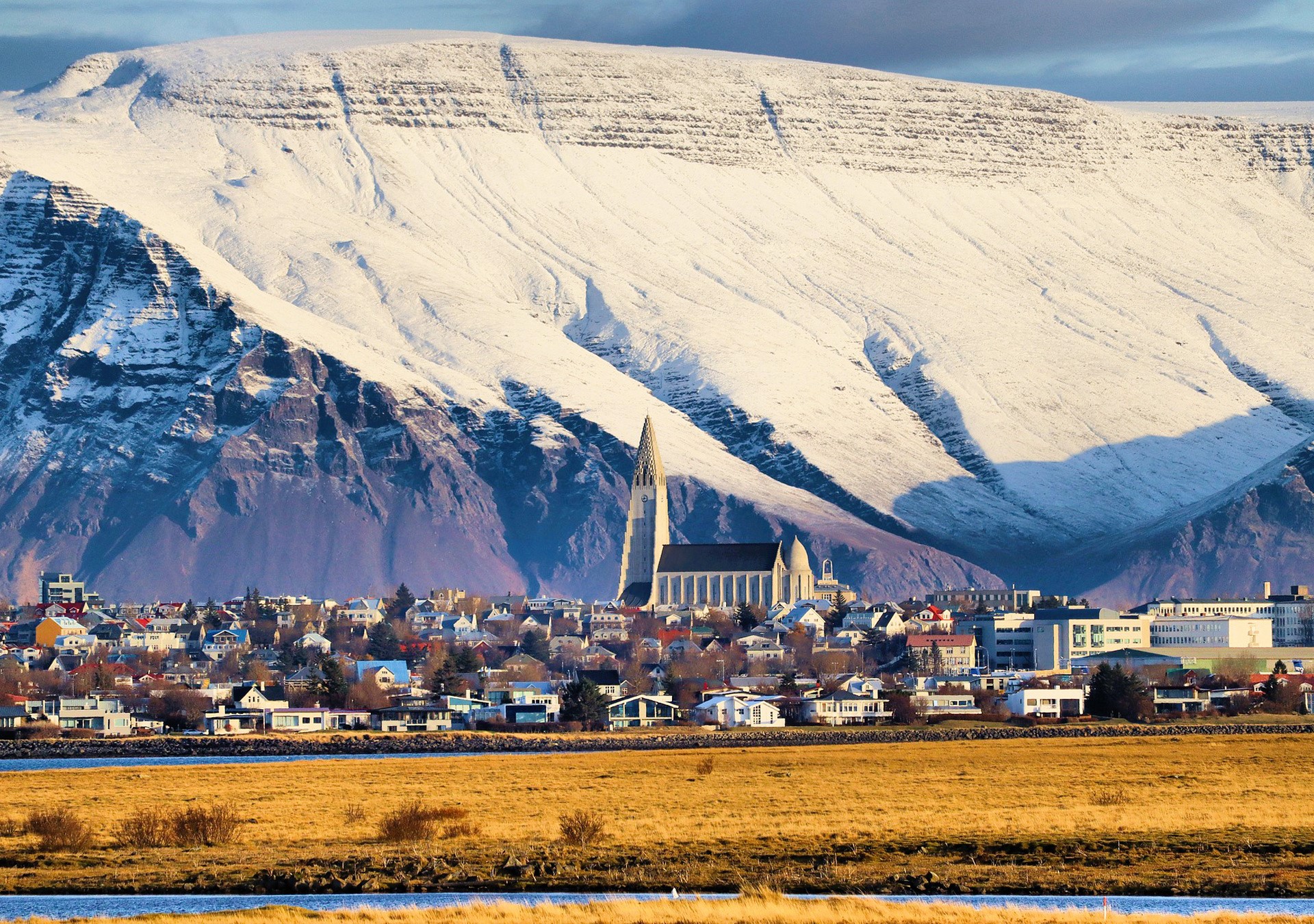
The final part of our walk continued along Skólavörðustígur Street, where we found numerous galleries and jewellery boutiques. However, our attention was captured by the massive structure of Hallgrímskirkja, the largest church in Iceland. This stunning modern church, whose facade resembles volcanic basalt columns, also represents the Icelandic belief that even a small country can have big dreams.
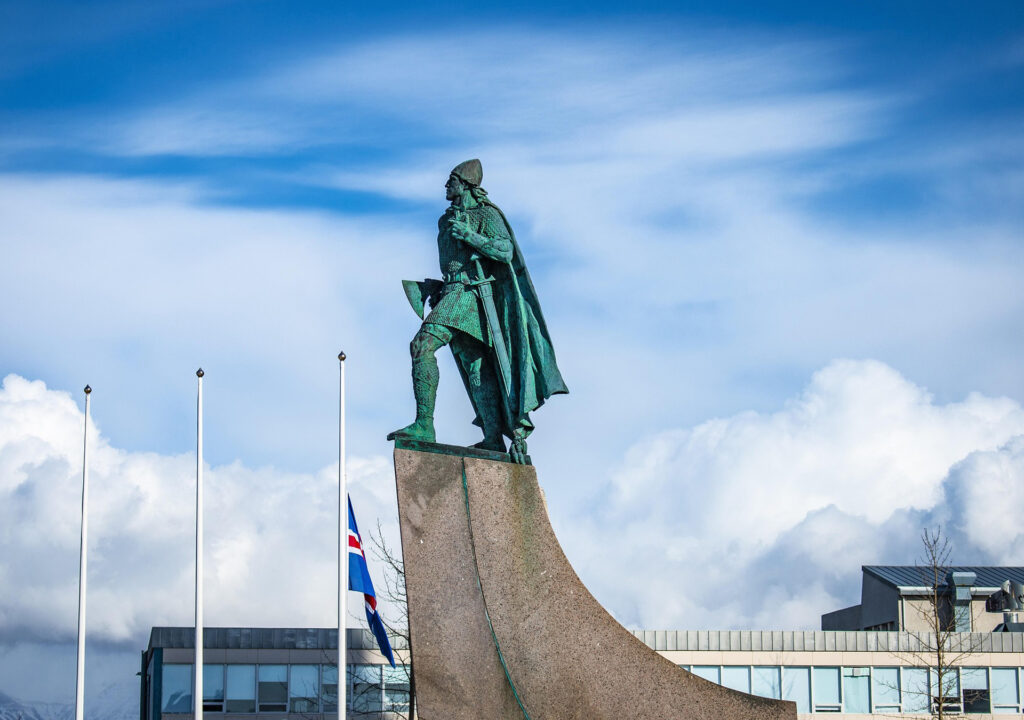
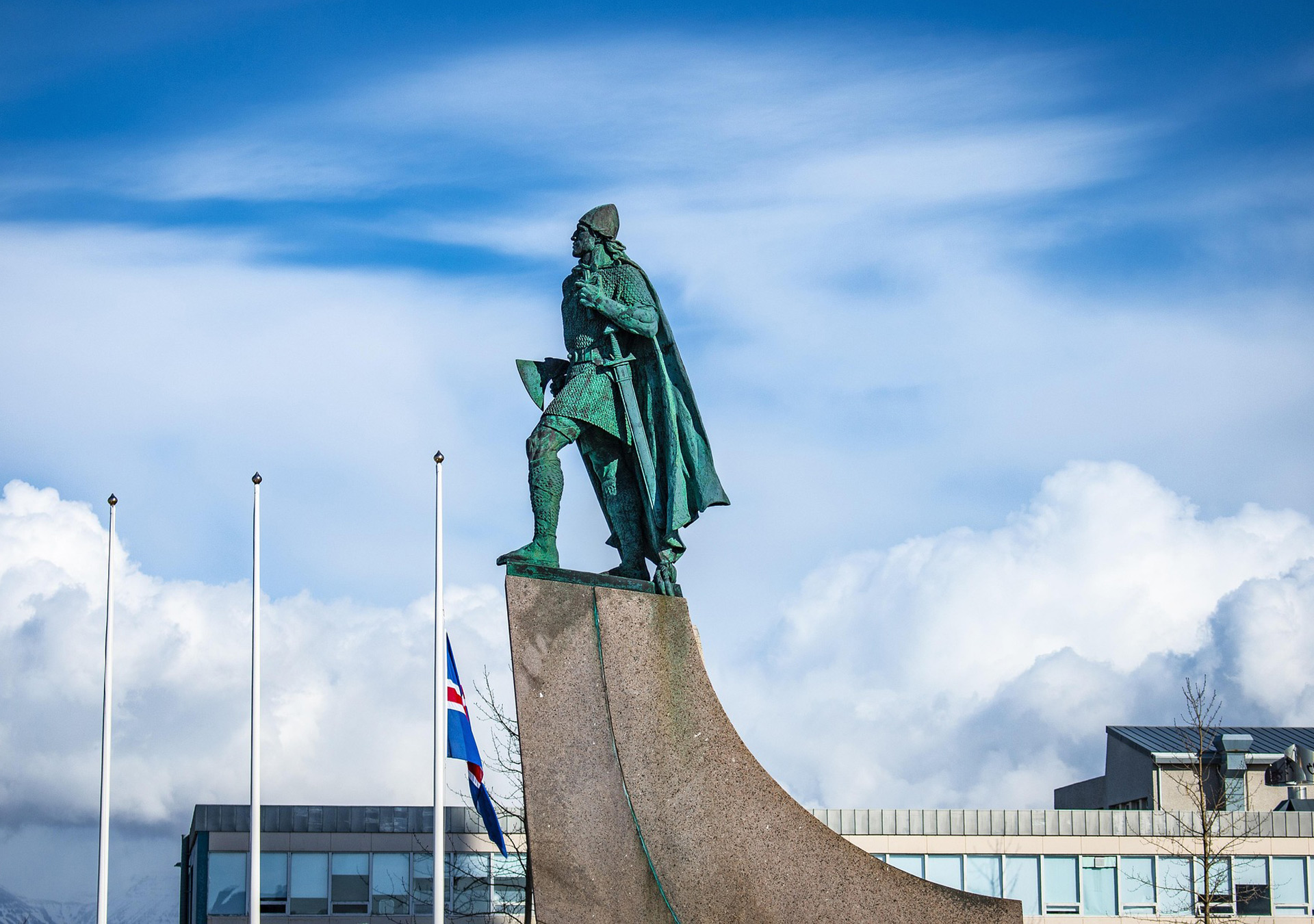
Inside the building, you’ll find one of the largest pipe organs in Europe, regularly used for concerts. From the church tower, accessible by elevator, there’s a breathtaking view of the entire city and surrounding landscape. In front of the church stands a statue of Iceland’s greatest adventurer, Leifur Eiríksson.
Address: Hallgrímstorg 1, Reykjavík
-
- Statue of the greatest adventurer
-
- Reykjavík
Harbour
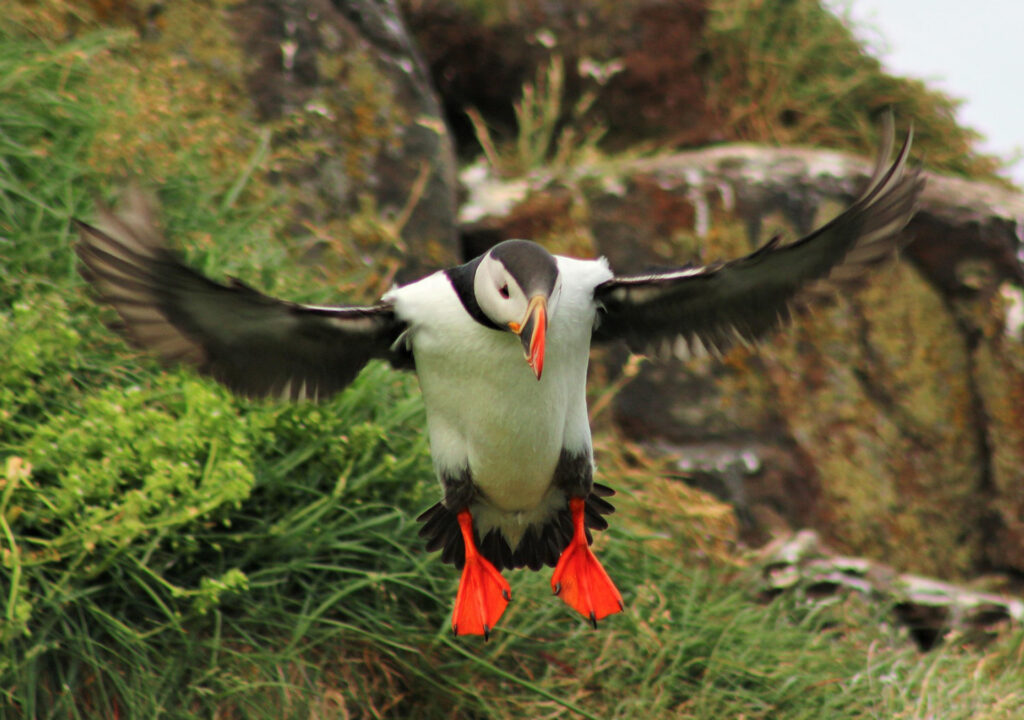
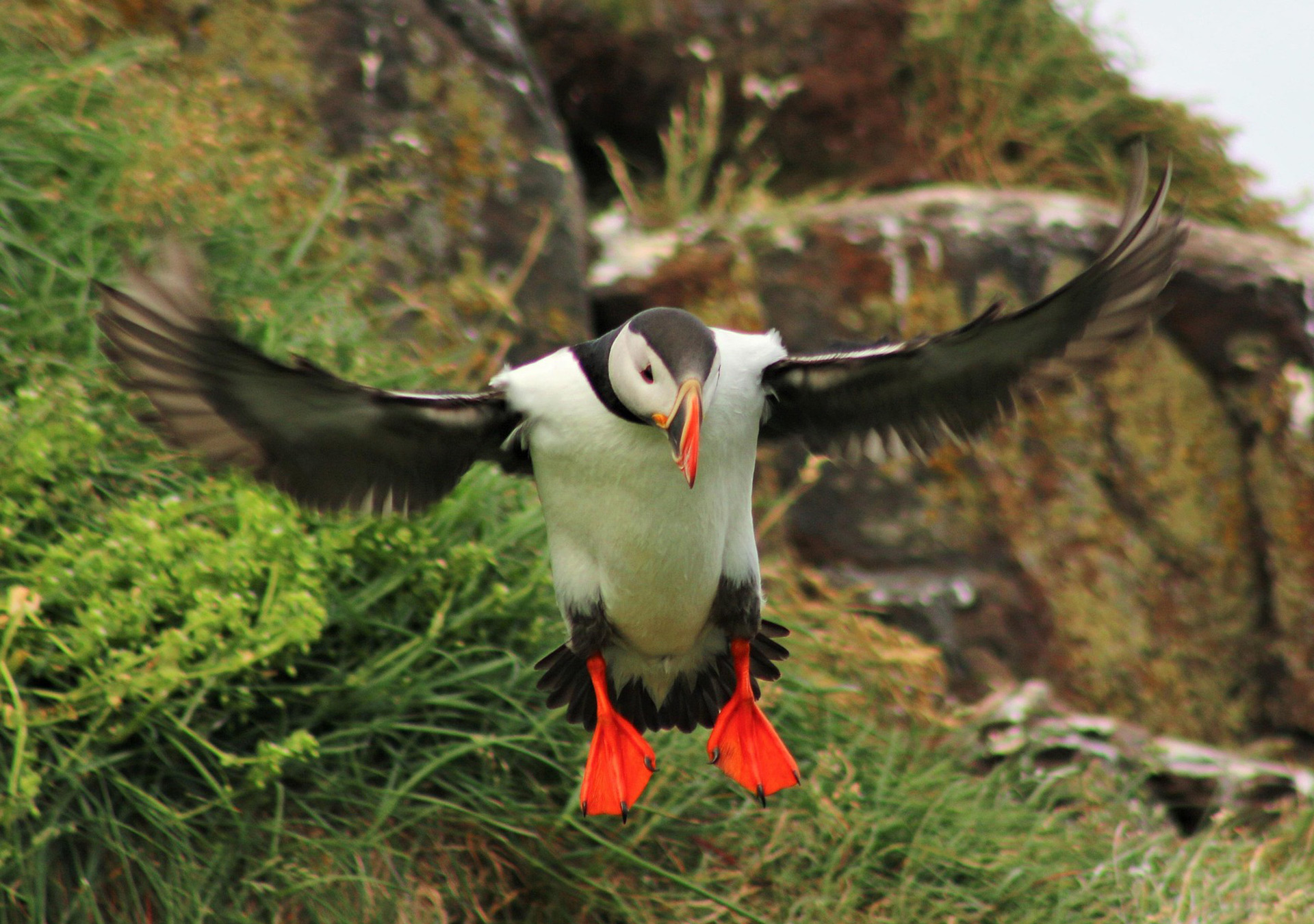
Reykjavík’s harbour is also worth a visit, as it’s the departure point for whale-watching, dolphin-spotting, and birdwatching tours—among the most famous birds being the strikingly coloured puffins.
On Harbour Street (Hafnarstræti), you’ll find some of the city’s oldest buildings, such as Fálkahúsið, whose roof is adorned with two carved wooden birds—a reminder that the Danish king once kept his precious falcons here. This street, lined with numerous shops, leads to the waterfront, where we didn’t miss the sculpture-adorned promenade.
-
- Harpa Concert Hall
-
- Sun Voyager
Harpa Concert Hall
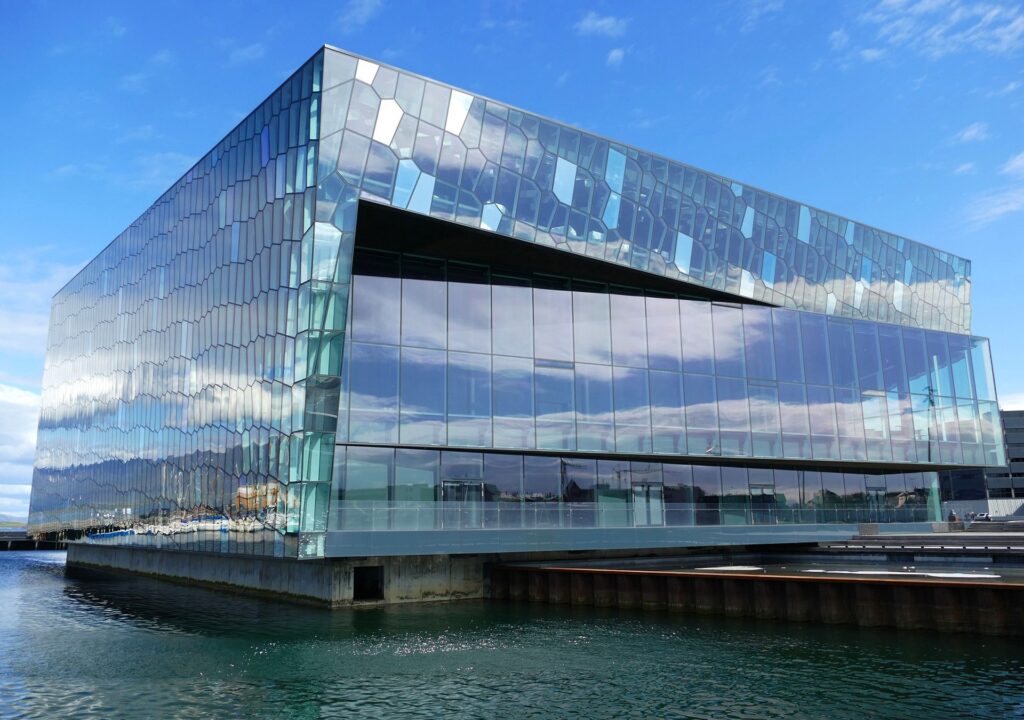
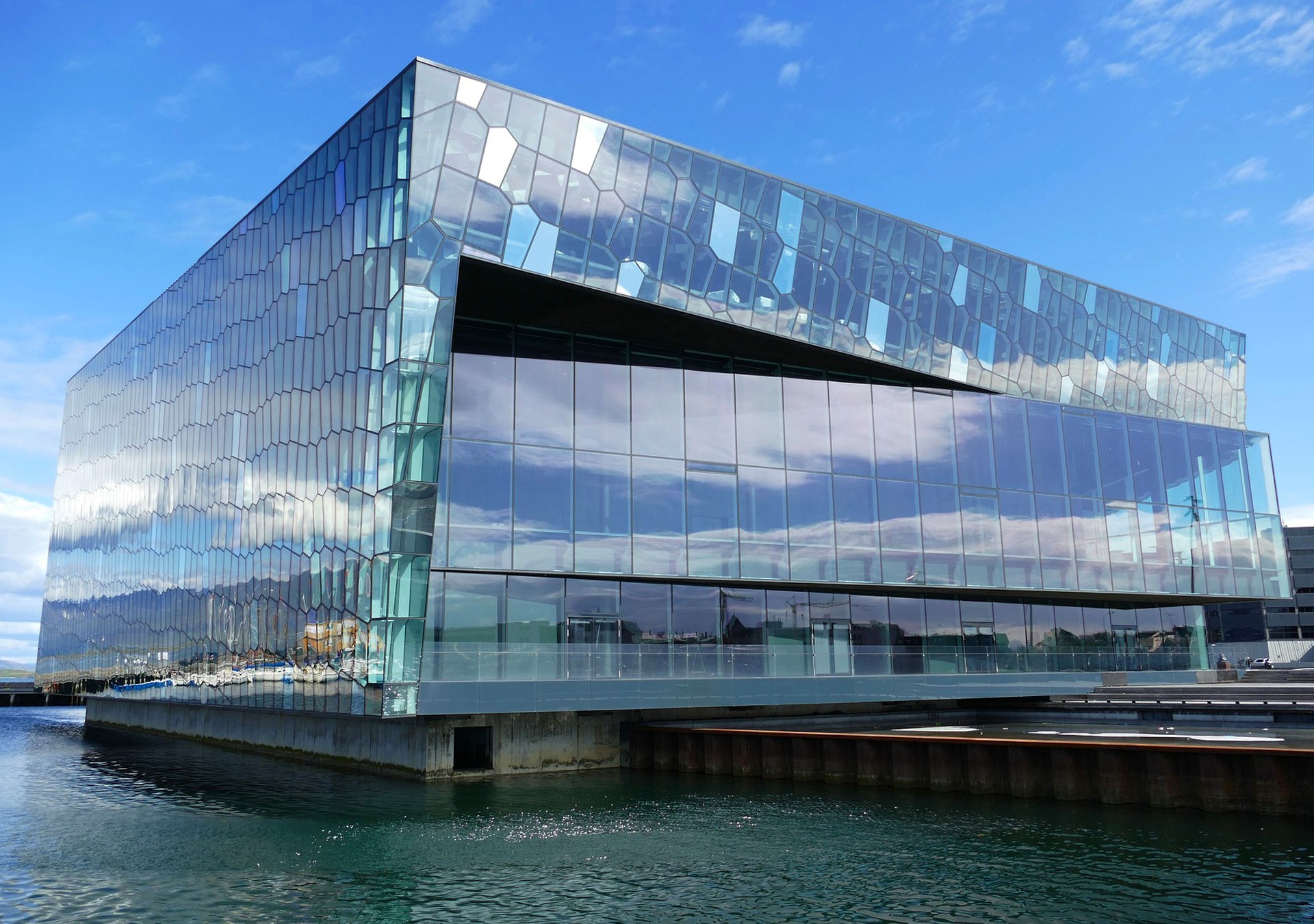
Further along the waterfront, we also spotted the pearl of Iceland’s coast—the Harpa Concert Hall. Its colourful glass facade, inspired by the basalt formations of Iceland’s nature, shimmers in the northern light and changes hues depending on the weather and time of day. The building not only hosts concerts and other cultural events but also features shops and restaurants offering a stunning view of Reykjavík, the surrounding mountains and the ocean.
Address: Austurbakka 2, Reykjavík
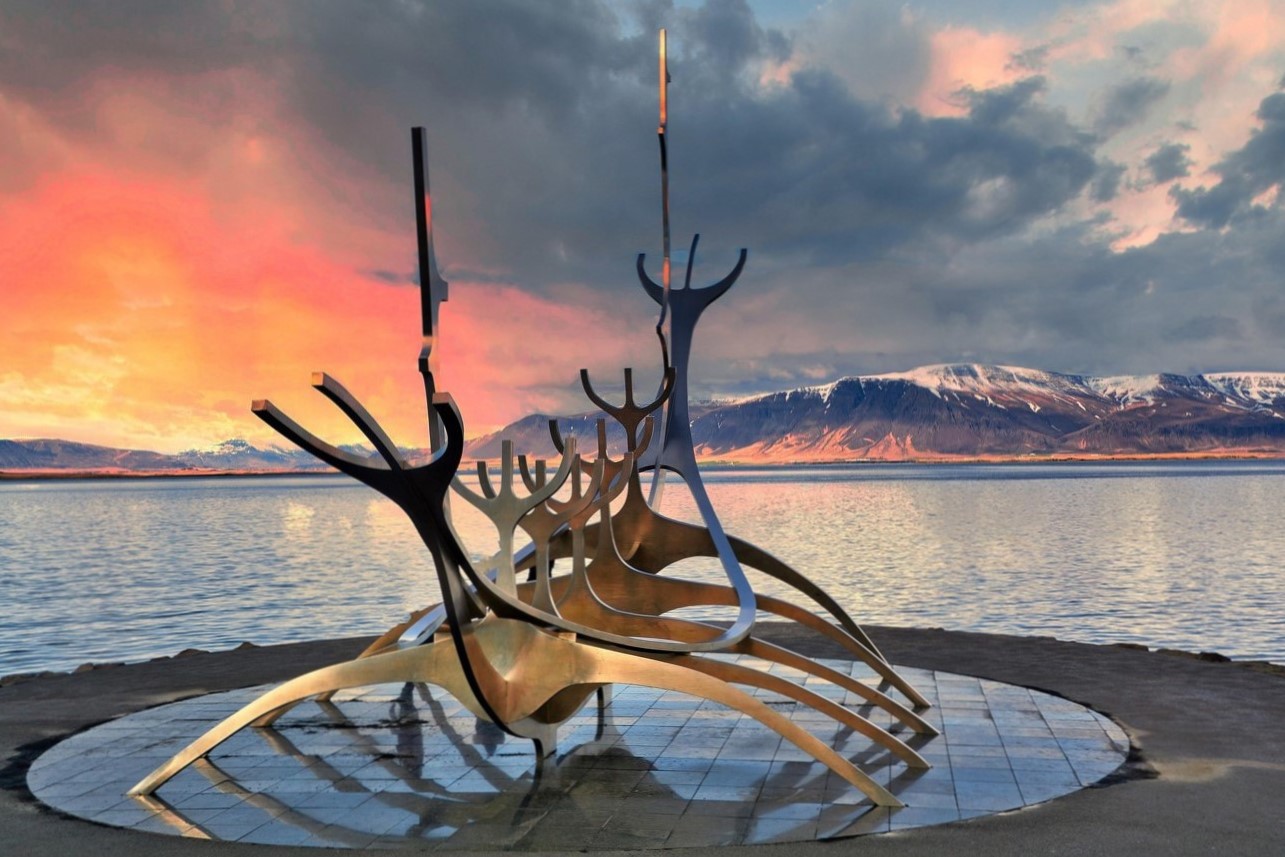
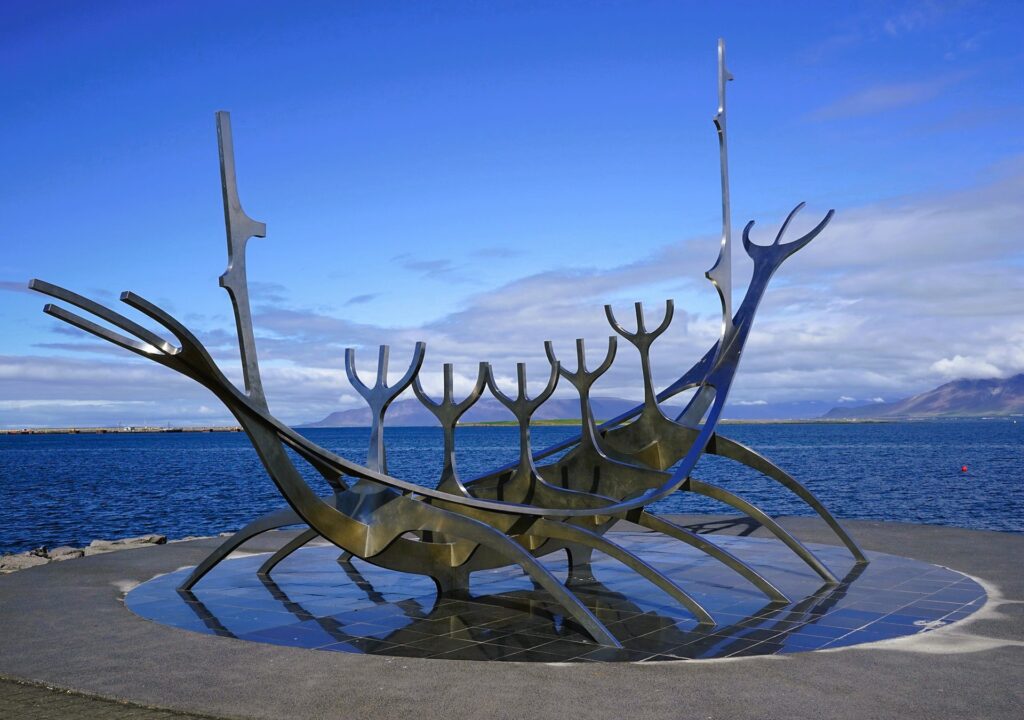
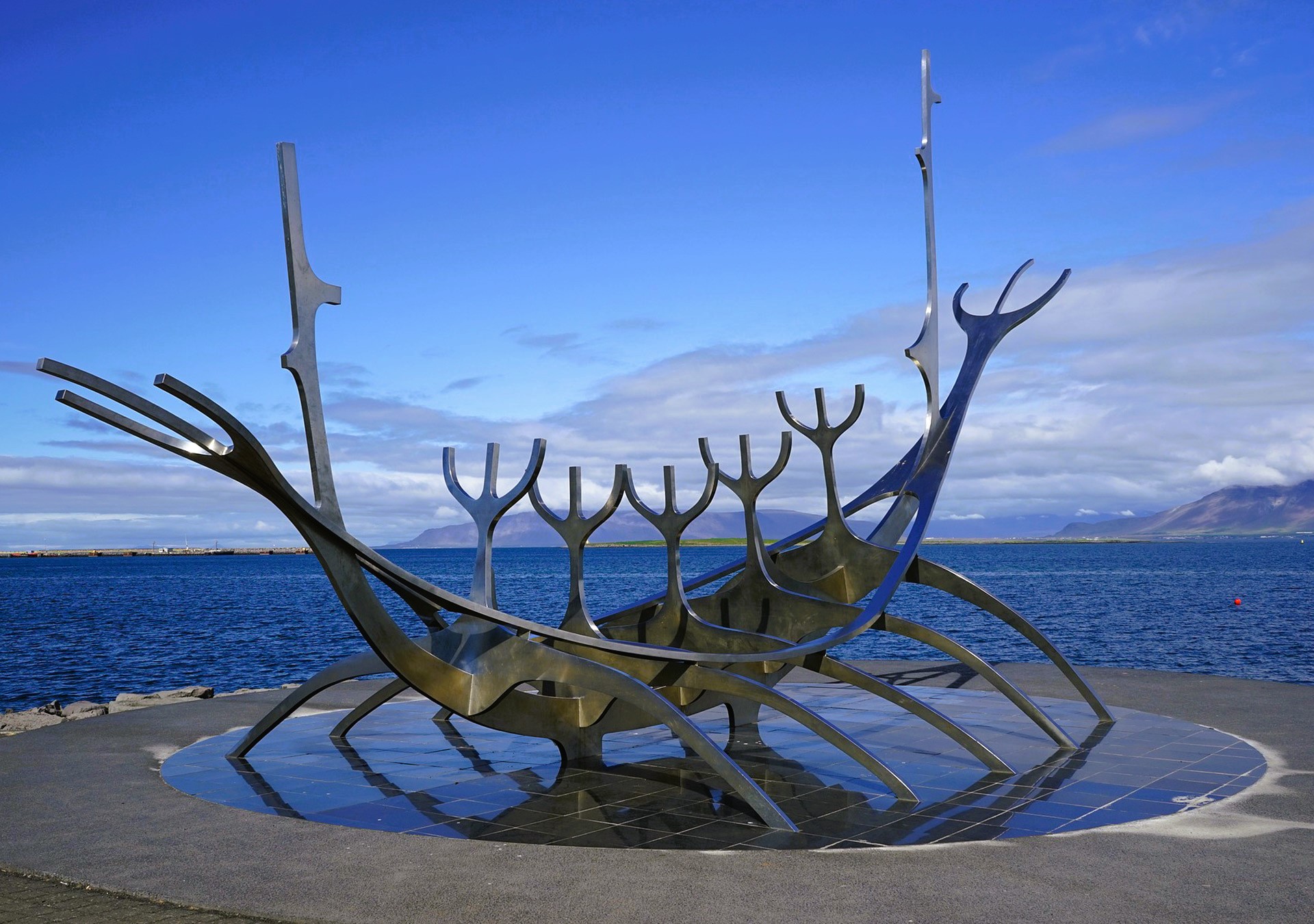
Standing on the waterfront is also the famous sculpture shaped like a Viking ship, called Sólfar 34 (Sun Voyager). The statue was created in 1986 to commemorate the 200th anniversary of Reykjavík being declared the capital and symbolizes Iceland’s rich history.
Höfði House
We then walked all the way to Höfði House, a witness to an event that changed the face of the world. In 1986, the famous summit between U.S. President Ronald Reagan and Soviet President Mikhail Gorbachev took place here. It was here that the agreement to limit intermediate-range nuclear weapons was reached, considered one of the key moments on the path to ending the Cold War. Today, the house is open to the public, offering a glimpse into the place where history was made.
Address: Borgartún 105, Reykjavík
How to save money?
In the capital, you can also take advantage of the Reykjavík City Card, which offers free entry to a wide selection of museums and galleries, access to all swimming pools in the city and unlimited free bus travel within the capital area (excluding the Bus No. 55 to the airport). Additionally, the card provides discounts on various tours, services and in shops.
Tip for curious minds:
Not far from the capital, we visited the interactive museum of Iceland’s volcanic processes at the Hellisheiði Power Plant. An excellent guide not only explained the workings of Iceland’s geothermal forces beneath the Earth’s surface and their utilization but also gave us the chance to explore multimedia installations and presentations on geothermal activity. The power plant offers several different tours, including a bonus trip around the Reykjanes Peninsula.
Address: Bæjarháls 1, Reykjavík
What you muss not miss:
Among the most visited and famous attractions is undoubtedly the geothermal spa Bláa Lónið — The Blue Lagoon. This oasis enchanted us with its unique atmosphere, healing waters and stunning natural surroundings. The milky-blue water maintains a pleasant temperature of 37–39°C and is rich in minerals that have beneficial effects on the skin. On-site, you can enjoy a massage and other wellness treatments. The local restaurant serves Icelandic specialties with a view of the lagoon. There’s also a hotel and a shop selling local cosmetic products enriched with minerals, mud and algae.
It’s worth noting that the lagoon itself is not a natural phenomenon but a byproduct of geothermal energy use. The neighbouring power plant draws hot, salty water to generate electricity, and afterward, this water is channelled into the Blue Lagoon.
The lagoon is located near Keflavík International Airport.
Address: Norðurljósavegur 9, Grindavík
-
- The Blue Lagoon
-
- Atlantic puffin
Our tips:
Due to the high number of visitors, it’s essential to book your tickets online in advance. We opted for an evening slot to avoid the biggest crowds during the day.
While bathing, don’t miss the mineral face masks with nourishing effects, offered at stalls right in the water.
Useful tips and advice:
Local cuisine with regional ingredients: Although restaurant prices are quite high, we highly recommend trying some of the local specialties featuring fresh fish, seafood or lamb.
Transportation: How to get from Keflavík Airport to Reykjavík? You have two great options.
Flybus Iceland – A comfortable and fast transfer straight to the city centre! The ride takes about 45 minutes and the bus will drop you off at the main bus terminal downtown. The perfect choice if you want to enjoy comfort after a long flight. The price is higher, but the convenience is worth it.
Local Bus No. 55 (company Straetó) – Want to save money? Try the public bus, which will take you to Reykjavík at a more affordable price. Travel like a local and spend the extra cash on Icelandic delicacies!
Accommodation: We recommend booking your stay well in advance, especially for the summer season. Plus, early reservations can sometimes secure better prices.
Our final invitation:
If you want to discover more breathtaking places in this stunning country and get extra tips, check out our articles on the South Coast or the Golden Circle.